Skip to content

Neoliberalism

Political Education In Latin American Social Movements

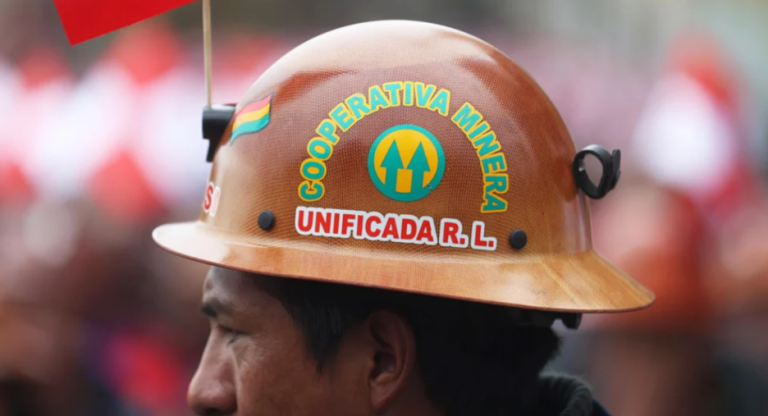
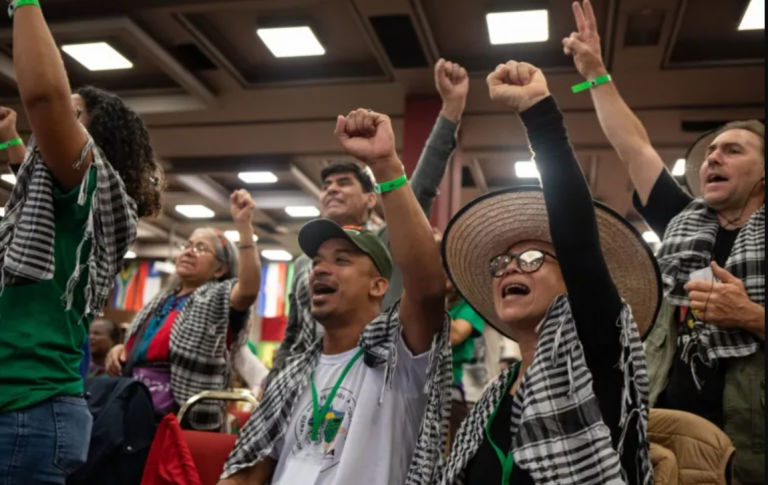
Across a vast Latin American landscape, the imperialist project of past and present runs up against a plurality of organized resistance. Be they extractive mining conglomerates and the dams they need built, corporate agribusiness and its endless expansion of the agricultural frontier, or the financial capital behind it all, the incursions of capital into Latin America – with the collaboration of corrupt local elites – are almost always met by an extraordinary diversity of worker-, student-, peasant-, Indigenous-, Black-, LGBTQIAPN+- and women-led movements defending their lived, lands, waters, territories, peoples, histories, and horizons.

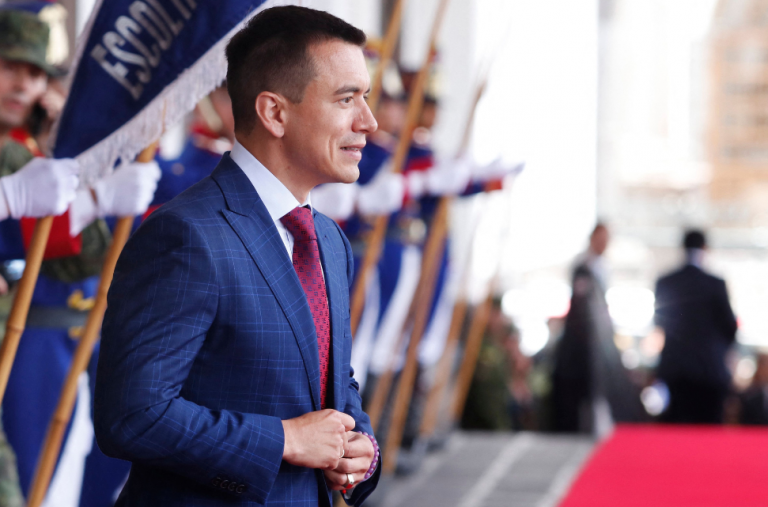
Ecuador: Clear Response From The People To The Fascist Noboa

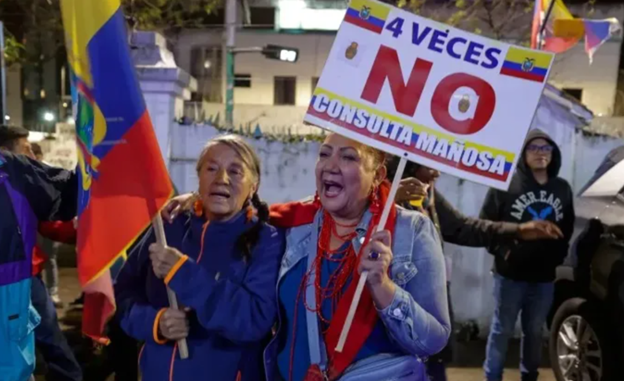
The results of the popular consultation and referendum in Ecuador, held this Sunday, gave a clear advantage to the “No” option on the four key questions promoted by the government of US backed President Daniel Noboa, in a day characterized by high citizen participation. The initiatives promoted by President Noboa, supposedly focused on “protecting national sovereignty”. According to data from the National Electoral Council (CNE), with more than 90% of the votes counted, the “No” vote exceeds 52% of the votes. This rejection is concentrated on the proposals to allow the installation of foreign military bases, eliminate state funding for political parties, reduce the number of assembly members, and convene a Constituent Assembly.

Noboa Cracks Down On Protests While Pushing Rewrite Of Constitution

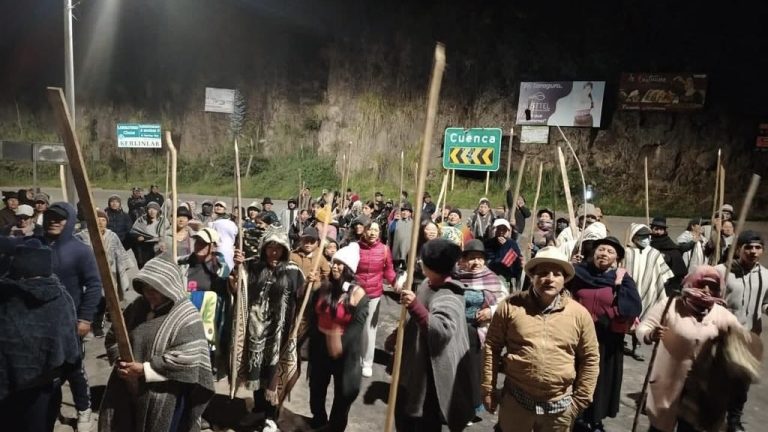
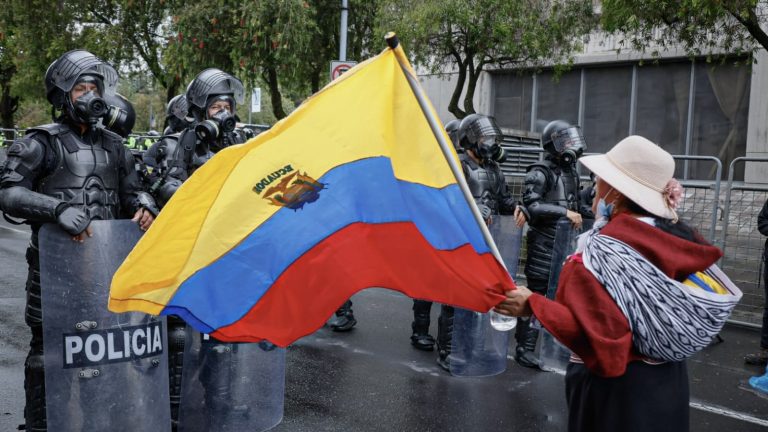
In mid-September, President Daniel Noboa announced the removal of Ecuador’s long-standing diesel subsidies. The decision — an unpopular measure that, when previously attempted in 2019 and 2022, sparked Indigenous-led protests that nearly toppled two governments — once again triggered mass demonstrations and a national strike, though this time on a more limited scale. The Noboa administration responded with violent repression, resulting in widespread human rights violations, the deaths of three protesters, and hundreds of arrests and injuries.

Africa’s Recent Elections: Crisis And A Continent’s Youth In Revolt

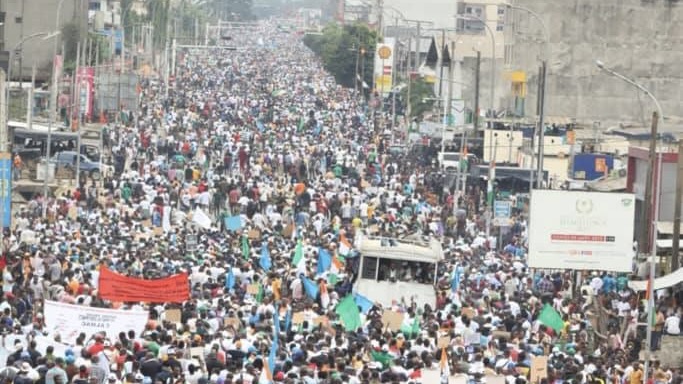
The past few months have seen three elections across Africa, in Tanzania, Cameroon, and Côte d’Ivoire. Each exposed a deepening democratic crisis on the continent. While the ballot boxes were filled and the slogans of “stability” and “unity” were loudly proclaimed, the underlying reality was very different; repression, exclusion, and a profound disconnect between the political class and the masses, especially youth. In all three cases, aging leaders clung to power through electoral processes that were anything but democratic.

No To FTAA: The Resistance That Lives

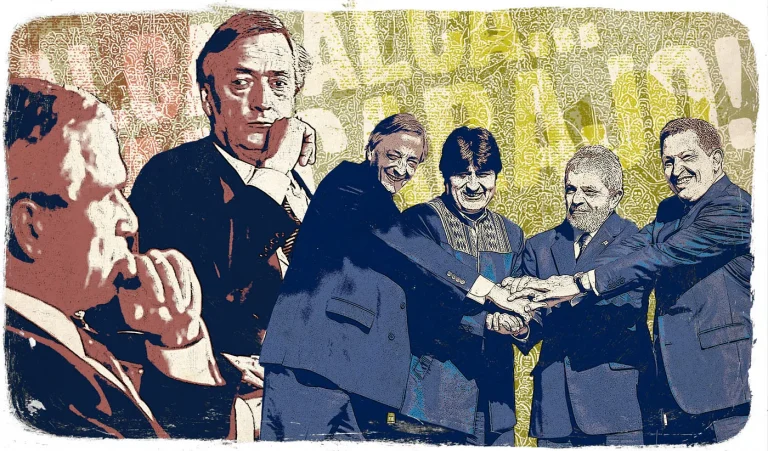
On November 5, 2005, the history of Our America took an unexpected and perhaps irreversible leap forward in emancipation. On that spring day in Mar del Plata, Argentina, five South American presidents joined together to say “No to the FTAA,” and, in that gesture, they thwarted the old and cherished project of the United States that aimed to definitively take over our region, now in a legal manner. The epic story of our South American leaders is no small feat. After the collapse of the Soviet Union in 1991, the United States, with no challenges in sight, saw itself as the arbiter of global truths and decisions.

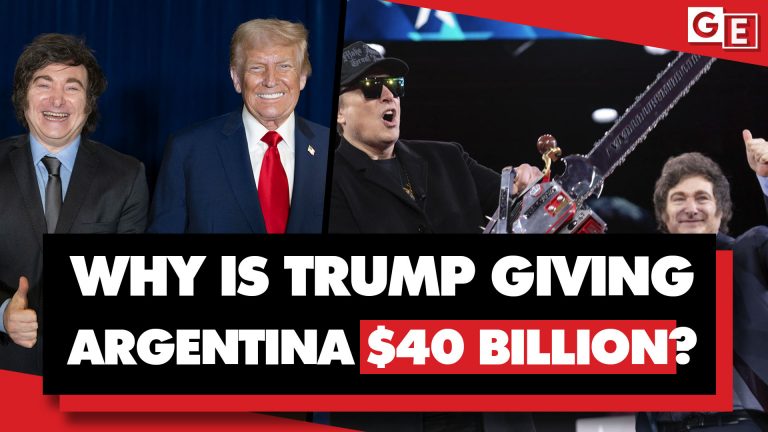
Why Trump Is Bailing Out Argentina’s Libertarian Leader

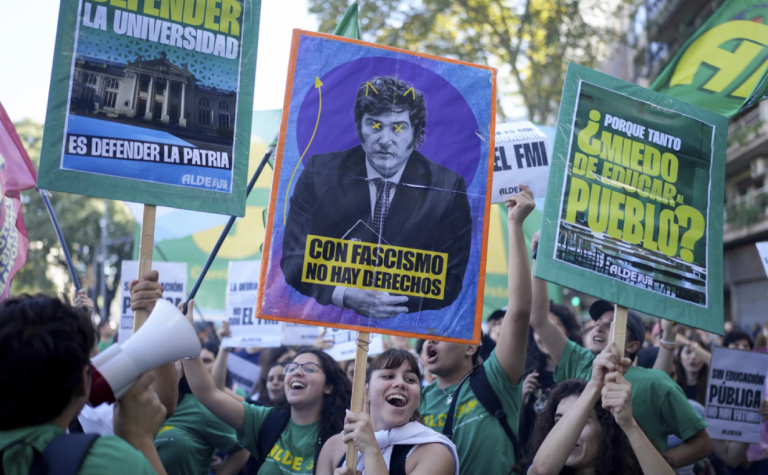
The Trump administration is talking about using $40 billion to bail out a foreign country: Argentina. So why is Trump abandoning his so-called “America First” stance to help a foreign leader? And who exactly is Argentina’s president Javier Milei, whose nickname is the “madman”, who calls himself an “anarcho-capitalist”, and who was the inspiration for Elon Musk’s federal cuts — and chainsaw stunts. This is a story that involves election meddling, brutal anti-worker austerity, economic crisis, corrupt corporate payouts, and, of course, crypto scams. Trump has bet a lot on Milei. The right-wing Argentine president is one of Trump’s closest allies on Earth. They have a lot of similarities.

Noboa’s Iron Fist Forces End Of CONAIE’s National Strike In Ecuador

After more than 30 days of demonstrations, roadblocks, military convoys, repression, clashes, marches, sit-ins, and more, the national strike called by the Confederation of Indigenous Nationalities of Ecuador (CONAIE) has ended. The strike was initially called to protest against the elimination of the diesel subsidy by the right-wing government of Daniel Noboa. Diesel is the most widely used fuel among farmers, peasants, and transporters, and it is also the cheapest. The CONAIE Statement A few days ago, negotiations between the government and CONAIE were suspended due to a lack of agreement and, according to the government, as a result of the continued roadblocks carried out by several Indigenous communities.

Chile’s Solidarity Economy Is Growing

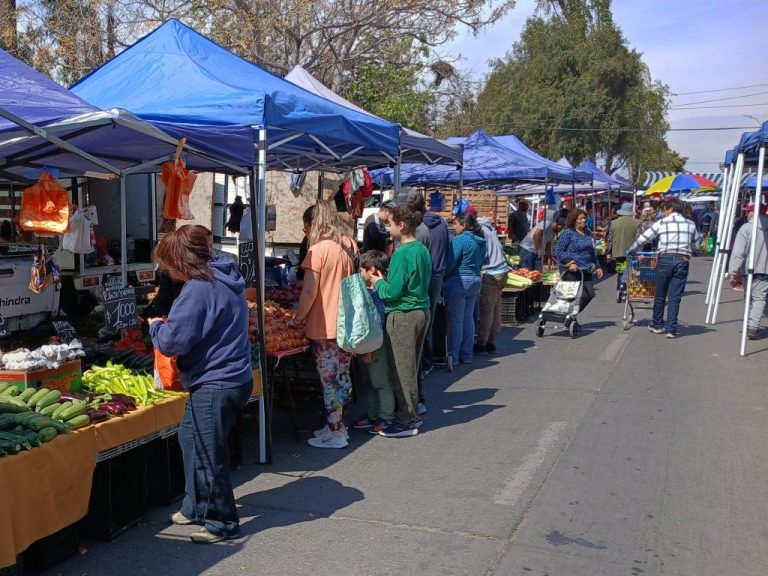
Chile has emerged from decades of often brutal dictatorship under General Augusto Pinochet with a dynamic and growing economy—and deepened social and economic inequalities. Pinochet’s neoliberal economic policies have concentrated wealth among the few and left significant portions of the population behind. In 2017, 56 percent of the lowest-income population earned, on average, only $258 per month. In contrast, the richest 5 percent of the population had a per capita income of over $2,900 per month—11 times higher, according to Observatorio Social, a division of the Chilean Social Development and Family Agency, in 2018.

Ecuadorian Government Increases Repression Of National Strike

The government of Daniel Noboa has opted to reinforce the security forces to definitively suppress the national strike called by the Confederation of Indigenous Nationalities of Ecuador (CONAIE), which has now been going on for 26 days. The protests, which have been concentrated in the province of Imbabura (although they have also taken place in dozens of other locations), demand the repeal of a presidential decree that eliminates the subsidy on diesel fuel, which is used especially by transporters, farmers, and rural workers. However, little by little, the demonstrations have taken on an anti-government tone that is evident in the mobilizations.

Warfare For Venezuela And Welfare For Argentina

Venezuela’s Bolivarian Revolution has been in the vanguard of the Global South. In contrast, President Javiar Milei’s government in Argentina represents the logical, though absurd, consequence of extreme neoliberalism, which he calls “anarcho-capitalism.” Western Hemispheric geopolitics reflect the weakening of US hegemony and an emerging multipolarity, especially with China’s entry as a major regional trading partner. US imperialism’s response, started well before Trump, has been to weaponize the dollar, impose illegal and crippling economic sanctions, and levy arbitrary tariffs. When these fail, the recourse is to military aggression.

World Bank Acknowledges Poverty Increase In Nigeria

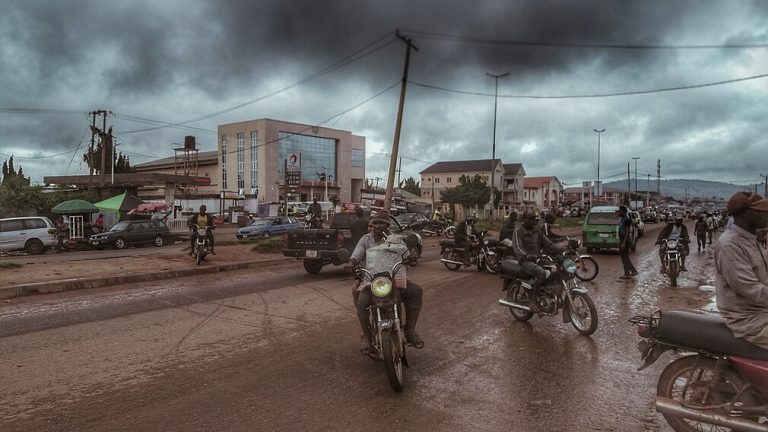
The World Bank projects that 139 million Nigerians will be living in poverty by the end of this year, a nearly 60% increase from 87 million in 2023, when President Bola Tinubu started implementing the reforms it had prescribed on the first day of his term. Promising to slash petrol prices during his election campaign, Tinubu declared in his presidential inaugural speech on May 29, 2023, “the fuel subsidy is gone,” overseeing a petrol price hike of nearly 488% in Africa’s largest producer by October 2024. This also increased the price of electricity multifold because more than 58% of the Nigerian households, left out of the national grid, rely on petrol and diesel generators. With storage capacity and cold-chain logistics limited, a lack of “reliable access to power also leads to high food losses.

Indigenous-Led Movement Against Austerity Gaining Momentum

The video is shocking. The footage is low quality, shot from above and behind the scene: A group of people run from state security forces up an empty highway at full speed. Four people are carrying a limp body. But under the fire of gunshots, tear gas and police sirens, three of the people drop the body and flee. The other man, in a blue jacket, kneels beside the body, and holds onto him. Two armored vehicles arrive, lights flashing. Two men in green fatigues, helmets and body gear jump out. They point their weapons, and begin to kick and beat the two men on the ground — one alive, though he would end up unconscious and hospitalized, one already dead. The latter’s name was Efraín Fuerez.

Madagascar’s President Dissolves Government Following Protests

The escalating the political crisis in Madagascar appears to have reached its peak on September 29, when President Andry Rajoelina announced that he was dissolving the government, following days of mass protests largely led by young people, against chronic water and power outages. The unrest began on September 25 in the capital, Antananarivo, as demonstrators took to the streets demanding reliable access to electricity and potable water, a fundamental challenge for many Malagasy households. What began as largely peaceful marches soon degenerated as security forces intervened decisively. Tear gas was deployed, curfews imposed, and reports emerged of beatings, mass arrests, and even use of live ammunition.

Moroccans Take To The Streets In Largest Protests In Years

Demonstrations swept through 11 cities in Morocco over the weekend, with thousands protesting the government’s corruption and expenditure policies. The government has been slammed for prioritizing international sporting events over basic public services, including health care, education, and employment. Although anti-government protests calling for reform have been on the rise in the Maghreb nation during the past few months, the current rallies are marked by participation of groups representing a wide spectrum of social and political backgrounds, and from different ages. The voices of students blended together with those of trade unionists, and families, forming a holistic protest scene, and reflecting a unifying spirit. This in turn confirms that daily social justice concerns are not confined to a single group, but is rather a popular demand. However, young “leaderless” organizers calling themselves the Gen Z 212, are believed to have organized the nationwide protests via social media networks.

The WTO And The Future Of International Trade

The current upheaval in international trade governance, with Trump’s return to the presidency, does not represent the death of global trade itself. But it does represent the final unraveling of the liberal institutional framework that emerged triumphant in the 1990s. The World Trade Organisation (WTO), as the institutional embodiment of this liberal paradigm, finds itself in a systemic crisis. Although the WTO crisis started before Trump’s two terms of office, what we see now is a critical moment which requires a fundamental reconceptualisation of international economic governance. The 1990s marked the zenith of liberal multilateralism in trade governance. It was characterised by unprecedented coordination among major powers pursuing market liberalisation.
assetto corsa mods

Urgent End Of Year Fundraising Campaign

Online donations are back! Keep independent media alive. 

Due to the attacks on our fiscal sponsor, we were unable to raise funds online for nearly two years.  As the bills pile up, your help is needed now to cover the monthly costs of operating Popular Resistance.

Urgent End Of Year Fundraising Campaign

Online donations are back! 

Keep independent media alive. 

Due to the attacks on our fiscal sponsor, we were unable to raise funds online for nearly two years.  As the bills pile up, your help is needed now to cover the monthly costs of operating Popular Resistance.

Sign Up To Our Daily Digest

Independent media outlets are being suppressed and dropped by corporations like Google, Facebook and Twitter. Sign up for our daily email digest before it’s too late so you don’t miss the latest movement news.