Skip to content

Transportation

Railroad Barons Launch An Astroturf Campaign For Their Mega-Merger

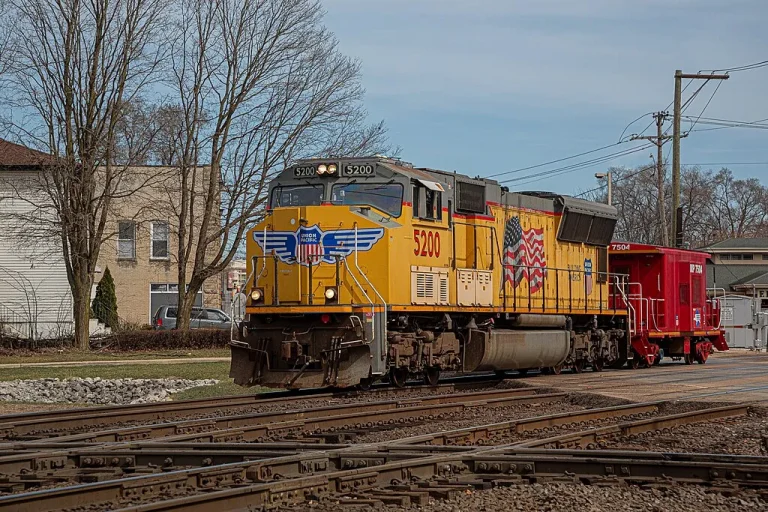
The power of railroad monopolies was one of most fraught political issues in America during the late 19th and early 20th centuries. Rampant political corruption, fraud, violations of workers’ rights, inefficiencies, and inflated prices were an endemic feature of monopolistic control over our national transportation system. So bad was the rail companies’ behavior that the first ever regulatory agency in US history was created specifically to monitor their abuses. At the center of many of these controversies was Union Pacific (UP), a company whose actions played an important role in shaping early antitrust policy. Flash forward to today, and that same company is back at it again.

Residents Built A $10,000 Bike Lane In Atlanta

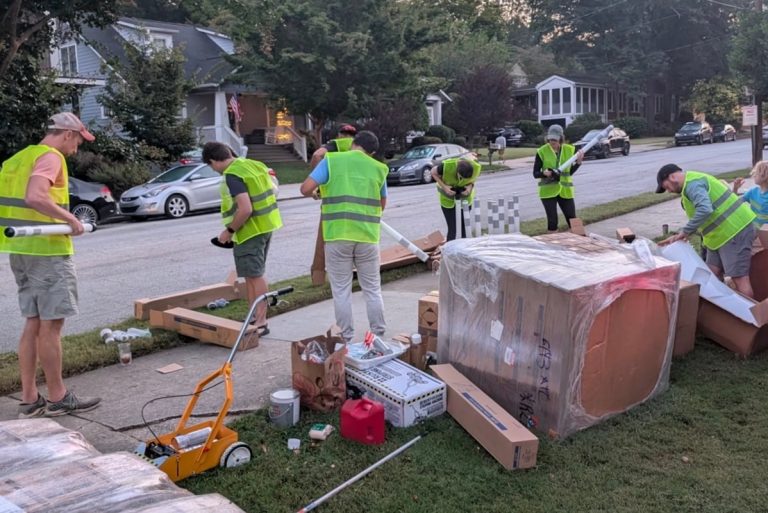
In 2020, city planning and transportation officials in Atlanta launched a tactical urbanism program to enable neighborhood groups to lead and fund alternative street design and safety changes through low-cost, temporary interventions. “These projects are often used to advance longer-term goals related to street safety and the design of public spaces,” the city explains in its tactical urbanism guide. “Tactical urbanism is temporary in nature, using tactical materials while demonstrating the potential of long-term change.” The 20th project under this initiative was just completed: turning street parking on one side of Virgina Avenue NE into a pop-up, protected, two-way bike lane, connecting a local high school and elementary school.

Make Trains Great Again For The Sake Of People And The Planet

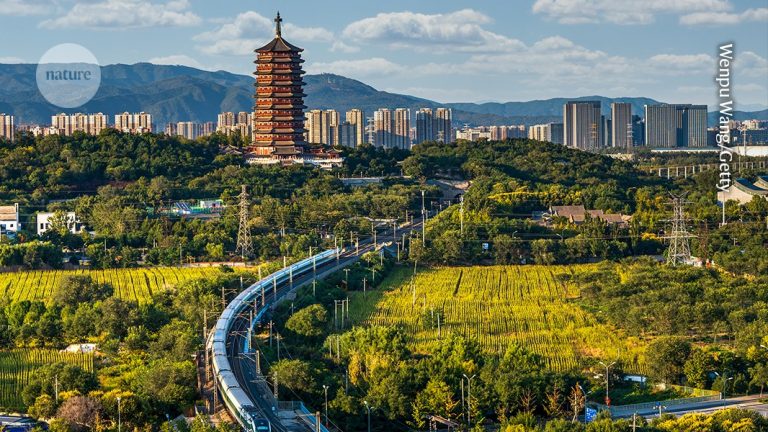
What if there were a technology that could help to reduce greenhouse-gas emissions, air pollution and environmental degradation, while improving health, reducing social inequality and boosting economic growth? There is, and this month it turns 200. The opening of the Stockton and Darlington Railway in northeast England on 27 September 1825 is generally considered to be the birth of the modern railway — an event that set in motion a revolution in human mobility and social organization. Initially, the railways enjoyed breakneck expansion, but since the mid-twentieth century, railway development in most countries has hit the buffers, and been overtaken by growth in road and air travel.

Public Transit ‘Death Spiral’: A Warning For Other Underfunded Cities

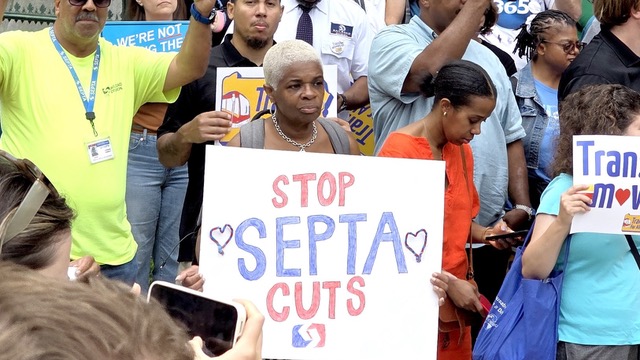
Philadelphia’s transit system plunged into crisis on August 24, when the Southeastern Pennsylvania Transportation Authority (SEPTA) slashed bus, trolley, subway, and Regional Rail service by 20%. SEPTA eliminated 32 bus routes, shortened 16 more, and reduced the frequency of other bus and train lines. The crisis occurred as a result of state lawmakers failing to close a USD 213 million budget gap. The funding standoff left the city’s 746,500 SEPTA riders stranded and pushed the nation’s sixth-largest transit agency toward what officials call a “death spiral” – which has deeply impacted the disproportionately Black and lower-income SEPTA ridership.

Chicagoans Call On Pritzker To Fund Transit, Other Public Services

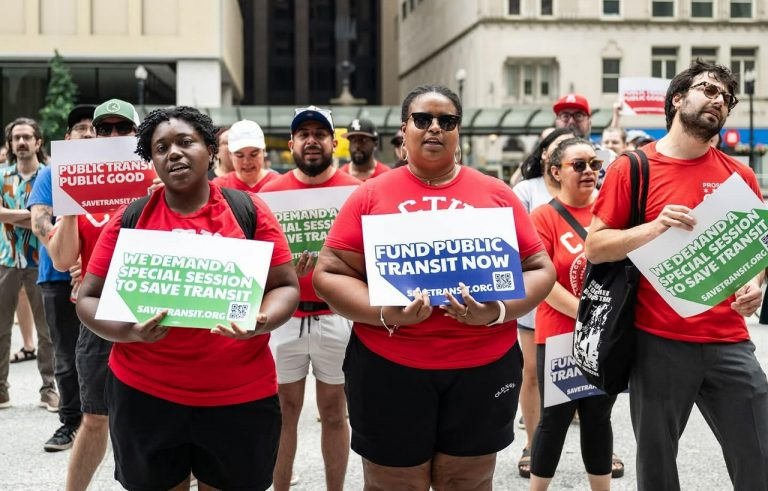
Chicago, IL – “We are here to demand that Governor JB Pritzker live up to his promise of standing up against the cuts and the cruelty of the Trump administration,” Chicago Teachers Union member Jesse Bostic said to the hundreds of people who rallied in Daley Plaza on Saturday afternoon, July 12. Better Streets Chicago organized the protest in response to the Illinois government’s failure to secure funding necessary to prevent 40% service cuts to public transportation. “This fight isn't just about buses and trains, it's about workers having dignity, it's about students being able to get to school. Let's build a system that shows up like we do,” said Jose Manuel Almanza, with Equicity Chicago.

Maglev Isn’t The Transit Future Our Cities Need

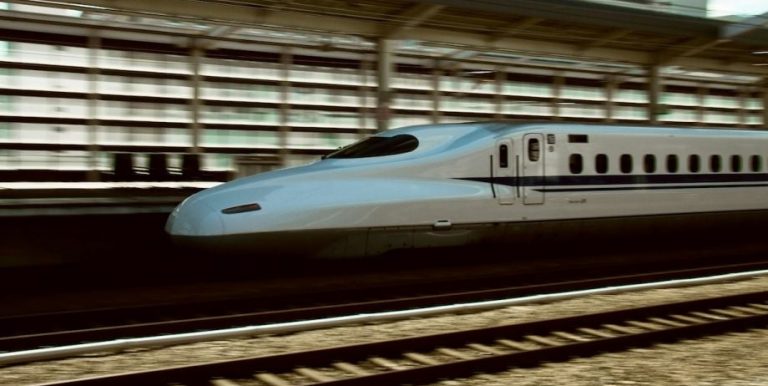
Like many Marylanders, I want a faster, more reliable way to get around. But speed without equity, sustainability, or connection to real community needs isn’t progress — it’s just a flashy detour. The proposed Superconducting Maglev (SCMaglev) train between Washington, D.C., and Baltimore is being marketed as a bold leap forward in transportation. In reality, it risks becoming another expensive infrastructure project that bypasses the people it claims to serve. For nearly a decade, I’ve followed the SCMaglev proposal through public meetings, community briefings and presentations to elected bodies. Its proponents have promised everything from reduced traffic congestion to job creation to futuristic innovation.

‘Fund The 15!’ Building Out A True National Railroad Network

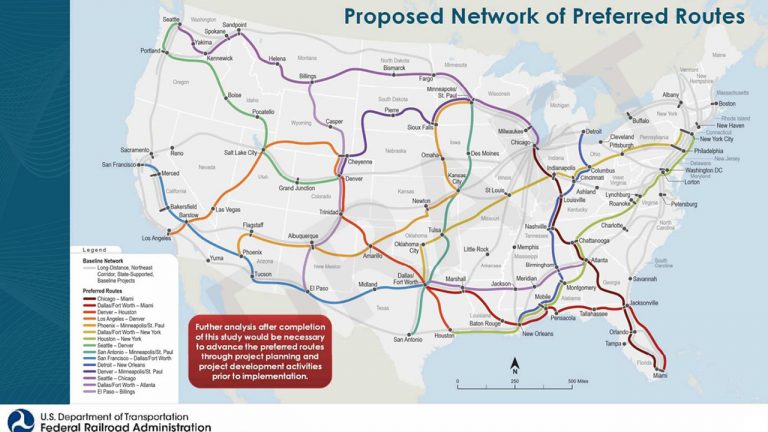
The American passenger rail renaissance is well-under way! Sold out trains, highly successful new services, and (justifiable) frustration about high ticket prices because of it: This is only the beginning. FY2024 was Amtrak’s most successful year in history with record ridership and record revenue. Americans, loudly and clearly, want more passenger rail travel options. Our limited existing services are already oversubscribed. Now is the time we need to work to meet the moment and bring passenger trains to more people in more places as part of a truly interconnected transportation network. They are truly engines of economic growth.

Truckers Petition Feds To Enforce HAZMAT Rules On Oil And Gas Waste

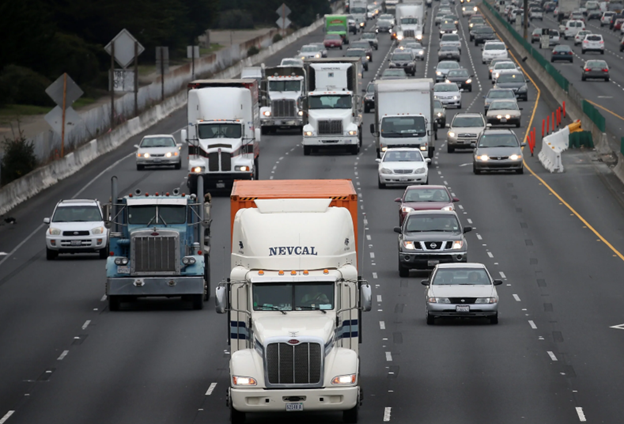
Washington, D.C.—Truckers and environmentalists have joined together to demand Department of Transportation (DOT) agencies to enforce existing hazardous material rules when it comes to hauling oilfield waste—including the water and sands used to frack and extract oil and gas. The organizations, led by Truckers Movement for Justice, claim hazardous payloads are often not tested, leaving drivers and communities vulnerable to exposure to hazardous materials. “These guys put their lives on the line every day, and they deserve the proper training and certifications to handle these hazardous loads,” says Billy Randel, leader of Truckers Movement for Justice and retired hazmat truck driver.

Public Transit Is In Crisis; Congress Can Fix It

Transit is essential. It’s how we get to health care appointments, parks, school, and work. Essential workers, small businesses, and under-served communities throughout the country depend on transit. Transit is a key component of economic opportunity, jobs, and a more environmentally sustainable society — and it’s a road to equity for disconnected communities. But from coast to coast — in big cities and in rural areas, in red and blue states — transit agencies are facing massive budget shortfalls and reducing service. And recent actions by the Trump administration — from Elon Musk taking a chainsaw to the federal government to Secretary of Transportation Sean Duffy threatening to withhold key federal funding — will worsen a bad situation.

Rail Users’ Network Conference: Good News, Bad News

The bad news was, of course, the fiscal cliff that is exacerbating funding crises for many transit providers, as we have been reporting. The good news is that some providers still expect to open new lines soon that have been planned and built over the years. This writer delivered the closing remarks, which will be summarized in a separate commentary at the end of this article. RUN is a not-for-profit advocacy organization whose purview includes Amtrak, other passenger-rail carriers in the United States and Canada, and rail transit in both countries. It holds two aftenoon-length conferences each year. Last year’s events focused on potential expansion of the Amtrak network through the FRA’s Long-Distance and Corridor ID studies, both of which now face uncertain futures due to political changes in Washington.

Infrastructure Failure In The United States Of America

Recent events in America’s air transport system suggest that the system is becoming more prone to dangerous failures. Those failures include a January 29 mid-air collision between an Army helicopter and a passenger jet Washington, D.C.’s Ronald Reagan National Airport; a harrowing near miss between a landing passenger aircraft and an unauthorized business jet crossing the runway; a plane taxiing to the gate in Denver when an engine caught fire leading to the evacuation of all passengers, all of whom survived; and a blackout of air traffic controllers’ screens for 60 to 90 seconds at Newark Liberty International Airport.

Strike Halts New Jersey Transit

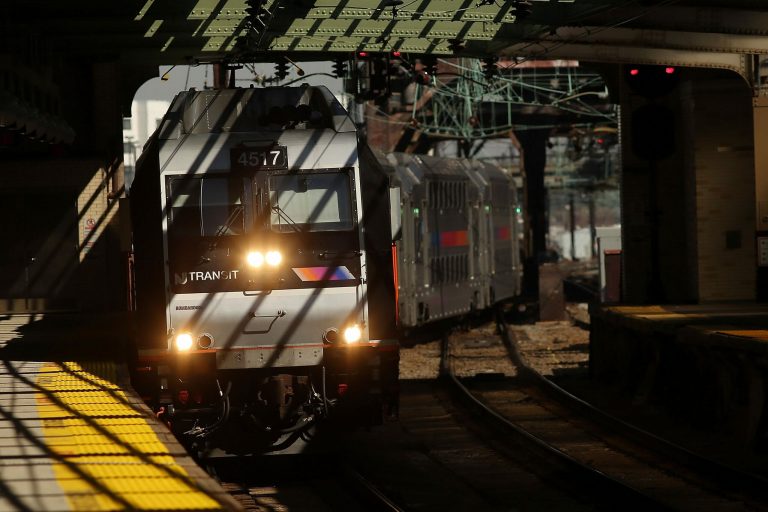
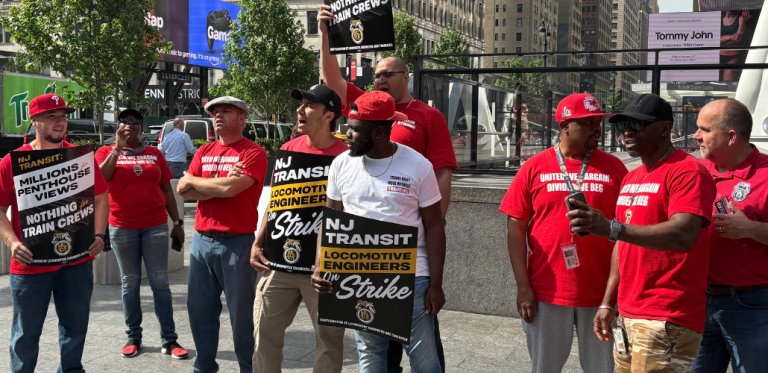
Four hundred and fifty train engineers at New Jersey Transit walked off the job overnight, after years of fruitless negotiations with their employer. These workers drive the state-run commuter trains that serve 350,000 daily riders in New Jersey, New York, and Pennsylvania. As of late Thursday night, NJT train service was completely shut down. The transit system is running additional buses as an alternative, but it’s extremely unlikely that they can make up the difference. “I take pride in what I do,” said one longtime engineer on the picket line, who didn’t want to give his name for fear of retaliation. “It gives me great joy taking my commuters to and from work every day.

Reclaiming Our Roads From Cars

Change, one might say, is afoot. We often think of streets as vehicular infrastructure, as “pipes for cars.” But streets, including the roadway surface, are social spaces — indeed public places. Stepping off the sidewalk onto the asphalt, we experience firsthand the diversity, dynamism, dangers and inequalities of the American city on the move. If we hope to achieve a more livable, equitable and sustainable city, we must reclaim the roadway for people. Historically, American streets were bustling, mixed-use spaces, but a century ago they were swept by the epidemic novelties of the automobile and influenza.

As US Threatens To Privatize Amtrak, UK Begins To Renationalize Rail

While the Trump Administration and billionaire advisor Elon Musk are talking about privatizing passenger rail here in the USA, in the UK, they’re going in the opposite direction. Next month, on May 25, the British will begin nationalizing passenger rail after decades of failed privatization, which began in 1994 (see write-up from the British House of Commons). Amtrak referenced the UK’s experiment with privatization in a March 2025 analysis explaining why privatization is a bad idea (see Amtrak FAQ here). On this side of the Atlantic, Amtrak had its best year ever for ridership and revenue. Some of its ridership growth is due to an increasing number of long-haul commuters, especially commuters from Philadelphia to New York City.

Santa Clara Valley Transit Workers Begin Strike

San Jose, CA – On Monday, March 10, around 1500 bus and light rail operators and mechanics for Santa Clara Valley Transportation Authority (VTA), walked off the job. The workers are represented by Amalgamated Transit Union (ATU) Local 265. This is the first strike at the VTA since its founding in 1973. Around 9 a.m. upwards of 70 ATU rank-and-file members could be seen picketing in front of the VTA headquarters as the strike began. Pickets were held at four other light rail and bus yards beginning at 4 a.m. VTA and ATU have been in contract negotiations since August.
assetto corsa mods

Urgent End Of Year Fundraising Campaign

Online donations are back! Keep independent media alive. 

Due to the attacks on our fiscal sponsor, we were unable to raise funds online for nearly two years.  As the bills pile up, your help is needed now to cover the monthly costs of operating Popular Resistance.

Urgent End Of Year Fundraising Campaign

Online donations are back! 

Keep independent media alive. 

Due to the attacks on our fiscal sponsor, we were unable to raise funds online for nearly two years.  As the bills pile up, your help is needed now to cover the monthly costs of operating Popular Resistance.

Sign Up To Our Daily Digest

Independent media outlets are being suppressed and dropped by corporations like Google, Facebook and Twitter. Sign up for our daily email digest before it’s too late so you don’t miss the latest movement news.