Skip to content

Women’s Rights

72 Hour Protest Against Abortion Waiting Period

At a podium on the capitol steps in Jefferson City, Liz Read-Katz kicked off what activists are calling a "women's filibuster" – a 72-hour protest in opposition to a bill that would triple the waiting period for abortions to three days and make Missouri one of only three states in the US with a 72-hour mandate. In a "story that could happen to anyone," the college-educated, stay-at-home mom told the crowd about "the most difficult choice I've ever had to make." Happily pregnant and five years into marriage, Read-Katz and her husband believed that "our dreams were coming true." "But everything changed at 16 weeks [into the pregnancy]." Read-Katz and her husband found out that their baby, a girl, had severe abnormalities – including Trisomy 18, a diagnosis that would have condemned their daughter to a short, painful life in a hospital, if she had lived at all. "I made a choice best for myself, my family and my baby. I chose to have an abortion," Read-Katz said.
New Short Film On Peace Mothers

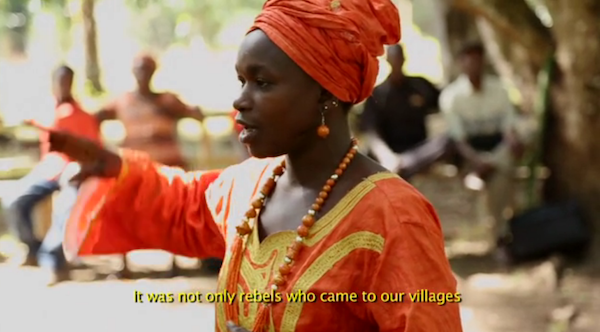
The women of Sierra Leone suffered uniquely during the 11-year civil war, yet they are now leading the way to peace in their country. Calling themselves “Peace Mothers” their courageous example is inspiring others around the world and illuminating a new power for peace to celebrate this Mothers’ Day. To help celebrate this power for peace, Catalyst for Peace is thrilled to release a new 5-minute short film telling their story. In fact, our Mother’s Day celebration in America has its roots in peacemaking. After the horrors of our own Civil War, Julia Warde Howe (famous for writing The Battle Hymn of the Republic) called for a national Mothers’ Day of Peace in 1870. When you read her stirring Mother’s Day Proclamation and watch the Fambul Tok Peace Mothers proclaim their optimism for their families and their country, you will see how they speak to each other across generations and across borders. As Fambul Tok‘s program of community reconciliation was growing across the country, village women said that in addition to the truth-telling and reconciliation bonfire ceremonies, they also wanted some focused time to come together as women. Simply to come together. And the rest, they said, would take care of itself.

Women’s Nepalese Sewing Collective Is Building A Refuge From Forced Marriage

Nasreen is a 23 year old business woman who has built a fair trade sewing collective based out of Kathmandu, Nepal, called Local Women’s Handicrafts, employing women from broken homes, abusive situations, extreme poverty and women with special needs. She is currently refusing her forced marriage. The marriage would most certainly put an end to Local Women’s Handicrafts and the jobs of the 20-plus women of this collective. By refusing this marriage Nasreen is now in danger and has been physically assaulted. Nasreen was born in the rural Bihar region in a village called Rajura. Bihar is known as the most corrupt state in India. At an early age, Nasreen felt the pressure of society and her family to have an arranged marriage. 57% of women in Nepal are married before the age of 18 (UNICEF). She watched her older sister enter a forced marriage and knew she would be next. Nasreen has since made it her life’s work to fight for women’s rights in Nepal. She explains, “People do not view education as important. Dowry is important. With girls and marriage it is like selling and buying. The more money the better. They are a commodity.” Women are treated as possessions and have no rights. At the age of 11 years old Nasreen met a westerner whom she befriended and he started teaching her English. Over the next 12 years he introduced her to computers and the internet, along with mathematics, philosophy, religion and the arts.

Indigenous Women And Two-Spirited People: Our Work Is Decolonization!

Indigenous women and two-spirited* people are leading a resurgence movement in iyiniwi-ministik, the People’s Island.* They draw on their traditional roles as protectors of the land and water to inform their work in our communities, and root themselves in their specific socio-political orders to counter colonialism and to revitalize language and culture. Rather than being defined as a struggle against patriarchal gender roles and the division of labour, Indigenous women and two-spirited people’s work combats the imposition of colonial barriers. The goal is not to attain gender equality, but rather to restore Indigenous nationhood, which includes gender equality and respect for gender fluidity. As I write this I can hear Khelsilem Rivers (Skwxwú7mesh-Kwakwaka‘wakw), a community organizer from Vancouver, pointing out that not all Indigenous peoples have the same traditions, and that to avoid perpetuating Pan-Indian stereotypes, we need to have honest discussions about the diversity of our traditions. This is an important point indeed, as not all Indigenous nations have the same traditions with respect to the fluidity of gender roles. Romanticizing ourselves as a collective unfortunately plays into “noble savage” stereotypes and does damage in the long run. With so many Indigenous people disconnected from their specific traditions, even so-called positive stereotypes are a form of continuing erasure.

This Mother’s Day, Remember Those Separated By Incarceration

The majority of women in prison are domestic violence survivors. Most women in prison are also mothers. This Mother's Day, Monica Simpson of SisterSong discusses the case of Marissa Alexander in the context of reproductive justice and the criminalization of survivors and mothers of color. As Mother's Day sentiments begin flooding our social media timelines, with each poster opining that theirs is the greatest mother, we tend to forget how painful this day can be for some: mothers and children who have been separated for various heart-wrenching reasons, including incarceration. Oftentimes, these are mothers who found themselves in relationships where domestic violence proliferated, and - with few options - were forced to make decisions and sacrifices in the face of circumstances many will never know. According to the Correctional Association of New York, the overwhelming majority of women in prison are domestic violence survivors. It is no wonder these mothers frequently go unconsidered, since their collective voice is rarely amplified. Their situations rarely meet the mainstream public eye unless they are brought into another conversation, usually for the purpose of comparison, and often in negligible ways.

Good News For Reproductive Justice And Women’s Equality

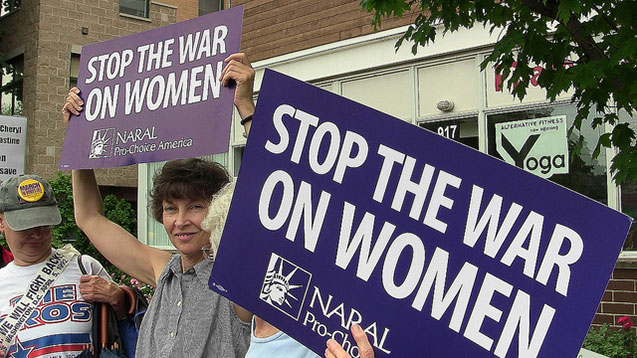
For 41 years, since the Supreme Court issued its 1973 opinion in Roe v. Wade, opponents of reproductive justice and women's equality have been working to roll back abortion access and limit anything even remotely connected to sexual liberation. They've scored a slew of victories. But the tide may have finally begun to turn. To wit, during the first quarter of 2014, legislators in 17 states introduced 64 measures to expand reproductive options, the largest such number in 25 years. Donna Crane, vice president for Policy at NARAL Pro-Choice America, attributes this to growing recognition of what is at stake if the Tea Party wing of the Republican Party garners enough support to impose its domestic agenda. "We have been working proactively since the late 1990s, but there is a different sense of opportunity out there today," she told Truthout. "The other side has overreached and brought on a backlash. People who were never before invested in reproductive health issues are fed up. When Virginia tried to pass a forced ultrasound law, it got public and press attention. So did many of the statements made by Republican lawmakers. Comments about 'legitimate rape,' the boys-will-be-boys mindset that downplayed the significance of sexual assault, were illuminating. We now know that this is how many members of Congress think and legislate. This is nothing new, but the public has come to realize just how crazy and out of touch these lawmakers are."

Where Are All The Feminists?

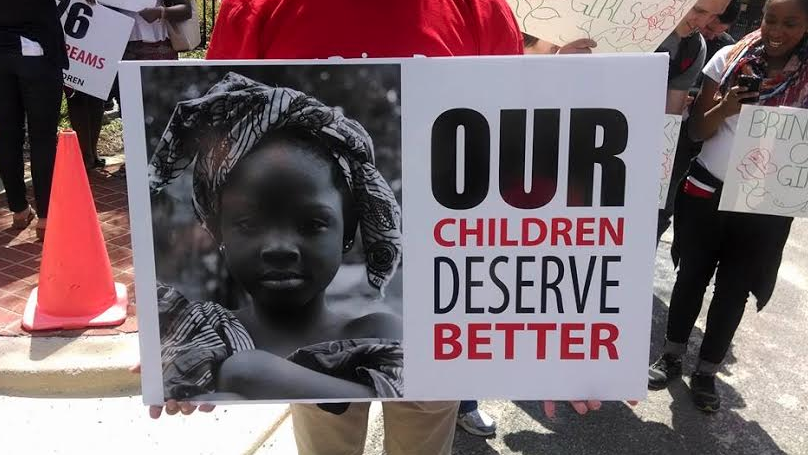
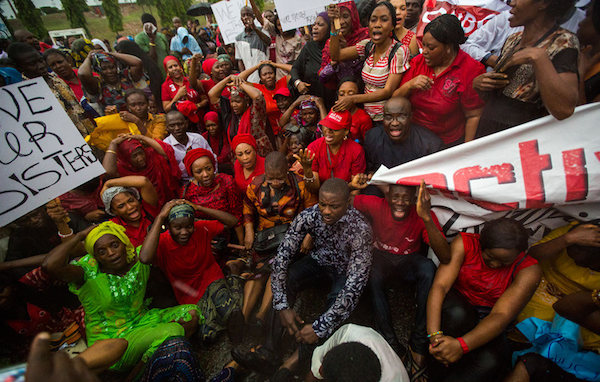
After attending the rally in front of the Nigerian Embassy today in support of the #BringBackOurGirls organized by Ms. Omolola Adele Oso, I was comforted by several familiar faces and friends who came out to support and vent their frustration and rage. However, my rage only grew when it was apparent that no official from the Embassy was going to address the hundreds of people in attendance. It grew when we were informed that the logistics of the “protest” required that the use of the space outside the Embassy in what should be a public street had to be rented. It grew when Ms. Oso told me that her life had been threatened and that she can never return home. It grew further when she then informed me that she wasn’t afraid because she can call the FBI or CIA to protect her. Finally, my rage boiled over when I read the otherwise fine Washington Post article that numbered the attendees at only 60. I personally passed that many people who were leaving the rally as I walked the 4 blocks after finding a distant parking spot. Then upon reflection I asked myself, “Where are all the Feminists?”

Ottowa First Nations’ National Day Of Resistance May 14th

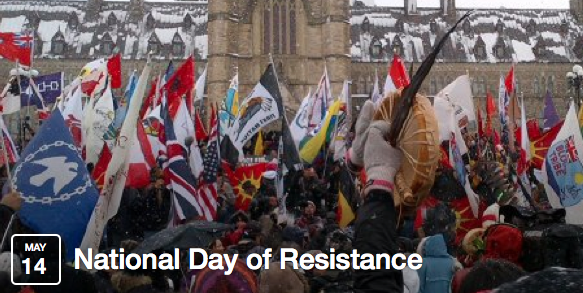
The federal conservative government has continued it's agenda to eliminate First Nations' rights at all levels. Bill C-33, the FNCFNEA gives the Minister of Indian Affairs full power and authority over First Nation education from pre-K to post-secondary. French and English will be mandatory languages at First Nation schools and First Nation language and culture must be approved by the minister. Please spend a day with First Nation students to develop one-page messages, letters, signs and posters with reasons why the Minister of Indian Affairs should not be in control of First Nation education- students should sign and date their messages identifying their Nation and bring those messages to Parliament Hill. We are also asking for First Nation citizens to boycott schools for the day and take a group picture in front of your schools with a slogan and share it on Facebook. (eg. Our school, our kids, our education) Missing and Murdered Indigenous Women is a national disgrace and we want to hear from anyone who has lost a female member in their family. Tell us why women are an important part of Indigenous culture and why you think Canada should open a public inquiry. Small towns are filled with perverse predators who seek out vulnerable Indigenous women of all ages and justice is rarely served. We will no longer allow Canada to turn a blind eye to a national crime against our mothers, daughters, aunties, grandmas and cousins.

Canadian Police: Over 1,000 Cases Missing/Murdered Indigenous Women

An RCMP project aimed at tallying the number of missing and murdered Indigenous women has uncovered “over 1,000” cases, APTN National News has learned. The RCMP was able to determine over a 1,000 cases of missing and murdered Indigenous women with the help other police forces across the country, according to a person with knowledge of the project, who asked not to be named because they’re not the official spokesperson on the project. As part of this project, the RCMP reached out to over 200 police forces across the country to get a peek in their files to compile their statistics. APTN was told the project was complete and the report’s release is being held up by the federal ministry of public safety Canada and was supposed to come out March 31. However, RCMP Aboriginal policing Supt. Tyler Bates denied a report was done when contacted on his cellphone Wednesday afternoon but not the tally. “There is no report as of yet that has been disseminated,” said Bates. “There will be a publicly available document down the road.” When asked about the tally of over 1,000 Bates said he couldn’t confirm or deny any number.

Women Rally For More Than 200 Kidnapped Girls

Five hundred women marched in Abuja yesterday, more than two weeks after female students were kidnapped from their boarding school. More rallies are planned through Monday. At midnight on April 15, 234 girls were kidnapped from their dorm room in Chibok, in northeastern Nigeria, by Islamic militant group Boko Haram. Most have been missing ever since. The separatist terrorism group’s name means “Western education is forbidden.” Fewer than 50 girls managed to escape their kidnappers, one of whom told the New Yorker the girls at first weren’t far from their homes. But now they are believed to be deep in the forest, on the border with Cameroon, and the Nigerian military is struggling to locate them. President Goodluck Jonathan has not addressed the kidnapping directly, and Nigerians are growing frustrated. “There are lots of stories, and we don’t know whom to believe,” one woman told the BBC. She was hoping to hear Jonathan speak out yesterday. He did not. Yesterday 500 people gathered in Abuja, the capital, to march to the National Assembly and deliver written demands for action to senior leaders.

The People Are With Us

It is a persistent belief among many in the political and media establishments that the United States is a “center-right nation” which finds progressives to be far too liberal for mainstream positions of power. If you look purely at electoral outcomes, those who assert this appear to have a fairly strong point. The last several decades of federal politics have been dominated by center-right policies and truly left wing politicians have been largely marginalized (ex. Bernie Sanders). Even Clinton and Obama—the last two Democratic presidents who, theoretically, should be leftists—are corporate-friendly moderates who have triangulated during negotiations with Republicans to pass center-right policy compromises (ex. Obama’s Heritage Foundation inspired ACAor the Clinton Defense of Marriage Act compromise). While electoral results support the idea of a center-right USA, looking beyond electoral politics—which involve a mixture of policy choices, party politics, fundraising, and propaganda—and focusing purely upon raw policy preferences, leaves us with an entirely different picture -- the people are progressive and leaning left on almost all critical issues.

In Bolivia, Being Journalist And Organizer Go Together

Susana Pacara, one of the founders of Radio Lachiwana in Cochabamba, Bolivia, believes that communication work is a key part of the defense of territory. She doesn’t mean this in an abstract way. Over the years, Pacara has fought the privatization of water, the construction of mega highways and the attacks on the rights of coca growers. She’s braved tear gas and repression with such bravery that she’s earned the title “Mamá Susana.”And now she’s fulfilled her dream of transmitting these stories of resistance and defense at the national level. In Quechua, “lachiwana” refers to a little bee that makes its hive in the most secret of places. The word could almost just as easily describe Pacara herself. At 49 years old, she has a small build, which she says helps her get to all sorts of places, and a curious expression.

Suffragettes No More – The Long Struggle For Women’s Equality

In many ways, life for American women in the 19th century was similar to the lives of women today under the Taliban. Women were deprived of basic rights, including access to education. Women who owned property lost control of that property when they married. Husbands had the legal right to "correct" their wives with beatings. Women had no right to money they had earned and no rights to make decisions concerning their own children. A proper woman had to be "strait-laced," literally. Women's clothing restricted their movement. Corsets made breathing and digestion difficult, and skirts had to be so long as to fully cover their legs. As a result, women's skirts literally swept the streets. To understand the context in which the women's suffrage movement existed, think about the American 1960s. Both were times of ferment and experimentation, in which authority was challenged; norms were violated and people struggled for equality, justice, true citizenship and shared democratic governance. In both eras, race and civil rights were major struggles. Women's status, rights and autonomy were part of that turbulent period, but so were other liberation and civil rights movements.

Wall of Women Opposes Oil Pipeline

"It breaks your soul," actor Tantoo Cardinal said, deep in a conversation about growing up in Alberta's boreal forest. Cardinal had flown into Vancouver from Toronto to join the "Wall of Women" opposing Kinder Morgan's oil pipeline expansion. The group included Squamish First Nation leader Mandy Nahanee, Lubicon Cree First Nation leader Melina Laboucan-Massimo, and Vancouver City Councillor Andrea Reimer. "It was a pain in my being for many years. I felt hopeless and desolate because nobody believed me," she said, of the environmental destruction she warned was happening in Alberta's tar sands. "Nobody wanted to hear about it. People were making money and living the life. I was a wild-eyed actress who had no sense of reality. Going back, it was all poison, I couldn’t see myself living there. It was filled with all these people from all around the world, their eyes were on fire with all the money they were making."

Reclaiming Women’s History Month

Just in case the message wasn’t clear, Medea Benjamin, the co-founder of Code Pink, was not only jailed overnight, but her shoulder was dislocated and her arm broken before being deported to Turkey without medical care. Medea managed to keep the world aware of her mistreatment through Twitter, which did allow Code Pink’s international support network to swing into action. Even though they were badgered relentlessly, U.S. embassy officials in Cairo did not find time to check in on her. The inability of the delegation to reach the women who requested their support highlights the isolation and extreme hardships that the women and families in Gaza are facing. International Women’s Day may have been celebrated for more than 100 years, but the world has a long way to go to provide women political, economic and social equality. Kudos to all the women and girls and their supporters who, by participating in theradical spirit of the original intention of International Women’s Day, are working towards a healthier future for all.
assetto corsa mods

Urgent End Of Year Fundraising Campaign

Online donations are back! Keep independent media alive. 

Due to the attacks on our fiscal sponsor, we were unable to raise funds online for nearly two years.  As the bills pile up, your help is needed now to cover the monthly costs of operating Popular Resistance.

Urgent End Of Year Fundraising Campaign

Online donations are back! 

Keep independent media alive. 

Due to the attacks on our fiscal sponsor, we were unable to raise funds online for nearly two years.  As the bills pile up, your help is needed now to cover the monthly costs of operating Popular Resistance.

Sign Up To Our Daily Digest

Independent media outlets are being suppressed and dropped by corporations like Google, Facebook and Twitter. Sign up for our daily email digest before it’s too late so you don’t miss the latest movement news.