Skip to content

Bolivarian Revolution

The Spirit Of Chavismo: Why Trump Must Not Invade Venezuela

In his excellent and provocative article, Roger D. Harris posed the following question in a recent edition of LA Progressive: Will the U.S. Attack Venezuela? His essay served as a warning, a fiery herald no eye could ignore. I do not rise to echo that caution across the void; I come to bear witness, a sentinel tracing its contours through time. I write from the memory of a land that invited me to bring a Freirean-style pedagogy to various sectors of the country, a los bosques, campos, tierras de cultivo y barrios de Venezuela.

The New US-Russia Clash In Latin America

Pushback from Latin American leaders are putting a wrench in the works of Donald Trump’s imperial ambitions. The Summit of the Americas– the U.S.-backed conference of regional leaders– has had to be cancelled (or, officially, postponed until 2026) due to threats of a mass boycott of the event. Leading this revolt are Gustavo Petro of Colombia and Claudia Sheinbaum of Mexico, who both declared they would skip the event in protest of the U.S. treatment of Venezuela, Cuba, and Nicaragua. With the summit promising to be a public relations disaster, the U.S. ordered it cancelled.

Venezuela’s Militias And The Civil-Military Union

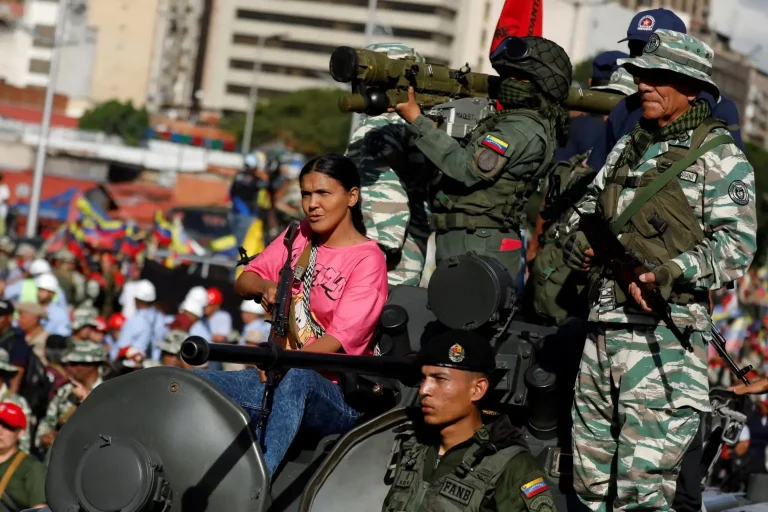
The ideological basis of our militias is rooted in anti-colonial struggle. Resistance to Spanish conquest in the 16th century was led by Aboriginal peoples. The form of social organisation of our indigenous peoples was not a pyramid-type hierarchical order with a single chief – we had many chiefs – so Spanish colonisers found they could not dismantle the entire social, political and military structures of our society by killing the head of a pyramid. Our chiefs organised resistance, including the great indigenous leaders Great Cacique Guaicaipuro and Great Cacia Uriquia, forming liberation movements which continued until the independence era.

Venezuela And The Heart Of The Struggle For A New World

“We will defend our independence with all the means at our disposal and we will raise our protest before the Spanish nation and its intelligent people, who we believe do not dispute the legality of our demands,” said Abd el-Krim, a Riffian revolutionary leader who resisted French and Spanish colonial occupation in the early 20th century. These words, which distinguish between the power that oppresses and the people who can understand and resist, resonate today more strongly than ever from Venezuela. Because Venezuela is not only a country beset by imperialism: it is an ethical, political, and cultural trench in the midst of a world collapsing amid wars, genocides, recycled fascisms, and markets that devour peoples.

US Increases Bounty On President Nicolás Maduro To $50 Million

The Venezuelan government has said that the increase in the reward for the arrest of President Nicolás Maduro by US Attorney General Pam Bondi is “ridiculous” and that it is part of a “propaganda operation” and a “desperate distraction” from the internal problems facing the United States. Bondi published a video on August 7, announcing that the US Department of Justice and Department of State are offering USD 50 million for “information leading to the arrest of Nicolás Maduro”. This is not the first time the US government has tried to pressure the Bolivarian government in this way. In 2020, the US Department of Justice offered USD 15 million for Maduro’s arrest. The accusations were based on alleged acts of “narco-terrorism” by the Venezuelan government.

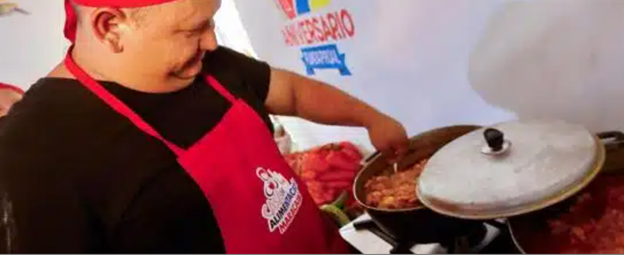
Venezuela On The Verge Of Eradicating Hunger

Since the imposition of illegal coercive measures (euphemistically referred to as sanctions) by the US and its allies on Venezuela in 2014, and after 11 years with a burden of 1,041 Unilateral Coercive Measures (MCU) on the nation, which places it between the fifth and sixth most sanctioned country in the world depending on the source, the country has once again reduced the hunger that appeared amid the economic, financial, and commercial blockade perpetrated against the national government as part of the war to stifle the economy, prevent the supply of essential goods, and negatively impact food security and sovereignty, with the goal of imposing the failed regime change.

What July 5th Taught Me That July 4th Never Did

Growing up in Venezuela and now living in the United States, I’ve always felt caught between two independence days: July 4th and July 5th. Two celebrations. Two flags. Two very different ideas of what it means to be free. In the U.S., the Fourth of July comes with fireworks, parades, and an almost unquestioned belief in the righteousness of the revolution it commemorates. But in Venezuela, July 5th conjures up different thoughts. It is not just a break from colonial rule but the beginning of a long, unfinished struggle to define freedom on our own terms. It’s not something we inherited. It’s something we’re still fighting for.

Tenacious Bolivarian Resistance Against Obstinate US Aggression

On the eve of Venezuela’s presidential election on 29th July 2024, Guardian correspondents, Tiago Rogero (based in Rio de Janeiro) and Sam Jones (based in Madrid) predicted the vote “could end 25 years of socialist rule.” It did not. The following, 30 July, another group of Guardian correspondents gave prominent coverage to far-right wing Venezuelan politician Maria Corina Machado, quoting her claim that “Maduro’s exit was inevitable.” Yet, Nicolas Maduro was inaugurated as the re-elected president for the 2025-2031 term on 10 January 2025. The July 2024 presidential election was followed by the election for National Assembly deputies and all 24 governorships of Venezuela’s federal structure on 25 May 2025.

Ballots And Bias: How The Press Framed Venezuela’s Elections.

The pro-government alliance achieved a sweeping victory in Venezuela’s May 25 elections, while a fractured opposition suffered losses. Western media distorted the results – spinning low turnout claims, ignoring the role of illegal US sanctions, and offering selective sympathy to elite opposition figures. At stake for the 54 contesting Venezuelan political parties were seats for 285 National Assembly deputies, 24 state governors, and 260 regional legislators. The pro-government coalition won all but one of the governorships, taking three of the four states previously held by the opposition. The loss of the state of Barinas was particularly symbolic for this was the birthplace of former President Hugo Chávez; and especially so, because the winner was Adán Chávez, the late president’s older brother.

ALBA-TCP Congratulates Venezuela On Successful Elections

On Monday, the Bolivarian Alliance for the Peoples of Our America – Peoples’ Trade Treaty (ALBA-TCP) congratulated Venezuela for successfully holding regional and parliamentary elections. Earlier, on Sunday night, the National Electoral Council (CNE) announced that the ruling United Socialist Party of Venezuela (PSUV) had won 23 out of 24 governorships. The Bolivarian Revolution also secured 40 out of 50 seats in the National Assembly. Among the new legislators will be current ALBA Secretary Jorge Arreaza. “The ALBA member states applaud and congratulate the people and government of the sister Bolivarian Republic of Venezuela for the resounding success of the legislative and regional elections held this Sunday, May 25, 2025.

The US Once Again Fails To Impose Its Will On The Venezuelan People

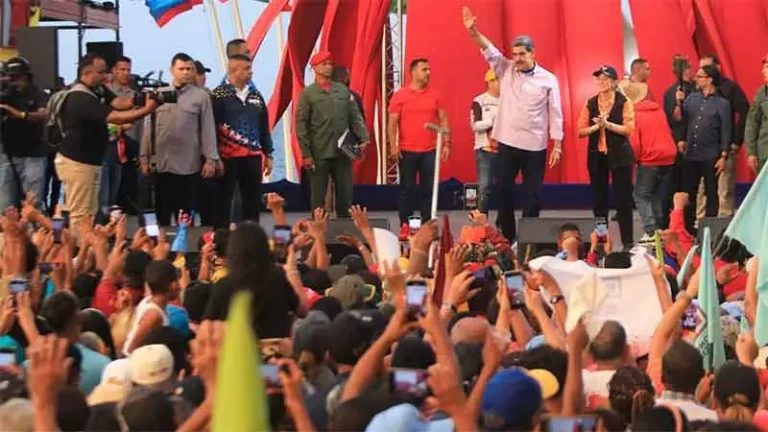
On Friday, January 10, in Caracas, Nicolás Maduro was sworn in as the President of the Bolivarian Republic of Venezuela for a third term (2025-2031). Hours later, about 587 miles away in Santo Domingo, Dominican Republic, the failed candidate of the far-right opposition, Edmundo González, a self-proclaimed commander-in-chief, issued a message on social media ordering Venezuela’s military high command to “disregard the illegal orders given by those who have seized power.” Just last Thursday, in the Dominican Republic, flanked by a group of right-wing former Latin American presidents, González announced his intention to take possession of the presidency in Caracas.

Venezuela: An Anti-Fascist Presidential Inauguration

More than 2,000 social leaders, communicators and national and international political activists gathered today at the La Carlota Center, Caracas, to participate in the Great World Anti-Fascist Festival and, from that front, to support the inauguration of President Nicolás Maduro Moros. Delegations from more than 100 countries will travel to Caracas this Friday to accompany the ceremony, which confirms that Venezuela’s institutionality is recognized and respected by the peoples of the world, despite the destabilization attempts of the right wing and its constant calls to isolate the country from the rest of the world.

Venezuela: Convince, Confuse, Co-Opt – ‘Three C’S’ Of War Propaganda

If we wanted to summarize the mechanisms of “cognitive warfare”, which aims to condition the brain through the manipulation of emotions, we could speak of the “three C’s”: Convince, Confuse, Coopt, consolidate fake news in the common perception. From the “witch hunts” against rebellious women in past centuries, to the construction of the “internal enemy” and the obsession against communism in the various modulations produced by the last century, imperialism has refined its propagandistic techniques, relying on the cult of the ephemeral and the “end of history”, multiplied by social networks in the current century.

Venezuelans Defend Their Revolution Against Another US Coup Attempt

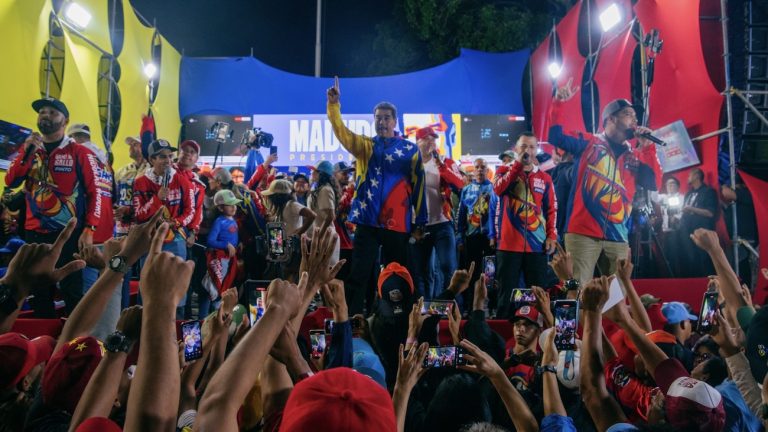
On July 28, Venezuelans re-elected President Nicolas Maduro for another term despite US interference in their electoral process and subsequent attempts to delegitimize the process. The United States government has refused to recognize President Maduro, instead claiming without evidence that an opposition candidate, Edmundo Gonzalez, was the winner, a tactic reminiscent of the Juan Guaido charade. Clearing the FOG speaks with Venezuelan political analyst Maria Paez Victor about the Bolivarian Revolution, the most recent US-backed coup attempt, media attacks, and how Venezuelans have prepared to protect their deep democracy and social gains.

The Venezuelan People Stay With The Bolivarian Revolution

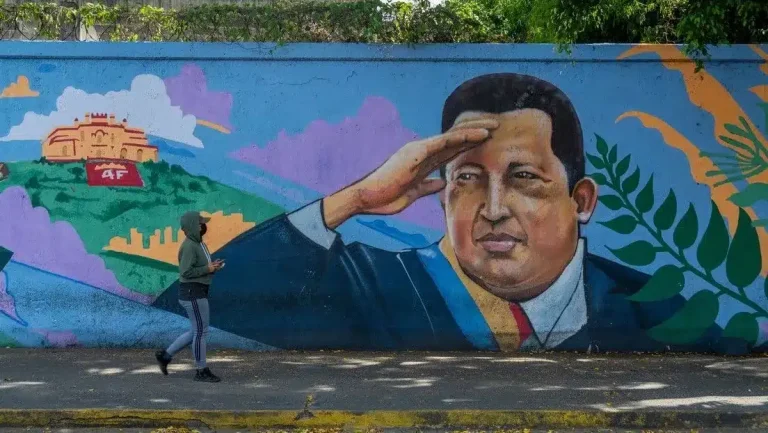
On July 28, the 70th birthday of Hugo Chávez (1954-2013), Nicolás Maduro Moros won the Venezuelan presidential election, the fifth since the Bolivarian Constitution was ratified in 1999. In January 2025, Maduro will start his third six-year term as president. He took over the reins of the Bolivarian Revolution after the death of Chávez from pelvic cancer in 2013. Since the death of Chávez, Maduro has faced several challenges: to build his own legitimacy as president in the place of a charismatic man who came to define the Bolivarian Revolution; to tackle the collapse of oil prices in mid-2014, which negatively impacted Venezuela’s state revenues (over 90% of which was from oil exports); and to manage a response to the unilateral, illegal sanctions deepened on Venezuela by the United States as oil prices declined.
assetto corsa mods

Urgent End Of Year Fundraising Campaign

Online donations are back! Keep independent media alive. 

Due to the attacks on our fiscal sponsor, we were unable to raise funds online for nearly two years.  As the bills pile up, your help is needed now to cover the monthly costs of operating Popular Resistance.

Urgent End Of Year Fundraising Campaign

Online donations are back! 

Keep independent media alive. 

Due to the attacks on our fiscal sponsor, we were unable to raise funds online for nearly two years.  As the bills pile up, your help is needed now to cover the monthly costs of operating Popular Resistance.

Sign Up To Our Daily Digest

Independent media outlets are being suppressed and dropped by corporations like Google, Facebook and Twitter. Sign up for our daily email digest before it’s too late so you don’t miss the latest movement news.