Skip to content

Decolonization

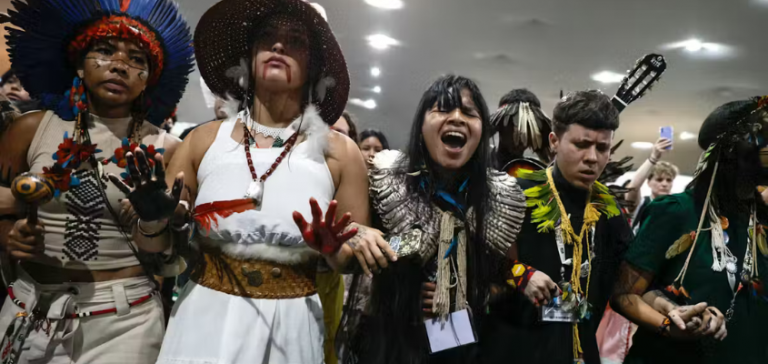
Theme From The Bottom: Post COP30 Reflections

The first Conference of the Parties (COP) summit I attended was back in 2015, COP 21, which took place in Paris, France. At this point in my climate and environmental justice journey I was wide-eyed and perhaps even a bit naive as I believed that nation states, international bodies like the United Nations, and so-called Civil Society Organizations contained the requisite mettle and principles to take on the crisis of climate change at scale while and the root causes that maintain and exacerbate it - white “supremacy” ideology, patriarchy, and colonization - contemporaneously.

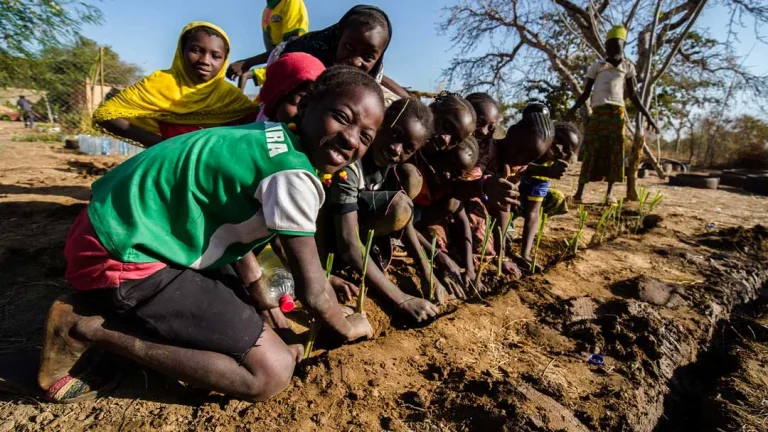
Agroecology Is A Form Of Resistance And Decolonization

In Burkina Faso, agroecology flourishes as an act of resistance. In a country where more than 80% of the active population makes their living off agriculture, peasant movements and social organizations have defended the production of healthy food and food self-sufficiency as a path to liberation from the wounds left by French neocolonialism. Leading this effort is the Yelemani Association, founded in 2009 by Blandine Sankara, sister of revolutionary leader and former president Thomas Sankara, who governed the country from 1983 to 1987, when he was assassinated.

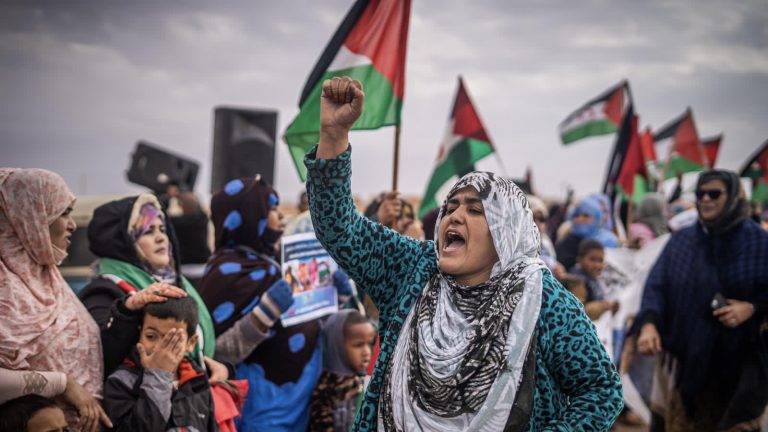
Western Sahara’s Decolonization At Crossroads After 50 Years

On November 6, the Sahrawis marked 50 years of occupation by the Moroccan kingdom, and continued resistance by activists, risking street violence, arrests, custodial torture, forced disappearances, and rapes by the occupation’s security forces. The anniversary came at an ominous time for the cause of Sahrawi liberation. The US, UK, and Europe, especially France, are bringing ever more pressure on the international community to legitimize the illegal occupation of Western Sahara by Morocco, which in turn is handing over the occupied resources for Western countries to loot.

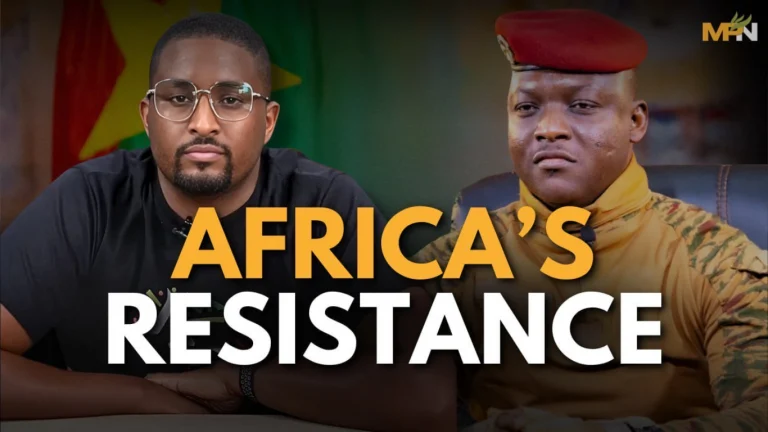
US Censorship, Pan-Africanism And The Rise Of Africa’s Resistance

On this episode of the MintCast, hosts Mnar Adley and Alan MacLeod speak with Ahmed Kaballo, the man behind the viral media outlet that the U.S. government has been trying to silence. In September, U.S. Secretary of State Antony Blinken gave a speech smearing media platform African Stream as secretly funded and controlled by Vladimir Putin himself. As Blinken said: According to the outlet’s website, ‘African Stream is’ – and I quote ‘a pan-African digital media organization based exclusively on social media platforms, focused on giving a voice to all Africans, both at home and abroad.’ In reality, the only voice it gives is to Kremlin propagandists.” Blinken provided no evidence to support these assertions. Yet, within hours, Silicon Valley reacted and crushed Kaballo’s organization. African Stream’s YouTube, TikTok, Instagram, and Facebook pages were permanently deleted, while its Twitter account was demonetized.

US’ ‘Pivot To The Pacific’ Provides An ‘Opportunity’ To Fight Empire

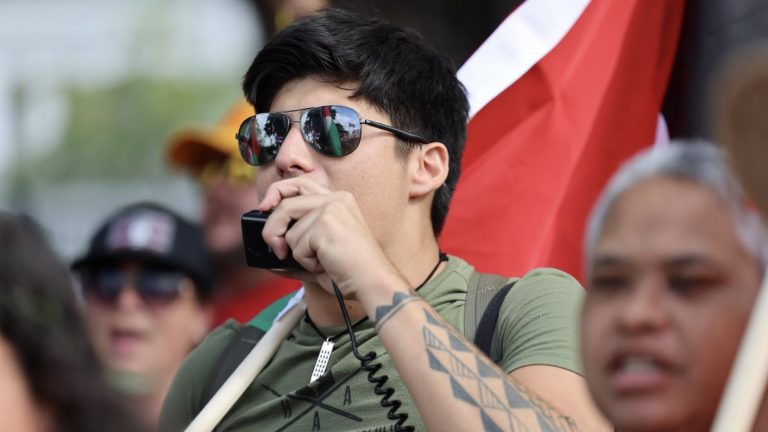
“Our nations are caught in the middle,” of the massive US escalation in aggression towards China, says Kawenaʻulaokalā Kapahua. Kapahua is the Political Education Chair for Hui Aloha ʻĀina, a Hawaiian independence party originally established in 1893 to resist the US occupation of Hawai’i. To him, the US drive towards war can in fact present “a major opportunity to start building, not just with ourselves in Hawai’i, but also with our Pacific comrades, neighbors, and cousins, to start fighting back.” “Our ocean is the frontline in this Cold War between China and the United States,” Kapahua articulates.

Niger’s Revolution Against French Neocolonialism Enters Third Year

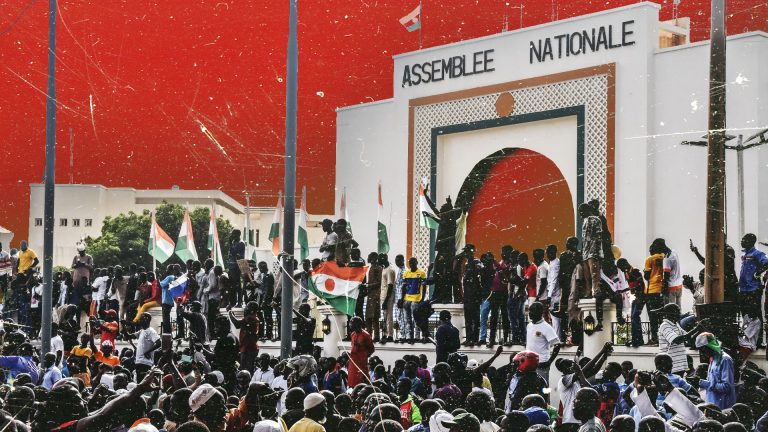
Under siege by France’s monetary strangulation and a war against their state by armed groups, Nigeriens marked the second anniversary of the July 26 revolution against French neocolonialism. The wave of mass protests against French military deployment in its former colonies had already washed away the regimes it had propped up in Mali and Burkina Faso when Niger’s then-president, Mohamad Bazoum, was also toppled in a coup on this date in 2023. With the support of pan-Africanists, the left, and the mass movement protesting against French domination, the coup leader, General Abdourahamane Tchiani, established the National Council for the Safeguard of the Homeland (CNSP) as a military government.

The Empire Never Died

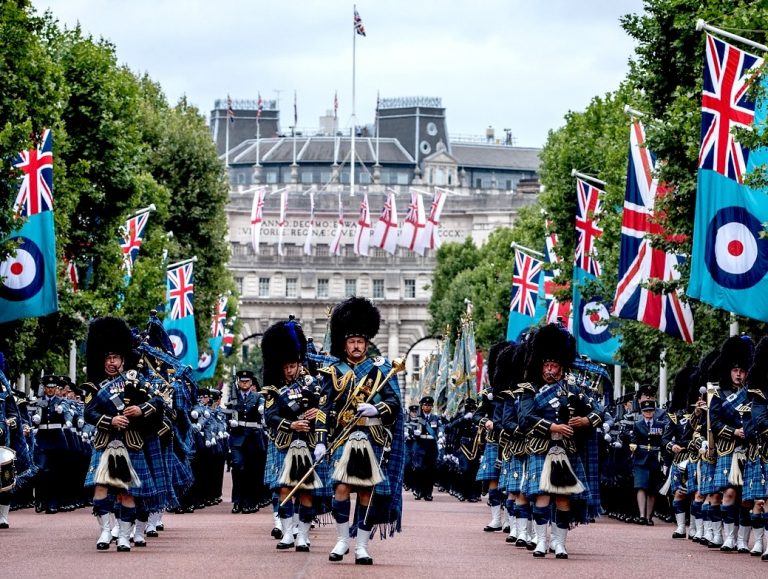
There’s long been a debate over whether Britain’s Empire — the largest the world has ever known — was a good or bad thing. There’s another question though – did it really end? In some ways, obviously it did. Some 62 territories have gained independence from the U.K. in recent decades, mainly during the period from India’s fight for independence in 1947 until Zimbabwe’s in 1980. But King Charles is still the head of state of 14 Commonwealth territories, from Australia to Saint Lucia, and the U.K. controls a further 14 “Overseas Territories,” such as Gibraltar and on the island of Cyprus. The United Nations Special Committee on Decolonisation has a list of 17 territories which are “non-self governing,” or colonies in all but name. In 10 of them, the U.K. is the current administering power.

50 Years Since Lebanese Civil War, Palestinian Refugees Cling To Hope

On April 13, 1975, a busload of Palestinian civilians was ambushed in Ain al-Rummaneh, a predominantly Maronite Christian neighborhood in East Beirut, by Phalangist militiamen who committed a massacre. That moment, often cited as the spark of the Lebanese Civil War, did not emerge from a vacuum — it followed years of tension between the Lebanese state, sectarian militias, and the growing Palestinian armed presence in Lebanon, which started in 1971 when the PLO arrived after being forcibly expelled by the Jordanian state following the events of Black September. Fifty years have passed, and the debate over the role of Palestinians — specifically Palestinian factions under the PLO — in the Lebanese Civil War remains mired in a murky combination of emotions, facts, myths, scapegoating, and to some extent, political erasure.

A People’s History Of Palestine

My journey into the realm of people’s history began during my teenage years when I first read Howard Zinn’s A People’s History of the United States. This initial exposure sparked my curiosity about how history is constructed and it led me to delve deeper into historiography — particularly the evolution of people’s history as an intellectual movement. Over the years, a wide range of historians, from Michel Foucault and Marc Bloch to Lucien Febvre and Chris Harman, each offered unique perspectives on the study of ordinary people in history.

Sahel States Exit ECOWAS, Launch Regional Passport And Joint Military

Just a year ago, on January 28, 2024, the military leaders of Burkina Faso, Mali, and Niger publicly declared their intent to withdraw from the regional economic bloc. This announcement was a historic point in the Sahel’s political shift, as the three countries continue to push for sovereignty, regional security, and economic autonomy. The withdrawal took effect on January 29, 2025, as confirmed by ECOWAS. On Tuesday, January 28, 2025, the streets of Ouagadougou, Burkina Faso, came alive with celebration as the Alliance of Sahel States (AES) marked the first anniversary of their historic decision to leave the Economic Community of West African States (ECOWAS).

France Must Go From Africa Is The Slogan Of The Hour

A cascade of anti-French sentiment continues to sweep across the belt of the Sahel in Africa: joining Burkina Faso, Mali, and Niger, Chad and Senegal demanded in November that the French government withdraw its military from their territories. From the western border of Sudan to the Atlantic Ocean, French armed forces, which have been in the area since 1659, will no longer have a base. The statement by the foreign minister of Chad, Abderaman Koulamallah, is exemplary: ‘France… must now also consider that Chad has grown up, matured, and that Chad is a sovereign state that is very jealous of its sovereignty’.

We Can’t Decolonize Architecture Without Talking About Palestine

One year ago this month, Palestine Collective was born. We’re a group of more than 50 creatives in the U.K. who have the primary goal of normalizing support for Palestine in architectural and design circles, both in the academic and practitioner space. We came together in response to the censorship we were facing in our places of work and study when speaking on the human rights and spatial injustices faced by Palestinians. We have seen censorship of Palestine across top cultural institutions. London’s Barbican Centre, a prominent performing arts venue, backed out of hosting a London Review of Books lecture series over a talk called “The Shoah after Gaza.”

Can The UN Fulfill Its Mission In An Imperialist-Dominated World?

During the months of September and October the United Nations is holding its 79th General Assembly, which is the space of broadest participation of the international body. The United Nations’ legitimacy, credibility and capacity to fulfill its founding mission to ensure peace and security have been questioned for decades, and 2023-24 was no different. Still, never before has the world witnessed a genocide unfolding before its eyes. In this context, the United Nations’ inability to do anything to stop it shines a bright and unforgiving light on the limitations of this body. Shaky Foundations Throughout its history the United Nations has been subjected to intense efforts at control or sabotage by colonial powers and US imperialist interests.

Burkina Faso Nationalizes United Kingdom Gold Mines

Burkina Faso will nationalize two gold mines at a cost of about US $80 million. The Boungou and Wahgnion mines were sold last year by London-listed Endeavour Mining to Lilium Mining for US $300 million. On August 27, the mines were purchased by Burkina Faso’s government for a fraction of this cost. “This strategic move is aimed at reclaiming Burkina Faso’s mineral wealth,” said Joe Hotagua of African Streams, “ensuring that a larger portion of the profits benefits Burkinabe people.” Endeavour Mining is based in London, UK, and claims to be the largest gold producer in West Africa. It also possesses assets in Senegal and Ivory Coast. Recently, allegations of serious misconduct have been levied against its mining operations in Ivory Coast.

Decolonization Movement Is Expanding In Africa’s Sahel Region

The United States announced that it will remove its troops from Niger in September after the government ordered them to leave. Mali and Burkina Faso have done the same. Chad is the most recent country in the Sahel Region of Africa to order the US out. This follows a wave of resistance against French colonization in the region. Clearing the FOG speaks with Abayomi Azikiwe of Pan African News Wire about the growing resistance in the Sahel and the United States. He discusses the unfulfilled promises of the Biden administration and the uncommitted movement in this presidential election.
assetto corsa mods

Urgent End Of Year Fundraising Campaign

Online donations are back! Keep independent media alive. 

Due to the attacks on our fiscal sponsor, we were unable to raise funds online for nearly two years.  As the bills pile up, your help is needed now to cover the monthly costs of operating Popular Resistance.

Urgent End Of Year Fundraising Campaign

Online donations are back! 

Keep independent media alive. 

Due to the attacks on our fiscal sponsor, we were unable to raise funds online for nearly two years.  As the bills pile up, your help is needed now to cover the monthly costs of operating Popular Resistance.

Sign Up To Our Daily Digest

Independent media outlets are being suppressed and dropped by corporations like Google, Facebook and Twitter. Sign up for our daily email digest before it’s too late so you don’t miss the latest movement news.