Skip to content

Development

Can The Poorer Nations Build A New Architecture For Development And Sovereignty?

A horrifying statistic hovers over the poorer nations: 3.4 billion people now live in countries that spend more on interest payments for public debt than on education or health. In 2024, according to a new report from the United Nations Conference on Trade and Development (UNCTAD), global public debt reached $102 trillion – a third of which is held by developing countries. The impact on these countries is especially severe: credit markets charge poorer nations far higher interest rates than they do richer nations, making debt servicing payments proportionately higher for the Global South.

Peace And Development Are Better Than Austerity And War

Reason seems to have been gradually abolished by the language of bombs. As weapons systems get ‘smarter’ and ‘smarter’, the range of diplomatic instruments used by the Global North states becomes blunter and blunter. US and European diplomats have returned to the old colonial habit of speaking loudly and brusquely, lecturing the natives about what they should or should not do while they themselves do whatever they want. If the natives do not agree, then the old colonial rulers simply threaten to cut off their hands or bomb their homes.

Who Says A Chicken Feather Can’t Fly Up To Heaven?

In 1957, Mao Zedong oversaw the publication of Socialist Upsurge in China’s Countryside, a three-volume collection of articles compiled by the Communist Party of China for the political education of the peasantry. The following year, selections from these volumes were republished in abridged and regional editions. One such edition included a report from the Anyang Regional Communist Party Committee’s Office for the Co-operative Movement with an introduction by Mao. The text, called ‘Who Says a Chicken Feather Can’t Fly up to Heaven?’, provides the title for this newsletter.

India: Farmers Near Victory After Almost 2,000 Days Of Protest

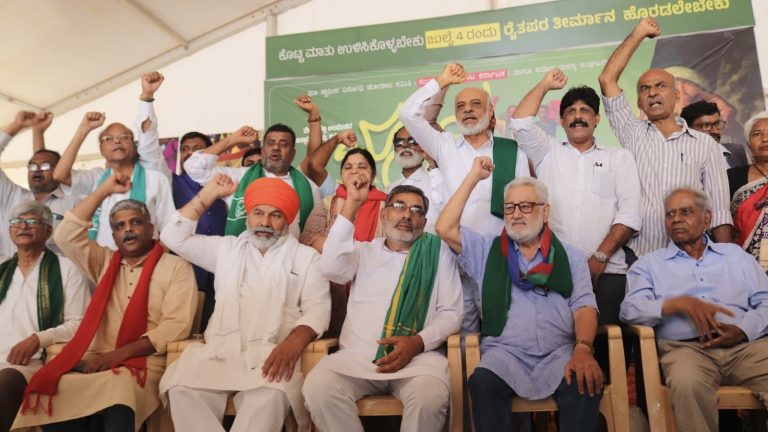
On the 1,188th consecutive day of protest against the forcible land acquisition from the farmers of 13 villages in the southern Indian state of Karnataka, its Chief Minister (CM) Siddaramaiah met with movement leaders on July 4. As a “gift” to the CM, the delegates carried mangoes, flowers, and seasonal vegetables grown on their threatened land, highlighting the fertility of the 1,777 acres his government is acquiring, allegedly for real estate interests. Hinting at his willingness to retreat, his office released a statement after the meeting, explaining that his government needed 10 days to examine the legal complexities involved in reversing the acquisition process for which his government had already issued the final notices this April. 

Financing For Development Forum Plants The Seeds Of Debtor Unity

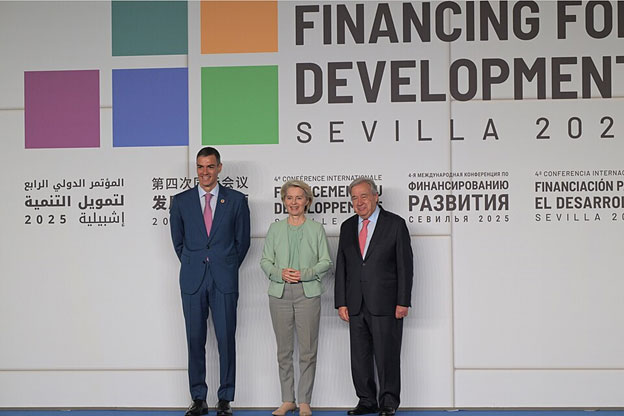
UN Member States adopted the ‘Compromiso de Sevilla’ at the Fourth Financing for Development Forum (FfD4) which concluded July 3– the culmination of months of contentious negotiations that pitted wealthy nations against the developing world in competing visions for reform of the global economic architecture. The wide-ranging outcome document will be met with both fanfare — from the host countries and UN officials keen to portray the process as a success — and criticism — from civil society groups lamenting the watering down of material commitments into so many toothless words.

The Global Gateway To Nowhere

European development aid has entered a new phase of the European Union’s neocolonialist agenda. Its “Global Gateway” plan is a wishlist for infrastructure projects to be launched across the world by European companies, backed by liberal reforms to pave the way. At its heart: Africa, where at least half of all investments are set to land. The Global Gateway was introduced by the EU’s technocratic institutions in Brussels as a branding exercise for a new direction for European aid in the world, following the cracks the COVID-19 pandemic revealed in Europe’s supply chains. In effect, this plan has sought to secure access to raw materials as well as energy with a view to reducing reliance on China’s minerals and Russia’s gas.

Community Struggles For Self-Governance In The Global South

Are we really free? With this seemingly straightforward yet provocative question, Vijay Dethe from Pachgaon village in the Chandrapur district of Maharashtra, India, opened several philosophical and political questions. Vijay belongs to Dalit community and works with the Gond adivasis (indigenous peoples in India) and other marginal communities of Pachgaon towards self rule and overall governance in the village. He further added “the ones who destroyed their forests, polluted their waters, are now telling us what ‘vikas’(development) is! Do they really know what ‘development’ is!?”

Can The Global South Get Out Of The US-Dominated Financial System?

Is it possible to create systems of trade, finance, and funding outside the US-dominated system? Is the BRICS bloc able to build the necessary alternatives to challenge this system? Economists, academics, and political leaders participating in the IV Dilemmas of Humanity Conference in São Paulo tackled this pressing question that today the nations of the Global South confront. Nations, who find that their plans for poverty alleviation, economic sovereignty, and trade with their neighbors, are held back by restrictions imposed by the United States and their debt commitments, for which they need a reserve of dollars.

Our Future Is Not Determined By The US Or Europe

“Debating the resources of the Global South is becoming urgent, but it is even more urgent to discuss how it is that most of the resources for the production of technology and goods are from the Global South and yet it is the North that takes all the wealth,” Cassia Bechara began her presentation, adding: ”in 2024 the wealth of the world’s richest millionaires was the greatest in history.” Although the speakers focused on the Global South in their presentations, they expressed different views on the same topic, as in the case of Márcio Pochmann, President of the Brazilian Institute of Geography and Statistics (IBGE).

Community Bank’s Innovative Strategy For Affordable Homes

When the pandemic hit, Mayra Ibarra moved back into her mother’s house to get some help with rent and childcare. There, she had to share a bedroom with her youngest son. Ibarra’s mother didn’t have internet access, but they quickly installed it so her son could attend kindergarten remotely. She bought him an old classroom chair, the kind with the desk attached to it, to keep in their bedroom. The setup worked for a few years, “but it felt like this is not my home, this is my mother’s home,” Ibarra says. “I wanted my home, my own space. Same for my kid.”

Neighborhood Renewal By Germantown Residents, For Germantown Residents

Jordan Parisse-Ferrarini has long been entrepreneurial. He learned it from his mother, who was quick to pick up a side hustle — starting a fruit stand, selling makeup door-to-door, selling kitchen products at markets — to help support her family when he was growing up in Mt. Airy and Germantown. So, it felt natural when, together with his mother and siblings, he founded a company focused on home repairs. They called it Handyman Wizards at first, then Ferrarini Kitchens, Baths and Interiors. A skilled carpenter, he got his electrician’s license, his realtor’s license, and then earned a construction management certificate.

The Case For Returning Disaster-Prone Areas Back To Nature

This week there were three wildfires burning within 100 miles of Los Angeles. Sadly, this isn’t breaking news; it’s the opening salvo of California’s new reality. Each year, wildfires trigger a predictable sequence of events: the fires burn, homeowners flee, firefighters battle the blazes often to catastrophic loss and, once the ash settles, people rush to rebuild grander homes, frequently in the exact same spots and typically directly or indirectly funded by taxpayer dollars. Despite the increase in frequency and intensity of wildfires and other natural disasters, people continue to be drawn to high-risk areas.

Western Climate Agenda Goes Against African Development

The exuberance of carbon and biodiversity offsets reached its pinnacle in Africa with several governments signing deals to concede vast sections of their primary forests to global carbon markets. Essentially, carbon and biodiversity offsets are premised on the flawed logic that forests, rangelands, mangroves and other important ecosystems of the world peripheries can serve as carbon sinks and neutralise the ecological effects of the unsustainable economic growth of the imperial core. The 2022 Land Gap Report estimates that the total area of land needed to meet climate pledges is almost 1.2 billion hectares globally.

State Senator Seeks To Unearth Hidden Costs Of Developer Tax Breaks

For decades, Baltimore has doled out tax breaks intended to spur development. But the increasing use of incentives has not been matched by scrutiny of how much they cost the city, and who is benefiting. State Senator Jill Carter intends to correct that imbalance with a bill she has introduced to study a variety of tax breaks in-depth, with the purpose of determining if their use is both equitable and cost effective. “I think it’s important that people pay attention to how much money is thrown out to wealthy developers with no accountability,” Carter said. The bill would authorize a task force to gather data and recommend processes to increase transparency and accountability for how tax breaks are used.

California Is Showing The Potential Of Strip Mall-To-Housing Conversions

State and local jurisdictions are desperately looking for new ways to speed up affordable housing development as the supply of homes falls short of demand nearly everywhere in the U.S. This fall, the Biden-Harris administration announced new resources to support commercial conversions to create affordable housing. While much of the focus is on office conversions, an idea that swept the nation as millions of Americans transitioned to remote work, relatively few office buildings are physically suitable for conversion. The costs can be incredibly high and the surrounding neighborhoods, often in business districts, are not necessarily conducive to new housing and the needs of residents.
assetto corsa mods

Urgent End Of Year Fundraising Campaign

Online donations are back! Keep independent media alive. 

Due to the attacks on our fiscal sponsor, we were unable to raise funds online for nearly two years.  As the bills pile up, your help is needed now to cover the monthly costs of operating Popular Resistance.

Urgent End Of Year Fundraising Campaign

Online donations are back! 

Keep independent media alive. 

Due to the attacks on our fiscal sponsor, we were unable to raise funds online for nearly two years.  As the bills pile up, your help is needed now to cover the monthly costs of operating Popular Resistance.

Sign Up To Our Daily Digest

Independent media outlets are being suppressed and dropped by corporations like Google, Facebook and Twitter. Sign up for our daily email digest before it’s too late so you don’t miss the latest movement news.