Skip to content

Elections

The Bolivian Left’s Self-Destructive Path

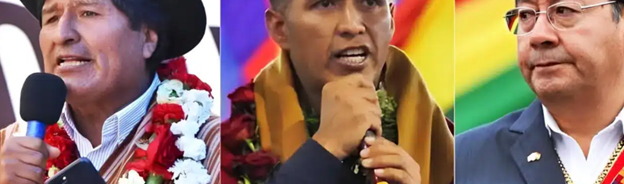
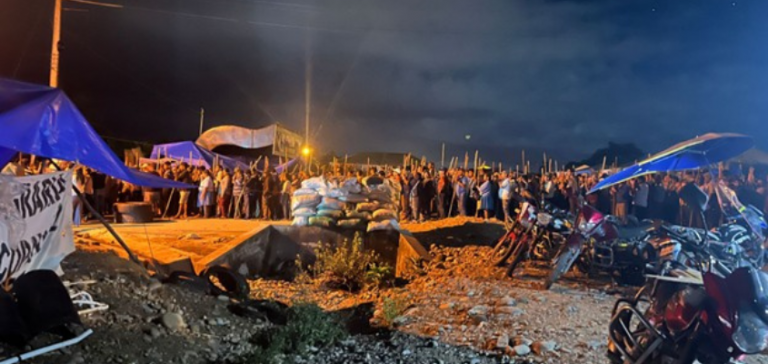
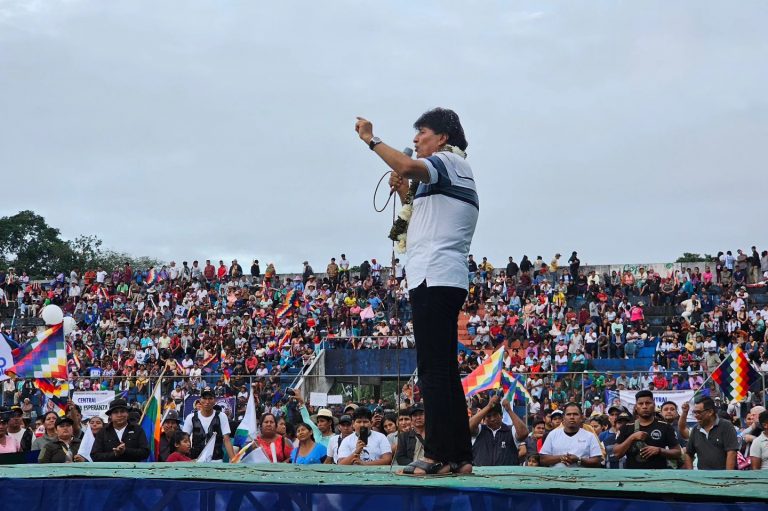
The Bolivian political landscape is currently characterized by a deep, self-inflicted crisis within the Movement Toward Socialism (MAS) which has culminated in a devastating electoral defeat yesterday. As the country approached the crucial presidential elections of August 17, 2025, the party’s leaders—specifically former President Evo Morales and President Luis Arce Catacora—engaged in a series of personal attacks and internal conflicts that paved the way for their own defeat. This political irresponsibility, driven by ambitions and factionalism, has enabled the return to power of the very right-wing forces that the MAS struggled for years to overcome.

Bolivia Turns To The Right

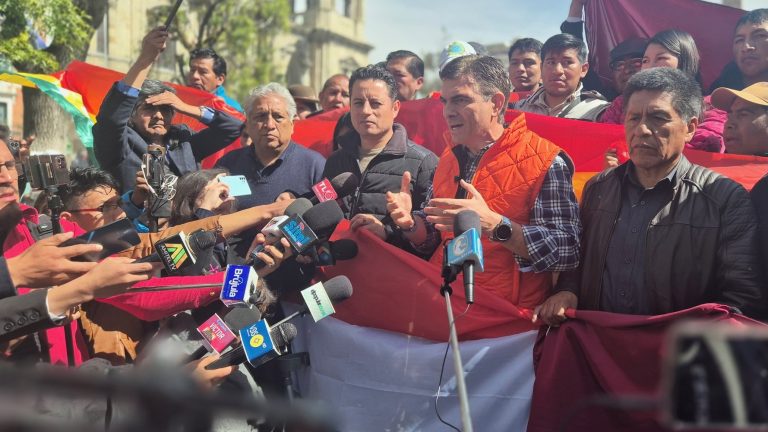
With more than 95.41% of the votes counted, Bolivia’s Plurinational Electoral Body reported that, according to the preliminary results, Rodrigo Paz of the Christian Democratic Party (PDC) and former president Jorge Quiroga of the Free Alliance (AL) emerged as the big winners on election day. Paz obtained more than 32% of the valid votes, while Quiroga obtained almost 27%. Bolivia’s current president, Luis Arce, said in a speech to the nation: “We have made every effort to ensure a peaceful and transparent electoral process.” For Arce, who decided to withdraw his election campaign in May, the election result was a severe blow, as his party, the Movement Toward Socialism (MAS), came in sixth place, its worst electoral performance in decades.

Can South Korea’s New President Stand Up To Washington?

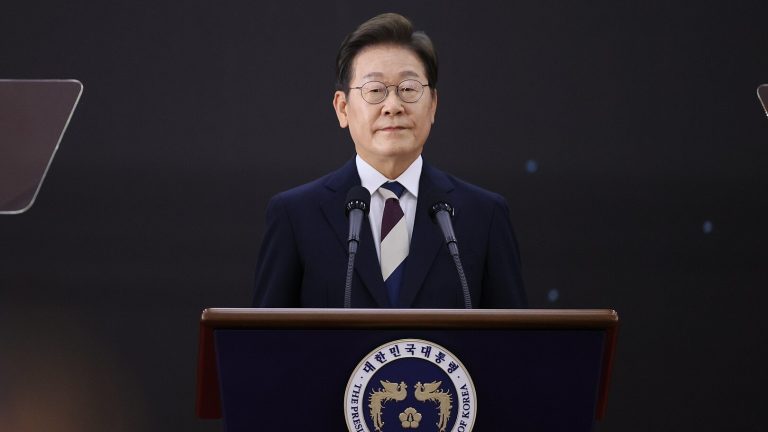
On June 3, the Republic of Korea (ROK) held a snap election to fill the vacant office of the presidency following the ouster of Yoon Suk-Yeol, who was impeached after his failed coup attempt on December 3, 2024. Lee Jae Myung, leader of the opposition Democratic Party (DP) and Yoon’s former rival in the 2022 election, emerged victorious with 49% of the vote, and was sworn into office on June 4. As president, Lee now faces the challenge of navigating the economic, political, and geostrategic dimensions of the ROK’s generalized crisis. Unrelenting US aggression has pushed tension on the peninsula and the wider region to a breaking point.

Tenacious Bolivarian Resistance Against Obstinate US Aggression

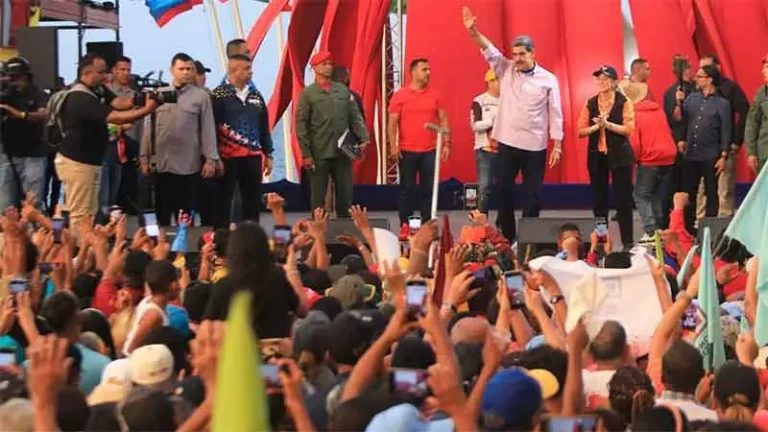
On the eve of Venezuela’s presidential election on 29th July 2024, Guardian correspondents, Tiago Rogero (based in Rio de Janeiro) and Sam Jones (based in Madrid) predicted the vote “could end 25 years of socialist rule.” It did not. The following, 30 July, another group of Guardian correspondents gave prominent coverage to far-right wing Venezuelan politician Maria Corina Machado, quoting her claim that “Maduro’s exit was inevitable.” Yet, Nicolas Maduro was inaugurated as the re-elected president for the 2025-2031 term on 10 January 2025. The July 2024 presidential election was followed by the election for National Assembly deputies and all 24 governorships of Venezuela’s federal structure on 25 May 2025.

Communities From Global South Know What Democracy Is

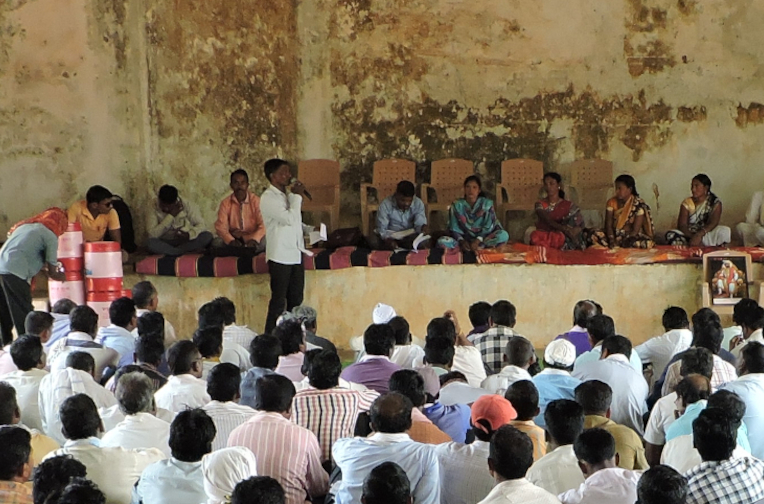
The contrast could not be starker. In 2024, with over 60 countries covering half the world’s population going to the polls, there was a clear tendency to vote in right-wing political parties with thin democratic pretensions. In many countries including India, USA, Argentina, and Russia, and in the European Parliament, the trend was clear. A powerful counterpoint to this was provided by a modest but inspirational gathering of Indigenous peoples and local communities from over 20 countries, in South Africa, in February 2025. They spoke about how their foundations were not hegemonic power and profits, but justice, equity, and respect not only amongst peoples but also with the rest of nature.

When Media Tell Us Who ‘Won’ A Latin American Election, Ask Questions

Elections in Latin America are often controversial. While many countries in the Global North regularly shuffle between parties offering alternating versions of neoliberalism, voting in Central and South America often offers starker contrasts: An anti-imperialist candidate in the mold of Venezuela’s Hugo Chávez might be up against a neoliberal such as Brazil’s Jair Bolsonaro. It could hardly be otherwise, in a region with the world’s biggest gap between the richest and poorest. North American and European corporate media are conscious of this complexity, but rarely convey it to their readers, instead issuing reports that lack sufficient context or history.

The Revolution Of Light And Korea’s Democratic Triumph

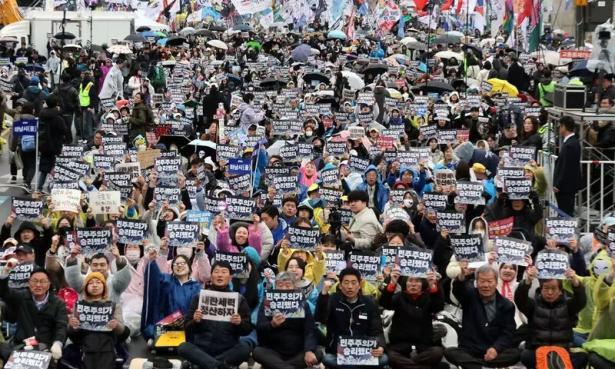
One of the most consequential missteps in US Korea policy under the Biden administration was the failure to engage with South Korea’s domestic political realities, particularly the widespread public opposition to President Yoon Suk-yeol’s increasingly authoritarian rule. By relentlessly propping up Yoon to serve Washington’s geopolitical agenda and its escalating Cold War posture toward China, the Biden administration not only ignored Korean public sentiment but also fueled domestic unrest. Domestic outrage against Yoon’s regime came to a head with his attempted imposition of martial law on December 3, 2024—a move that exposed the fragility of his position and deeply damaged Washington’s credibility in the region.

Following Kamala’s Script, Maryland Governor Vetoes Reparations Bill

With his veto earlier this month of legislation to study reparations for the descendants of enslaved Africans, Maryland Governor Wes Moore, a Democrat, signaled two things: first, he intends to seek his party’s nomination for the White House in 2028; and secondly, he plans to redeploy the discredited strategy of appealing to white voters by distancing his campaign from African Americans. If recent history is any guide, that dog won’t hunt for Moore, the nation’s lone African American governor, any more than it did for Kamala Harris in her presidential campaign last year or Hilary Clinton in 2016. Both Harris and Clinton cut their teeth as politicians with policies that the African American working class widely regarded as deeply racist; both lost to Donald Trump.

Venezuela’s Participatory Democracy And The Struggle Against Imperialism

Alison Bodine is an anti-imperialist activist and solidarity organizer based in Canada who is active with the Venezuela Solidarity Network and the Fire This Time Movement for Social Justice. She has visited Venezuela regularly since 2018 as part of international observation missions. Bodine is the author of Revolution and Counter-Revolution in Venezuela, a book that analyzes the Bolivarian Process and the challenges it faces. In this conversation with Venezuelanalysis, Bodine discusses her experience as an international observer during Venezuela’s most recent parliamentary and regional elections held on May 25.

Ballots And Bias: How The Press Framed Venezuela’s Elections.

The pro-government alliance achieved a sweeping victory in Venezuela’s May 25 elections, while a fractured opposition suffered losses. Western media distorted the results – spinning low turnout claims, ignoring the role of illegal US sanctions, and offering selective sympathy to elite opposition figures. At stake for the 54 contesting Venezuelan political parties were seats for 285 National Assembly deputies, 24 state governors, and 260 regional legislators. The pro-government coalition won all but one of the governorships, taking three of the four states previously held by the opposition. The loss of the state of Barinas was particularly symbolic for this was the birthplace of former President Hugo Chávez; and especially so, because the winner was Adán Chávez, the late president’s older brother.

ALBA-TCP Congratulates Venezuela On Successful Elections

On Monday, the Bolivarian Alliance for the Peoples of Our America – Peoples’ Trade Treaty (ALBA-TCP) congratulated Venezuela for successfully holding regional and parliamentary elections. Earlier, on Sunday night, the National Electoral Council (CNE) announced that the ruling United Socialist Party of Venezuela (PSUV) had won 23 out of 24 governorships. The Bolivarian Revolution also secured 40 out of 50 seats in the National Assembly. Among the new legislators will be current ALBA Secretary Jorge Arreaza. “The ALBA member states applaud and congratulate the people and government of the sister Bolivarian Republic of Venezuela for the resounding success of the legislative and regional elections held this Sunday, May 25, 2025.

Germany In Crisis Part 4: Wanderers And Seekers

Dresden, May 6 — Friedrich Merz barely managed to assume power Tuesday as the Federal Republic’s 10th chancellor, having fallen six votes short of the number he needed when the first Bundestag ballots were counted in a morning vote. Berlin was reeling for most of the day as it faced a political impasse unprecedented in postwar German history. A second ballot, held hurriedly later in the afternoon, got Merz over the line by a margin of nine votes. While Bundestag members vote secretly, the numbers indicate that some members of his new coalition betrayed him. Among the German analysts with whom I spoke today, the interesting question now is how long Merz will manage to remain as chancellor.

Following Unfair Presidential Election, Ecuador Faces A Grim Future

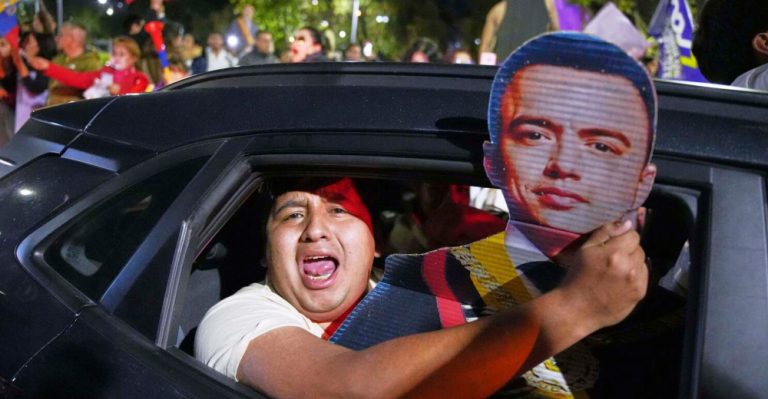
On April 13, a runoff presidential election between the incumbent Daniel Noboa and the progressive candidate Luisa Gonzalez was held in Ecuador. Leading up to the election, a very tight race was expected and conditions pointed to a likely victory by Gonzalez. However, on election day, Noboa was declared the winner with a lead of more than 11%. Clearing the FOG speaks with Pedro Labayen Herrera, who is a researcher at the Center for Economic and Policy Research where he focuses on Ecuador. Labayen was present for the elections. He reports on the scandals just before the election, violations of the Constitution by Noboa and what happened on election day. He also describes the deterioration of conditions within Ecuador and the challenges ahead.

Advocates Put Palestinian Rights On The Ballot As Canada’s Election Nears

Montreal, Canada — The United States has loomed large over Canada’s upcoming election, with concerns over President Donald Trump’s tariffs and annexation threats dominating much of the campaign. But for many Canadians, another topic has also been front-of-mind in the lead-up to the vote on April 28: Israel’s war on Palestinians in the Gaza Strip. “This is a priority issue for many Canadians,” said Dania Majid, a Palestinian community advocate and lawyer based in Toronto, in an interview with Truthout. “We are not detached from what is happening in Palestine.” Last month, a survey commissioned by the National Council of Canadian Muslims (NCCM) found that 55 percent of Canadian voters backed a ban on weapons exports to Israel as the war in Gaza dragged on.

Vote Palestine Platform Aims To Put Gaza On The Ballot

A grassroots campaign to put Palestine on the ballot has garnered support from 181 candidates running for a seat in the House of Commons. According to a post from the “Vote Palestine” campaign’s Instagram, 124 candidates from the NDP, 44 Green Party candidates and 13 Liberal Party candidates have provided full platform endorsement as of April 11. The platform’s organizers say their calls are guided by Canada’s obligations under international law. The platform has five key demands, including a two-way arms embargo, the end of Canadian involvement in illegal Israeli settlements, a plan to address anti-Palestinian racism, the recognition of the state of Palestine and proper funding of relief efforts in Gaza.
assetto corsa mods

Urgent End Of Year Fundraising Campaign

Online donations are back! Keep independent media alive. 

Due to the attacks on our fiscal sponsor, we were unable to raise funds online for nearly two years.  As the bills pile up, your help is needed now to cover the monthly costs of operating Popular Resistance.

Urgent End Of Year Fundraising Campaign

Online donations are back! 

Keep independent media alive. 

Due to the attacks on our fiscal sponsor, we were unable to raise funds online for nearly two years.  As the bills pile up, your help is needed now to cover the monthly costs of operating Popular Resistance.

Sign Up To Our Daily Digest

Independent media outlets are being suppressed and dropped by corporations like Google, Facebook and Twitter. Sign up for our daily email digest before it’s too late so you don’t miss the latest movement news.