Skip to content

Sustainability

What Futures Are Possible?

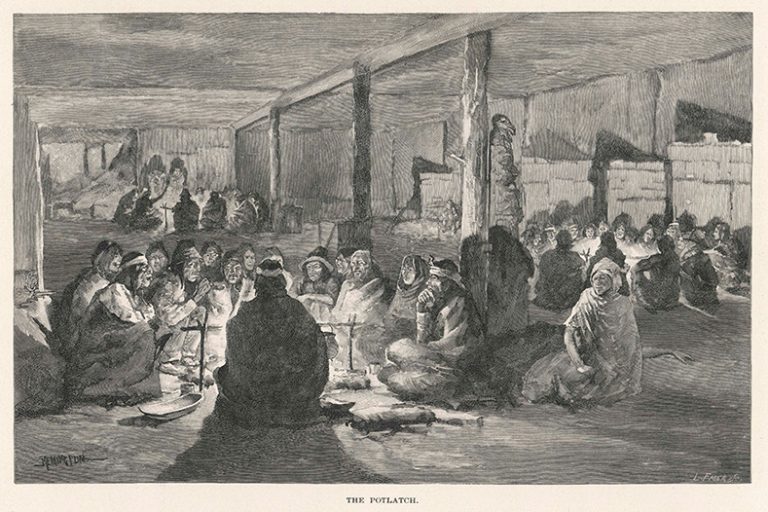
People have been forecasting the future for as long as they’ve had language. Premodern ideas of what’s to come often featured either a catastrophic end of the world or an eventual paradisiacal condition of peace and plenty. This was true both for many, though not all, Indigenous peoples and for followers of the world’s missionary religions (i.e., Christianity and Islam, and to a lesser degree Buddhism). For some cultures, the arc of time was imagined as a progression from ancient virtue to present corruption and eventual ruin or salvation; for others, time was cyclical, with multiple Golden Ages and periods of decline.
Brazil’s Co-Ops Have Big Asks Ahead Of COP30

With the UN Climate Change Conference (COP30) taking place in Belém, Brazil, in November, the country’s co-op movement is trying to boost its presence in climate discussions and reaffirm its commitment to sustainable development. Co-ops are key players in Brazil, accounting for 75% of wheat, 55% of coffee, 53% of corn, 52% of soybeans, 50% of pigs, 46% of milk and 43% of beans produced. The nation’s 4,500 co-ops represent 23 million members. In March, the Brazilian Cooperative Organisation (OCB) published a COP30 Manifesto, after a series of conversations with member organisations and co-op leaders which started at the 15th Brazilian Cooperative Congress in 2024.

Sweden’s ‘Secondhand Only’ Shopping Mall Is Changing Retail

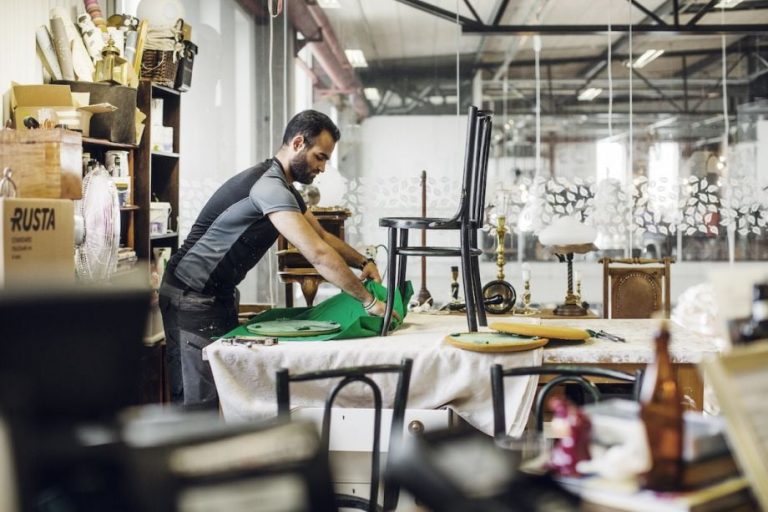
As a fashion sustainability researcher, finding the ReTuna shopping mall in Eskilstuna was a delightful surprise. Stepping into this Swedish shopping centre felt refreshingly different – it is the first in the world to sell only secondhand and repurposed items. During numerous visits to the shopping mall over the last 18 months, I have spoken to customers, managers and employees – all of whom seemed excited by ReTuna’s innovative business model. The mall instantly feels very different to the cluttered charity shops or vintage boutiques most of us associate with pre-owned retail. There is a wide range of products on sale – fashion, sports equipment, household items, children’s toys, antiques – and even an Ikea secondhand store selling previously used and repaired furniture.

Bioregioning Is Our Future

Lately I’ve been reading Andrew Schelling’s Tracks Along the Left Coast, a biography of linguist, anthropologist, and anarchist Jaime de Angulo (1887-1950). De Angulo was a character worth knowing about. His affluent Spanish parents gave him a civilized upbringing in fashionable Paris; nevertheless, he had a wild streak. So, before he turned 20, de Angulo hightailed it to San Francisco, arriving just in time for the Great Quake of 1906. During the next few years, he earned a medical degree, then worked as a cowboy trekking the California coast. The Native Americans he met fascinated and impressed him. As a way of documenting and preserving their way of life, which he regarded as perfectly adapted to the endlessly varied, stunningly beautiful landscape around him, de Angulo (often collaborating with his linguist wife, Lucy Shepard Freeland) learned and described 25 of the roughly 100 Native languages then spoken in California.

BlackRock Pivots From Sustainability Evangelists To Fossil-Fuel Funders

In 2016, Larry Fink, CEO of investment firm BlackRock, had no doubts about the importance of environmental, social, and governance (ESG): “Over the long term, ESG issues – ranging from climate change to diversity to board effectiveness – have real and quantifiable financial impacts”, he wrote in a letter on corporate governance in 2016. The CEO of the world’s largest asset-management company has since changed his mind: “The reason I backed away from using the term ESG is that it means something different to everyone. It’s so undefined that it’s become unmentionable”, Fink said in 2023, as a guest on the Wall Street Journal podcast “Free Expression”.

America Should Sprawl? Not If We Want Strong Towns

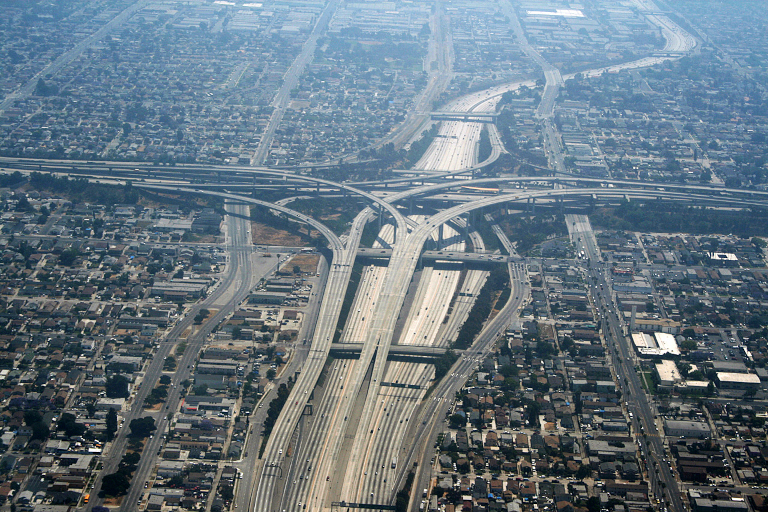
There’s been a lot of buzz around Conor Dougherty’s recent New York Times piece, “Why America Should Sprawl.” The article argues that the country’s housing crisis is so severe—and infill development so insufficient—that we need to embrace aggressive outward expansion of our metro regions, what many would call sprawl, to build the millions of homes America needs. It’s a compelling, well-written piece, and it’s struck a chord with a lot of readers. But from a Strong Towns perspective, the core argument is fatally flawed. Because sprawl doesn’t solve the underlying problem. It is the underlying problem.

Unpacking The Localism Manifesto: Solving Our Crises From The Bottom Up

The United States is a failing country. Political leaders at all levels have failed to effectively solve the many crises we face such as the climate crisis, economic insecurity and growing inequality, and the need for affordable housing, education, and health care, and more. Action at the local level, where people have the most control, offers a pathway forward. Clearing the FOG speaks with Michael Shuman, author of A Localism Manifesto, which can be found at The Main Street Journal. Shuman explains how decentralized action works, the principles involved, and how it offers a radical new politics that can heal the current polarization of our society.

Systems Are Breaking And That’s Our Opportunity

A few months ago, I reconnected with a friend whom I had worked with on an initiative on ‘the sharing economy’. At the time, we were both ‘Young Global Leaders’ (YGLs) with the World Economic Forum. It was 2013, and we had volunteered our time to bring attention to how new technologies could be used to help everyone have a good life with less ecological impact. Personally, we were imagining a future of peer-to-peer resource sharing, community-based production, and cooperative ownership. Meeting up after years, we laughed that our work had oddly contributed to the World Economic Forum publishing the line that became infamous as a globalist’s dystopian injunction: “You will own nothing and be happy.”

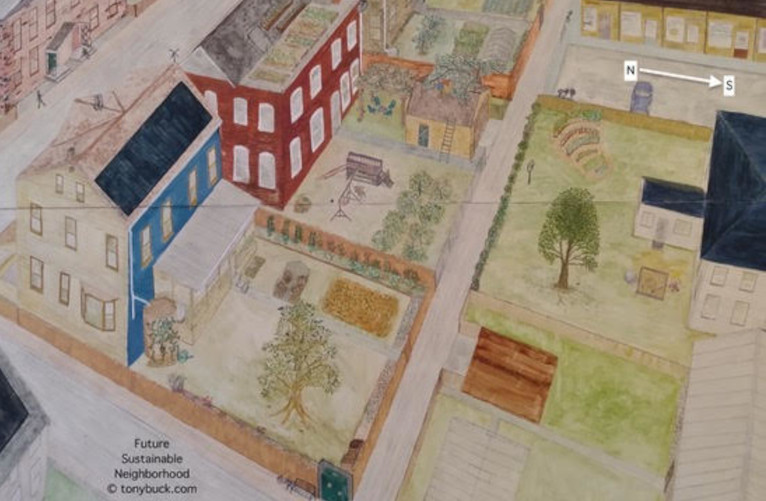
Future Sustainable Neighbourhood

Billionaires are building bunkers. What do they know that the “average” person doesn’t? Well, those who pay attention know that multiple Nature tipping points are being either breached, or reached! (The Metacrisis.) Add to that regional conflicts that could go worldwide, and us “average” people may also feel concerned about the near and far-off future. So, I wrote this book, Future Sustainable Neighborhood, for those who can’t afford to buy islands and build bunkers (me included). Anyway, what’s the use of being a billionaire if there’s no food to buy in the market? When one writes, immediate distillation occurs as we zoom in on what needs to be said.

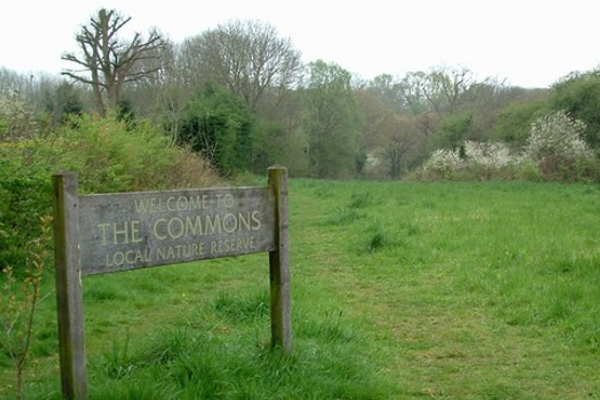
How The Commons Can Reach Working-Class Communities

All civilisations fall in the end. The Roman Empire is long gone, along with the ancient Greeks, Egyptians and Sumerians. Will the global civilisation of corporate capitalism buck the trend? Of course not, but how long does it have left? In such a complex system, it’s impossible to predict when there will be a sudden shift, but there’s good evidence that the process of breakdown has already begun. Damage to soils, water tables, forests, the oceans and climate is occurring alongside economic and political upheaval. No longer is this a theoretical matter about the distant future, but something we should be preparing for today. But how? I come at that question after decades working on ‘sustainable development’. During the 90s, I was doing that in Eastern Europe, but was dismayed that most saw corporate capitalism as the path to follow.

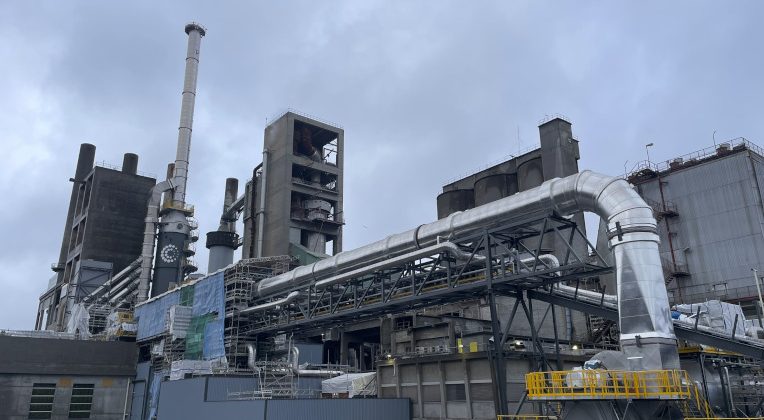
Carbon Capture And Storage: The Frivolous Gamble Of Climate Policy

Carbon Capture and Storage (CCS) has become an essential part of European and global climate policy. The logic is simple: we capture CO2 emissions from factories and store them deep underground. This way we save the planet and the industry. Industrial emissions account for about 25% of European emissions. To become climate neutral by 2050, they must disappear. CCS is also being counted on to green some of the energy sector’s emissions. Governments are willing to provide supportive regulation and invest heavily in it. However, there are fundamental concerns about the feasibility of the technology, both technically and economically. Its failure could prove disastrous and undermine Europe’s climate strategy altogether.

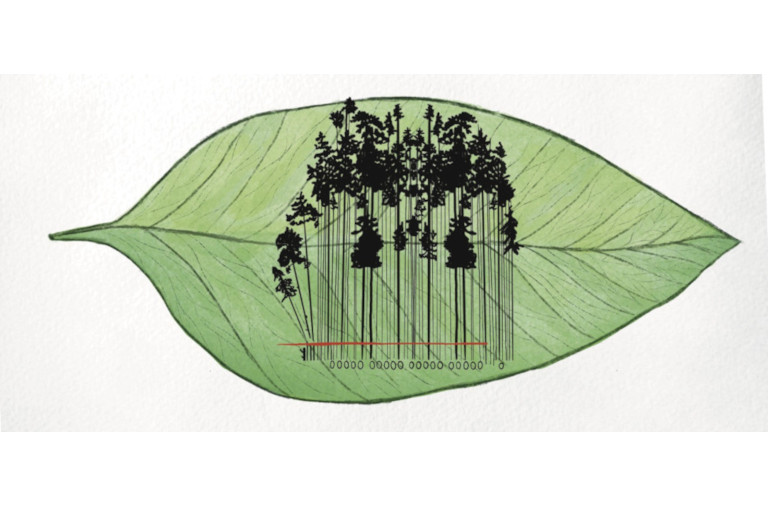
Is The Bioeconomy A Sustainable Solution For The Planet?

On 10 February, representatives of 14 bioeconomy organisations from 11 EU Member States signed a Memorandum of Understanding (MoU) officially establishing the European Bioeconomy Cluster Alliance (EBCA). The agreement is an important step towards fostering collaboration and innovation in the bioeconomy sector. In Spain, regions such as the Basque Country and Catalonia, in particular, are strongly committed to the transition towards a bioeconomy model. The bioeconomy has emerged in recent decades as a transformative proposal for our economic system aimed at achieving climate neutrality and moving away from the use of fossil fuels, cement and other materials, such as plastics.

A Town In Transition, And Local Community Resilience

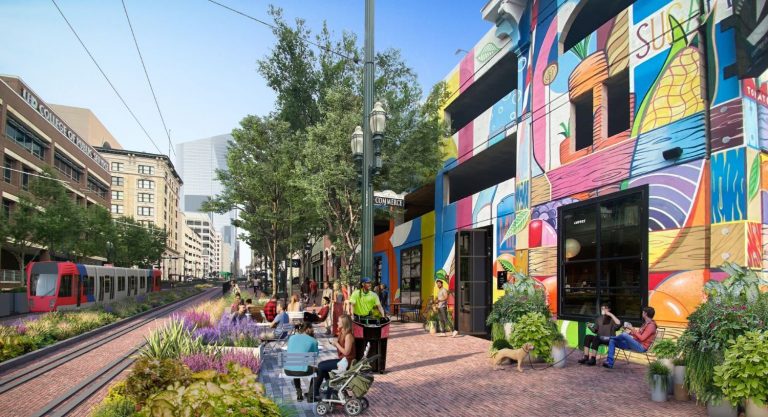
A large town, not yet a city, Reading (UK) is typically seen as a commuter hub, with thousands travelling into London every day to get to work. Reading itself may seem unexceptional, even bland, with not much going on there. But, on looking a little closer, Reading has real community, a group of local people who are coming together to create real change. While many of our problems are global – e.g. the climate and biodiversity emergency, declining fossil fuels, dwindling resources, pollution, overconsumption, food insecurity, inequality – there is much we can do at the local level to make things better.

The Seven Fundamental Drivers Of Overshoot

Humanity is in overshoot. The last 50 years have marked a unique period in history during which our species has been able to access, extract, and consume natural resources at a rate faster than the Earth is able to regenerate them. As humanity continues to grow its population beyond the carrying capacity of its environment, the associated excess consumption is degrading the health of Earth’s ecosystems. By over-consuming our environment—and ecosystem stability—in the short-term, we are putting our planet’s long-term stability and capacity to provide for future generations in jeopardy.

Action On Climate Change May Look Different Than You Expect

Talk a walk through the Los Angeles’ Arts District, and you’ll learn that there’s nothing contradictory about trying to save the world and living a luxury lifestyle. Start your tour with the Los Angeles Cleantech Incubator (LACI), which proudly displays a banner stating: “the future begins here.” LACI is “a non- profit organization creating an inclusive green economy” and run “by entrepreneurs, for entrepreneurs.” They are also supported by a “community” that includes not only the City of Los Angeles but also BMW, Wells Fargo, United Airlines, and JPMorgan Chase.
assetto corsa mods

Urgent End Of Year Fundraising Campaign

Online donations are back! Keep independent media alive. 

Due to the attacks on our fiscal sponsor, we were unable to raise funds online for nearly two years.  As the bills pile up, your help is needed now to cover the monthly costs of operating Popular Resistance.

Urgent End Of Year Fundraising Campaign

Online donations are back! 

Keep independent media alive. 

Due to the attacks on our fiscal sponsor, we were unable to raise funds online for nearly two years.  As the bills pile up, your help is needed now to cover the monthly costs of operating Popular Resistance.

Sign Up To Our Daily Digest

Independent media outlets are being suppressed and dropped by corporations like Google, Facebook and Twitter. Sign up for our daily email digest before it’s too late so you don’t miss the latest movement news.