Skip to content

Brazil

Brazil Protesters Triumphed in the Streets, but New Uncertainities

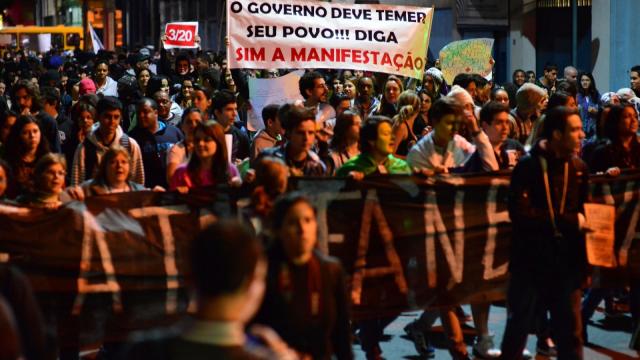
Occupying and standing on the streets is more necessary than ever. In some cities that hosted the Confederations Cup (such as Belo Horizonte and Rio de Janeiro) and in other places where strong police repression still continues, people are now organizing people’s assemblies, strengthening their protests, occupying political bureaus, etc. It is in no way clear how best to proceed, nor are we sure about the strategy that should be implemented. It is a difficult process where we must confront the shift towards conservative positions, the old automated procedures of the left-wing tradition, the international interests imposed by FIFA, the government’s attempts to minimize the protests, and corporate media that now mention “vandalism” again, hiding police abuse and spreading fear among those who still haven’t set foot on the streets. Maybe all of this is just part of building the new alternative. Nobody said it would be easy, but it is crucial to try, as so many people are doing around the world.

Video: Military Police Join Protestors in Brazil!

This video is from mid-June in Brazil It shows a group of police officers joining the protests, sitting down in public space. Research on non-violent resistance movements cited in the book, "Why Civil Resistance Works" indicates that the chances of success increase by 60% when the security forces join the protesters.

The Age of Revolution: 1989-2013, and Counting

We live in an age of revolution, and specifically of anti-elite, anti-authoritarian revolution. It’s an age that began in earnest with the fall of the Berlin Wall in 1989 and shows no signs of slowing down. Edward Snowden, who on Friday was reportedly offered asylum by both Nicaragua and Venezuela, is in his own way a soldier in that revolution, one who has exposed the secrets of the world’s greatest imperial power and made it look both foolish and vulnerable. That’s the thread that connects this week’s explosive news out of Egypt to the bizarre episode of the Bolivian president’s airplane, which was forced to land in Vienna (almost certainly at the behest of someone in Washington), based on false rumors that Snowden might be on board. Screw national sovereignty – the most powerful nation on earth is hunting a computer nerd! In other words, both these things are driving powerful people crazy.

Popular Resistance Newsletter – Organized Resistance Brings Sweeping Change, Lessons for US

The big story of the week was Egypt. Protests organized by Tamarod (Rebel) that have been building for months, resulted in the biggest protest in Egypt’s history, four days of mass protest beginning on June 30 that ended the rule of President Mohamed Morsi. More than a week ago, Tamarod recommended that the head of the Egyptian Constitutional Court become the interim president and that is what the Egyptian military announced. The military made the announcement after lengthy meetings with religious groups, including minority religions; opposing political parties, including a Muslim party; and civil society including Tamarod.

Open Letter From Egyptian Revolutionaires

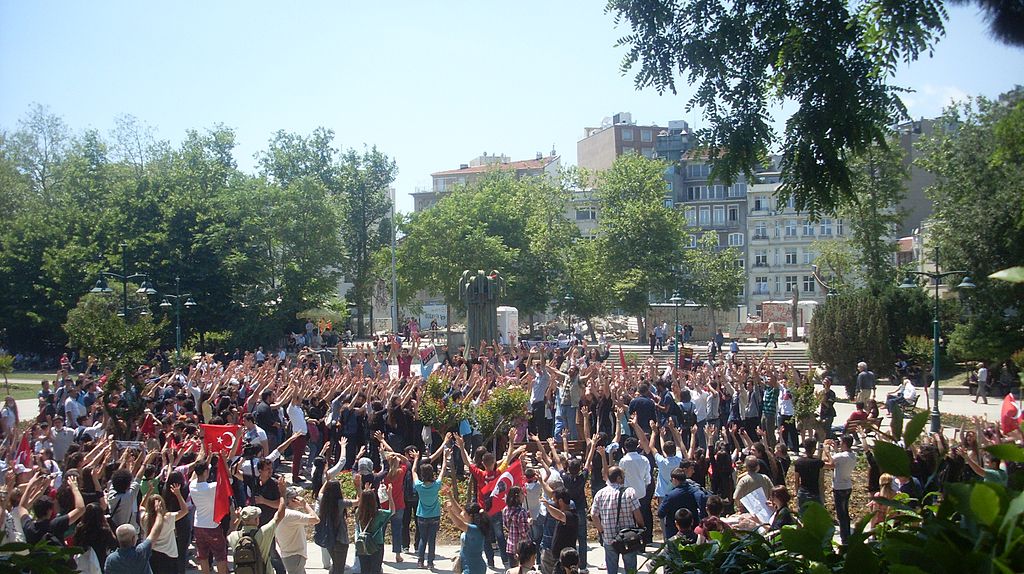
We draw hope and inspiration from recent uprisings especially across Turkey and Brazil. Each is born out of different political and economic realities, but we have all been ruled by tight circles whose desire for more has perpetuated a lack of vision of any good for people. We are inspired by the horizontal organization of the Free Fare Movement founded in Bahía, Brazil in 2003 and the public assemblies spreading throughout Turkey. None of us are fighting in isolation. We face common enemies from Bahrain, Brazil and Bosnia, Chile, Palestine, Syria, Turkey, Kurdistan, Tunisia, Sudan, the Western Sahara and Egypt. And the list goes on.

Brazilian Protesters Force Compromise in Public Services

This was a busy week on Brazil's political agenda. After a wave of protests that involved more than 100 cities throughout the country, several moves took place in the political arena. On the third week of social unrest, on Monday President Dilma Rousseff met governors and mayors to discuss topics being demanded by those protesting on the streets. DILMA ROUSSEFF, PRESIDENT OF BRAZIL (SUBTITLED TRANSL.): People are now out on the street saying that they desire for change to continue, that those changes be increased, that they occur even faster. The country wants accountable political representation, a society where citizens, and not the economic power, are in first place. It is very good that people are voicing all this out loud.

An American with Brazilian Envy

Why aren’t Americans at the barricades? Our spirits have been sickened by the toxins baked into our political system, which legalizes graft and is held hostage by special interests and a gerrymandered minority. As a result, we are legislatively incapable of dealing with big problems like joblessness, climate change, gun safety, infrastructure, hunger or – based on recent House Republican chaos – immigration. The public investments we’re not making – in schools, teachers, roads, bridges, clean energy – are killing us. Our tax code is the least progressive in the industrial world. The most massive transfer of wealth in history, plus a cult of fiscal austerity, is destroying our middle class. Tuition is increasingly unaffordable, and retirement is increasingly unavailable. The banks that stole trillions of dollars of Americans’ worth have not only gone unpunished; they’re still at it.

Brazilians Rise Up Against Country’s Ruling Class

The first surprise about the Brazilian protests is that they have taken place at all. The second surprise is their scale. On reflection, they should have taken place years ago. The recent hike in bus fares was simply the last straw for a nation tired of being treated like otários ("suckers") – as a taxi driver put it to me on Sunday – by its ruling classes. Demonstrations in modern Brazil are usually left to small groups belonging to the country's beleaguered "social movements" and therefore easily ignored by the media, which is dominated by the all powerful Globo conglomerate. Protesters depicted as troublemakers, lazy students, leftists and rich kids without a cause – as one prominent social commentator in Rio described them last week – are quickly discredited and forgotten. But this time round Globo and its allies are on the back foot.

Brazilian Government Targets Anarchists in Porto Alegre

The afternoon of Thursday, June 20, 2013, between 12 and 15 agents, unidentified but wearing vests and jackets and police posing as agents of the federal police entered and searched the athenaeum da Batalha várzea, political and social space Gaucha Anarchist Federation (AGF), located travessa Venezianso back. They also seized some equipment. The officers did not show any search warrant to neighbors who were concerned about what was happening. Moreover, in the morning, agents, also hidden, tried to arrest a friend at his home. The FAG is a 18-year old political organization. During these years, we did not hidden and we have always maintained the character of our public spaces in which we conduct numerous political and cultural activities, as well as our political action.

Brazil to Spend $25bn on Public Transit, Vote on Reforms

Brazilian President Dilma Rousseff has proposed to set aside $25bn for public transport following days of mass nationwide street protests, in an effort to seize the political initiative. She also suggested on Monday a referendum on broad "political reform" in response to public anger with substandard public services and rampant official corruption in Brazil, the world's seventh largest economy. She also stressed the need for fiscal responsibility and for boosting investments in health and education as demanded by Brazilians who have taken to the streets in the tens of thousands over the past two weeks. "The streets are telling us that the country wants quality public services, more effective measures to combat corruption ... and responsive political representation," Rousseff said.

Five Million Brazilian Farmers take on Biotech Giant Monsanto

Five million Brazilian farmers have taken on US based biotech company Monsanto through a lawsuit demanding return of about 6.2 billion euros taken as royalties from them. Farmers say that they are using seeds produced many generations after the initial crops from the genetically modified Monsanto seeds were grown. Farmers claim that Monsanto unfairly collects exorbitant profits every year worldwide on royalties from "renewal" seed harvests. Renewal crops are those that have been planted using seed from the previous year's harvest. Monsanto disagrees, demanding royalties from any crop generation produced from its genetically-engineered seed. Because the engineered seed is patented, Monsanto not only charges an initial royalty on the sale of the crop produced, but a continuing two per cent royalty on every subsequent crop, even if the farmer is using a later generation of seed.

US History of Overthrowing Elected Leaders

One dramatic change in the last 50 years is the consistent opposition of the American public to such interventions. This was perhaps best illustrated in the 1980’s when U.S. solidarity movements undoubtedly prevented greater bloodshed in South Africa, El Salvador, Nicaragua and possibly other places. One striking feature were the thousands who travelled to work alongside Nicaraguan peasants as well as to serve as a human shield, knowing the U.S. backed contras were less likely to murder Americans. The intelligentsia here, if it ever reported this remarkable phenomenon, surely prefers to forget; people in Nicaragua and the rest of Latin America, not to mention the Washington planners of contra terror, most definitely have not.

Autonomy: An Idea Whose Time Has Come

As the ongoing uprising in Turkey and the mass protests in Bosnia, Bulgaria and Brazil confirm, the wave of struggles that kicked off with the Arab revolutions of 2011 is still in full swing. However, it is also clear that, two years hence, the “dangerous dreams” of the Arab revolutionaries, Europe’s indignados and America’s occupiers largely remain unfulfilled. In Europe, the austerity mantra is still being uncritically praised and dutifully imposed by governments of the left and the right. In Egypt, Islamist forces have successfully managed to hijack the revolution by taking state power and suppressing its epochal promise of radical emancipation. In the United States, meanwhile, the bodies that once assembled on Wall Street seem to have dissipated back into their previous state of social atomization. In the present conjuncture, an old but important question arises — both for the movements that kicked off in 2011 and for the ones currently underway in Turkey, Brazil and elsewhere: what is to be done?

Global Protest Grows as Citizens Lose Faith in Politics and the State

If the recent scenes have seemed familiar, it is because they shared common features: viral, loosely organised with fractured messages and mostly taking place in urban public locations. Unlike the protest movement of 1968 or even the end of Soviet influence in eastern Europe in 1989, these are movements with few discernible leaders and often conflicting ideologies. Their points of reference are not even necessarily ideological but take inspiration from other protests, including those of the Arab spring and the Occupy movement. The result has seen a wave of social movements – sometimes short-lived – fromWall Street to Tel Aviv and from Istanbul to Rio de Janeiro, often engaging younger, better educated and wealthier members of society.

Why the BRICs are Crumbling: The Rise of Inequality

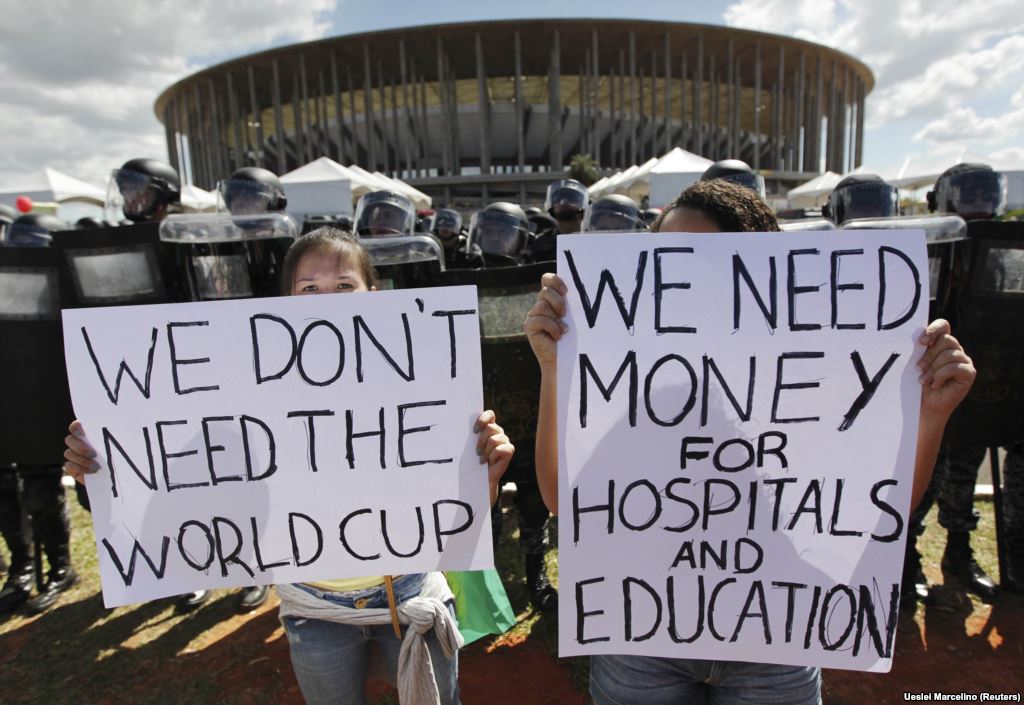
It’s clear, now, what it’s about. Brazil’s economic rise has been spectacular – but as in most of the so-called Bric countries it has involved increased inequality, exacerbated corruption and the prioritisation of infrastructure over public services. “Less stadiums, more hospitals,” reads one plaintive placard. The fact that the whole process was fronted by the relatively liberal and pro-poor Workers’ Party led, for a time, to acquiescence. The government sold the idea that hosting the World Cup, clearing some of the slums and pacifying the rest with heavy policing, together with a new transport system in the major cities, would complete Brazil’s emergence as a developed country. But the World Cup is draining money from public services; the cost of the urban transport system is squeezing the lower middle class.
assetto corsa mods

Urgent End Of Year Fundraising Campaign

Online donations are back! Keep independent media alive. 

Due to the attacks on our fiscal sponsor, we were unable to raise funds online for nearly two years.  As the bills pile up, your help is needed now to cover the monthly costs of operating Popular Resistance.

Urgent End Of Year Fundraising Campaign

Online donations are back! 

Keep independent media alive. 

Due to the attacks on our fiscal sponsor, we were unable to raise funds online for nearly two years.  As the bills pile up, your help is needed now to cover the monthly costs of operating Popular Resistance.

Sign Up To Our Daily Digest

Independent media outlets are being suppressed and dropped by corporations like Google, Facebook and Twitter. Sign up for our daily email digest before it’s too late so you don’t miss the latest movement news.