Skip to content

Food and Agriculture

Midwest Farmers Face Suicide Crisis

One by one, the three men from the same close-knit community took their own lives. Their deaths spanned a two-year stretch starting in mid-2015 and shook the village of Georgetown, Ohio, about 40 miles southeast of Cincinnati. All of the men were in their 50s and 60s. All were farmers. Heather Utter, whose husband’s cousin was the third to die by suicide, worries that her father could be next. The longtime dairy farmer, who for years struggled to keep his operation afloat, sold the last of his cows in January amid his declining health and dwindling finances. The decision crushed him. “He’s done nothing but milk cows all his life,” said Utter, whose father declined to be interviewed. “It was a big decision, a sad decision. But at what point do you say enough is enough?”

Bayer On The Edge As Jury Awards $265 M To US Peach Farmer Over Illegal Dicamba Drift

A jury on Saturday awarded US$ 250 million in punitive damages to a southeastern Missouri peach farmer who argued that weedkiller dicamba that had drifted onto his orchards from other farms had severely damaged his trees — an award that could bode well for over 140 other farmers suing the chemical’s makers – Bayer (Monsanto) and BASF. The punitive damages awarded to farmer Bill Bader, of Campbell, came a day after the jury awarded him $15 million in actual damages...

Green New Deal Must Offer Farmers A Way To Transition To Regenerative Agriculture

Right now, soil health is declining because intensive farming practices, including monocultures, deplete soil organic matter, destroy the biological health of soil, and increase the soil’s vulnerability to erosion. Concurrently, floods disperse prime topsoil from highly erodible monocrop operations while pesticides and commercial fertilizers kill the beneficial insects and microorganisms that create and support healthy soils.  As the land is being degraded, farmers increasingly feel the effects of unsustainable farming practices and climate change. For example, many farmers in the Midwest were unable to plant crops last year because of the floods. Farm debt has now reached levels not seen since 1980, and last year, Farm Aid’s hotline call volume increased 109% from 2017.

Atlanta Turns 7-Acre Vacant Lot Into Largest Free Food Forest In The Country

Instead of developing it into townhouses, the City of Atlanta recently voted to transform a vacant, old, overgrown pecan farm into a food forest. The 7-acre public park will feature fruit-producing trees, shrubs and vines along walking trails, a community vegetable garden and restored native forest and stream-side areas by 2020. The vegetable garden has already been planted alongside preexisting walnut and pecan trees. More than 100 fruit trees have also been planted including figs, apples, plums and peaches.

Black Farmers Are Embracing Climate-Resilient Farming

Chief Zogli looked weary as he scratched a notch in his doorpost to record the weather. “Still no rain,” he says with resignation. The chickens pecked lazily in the dust and the goats foraged for the last of the dropped grains beneath the emptying corn crib. In this rural community outside of Odumase-Krobo, Ghana, the farmers depend on rainfall as their only source of agricultural water. Zogli explains that the rainy season has been arriving later each year and ending sooner—and the thirsty crops struggle to mature. From the African continent to the Americas and across the Caribbean, communities of color are on the front lines of and disproportionately harmed by climate change. Record heat waves have caused injury and death among Latinx farmworkers and devastating hurricanes have become regular annual visitors in the Caribbean islands and coastal areas of the U.S.

‘Frontline Farmers’: Highlights From 50 Years Of Agrarian Activism

Depending on the reader's knowledge of agrarian activism in Canada, Frontline Farmers is either an insightful reminder of various campaigns and struggles, or an excellent introduction to agrarian activist history. For all of us, it is a great primer regarding the ongoing issues in Canadian agriculture. The NFU was founded in Winnipeg in July 1969 with more than 2,000 farmers gathered for its first convention. It comprised a merger of several provincial farm organizations from across Canada.

Brave New World: What You Need To Know About Gene-Edited Farm Animals

For decades, the biotech industry has spun a narrative around genetically engineered crops that could be summed up very simply as “jam tomorrow, instead of bread and butter today.” Sustained—and financed—largely on the promise of spectacular success at some unidentified point in the future, the research and development of new types of GMO foods, made with a whole host of new genetic engineering technologies, has gathered pace in recent years.

Fast Food Nations And Global Nutrition

Daniel Maingi works with small farmers in Kenya and belongs to the organisation Growth Partners for Africa. He remembers a time when his family would grow and eat a diversity of crops, such as mung beans, green grams, pigeon peas and a variety of fruits now considered ‘wild’. Following the Structural Adjustment Programmes of the 1980s and 1990s, the foods of his childhood have been replaced with maize. He says that in the morning you make porridge from maize. For lunch, it’s boiled maize and a few green beans. In the evening, a dough-like maize dish is served with meat. He adds that it is now a monoculture diet. The situation is encapsulated by Vandana Shiva who says if we grow millets and pulses, we will have more nutrition per capita. But If we grow food by using chemicals, we are growing monocultures, which leads to less nutrition per acre, per capita.

Three Steps For Building A Million-Person Food Citizen Force

Americans cherish the “family farm.” Most are also happy to be able to buy local foods at farmers markets, grocers or their favorite restaurants. In the marketplace, consumers are sending the message that they want more sustainable and organic food, sales of which exceeded $50 billion last year. And the vast majority of people in our nation believe that climate change is real, and that urgent action needs to be taken. While there is some variability depending upon one’s political affiliation, Democrats and Republicans alike hold these views. If this is what we collectively believe, across party, then surely our politics and public policies support these priorities, right? Well, not so much.

Cuba’s Urban Farming Shows Way To Avoid Hunger

LONDON, 11 November, 2019 − When countries run short of food, they need to find solutions fast, and one answer can be urban farming. That was the remedy Cuba seized with both hands 30 years ago when it was confronted with the dilemma of an end to its vital food imports. And what worked then for Cuba could have lessons today for the wider world, as it faces growing hunger in the face of the climate crisis. When the Soviet Union collapsed in the 1990s, most of Cuba’s food supplies went with it.

Monte Carmelo Celebrates 14th Peasant Seed Festival

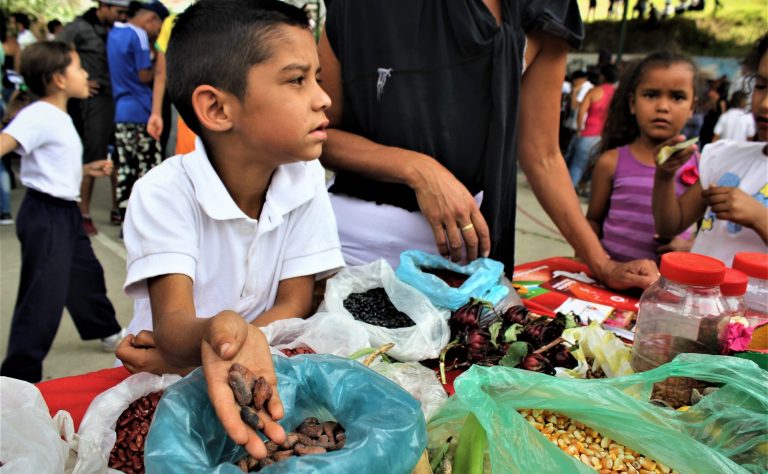
On October 29, the rural village of Monte Carmelo, located in the municipality of Andrés Eloy Blanco in Lara State, celebrated its 14th consecutive Peasant Seed Festival. According to Juan Ramón Escalona, local resident and member of the Collective Seeds of Solidarity, this festival was founded in 2005 by local peasants and farmers concerned with the preservation of native seeds against the onslaught of imported and transgenic seeds and increasing prevalence of monoculture in agricultural production. For Gaudy García, the preservation and reproduction of the native seed is a question of preserving local identity, culture and traditions, but it is also a matter of human rights and sovereignty. “Seeds are no one's inheritance. They exist for the benefit of all mankind, but capitalism has appropriated them, and even created patents...”

Holistic Land Management – Only A Movement Can Prevent Desertification

According to the United Nations Convention to Combat Desertification (UNCCD) the scourge of desertification is costing the global economy up to 15 trillion dollars annually, making it urgent to restore degraded land to mitigate climate change. In August 2019, the United Nation’s Intergovernmental Panel on Climate Change (IPCC)’s report  said better management of land can curb greenhouse gases that contribute to global warming. IPCC scientists said tackling land degradation can help keep temperatures below 2 degrees Celsius, a goal global governments are dithering to meet. Holistic management, pioneered 50 years ago by acclaimed Zimbabwean ecologist, Allan Savory, is proving effective in the restoration of degraded land in many parts of the world where it is being applied.

US Allows Poisons In Food Not Allowed In The UK

A 'food activist' has called out the discrepancies in ingredient listings on the same packaged products when they are sold in the U.S. versus the U.K. Vani Hari, who goes by the moniker The Food Babe online, showed the differences between common bodega goods like chips and soda and how they are formulated on each side of the Atlantic.  The author and campaigner, 38, shared her findings with her audience, who were horrified to see ingredients like the preservative BHT (butylated hydroxytoluene) and artificial colorings in products sold to American consumers while the British versions - and Australian and Canadian - come without.

How One Boston Hospital Is Feeding Patients Through Its Rooftop Farm

Carrie Golden believes the only reason she’s diabetes free is that she has access to fresh, locally grown food. A few years after the Boston resident was diagnosed with prediabetes, she was referred to Boston Medical Center’s Preventative Food Pantry as someone who was food insecure. The food pantry is a free food resource for low-income patients. “You become diabetic because when you don’t have good food to eat, you eat whatever you can to survive,” Golden says. “Because of the healthy food I get from the pantry… I’ve learned how to eat.”

Save The Amazon – Boycott Brazilian Food

Brazil's environment is under siege, as President Jair Bolsonaro has approved hundreds of new toxic pesticides this year and gutted watchdog environment agencies. Among the many dreadful results, news reports indicate that between December 2018 and March 2019, Brazilian beekeepers found more than 500 million dead bees. As the Amazon burns, Indigenous activists are calling on the world to help, and Beyond Pesticides is responding by promoting a boycott started by a Swedish Supermarket owner: #BoycottBrazilianFood. The Amazon rainforest is the world's biggest terrestrial carbon sink, and home both to the planet's richest biodiversity and approximately 400 indigenous tribes. The country has 2300 pesticides registered for use; a total of 290 new toxic pesticides have been approved as of late August 2019.
assetto corsa mods

Urgent End Of Year Fundraising Campaign

Online donations are back! Keep independent media alive. 

Due to the attacks on our fiscal sponsor, we were unable to raise funds online for nearly two years.  As the bills pile up, your help is needed now to cover the monthly costs of operating Popular Resistance.

Urgent End Of Year Fundraising Campaign

Online donations are back! 

Keep independent media alive. 

Due to the attacks on our fiscal sponsor, we were unable to raise funds online for nearly two years.  As the bills pile up, your help is needed now to cover the monthly costs of operating Popular Resistance.

Sign Up To Our Daily Digest

Independent media outlets are being suppressed and dropped by corporations like Google, Facebook and Twitter. Sign up for our daily email digest before it’s too late so you don’t miss the latest movement news.