Skip to content

Latin America

Leaders Across The Americas Unite Against Growing Global Fascism

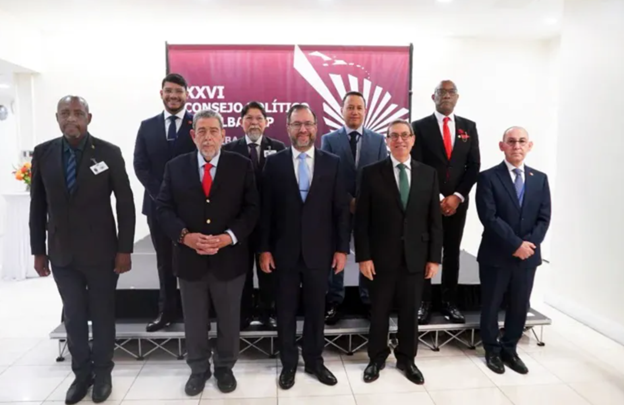
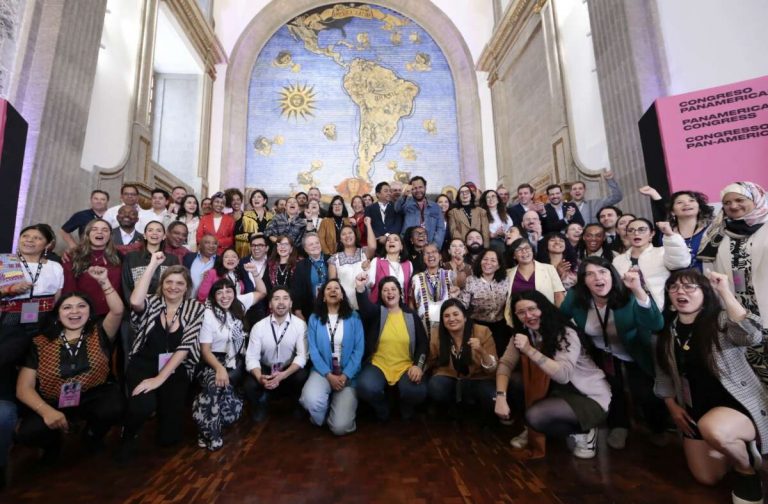
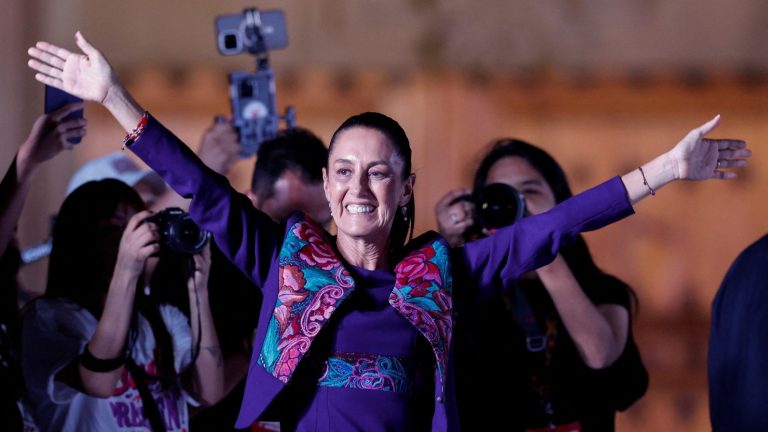
On the final day of the Second Pan-American Congress this month, more than 60 delegates from 12 countries made their way into the Secretary of Public Education headquarters in downtown Mexico City. As leaders from the Americas walked through the building’s passages and patios, many stopped to take pictures in front of the walls lined with murals from famous artists, including Diego Rivera. The UNESCO World Heritage Site served as the location of the final plenary of the three-day gathering aimed at uniting progressive and democratic forces in the Western hemisphere to take on rising far right authoritarianism. Delegates representing communities from as far as Nunavut in Canada to the extreme southern tip of South America eventually took their seats in the Ibero-American Hall, a space adorned with a massive, nearly 1,500-square-foot mural, appropriately called “The Union of Latin America” by Roberto Montenegro.

Trump Is Sending Thousands Of Troops To Latin America

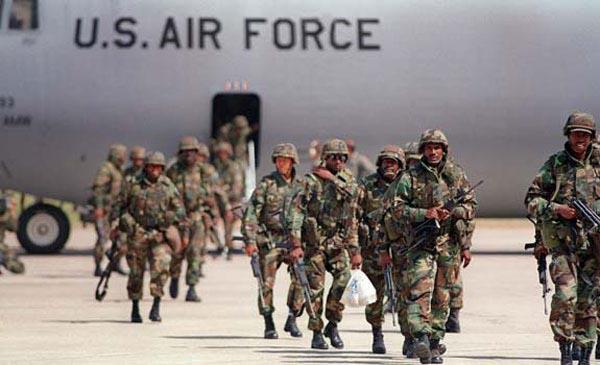
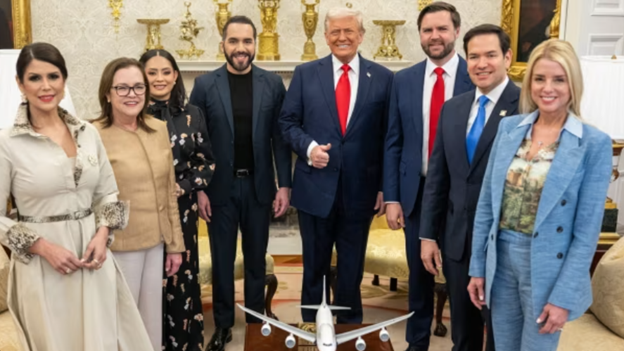
The Department of Defense has ordered the deployment of air and naval forces to the southern Caribbean Sea. On August 15, CNN reported that Trump is deploying 4,000 U.S. sailors and Marines to Latin America, and that various military assets are being allocated to the U.S. Southern Command including a nuclear-powered attack submarine, several destroyers, and a guided missile cruiser.  This operation comes after Donald Trump secretly signed an order last week directing the Pentagon to use the armed forces in the supposed “fight against drug cartels” in countries where groups declared “terrorist” exist, such as in Mexico, Haiti, El Salvador, and Venezuela. The operation was confirmed by Secretary of State and National Security Advisor, Marco Rubio.

What Lies Behind Trump’s Attacks Against Venezuela?

As if President Trump intended to meet professional US mercenary Erik Prince half way, US Attorney General Pam Bondi increased the existing US bounty on President Nicolas Maduro — originally set at $15 million — from $25m to $50m for anyone providing “information leading to his arrest or conviction.” In late 2024, Prince, a professional mercenary, alongside Venezuela’s far right, promoted a plan to deploy a private army to Venezuela. He suggested that if the US raised the bounty on Maduro’s head to $100 million, targeting not only the president but also Diosdado Cabello and the entire government, they could “just sit back and wait for the magic to happen.” Prince and Venezuela’s far right even launched a crowdfunding campaign, Ya Casi Venezuela (“Almost There, Venezuela”), to collect the $100 million.

Colombia Labels US Military Ops ‘Aggression’ In Latin America

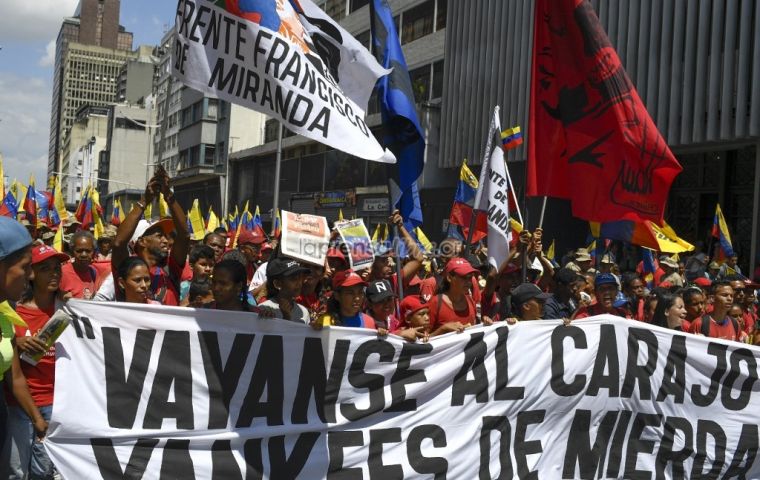
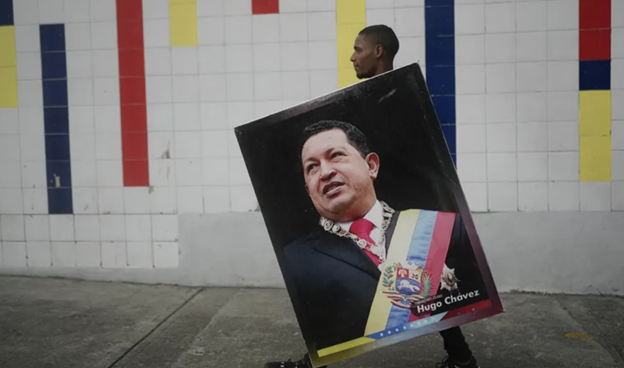
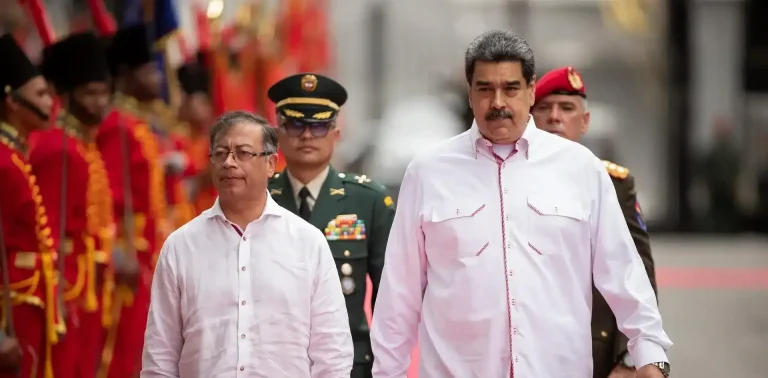
Through a message posted Sunday, August 10, on social media, Colombian President Gustavo Petro reaffirmed his strong support for Venezuelan President Nicolás Maduro. This followed recent threats from the Trump administration against the Venezuelan government, which is trying to link Maduro with drug trafficking, and the discovery by Bolivarian authorities of arsenals of weapons belonging to terrorist groups linked to the extreme right. Petro emphatically declared that “Colombia and Venezuela are the same people, the same flag, the same history.” He emphasized that “any military operation that is not approved by our sister countries is an aggression against Latin America and the Caribbean.”

Trump Targets Latino Migrants: Ideology Over Humanity

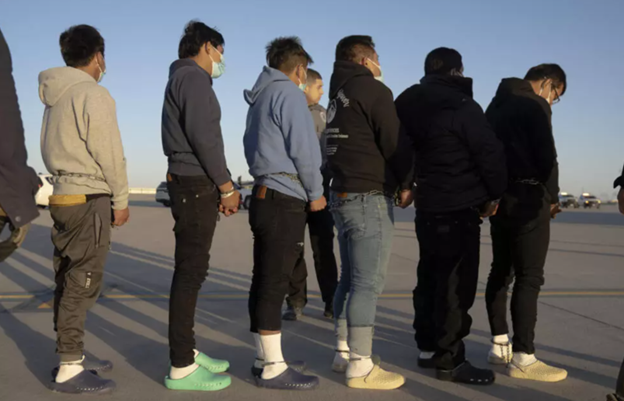
The importance of Latinos living and working in the US is enormous: if they were in a separate country, it would be the world’s fifth largest economy, bigger than even India. President Trump is recklessly attacking Latino migrants, inflicting calculated cruelty and disregarding the consequences for their home countries. Disastrously, US immigration policy affects the very victims of Washington’s destabilization campaigns in Latin America and Caribbean, which drive people to leave their homelands in the first place. In effect, by exporting chaos, the hegemon paradoxically ends up importing immigrants.

Trump’s Latin American Policies Go South

With the Trump imperium passing the half-year mark, the posture of the US empire is ever clearer. Whether animated by “America First” or globalism, the objective remains “full spectrum dominance.” And now with the neocon capture of the Democrats, there are no guardrails from the so-called opposition party. Call it the “new cold war,” the “beginning of World War III,” or – in Trump’s words – “endless war,” this is the era that the world has entered. The US/Zionist war against Iran has paused, but no one has any illusions that it is over.

Challenging The Media Myth Of Latino Machismo

Patriarchy is alive and well throughout the world. But the English-language media flatters itself by one-sidedly portraying machismo as a particularly Latin American malady, all the while overlooking significant feminist gains made in the region. Take, for instance, the entry under “machismo” in the latest edition of Britannica which asserts: “It has for centuries been a strong current in Latin American politics and society.” But the encyclopedia makes no such recognition for its own Anglo society. An article in the AP on sexual bias in Mexico blames “Mexico’s ‘machismo’ culture and strong Catholic roots,” calling out patriarchy as a defining and harmful feature for the whole of Latin American culture.

Despite The Pain In The World, Socialism Is Not A Distant Utopia

Every morning, I open the newspapers (now on apps rather than print) and read about atrocities taking place across the world. There is an inflation of pain, from the genocide in Gaza to the war in Sudan and the unreported chaotic violence in and around Myanmar. These conflicts seem interminable and might even confuse the casual observer who does not follow them closely. The current phase of Sudan’s war began in April 2023, with the Sudanese Armed Forces (led by General Abdel Fattah al-Burhan) arrayed against the Rapid Support Forces (led by Commander Mohamed ‘Hemedti’ Hamdan Dagalo).

Pedagogy And Class Power: Reclaiming Freire In An Age Of Reaction

In the early decades of the twenty-first century, education has become a frontline in the ideological struggle over the future of global capitalism. The coordinated assault on teachers, curriculum, and institutions of public learning is not an isolated culture war but a structural feature of neoliberal governance. In this context, the pedagogical philosophy of Paulo Freire demands renewed attention—not as an abstract theory of “engaged learning,” but as a revolutionary praxis situated in a broader Marxist tradition of class struggle.¹ Freire’s Pedagogy of the Oppressed, first published in 1970, emerged not from elite seminar rooms but from literacy campaigns among Brazil’s dispossessed.

US Empire’s Tactics Come Home; Trump Sends Military To Repress Protests

US President Donald Trump deployed the military to repress demonstrations in Los Angeles, California, as protesters flooded the streets to denounce the abuse of immigrants by US Immigration and Customs Enforcement (ICE). Trump sent at least 700 Marines and 2,000 members of the National Guard. This is the first time in 60 years that a US president has deployed troops to a state without the approval of its governor. The office of California’s Governor Gavin Newsom condemned Trump’s move as an “illegal militarization of Los Angeles”, and filed a lawsuit seeking to block the president and Department of Defense from taking control of a California National Guard unit.

Latin America’s Long Fight Against The US For Sovereignty

“An American team will win the next soccer World Cup,” a Nicaraguan boy once told me. It took me a second to realize he meant Brazil or Argentina, not the United States. Greg Grandin’s new book shows that “America” (or, in Spanish, América) was the name used for the whole hemisphere by the late 17th century. In the 18th, the great liberator Simón Bolívar set out his vision of “our America”: a New World free of colonies, made up of distinct republics living in mutual respect. He even cautiously welcomed the newly declared Monroe Doctrine as a rejection of European imperialism. Bolívar died without realizing his dream of a Pan-American international order but, Grandin argues, his ideals live on in Latin America today.

China-Celac Forum Brings Latin America And China Together

Ten years after its creation, the China-CELAC Forum has consolidated its position as one of the most relevant platforms for dialogue between Latin America, the Caribbean, and Asia. “The platform has strengthened cooperation between CELAC members and China, based on sovereign equality, mutual respect, plurality, and shared benefits,” states the meeting’s final joint declaration. Under the theme “Planning development and revitalization together, jointly building a China-LAC community with a shared future,” the meeting brought together representatives from more than 30 countries and leaders such as Xi Jinping (China), Luiz Inácio Lula da Silva (Brazil), Gustavo Petro (Colombia), and Gabriel Boric (Chile).

Latin America Three Months Into Trump

Nobody is complaining anymore about Latin America and the Caribbean being neglected by the hegemon to the north. The Trump administration is contending with it on multiple fronts: prioritizing “massive deportations,” halting the “flood of drugs,” combatting “threats to US security,” and stopping other countries from “ripping us off” in trade. The over 200-year-old Monroe Doctrine is alive and on steroids. But has Washington taken a sharp right turn, qualitatively departing from past practices, or simply intensified an already manifest imperial trajectory? And, from a south-of-the-border perspective, to what extent are the perceived problems “made in the USA”?

Birthing A New International Order

Writing in his cell as a political prisoner in fascist Italy after World War I, the philosopher Antonio Gramsci famously declared: “The crisis consists precisely in the fact that the old is dying and the new cannot be born; in this interregnum a great variety of morbid symptoms appear.” A century later, we are in another interregnum, and the morbid symptoms are everywhere. The U.S.-led order has ended, but the multipolar world is not yet born. The urgent priority is to give birth to a new multilateral order that can keep the peace and the path to sustainable development. We are at the end of a long wave of human history that commenced with the voyages of Christopher Columbus and Vasco da Gama more than 500 years ago.

Mexico’s Sheinbaum Calls On CELAC To End Blockade Of Cuba And Venezuela

At the 9th Summit of Heads of State and Government of the Community of Latin American and Caribbean States (CELAC), Mexican President Claudia Sheinbaum condemned economic blockades against any country and singled out those imposed on Cuba and Venezuela by the United States. “We reject, as Mexico has historically done, trade sanctions and blockades…” said Sheinbaum. “No to the blockade of Cuba. No to the blockade of Venezuela,” the Mexican president stated during her speech at the summit, held in Honduras, on Wednesday, April 9.
assetto corsa mods

Urgent End Of Year Fundraising Campaign

Online donations are back! Keep independent media alive. 

Due to the attacks on our fiscal sponsor, we were unable to raise funds online for nearly two years.  As the bills pile up, your help is needed now to cover the monthly costs of operating Popular Resistance.

Urgent End Of Year Fundraising Campaign

Online donations are back! 

Keep independent media alive. 

Due to the attacks on our fiscal sponsor, we were unable to raise funds online for nearly two years.  As the bills pile up, your help is needed now to cover the monthly costs of operating Popular Resistance.

Sign Up To Our Daily Digest

Independent media outlets are being suppressed and dropped by corporations like Google, Facebook and Twitter. Sign up for our daily email digest before it’s too late so you don’t miss the latest movement news.