Skip to content

New Economy

How Progressives Could Still Win The 21st Century

Our era will be remembered for the triumphant march of authoritarianism in whose wake the vast majority of humanity have experienced unnecessary hardship and the planet’s ecosystem has suffered avoidable climate destruction. For a brief period – a period the British historian Eric Hobsbawm described as “the short 20th century”  – establishment forces  were united in dealing with challenges to their authority. It was a rare period in which the establishment had to face a variety of progressives, all seeking to change the world: social democrats, communists, self-management experiments,  national liberation movements in Africa and Asia, the early, radical, ecologists etc.

Saving Local Newspapers Squeezed By Hedge Funds

The conversation about the crisis in local news has tended to focus on two solutions: helping create local news startups and supporting local newspapers still in existence. Each approach has limitations and promise. Birthing nonprofit news organizations is critically important and valuable, but so far there are far too few (around 300), and their scale is small. Congress, on the other hand, has so far focused on helping existing newspapers as they often are the only source of information in a community. But as a long-term strategy that is misguided.

Truth And Redistribution

In a nutshell, our racial dilemma is grounded in a political, economic, and identity-based devaluing of Black lives that has persisted ever since the first enslaved African arrived in Jamestown in 1619. The ensuing history of the United States is built on both racial and economic injustice, two related but distinct problems.  These racial and economic injustices, while entrenched, can be addressed. Below are three complementary policies that can make meaningful progress toward undoing centuries of systemic inequities, while prospectively ensuring capital access going forward: (1) Reparations through which the nation acknowledges and redresses its exploitation and extraction of Black resources and personhood; (2) Baby Bonds (publicly funded trust accounts) to establish a birthright to capital; and (3) a wealth tax to break up the concentration of wealth among the capitalist elite and diffuse the political power that goes along with such concentration.

Black Families Purchased Land To Build Their Own City

In Toomsboro, Georgia, a group of 19 Black families banded together to create what has the potential to be the next Black Wall Steet. Black people are resilient, we've had to be to thrive under systems that weren't built for us. This resiliency has created innovative solutions to impossible problems such as racial injustices, food insecurity, and a lack of secure and safe communities. Ashley Scott, a realtor living in Stonecrest, Georgia, was reaching her breaking point after watching the murder of Ahmaud Arbery in her home state.

How Co-operative Architecture Shaped Britain

In the 19th and 20th centuries, Britain's growing co-operative movement provided an alternative to capitalist business practices – and made its mark on cities and towns with ambitious building projects. Co-operative forms of organization have proliferated in the UK during the pandemic, with self-organizing networks of mutual aid groups forming and thriving at street and neighborhood level to meet people’s needs in a collective way. These kinds of relationships feel novel, but co-operative organization has a long history in Britain. Throughout much of the last 170 or so years, the co-operative consumer movement has comprised a vast national system of mutual enterprise, giving rise to the Co-operative Wholesale Society (now known as the Co-op) which has been a stalwart institution on the Left.

Community Land Trust Builds Social Housing

European communities are adapting the U.S. model of the community land trust to mitigate the housing affordability crisis. While trusts in the U.S. stemmed from the civil rights movement with the goal of securing access to land for Black farmers in the South, European countries have applied the movement’s logic to rural and urban challenges and its spread has been broadly from the affluent northwest to the east. Brussels, Belgium, known as the ‘capital of Europe,’ is one of many cities worldwide that are facing mounting pressure on their accessibly-priced housing stock.

How To Turn Your Non-Profit Into A Worker Co-op

If people who want to start a worker-owned cooperative are currently working for a government agency — like we were working for a nonprofit that was contracting with a government agency — but even if you are working directly with a government agency and they're going to outsource your jobs to another company, you have the best expertise that anyone could have for doing your job. And if you form a worker cooperative and put in your own bid, there's nothing to stop you from doing that. And your bid will probably be the most attractive because you know the best of how much things cost, and what to expect in the way of expenses. And you can also address how the work will be done better than anyone else could. And so your chances for keeping your jobs that way are, I think, really good, as as we were able to do. And so I think what we did could be a model for any government employees where they're going to get laid off, and the job is going to be outsourced. All government agencies have to put bids out for proposals.

People With Jobs Are Sharing Their Stimulus Checks With People Out Of Work

The responses of governments around the world to the pandemic and its resulting economic impacts are revealing and varied. As officials enact measures to keep economies afloat and keep people from financial ruin, unprecedented relief efforts are underway. Canada’s government has promised monthly payments worth about $1,450 to anyone affected; Australia plans to give about $1,000 every two weeks to each employee of any struggling business. Many nations, big and small, have guaranteed recurring payments to all citizens until it is safe to go back to work. Italy froze all rent and mortgage payments in early March, and cities and countries around the world have considered ways to follow suit—including the U.S., which ordered reduced mortgage payments for some eligible homeowners for up to a year.

Ten Point Agenda For The Global South

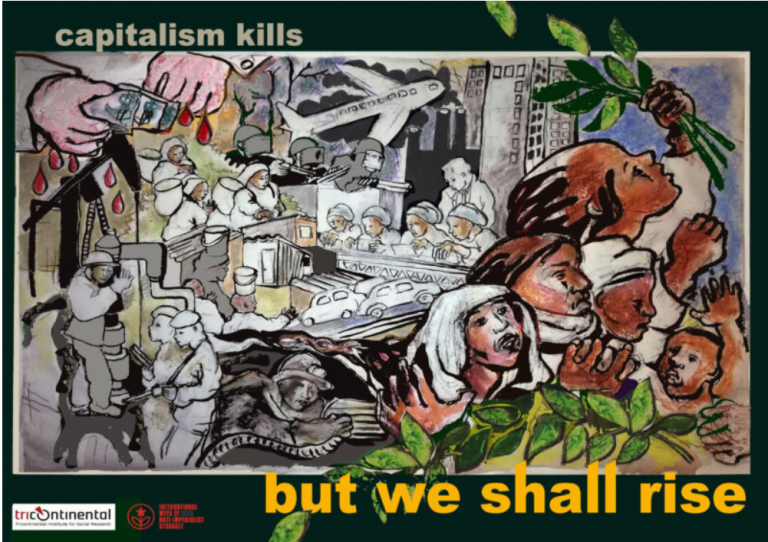
In 1974, the United Nations General Assembly passed a New International Economic Order (NIEO), which was driven by the Non-Aligned Movement (NAM). The resolution laid out a clear plan for the structural transformation of the world system, which was in the throes of a crisis at the time. But, the NIEO was set aside and the world order was shaped in a neoliberal direction; this neoliberal orientation furthered the crisis and brought us to this current cul-de-sac of human possibilities. Our team at Tricontinental: Institute for Social Research developed a ten-point agenda for a post-COVID-19 world. Last week, I presented this agenda at the High-Level Conference on the Post-Pandemic Economy, organized by the Bolivarian Alliance for the Peoples of Our America (ALBA).

Democratizing Energy To Counter The Climate Catastrophe

Youth climate activists have been striking to demand immediate climate action from political powers. They conjoined the issues of climate and labor by calling for a global climate strike in September, 2019, in which a historic 7.6 million schoolkids, (grand)parents and workers from 185 countries participated. Over 70 trade unions around the world supported the strike and the number of climate groups that are demanding a just transition for fossil fuel workers are also steadily increasing. The European landscape of climate activism is becoming densely populated. Numerous communities are defending nature together with their livelihoods. Initiatives like Ende Gelände practice civil disobedience to mobilize large numbers of European activists for climate justice. In most recent manifestations, such as Fridays for Future and Extinction Rebellion, many pupils and students are active, who also brought their families and teachers onto the streets.

Reclaiming Work: Can Cooperatives Overthrow The Gig Economy?

The pandemic has brought into focus the stark conditions and precarity faced by workers in the gig-economy. When the dust settles, can these workers who were at the frontlines of this crisis build a fairer future? The workers featured in Reclaiming Work believe so. This short documentary by Cassie Quarless and Usayd Younis of black & brown film features cycle courier cooperatives who offer a socialist alternative to the digital giants of Deliveroo and Uber. In fact, La Pájara, one of the cycle cooperatives showcased in the documentary, was formed following protest movements against Deliveroo in Madrid. Cooperatives like these are supported by the wider federation of CoopCycle – a ‘platform cooperative’ countering mainstream economic models of platform capitalism.

Why Banking Needs A Co-operative Revolution

You’d struggle to find anyone who believes our current banking sector was the ideal one for producing and maintaining a strong and just economy. The 2008 crisis showed how unstable, and vital to the wider economy, the sector is. The fact is, credit is both necessary and central to the global economy. Economists like Lazzarato have come up with theories about how debt drives economic production and an ever-increasing economy and in an era where finance has come to dominate our economy, it is evident to everyone that banks are very powerful institutions and if they could be reformed could be the power behind substantial improvement in our economy. Democratisation of our banking sector, via co-operatives and credit unions, is something that merits serious thought.

Solidarity Gardens Launched To Address Food Disruption And Insecurity

Champaign-Urbana, IL - Individuals and organizations are encouraged and empowered to plant gardens throughout the Champaign-Urbana area and donate use of land, garden supplies, and expertise through a newly launched initiative, Solidarity Gardens CU, in order to address food disruptions and insecurity during the COVID-19 pandemic and beyond. Modeled after the WWII-era Victory Gardens, Solidarity Gardens is being launched on June 3, 2020 by a network of area organizations and individuals throughout the Champaign-Urbana area. With help from the broader community, Solidarity Gardens CU will be offering free seeds, seedlings, tools, soil, containers, miscellaneous supplies, gardening expertise, and educational resources to any interested party in the Champaign-Urbana area, and will then collect, process, and redistribute...

Black Power Through Participatory Budgeting

I’ve spent the last two and half years learning and implementing participatory budgeting in New York City, first from within the New York City Council and now as a staff member of Participatory Budgeting Project. As members of Black Youth Project 100, I and my colleague Maria Hadden have presented on participatory budgeting as a policy for Black self-determination and liberation on various occasions and to varying audiences. Can you imagine my excitement when, on August 1st, The Movement for Black Lives released a robust policy agenda titled A Vision for Black Lives: Policy Demands for Black Power, Freedom and Justice — and included a bold solution for more community control through participatory budgeting? Contained in the policy agenda are some things we want to see get done.

The Future Is Public

Resistance to privatisation has turned into a powerful force for change. (Re)municipalisation refers to the reclaiming of public ownership of services as well as the creation of new public services. In recent years, our research has identified more than 1,400 successful (re)municipalisation cases involving more than 2,400 cities in 58 countries around the world. But this book is about more than just numbers. It shows that public services are more important than ever in the face of the climate catastrophe, mounting inequalities, and growing political unrest. Together, civil society organisations, trade unions, and local authorities are crafting new templates for how to expand democratic public ownership to all levels of society and opening up new routes to community-led and climate conscious public services.
assetto corsa mods

Urgent End Of Year Fundraising Campaign

Online donations are back! Keep independent media alive. 

Due to the attacks on our fiscal sponsor, we were unable to raise funds online for nearly two years.  As the bills pile up, your help is needed now to cover the monthly costs of operating Popular Resistance.

Urgent End Of Year Fundraising Campaign

Online donations are back! 

Keep independent media alive. 

Due to the attacks on our fiscal sponsor, we were unable to raise funds online for nearly two years.  As the bills pile up, your help is needed now to cover the monthly costs of operating Popular Resistance.

Sign Up To Our Daily Digest

Independent media outlets are being suppressed and dropped by corporations like Google, Facebook and Twitter. Sign up for our daily email digest before it’s too late so you don’t miss the latest movement news.