Skip to content

Women’s Rights

Capitalism, Ecology And The Official Invisibility Of Women

When it comes to the world economy, what you "see" is not usually what you get - especially when it comes to gender. Capitalism has fueled a world in which women are rendered invisible and saddled with the majority of labor. They are responsible for two-thirds of all working hours, produce 50 percent to 90 percent of the world's food and 100 percent of the world's children. Yet, for all this, they receive only 10 percent of the world's income and own less than 1 percent of the world's property. As a result, women make up 70 percent of the world's poor. Moreover, gender violence is more of a threat to women's health than the sum of traffic accidents and malaria. Often, when women are "seen," they are seen as simply bodies, to be manipulated in ways that lead to profit. In a very real sense, as people, women are invisible.

Hidden From Sight: Women In Extreme Poverty Rising

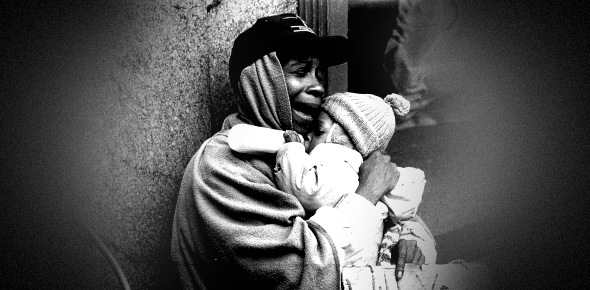
Meanwhile, poverty grows, the stock market zooms to new heights, the wealth of the one percent increases, and corporate executives continue to get tax exemptions for business entertainment expenses, which allow corporations to deduct 50 percent of these costs from their annual taxes. In all this discussion, the real face of poverty — single mothers — has strangely disappeared. Welfare policy in America has always favored mothers and children. In a country that values self-sufficiency and glorifies individualism, Americans have viewed men — except war veterans — as capable of caring for themselves, or part of the undeserving poor. Women, by contrast, were always viewed as mothers with dependents, people to be cared for and protected precisely because they are vulnerable and raise the next generation.

Advice for Young Women: Get a Union Job

Back in the days before modern feminism, a young woman looking for work might typically be advised, politely, to “learn a trade,” with the implication that she wasn't bound for college or an elite career, but a humbler job as, say, a secretary or seamstress. Such a phrase might sound condescending today. Yet working in a trade might still be sound career goal for a woman, if she gets the right kind of job—in a union. According to a new paper on women and unionization by progressive think tank the Center for Economic and Policy Research (CEPR), "Even after controlling for factors such as age, race, industry, educational attainment and state of residence, the data show a substantial boost in pay and benefits for female workers in unions relative to their non-union counterparts. The effect is particularly strong for women with lower levels of formal education." In other words, all other things being equal, unions are good for working women, yielding higher wages and better job benefits. Specifically, “unionized women workers on average make 12.9 percent more than their non-union counterparts, are 36.8 percent more likely to have employer-provided health insurance and 53.4 percent more likely to have participated in an employer-sponsored retirement plan.”

Reclaiming And Using “Terror”

Americans were shocked to learn former South African President and human rights icon Nelson Mandela was on the US terror watch list til 2008. This revelation should prompt us to ask: what is “terror” and how do we address it? A decade spent fighting and funding , with over $1 trillion, the Global War on Terror destabilized the world and left us more vulnerable. Ironically just after President Obama abandoned that term, Edward Snowden revealed a vast, costly telecommunications infrastructure representing its hidden counterpart. The National Security Agency created a dragnet that gathered the communications of world leaders and millions worldwide. Information on citizens’ phone calls, e-mails, and web activity was swept up, frequently with no evidence of violent plans.

Tribute to Feminists And Women Human Rights Defenders

As part of the 16 Days Campaign Against Gender Based Violence (November 25 – December 10, 2013) AWID is honoring Feminists and Women Human Rights Defenders (WHRDs) Who Are No Longer With Us and whose contributions to the advancement of human rights are very much missed. The tribute was first launched at AWID’s 12th International Forum on Women’s Rights in Development, held in April 2012 in Istanbul, Turkey. The new version of the tribute takes the form of anonline photo exhibition launched on November 25th, Day for the Elimination of Violence Against Women and ends on December 10, International Human Rights Day with a special slide show featuring 16 WHRDs from around the world. The tribute features photographs and biographies of women’s rights leaders from around the world. Each day of the campaign we will share the story of a WHRD(s) on our website as well as through Facebook and Twitter using hashtags #16days and #AWIDMembers and link back to the full online exhibit which will commemorate and celebrate the work and lives of WHRDs who have passed away since January 2011.

Idle No More: New Generations Of Young Women Activists

It is very inspiring to be involved within the Idle No More movement for many reasons: it is mostly led by women, it gives strong voices to the grassroots population, it renews cultural and identity pride of Indigenous youth, and it brings the Indigenous and non-Indigenous peoples of Canada closer as they have to work together on common issues like the protection of the Mother Earth and democracy. Indigenous peoples in Canada have lived a long history of colonization and oppression. The impacts and traumas of this history still can be felt and seen today: they live marginalization, segregation and exclusion. For decades, high level government inquiries, federal audits and international human rights bodies have repeatedly and consistently pointed to an unacceptable gap between Indigenous and non-Indigenous peoples in the enjoyment of basic human rights. Despite living in one of the world’s wealthiest countries, Indigenous families and communities in Canada continue to face widespread impoverishment, inadequate housing, food insecurity, ill-health and unsafe drinking water. They also face different types of racism and discriminations. Indigenous women often face double discrimination: they are discriminated as Indigenous and as women. According to several studies and statistics, Indigenous women are 4 times more likely to experience violence than non-Indigenous women. Also, the number of missing and murdered Indigenous women and girls in Canada is disproportionately high. . .

Indigenous Women Put Fear Aside & Become Powerful Leaders For Equality

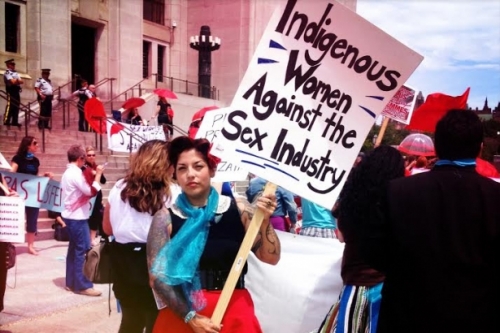
As the young, Indigenous, women-led movement of Idle No More approaches its first anniversary on Dec.10, the Vancouver Observer profiles four indigenous women who are making a difference in BC. These four women are ignited by a passion for change because of what they experienced at home or in their communities. When Cherry Smiley, 30, accepted Governor General’s Award in Commemoration of the Persons Case in Ottawa in October, she quoted an Indigenous poet and visual artist based in New York. Smiley’s voice trembled, unaccustomed to the regal reception. The award ceremony took place in a Victorian-decorated room at Rideau Hall, the residence of the Governor General, complete with a violinist playing. "As Gail Tremblay said, for an indigenous person, choosing not to vanish, not to feel inferior and not to hate oneself becomes an intensely political act. I choose not to vanish, not to feel inferior, not to hate myself, and I am not afraid," Smiley said. She was one of five women this year who received the award, which honours Canadian women who advance women’s equality.

The Smartest People in Seattle Politics

Having political smarts isn’t about brokering power. True political geniuses are bringing policy to the table and suturing it to the flesh and bones of our city. They’re working, usually behind the curtain, to change conversations about what’s possible. Seattle is wealthy. It’s educated. And the voters are liberal. We’ve got everything it takes to become a national model for building mass transit, closing achievement gaps in schools, innovating environmental policy, and treating everyone equitably. But way too often, the same cast of self-satisfied schmucks hogs the limelight while settling for a career of unmemorable civic housekeeping. For instance, the Seattle City Council lacks a vision for a citywide light-rail system while instead making noisy fanfare over largely inconsequential tweaks to the city budget.

African Women Embrace Politics, Offer Hope For Reform And Progress

This policy of quotas applies to women, youth representation and minorities. It has been adopted by many African countries, including former war-ravaged Rwanda, and Zimbabwe, which continues to be led by the controversial Robert Mugabe. With the introduction of women into African politics, expectations of an end to the “old style” of African politics have emerged, based on the belief that adding women in government may help to resolve past conflicts and cultural differences that have plagued African politics for decades. Rwanda is proving that women in politics works. Twenty years after the genocidal civil war that killed 800,000 in a three-month period, Rwanda is now the first and only nation that has elected the world’s first female-dominated legislature.

VIDEO: Fukushima: The Beginning of The End Of Nuclear Power | Resistance Report #12

The hear no evil see no evil attitude of mainstream media outlets here in the United States about the ongoing crisis at the Fukushima nuclear facility in Japan does not obscure the fact that, in the attempt mitigate future catastrophic damage, the global community is faced with challenges unique in the history of humankind. Members of the Green Shadow Cabinet traveled to the UN on Thursday to deliver a petition signed by 150,000 citizens of the world demanding that the government of Japan transfer responsibility for the Fukushima reactor site to an international engineering firm overseen by a civil society panel and an international group of nuclear experts. Additionally, the petition demanded that the global media be permitted around-the-clock access to accurate information throughout the entire process of removal of the spent fuel rods so that the international community can be informed of any risks to its health. Also covered this week’s episode of the Resistance Report:

The Future Must Be Green, Red, Black and Female

The future of the human species - if there is to be a future - must be radically green, red, black and female. If we take this seriously - a human future, that is, if we really care about whether there will be a human future - each one of us who claims to care has to be willing to be challenged, radically. How we think, feel, and act - it's all open to critique, and no one gets off easy, because everyone has failed. Individually and collectively, we have failed to create just societies or a sustainable human presence on the planet. That failure may have been inevitable - the human with the big brain may be an evolutionary dead-end - but still it remains our failure. So, let's deal with it, individually and collectively. We can start by looking honestly at the data about the health of the ecosphere, in the context of what we know about human economic/political/social systems. My conclusion: There is no way to magically solve the fundamental problems that result from too many people consuming too much and producing too much waste, under conditions of unconscionable inequality in wealth and power.

Build Resistence To The War On Women

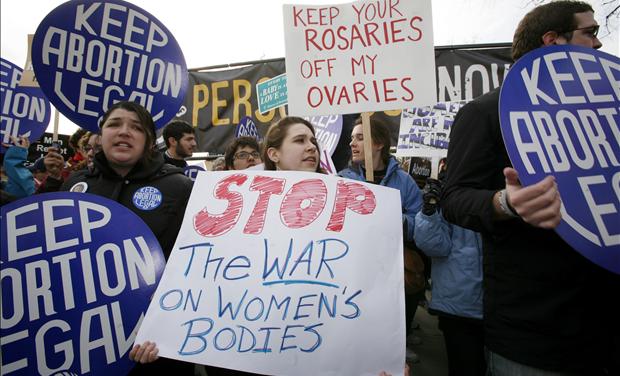
Let Us Not Talk Falsely, the Hour Is Getting Late: We Do Not Need A “New Underground” Of Abortion Services – We Need Revolution and an Uncompromising Resistance Among Millions to Defeat the War On Women! I want to speak to something that I have heard advocated by abortion rights supporters with increasing frequency as the attacks on abortion rights escalate to a fevered pitch across this country. As abortion clinics are closed down at an alarming rate, as access to abortion is restricted beyond the reach of many poor and rural women already, and as new laws and restrictions mount, it is not uncommon to hear some of the most dedicated fighters in the pro-choice movement insist that it is time to begin developing underground networks that will be able to continue providing abortions to women even if it becomes illegal. The first time I heard this approach advocated more than fifteen years ago at a women’s conference, I found it extremely attractive because it had the appearance of defiance and determination not to be stopped by unjust and illegitimate laws. However, now when I hear this advocated I hear the air of desperation, defeat and honestly a degree of self-delusion.

Stories of the Disappeared: The World Court of Women Against Poverty

"Poverty is the new normal" according to former Green Party presidential candidate Jill Stein, speaking in Philadelphia in October 2013 in her role as juror for the World Court of Women on Poverty in the United States. Stein leads the "Green Shadow Cabinet," which aims to provide an "alternative voice to the dysfunctional government in Washington DC." Her participation in the court aimed to inform her administration's understanding of how the economy and our nation's social policies are affecting people and communities.

More than 60 Saudi Women Openly Defy Ban on Driving

More than 60 Saudi women got behind the wheels of their cars as part of a protest against a ban on women driving in the kingdom, activists have claimed. A Saudi professor and campaigner, Aziza Youssef, said the activists have received 13 videos and another 50 phone messages from women showing or claiming they had driven, the Associated Press reported. She said it had not been not possible to verify all of the messages. But, if the numbers are accurate, they would make Saturday's demonstration the biggest the country has ever seen against the ban.

Fearless…And Topless: Femen Activists To bring ‘Sextremism’ To UK

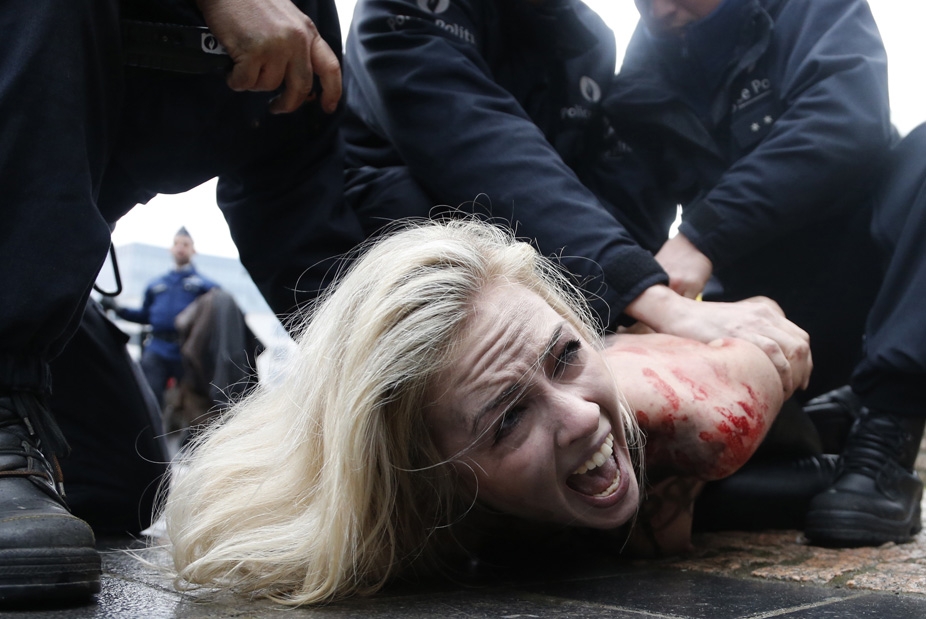
The controversial activists of Femen, notorious for their topless protests on issues such as prostitution, abortion and the wearing of the hijab, are planning to target Britain. The setting up of a new British arm of Femen's operations is likely to generate mixed feelings among indigenous feminist groups. A succession of high-profile topless protests since the group's formation in 2009 was greeted with bafflement and amusement by many observers, although given the heavy-handed treatment often meted out by bodyguards and police there is no doubting its members' courage. According to the 25-year-old Shevchenko, Femen has no formal leadership, but hopes to establish a "homegrown" UK branch, built up from a base of British feminist activists, with whom she is in discussions this weekend.
assetto corsa mods

Urgent End Of Year Fundraising Campaign

Online donations are back! Keep independent media alive. 

Due to the attacks on our fiscal sponsor, we were unable to raise funds online for nearly two years.  As the bills pile up, your help is needed now to cover the monthly costs of operating Popular Resistance.

Urgent End Of Year Fundraising Campaign

Online donations are back! 

Keep independent media alive. 

Due to the attacks on our fiscal sponsor, we were unable to raise funds online for nearly two years.  As the bills pile up, your help is needed now to cover the monthly costs of operating Popular Resistance.

Sign Up To Our Daily Digest

Independent media outlets are being suppressed and dropped by corporations like Google, Facebook and Twitter. Sign up for our daily email digest before it’s too late so you don’t miss the latest movement news.