Skip to content

Class Struggle

UPS Pays Out $700 Million To Stockholders: An Object Lesson In The Operation Of Capitalism

On Thursday, the US-based logistics and delivery company UPS announced a quarterly dividend payout to shareholders of more than $700 million for the three months to August 2018. The announcement came the very same day as the Teamsters union met in Chicago, Illinois to endorse new contracts for UPS workers that enforce poverty-level wages and introduce major new concessions. UPS’s dividend payout is an object lesson in the basic functioning of capitalism. Where does this $700 million come from? It did not, after all, arise out of thin air. It is extracted from the labor of hundreds of thousands of workers, in the US and internationally. It is part of the surplus value produced by these workers—the difference between the wages they earn by selling their labor power, barely enough to survive, and the value they add in the process of production and distribution.

Imagining A World With No Bullshit Jobs

In this interview about his latest book, David Graeber discusses the role of unions, the challenges posed by automation and “the revolt of the caring classes.” Is your job pointless? Do you feel that your position could be eliminated and everything would continue on just fine? Maybe, you think, society would even be a little better off if your job never existed? If your answer to these questions is “yes,” then take solace. You are not alone. As much as half the work that the working population engages in every day could be considered pointless, says David Graeber, Professor of Anthropology at the London School of Economics and author of Bullshit Jobs: A Theory.

Vermont’s Striking Nurses Want A Raise For Nonunion Workers Too

Especially for professional workers, when your main strike issue is pay, attracting public support can be a challenge. Savvy employers paint union members as spoiled. They like to point out that you’re already making more than many of your nonunion neighbors. Yet when 1,800 nurses and technical staff struck for better wages July 12-13 at the state’s second-largest employer, the University of Vermont Medical Center, the people of Burlington came out in force to back them up. “We had policemen and firefighters and UPS drivers pulling over and shaking our hands” on the picket line, said neurology nurse Maggie Belensz. “We had pizza places dropping off dozens of pizzas, giving out free ice cream.” And when a thousand people marched from the hospital through Burlington’s downtown, “we had standing ovations from people eating their dinners,” she said. “It was a moving experience.”

How Tech Workers Are Organizing For Social Change

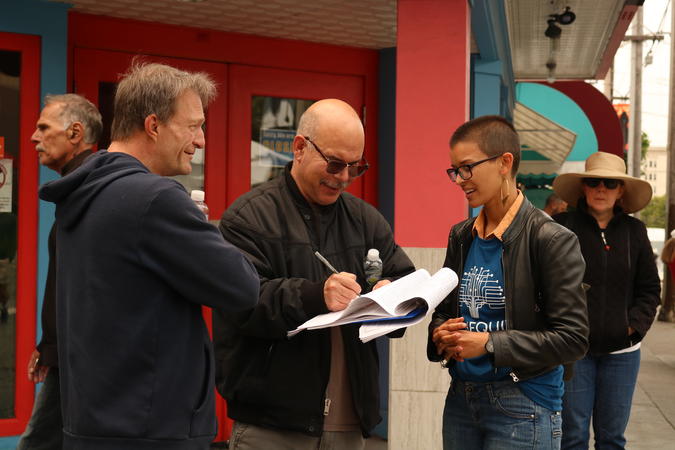
Coworker.org, a nonprofit based in the U.S. that enables workers to start campaigns to change their workplaces, received more inquiries from employees at tech firms about using the platform following the election in 2016, Yana Calou, the group's engagement and training manager said: "They were really concerned about their jobs being used towards things that they were not really comfortable with." Another organization leading this effort in the San Francisco Bay Area, home to several of the world's largest technology companies, is the TechEquity Collaborative, which is taking more of a grassroots approach. "No one was looking at the rank and file tech worker as a constituent group to be organized in a political way," says Catherine Bracy, executive director of the TechEquity Collaborative. "There is a critical mass of tech workers who feel a huge sense of shame and guilt about the role that the industry is playing in creating these inequitable conditions, and want to do something different about it.

We Stand In Solidarity With The Resilient People Of Iraq

Major, nationwide protests are currently raging throughout Iraq. Beginning in Basra among young oil workers demanding jobs for locals, the movement has spread to other major cities in Iraq. As reported by Human Rights Watch, during the protests, which began earlier in July, peaceful demonstrators, including children, have been targeted, killed, wounded, and arrested by Iraqi security forces, paramilitary forces and militias run by members of the political elite. Demonstrators are mainly young people, and while there are no centralized leader or political party affiliations, their demands are clear. Protesters are calling for fundamental necessities like clean running water, electricity, healthcare, and jobs. However, they signal a deeper call for human dignity and for radical political change in Iraq.

Our Solidarity Is Stronger Than Their Hate

The renewed threat of the far right is another frightening feature of the Trump era, but we have solidarity and unity to rely on in building resistance and a left alternative.  AT THE start of August one year ago, the far right in the U.S. was preparing for its boldest moment yet during the Trump era: two days of strutting and bullying on the streets of Charlottesville, Virginia, at their “Unite the Right” rally. They claimed they were exercising their “free speech,” but the white supremacists’ real purpose — deadly violence — was exposed when a Nazi used his car as a murder weapon to plow into a march of anti-racist demonstrators, injuring numerous people and killing Heather Heyer. Horror at Heyer’s murder was compounded by outrage at Donald Trump for pandering to the racists with his comment that there were “good people” among the thugs.

Rebel Cities 9: Iceland’s Slow-Burning Digital Democratic Revolution

For the last decade, Iceland has been a subject of democracy folklore. The country is often neglected due to its size and location, but when it receives attention it is almost mythologized. One reason for this is that the people there, from the bottom up, are innovating with digital democratic experiments. The folk are co-creating the law. Icelanders to their credit have twice peacefully ousted governments; they are world leaders in transparency laws and digital freedom; and through referendum the nation decided not to bail out its failed banks. Through a crowd-sourced Constitution, Iceland showed a pathway for 21st Century democratic renewal, although successive politicians blocked the final destination. In addition, the Pirate Party of Iceland, a new direct democracy party, has often polled highest yet has not made it into government.

How European Workers Coordinated This Month’s Massive Amazon Strike—And What Comes Next

As Amazon CEO Jeff Bezos’ net worth topped $150 billion last week, making him the richest man in modern history, thousands of Amazon workers across Europe went on strike. The work stoppage, which lasted three days at some facilities, was one of the largest labor actions against Amazon to date, and the first to receive widespread coverage in the U.S. media. But the strikes and protests in Spain, Germany and Poland were just the latest in an escalating series of actions against Amazon in Europe, where workers belonging to both conventional unions and militant workers’ organizations are forging a transnational movement against the internet juggernaut. In Germany, which is Amazon's second-biggest market after the United States, workers at the company’s fulfillment centers waged the first-ever strike against Amazon in 2013.

What Makes Millennial Socialism Different

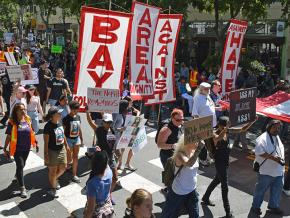
The Occupy movement, British Labour leader Jeremy Corbyn and Vermont Sen. Bernie Sanders all changed what the millennial generation thinks of as socialism—and made the come-from-behind win of New York’s Alexandria Ocasio-Cortez possible. At least, that’s what Ben Judah argues in a recent piece for The American Interest, in which he outlines the many differences between the “old left” and the “new left” in the U.S. and the U.K. One major shift on the left, Judah says, has been the coining of the terms “1 percent” and “99 percent,” which he considers one of the most powerful accomplishments of the Occupy movement, because they allowed a new kind of revolution to seep into the imagination of young Americans.

Unions In The 21st Century: Adapt To Survive, Co-Opt To Grow

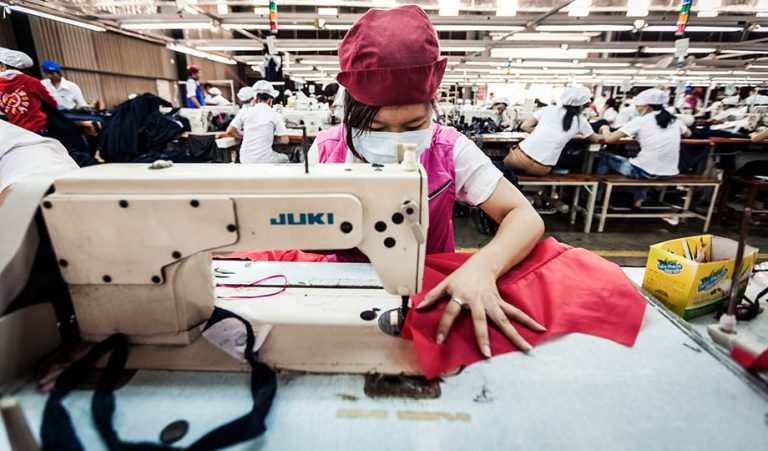
It has always surprised me how rarely trade unions are raised in the conversation on forced labour. Their fundamental purpose is to secure better conditions for workers, in part by using collective action to identify and rectify the structural and systemic problems occurring within their sectors. As such, they should be central and essential actors within any serious effort to root out forced labour in the global economy today. Yet trade union voices have been almost entirely shut out of the conversation. Governments, business and many NGOs have instead chosen to rely upon voluntary corporate disclosure, supplier auditing, and awareness raising campaigns to catch ‘bad apples’ and alter corporate and supplier behaviour for the better.

Teamsters Union Blackmails UPS Workers: Approve Contract Or Your Wages Will Be Cut

The Teamsters Union is seeking to blackmail UPS workers into voting for its sellout contract proposal by threatening that a “no” vote will result in an even worse offer. A UPS worker provided the World Socialist Web Site with a letter sent out to all New York state UPS Teamster members by Local 687 president Brian Hammond. The letter, dated July 16, includes the following threat: “Health and pension—the company has agreed to pay the full amount needed to the health and pension fund of $5.28 over the life of the agreement. They will do this only if we pass our supplement [agreement] the first time. If not, the extra amount will come from your wage increase like before. Currently FT [full-time] employees have $1.95 per hour diverted to pension. I do not want to see that number increase!”

Massive Protests In Iraq

A week ago, demonstrators gathered in Basra at the entrances to three Iraqi oilfields: the West Qurna field run by Lukoil, the Rumaila field run by BP and the West Qurna field run by ExxonMobil. Protesters accused the foreign companies of polluting the water and the environment in the city of Basra and more widely throughout southern Iraq; of failing to provide social benefits for the cities in which they work; and of not providing jobs for Iraqis. On July 10th, a group of demonstrators from Garma, in the north of the province of Basra, denounced environmental destruction and demanded “treatment of high water salinity that has killed the trees and plants and destroyed our land”. The protests intensified after Iraqi police opened fire in an attempt to disperse dozens of protesters near the West Qurna field, killing one person and injuring three others.

The Crummy Good Economy And The New Serfdom

For about a year now, the unemployment rate has been around 4%. That’s supposed mean full employment, labor shortages, and rising pay. But the latest earnings report is the same old story: no gains in real hourly wages from June of 2017 through June of 2018. Most employers have been able to find new workers without having to raise pay offers. What’s going on?  There are screwball right-wing diversions and explanations. A Trump economist, D. J. Norquist, opines that it will take time for the Republican tax-cuts to work their way through the economy. As an explanation, this is nonsense. Just because the lords of creation get more money doesn’t mean more will filter down to workers. We have the evidence of forty years on that issue. Then we have Stephen Moore at the Heritage Foundation.

A Transformational Plan For Economic Democracy To Serve The People

As Shadow Chancellor John McDonnell likes to say, ‘Another world is not just possible, it is within reach’. Largely unnoticed by its enemies within and without, the Corbyn Project is cohering around a programme for transformative change that could form the basis for a new political-economic settlement. Building on popular elements of Labour’s 2017 manifesto, For the Many Not the Few, and encompassing cutting edge thinking from the Alternative Models of Ownership report and beyond, the leadership is assembling the tools and strategies to enable a Labour government to pursue a bold transformation of the British economy organised around ownership, control, democracy, and participation.1

Survival Of The Richest

Last year, I got invited to a super-deluxe private resort to deliver a keynote speech to what I assumed would be a hundred or so investment bankers. It was by far the largest fee I had ever been offered for a talk — about half my annual professor’s salary — all to deliver some insight on the subject of “the future of technology.” I’ve never liked talking about the future. The Q&A sessions always end up more like parlor games, where I’m asked to opine on the latest technology buzzwords as if they were ticker symbols for potential investments: blockchain, 3D printing, CRISPR. The audiences are rarely interested in learning about these technologies or their potential impacts beyond the binary choice of whether or not to invest in them. But money talks, so I took the gig.
assetto corsa mods

Urgent End Of Year Fundraising Campaign

Online donations are back! Keep independent media alive. 

Due to the attacks on our fiscal sponsor, we were unable to raise funds online for nearly two years.  As the bills pile up, your help is needed now to cover the monthly costs of operating Popular Resistance.

Urgent End Of Year Fundraising Campaign

Online donations are back! 

Keep independent media alive. 

Due to the attacks on our fiscal sponsor, we were unable to raise funds online for nearly two years.  As the bills pile up, your help is needed now to cover the monthly costs of operating Popular Resistance.

Sign Up To Our Daily Digest

Independent media outlets are being suppressed and dropped by corporations like Google, Facebook and Twitter. Sign up for our daily email digest before it’s too late so you don’t miss the latest movement news.