Skip to content

Food and Agriculture

Mexican Farmers Oppose Expansion Of GMO Crops

Bean grower Manuel Alvarado is part of the majority of producers in Mexico who consider it unnecessary to introduce genetically modified varieties of beans, as the government is promoting. “There is no study showing superior yields compared with hybrid or regional seeds. People are still unaware of what transgenic products are, nor the effects they have, but some of the things that are known about them are not good,” said Alvarado, the head of Enlaces al Campo, a bulk beans sales company in the city of Fresnillo, in the northern state of Zacatecas. "There can be no biosecurity with transgenics: they cause genetic erosion (loss of genetic diversity)." -- Silvia Ribeiro Genetically modified organisms (GMO) may cause a number of problems, among them the possibility that “transgenics will contaminate native and hybrid seeds, which have higher germination rates than transgenics,” Alvarado told IPS. Bean farmers in Mexico face a context of overproduction, low prices and increasing imports, in a country where there are 300,000 bean producers, half of them small scale farmers.

Study: Organic Vs. Non-Organic Food

An international team of experts led by Newcastle University has shown that organic crops are up to 60% higher in a number of key antioxidants than conventionally-grown ones. Analysing 343 studies into the compositional differences between organic and conventional crops, the team found that a switch to eating organic fruit, vegetable and cereals – and food made from them – would provide additional antioxidants equivalent to eating between 1-2 extra portions of fruit and vegetables a day. The study, published today in the prestigious British Journal of Nutrition, also shows significantly lower levels of toxic heavy metals in organic crops. Cadmium, which is one of only three metal contaminants along with lead and mercury for which the European Commission has set maximum permitted contamination levels in food, was found to be almost 50% lower in organic crops than conventionally-grown ones.

U.S. And EU Civil Society: TTIP Bad For Many Sectors

The next round of negotiations for the Transatlantic Trade and Investment Partnership (TTIP) will take place July 14–18 in Brussels, almost exactly a year since the first round in Washington, DC. Since that time, movements for local and regional farming and food systems and public health advocates on both sides of the Atlantic have coordinated efforts to raise their concerns around the agreement. Civil society groups from the U.S. and EU are deeply concerned that the agreement could serve to lower standards on food safety and public health. “We must not let free trade agreements like TTIP move us towards even more intensive food production without thinking about how this will impact on the environment, public health, food safety, rural development and local communities. Civil society in both the EU and the U.S. is ready to raise the bar and instead of starting a race to the bottom,” said Robert Pederson of ARC2020, the European sustainable agriculture coalition.

If FDA Rule Goes Through You Will Not Be Able To Trust Meat Safety

Today, the U.S. Department of Agriculture (USDA) sent to the White House Office of Management and Budget a final rule that would dramatically reduce the number of trained USDA inspectors in poultry slaughter plants and replace them with company employees. The USDA estimated in the proposed rule that the industry will stand to gain $260 million annually because of increased production and fewer regulatory requirements with no guarantees of improved food safety. “This rule, which essentially privatizes poultry inspections, serves up the huge gift of deregulation to the meat industry,” said Wenonah Hauter, executive director of Food & Water Watch. “If the White House acquiesces, it will be a disaster for workers and consumers who want to know that the poultry they are eating is safe.” The rule was first proposed on January 27, 2012 and received over 175,000 public comments overwhelmingly opposed during the comment period. Earlier this year, over 100 groups sent a letter to President Obama and USDA Secretary Tom Vilsack urging them to withdraw the rule and another 220,000 consumers expressed their opposition to the proposed rule. Occupational safety and worker justice communities also overwhelmingly oppose the rule.

Salvadoran Farmers Successfully Oppose Monsanto Seeds

Farmers across El Salvador united to block a stipulation in a US aid package to their country that would have indirectly required the purchase of Monsanto genetically modified (GM) seeds. Thousands of farmers, like 45-year-old farmer Juan Joaquin Luna Vides, prefer to source their seeds locally, and not to use Monsanto's GM seeds. "Transnational companies have been known to provide expired seeds that they weren’t able to distribute elsewhere," said Vides, who heads the Diversified Production program at the Mangrove Association, a community development organization that works in the Bajo Lempa region of El Salvador. "We would like the US embassy and the misinformed media outlets [that are pressuring the Salvadoran government to change their procurement procedure] to know more about the reality of national producers and recognize the food sovereignty of the country," he added. During the last two months, the US government has been attempting to pressure the government of El Salvador to sign the second Millennium Challenge Compact with the Millennium Challenge Corporation (MCC), a US foreign aid agency created during the presidency of George W. Bush.

8 Reasons CSAs Are Better Than Grocery Stores

If you've ever compared the difference between grocery produce and farm-fresh harvests, you know how strikingly different they taste. (Just a look at these strawberries says it all.) Not everyone has time for farmers markets, or the bankroll to frequent them, but CSAs are worth the effort for sure. CSA, which stands for community supported agriculture, is crucial for keeping small farms up and running and is a great way to get loads of just-picked produce in your home. For those who are new to the concept, CSAs work like this: You sign up for a share with a farm before the harvest season begins and receive a haul of fruits and veggies with your name on it every week. It's pretty great. The only downfall is having to pay the lump sum for the goods before the season starts, but this fee helps the farms run smoothly. And it means you don't have to pay a penny for produce throughout the 20-25 weeks that the CSA runs. We're not going to lie to you, a CSA is not without its downfalls. Sometimes you get stuck with a handful of stinging nettles or fiddlehead ferns and things become very confusing. Other times you are handed a big box of leafy greens that needs to be quickly eaten before everything wilts. But the pros outweigh the cons -- here's how.

What Can Urban Agriculture Do?

Many major cities in Latin America and the Caribbean are turning to urban farming to address the common problems that they face, such as urban poverty and food insecurity. According to a report by the Food and Agriculture Organization (FAO), the urban population of Latin America and the Caribbean is now almost half a billion; the region is the most urban in the world. In 2009, representatives from Central American national governments, research institutes, and international organizations met to draft the Medellìn Declaration, which committed them to incorporate UPA, or urban and peri-urban agriculture (the latter refers to commercial farming that supplies a city’s food) to alleviate their cities’ problems. Havana, Cuba, is making use of the technological developments that have arised from the use of UPA. “In Cuba, the biggest challenge was the shortage of inputs, especially seed, fertilizer, and pesticide,” said Graeme Thomas, author of the FAO report. “That has been overcome by a shift to fully organic production.” Havana is well known for their use of organoponics, a farming technology that uses organic substrates. The city, which previously struggled with food rationing and child malnutrition, now boasts 97 organoponic gardens. An estimated 90,000 households are now growing their own vegetables and raising small animals for consumption, and

Victory For Campaign To Protect The Bees

The agri-business giant Syngenta has withdrawn its controversial application to use a banned pesticide in the UK, after campaigners warned that the chemical could have a devastating impact on threatened bee populations. The chemical in question is a type of neonicotinoid – a class of pesticides banned across the European Union for two years from December 2013. Though they are prohibited for their impact on essential pollinator species, including shrinking bee populations, the UK can allow the use of neonicotinoids in “emergency circumstances.” Therefore, Syngenta applied for an exemption to use neonicotinoids on oilseed rape across the UK – claiming it was the only way to protect 186,000 hectares of crops. The government – which had opposed the EU ban – had been expected to give its ruling on Tuesday. Though that did not arrive, Syngenta has now decided to withdraw its appeal. The firm said it was now too late to supply the pesticide to British farmers for this year’s crops, but said they would apply for another emergency exemption in 2015. Environmentalists have welcomed the news, after the government came under heavy pressure to reject Syngenta’s appeal.

Hillary Clinton Goes To Bat For GMOs

Speaking at a conference in San Diego last week for the world's largest trade organization of biotechnology firms, potential presidintial candidate Hillary Clinton backed GMOs and Big Ag, further displaying her allegiance to the industry in the eyes of sustainable food and organic advocates. While trumpeting her endorsement of GMO seeds when she served as Secretary of State, Clinton told the crowd that the term "'genetically modified' sounds Frankensteinish," and thus turns people off to GMOs. "Drought resistant sounds really like something you'd want," she said, encouraging the industry to improve their semantics. “There’s a big gap between the facts and what the perceptions are.” "If Hillary Clinton intends to run for office in 2016, she should think carefully about supporting a food and farming system that is proven to be detrimental to public health." —Katherine Paul, Organic Consumers Association Clinton's certainty concerning the safety of GMO foods stands in stark contrast to public opinion. A Consumer Reports poll in June found that 92 percent of Americans favor labeling the foods. U.S. campaigners rejecting the industry's push for genetically-modified crops have been pushing hard to get states to pass labeling laws.

National Consensus Emerges On GMO Foods

According to a new national poll by Consumer Reports released today, an overwhelming majority of U.S. consumers think that before genetically engineered (GE) food is sold, it should be labeled accordingly (92% of consumers) and meet long-term safety standards set by the government (92%). The U.S. Food & Drug Administration (FDA) currently does not require labeling or pre-market safety assessments of GE food. Similarly, 92% of Americans specifically agreed that the government should require that GE salmon be labeled before it is sold. The FDA is considering whether to approve a GE salmon, which is designed to grow to maturity twice as fast as normal salmon, and has said that it does not intend to require labeling. In addition, nearly three-quarters (72%) of consumers polled said that it’s crucial for them to avoid GE ingredients when purchasing food. The poll data can be found online here [PDF]. “This poll underscores that, across the country, consumers want labeling of GE food, including GE salmon, and consider safety standards set by the government of such food imperative,” said Jean Halloran, Director of Food Policy Initiatives at Consumers Union, the policy arm of Consumer Reports.

Criminalizing Dissent In India

A recent Intelligence Bureau (IB) leaked report, ‘Impact of NGOs on Development’, has a special section on GMOs and is clearly supportive of the introduction of GM crops into Indian agriculture. The IB said foreign NGOs and their Indian arms were serving as tools to advance Western foreign policy interests in various areas, of which GMOs comprise one aspect. In response to the report, Aruna Rodrigues, Vandana Shiva and Kavitha Kuruganti, who were all mentioned in the report, released a statement that turned the tables on the IB by saying that it is conspiring with global corporate interests to haemorrhage India’s agricultural economy (12). The report quotes Dr Ronald Herring of Cornell University, who is a known promoter of genetically-modified organisms and Monsanto’s monopoly. Speaking to The Statesman newspaper in India, Aruna Rodrigues said: “Here is a real foreign hand that informs the IB report. Cornell University, where Dr Herring works, was one of the main forces, along with USAID and Monsanto, behind the making of Bt brinjal in India.”

Maasai Families Face Eviction As Geothermal Companies Take Land

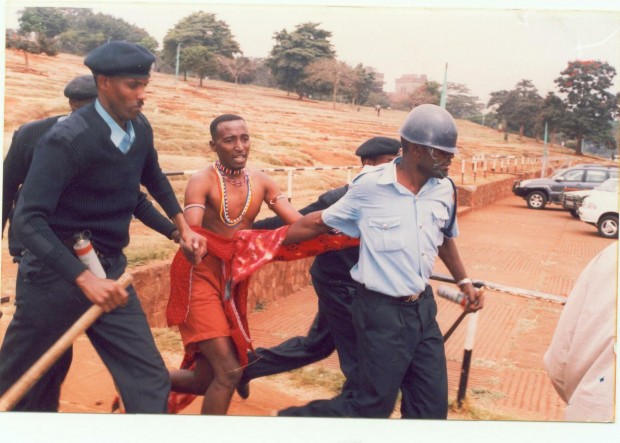
Reminiscent of what happened to the Maasai community in Narasha in 2013, Maasai pastoralists in Kedong, Akira and Suswa are glaring at massive evictions arising from a group of concessions awarded to several companies including Hyundai, Toshiba, Sinopec and African Geothermal International (AGIL) for the purposes of developing geothermal projects on the Maasai lands. According to the local communities–who claim ancestry to the land and have filed cases in Kenyan courts– African Geothermal International (AGIL) and Marine Power along with Akira I and Akira II1 have disregarded court injunctions instituted by the Maasai, proceeding to deploy their heavy machinery to their proposed project sites without due diligence or consultations with the local communities. The concession areas, which cover hundreds of thousands of acres, are home to thousands of Maasai pastoralists.

The Food Safety Movement Grows Tall

Let us celebrate today the latest initiatives of our nation's growing food safety movement. Across the country, consumers are demanding the right to know what is in their food, and labeling of genetically engineered food. It's a vibrant and diverse coalition: mothers and grandmothers, health libertarians, progressives, foodies, environmentalists, main street conservatives and supporters of free-market economics. Last year, a New York Times poll found that a near-unanimous 93 percent of Americans support such labeling.

Do-It-Yourself Biodiversity

Counteracting the threats to the biological communities that support life on Earth is a huge task, but there are also many ways in which we as individuals can make real contributions to preserving biodiversity. Conservation biologists have used the theory of island biogeography to develop strategies for preserving biodiversity. Small islands of habitat cannot support large predators, but they can provide refuges for smaller species, and many small islands can be strung together to support larger, mobile species. Almost all of us can help by creating islands of biodiversity wherever we live. Soil In land-based ecosystems, biodiversity begins with the soil. Recent science has shown that J.I. Rodale and other organic pioneers were right-- the soil is a living organism, and synthetic fertilizers and pesticides do kill the soil. The growth of all the plants we see above ground--from lettuce seedlings to redwood trees--results from a symbiosis between the plants and the fungi, bacteria, insects, and other soil-dwelling organisms. For a greater understanding of the microbial life in the soil, see Teaming with Microbes: The Organic Gardener's Guide to the Soil Food Web by Jeff Lowenfels and Wayne Lewis.

After Occupy, Reform or Revolution? | American Autumn Excerpt

A year after the birth of the Occupy Wall Street movement in New York City, writer, director and producer Dennis Trainor, Jr. made a full-length feature documentary capturing the fervor and passion that spread through the nation in fall 2011, fueled a street revolution and introduced the concept of “the 99%” to define the corporate greed that has crippled the U.S. American Autumn lets the protestors and organizers tell in their own words why they joined the protests and what they hoped to accomplish. Shot at the birthplace of the Occupy movement at Zuccotti Park in New York City, as well as on location at protests in Washington, D.C., Trainor offers a Ground Zero view of the movement and its participants. On camera, protesters strive to define the goals of Occupy as well as how to achieve them. “Imagine that a single voice carries as much weight as the CEO of Goldman Sachs” the film posits, distilling one of Occupy’s core beliefs.
assetto corsa mods

Urgent End Of Year Fundraising Campaign

Online donations are back! Keep independent media alive. 

Due to the attacks on our fiscal sponsor, we were unable to raise funds online for nearly two years.  As the bills pile up, your help is needed now to cover the monthly costs of operating Popular Resistance.

Urgent End Of Year Fundraising Campaign

Online donations are back! 

Keep independent media alive. 

Due to the attacks on our fiscal sponsor, we were unable to raise funds online for nearly two years.  As the bills pile up, your help is needed now to cover the monthly costs of operating Popular Resistance.

Sign Up To Our Daily Digest

Independent media outlets are being suppressed and dropped by corporations like Google, Facebook and Twitter. Sign up for our daily email digest before it’s too late so you don’t miss the latest movement news.