Skip to content

military spending

Resistance Grows To Europe’s 2026 Budget Plans

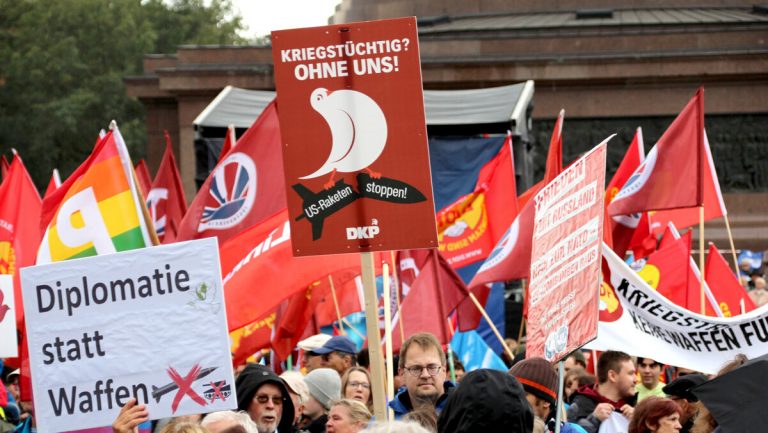
It’s the peak of the 2026 budget season in Europe, and military and arms spending are dominating the debate. Under the European Union’s militarization drive and national commitments to meet higher NATO contributions, draft budgets circulating across the bloc allocate billions of euros to so-called defense at the expense of public services and workers’ rights. While trade unions and social movements in some countries are already mobilizing against this trend, others are still working to make clear that rearmament plans will only worsen the social and economic crises faced by Europe’s working class.

Pentagon And Military-Related Spending In Congressional Bill HR1

It is unusual for reconciliation bills, such as H.R. 1, to include substantial funding for the Department of Defense or other military-related programs in other departments. However, H.R. 1 breaks from precedent by allocating $156 billion to “national defense.” This is problematic for four main reasons: (1) It benefits weapons-makers and contractors more than service members; (2) It lacks details on specific spending categories, effectively making it a slush fund; (3) It incentivizes future lawmakers to skirt the regular budget process, which is more deliberative and transparent than the reconciliation process; and (4) It increases Pentagon and military-related spending by over 13 percent from FY25, pushing “national defense” spending beyond the $1 trillion mark.

‘Forever Wars’ Authorization Finally Repealed By US House

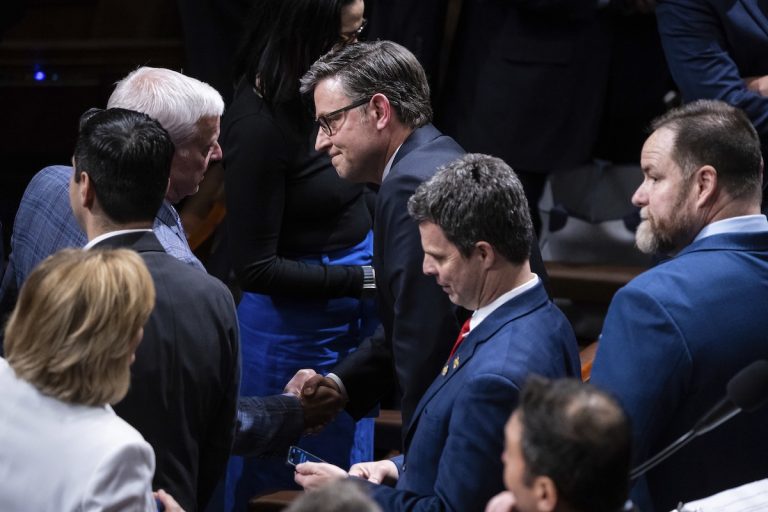
Almost exactly 24 years after the September 11, 2001 attacks, the U.S. House of Representatives voted this week to finally repeal a pair of more than two-decade-old congressional authorizations that have allowed presidents to carry out military attacks in the Middle East and elsewhere. In a 261-167 vote, with 49 Republicans joining all Democrats, the House passed an amendment to the next military spending bill to rescind the Authorizations for the Use of Military Force (AUMF) passed by Congress in the lead-up to the 1991 Persian Gulf War and 2003 War in Iraq. The decision is a small act of resistance in Congress after what the Quincy Institute’s Adam Weinstein described in Foreign Policy magazine as “years of neglected oversight” by Congress over the “steady expansion of presidential war-making authority.”

US: $1.6 Billion For Propaganda, Nothing For Infrastructure

The United States has approved $1.6 billion to counter what it calls China’s “malign influence” abroad. The funding goes to foreign media outlets, NGOs, influencers, and think tanks that align with Washington’s preferred messaging. This is not defense spending. It is not humanitarian aid. It is a global messaging campaign, funded by taxpayers. The U.S. says it cannot afford healthcare, housing, or student debt relief. But it finds $1.6 billion to run media campaigns in Vietnam, Nigeria, and Colombia. This is not sustainable. It is not defensible. If the government can find this money for foreign propaganda, it can find the money for clean water in Flint, or housing in Los Angeles. It chooses not to.

Peace And Development Are Better Than Austerity And War

Reason seems to have been gradually abolished by the language of bombs. As weapons systems get ‘smarter’ and ‘smarter’, the range of diplomatic instruments used by the Global North states becomes blunter and blunter. US and European diplomats have returned to the old colonial habit of speaking loudly and brusquely, lecturing the natives about what they should or should not do while they themselves do whatever they want. If the natives do not agree, then the old colonial rulers simply threaten to cut off their hands or bomb their homes.

NATO’s Obscene Five Percent Pledge

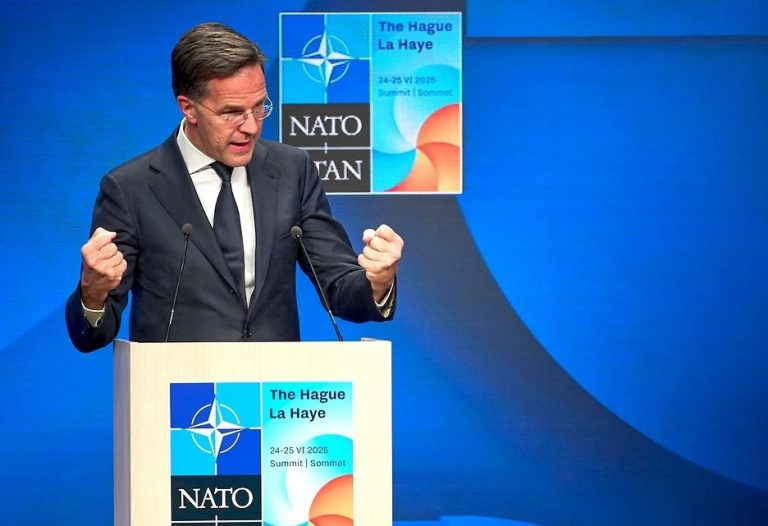
At this week’s NATO summit in The Hague, leaders announced an alarming new goal: push military spending to 5 percent of nations’ GDP by 2035. Framed as a response to rising global threats, particularly from Russia and terrorism, the declaration was hailed as a historic step. But in truth, it represents a major step backwards — away from addressing the urgent needs of people and the planet, and toward an arms race that will impoverish societies while enriching weapons contractors. This outrageous 5 percent spending target didn’t come out of nowhere — it’s the direct result of years of bullying by U.S. President Donald Trump.

Washington Hits Snag Against Yemen

The US military has used $200 million in munitions since it restarted its campaign against Yemen over two weeks ago – the success of which has been “limited,” according to a 4 April report by the New York Times (NYT). The report comes as US President Donald Trump has been boasting about the success of Washington’s campaign against the Ansarallah resistance movement, which he says has been “decimated.” “In closed briefings in recent days, Pentagon officials have acknowledged that there has been only limited success in destroying the Houthis’ vast, largely underground arsenal of missiles, drones and launchers,” anonymous congressional aides and officials told NYT.

Building A Planet Of Peace Is The Only Realistic Thing To Do

There are times in life when you want to set aside complexity and return to the essence of things. Last week, I was on a boat in the Caribbean Sea, travelling from Isla Grande to the mainland of Colombia, when it began to rain heavily. Though our boat was modest, we were in minimal danger with Ever de la Rosa Morales, a leader of the Afro-Colombian community on the twenty-seven Rosario Islands (located off the coast of Cartagena), at the helm. During the downpour, a range of human emotions swept through me, from fear to exhilaration. The rain was linked to Hurricane Beryl, a storm that struck Jamaica at a Category Four level.

‘Move The Money’: Detroit Votes For Slashing Bloated Pentagon Budget

Detroit, Michigan - Following in the footsteps of neighboring Hamtramck, Detroit has become the biggest U.S. city so far to pass a “Move the Money” resolution. The measure, approved unanimously by City Council on Tuesday, calls on the U.S. Congress and the president to shift public money away from the military to fund social services. The Michigan Peace Council, a major backer of the campaign to win the resolution, praised the council vote, which came on the same day that nearly 101,000 Michiganders voted “Uncommitted” in the Democratic primary to oppose President Joe Biden’s support for Israel’s brutal war against Gaza.

Biden Signs Bill Reviving World War II-Era Lend-Lease Program To Ukraine

President Biden on Monday signed a bill into law reviving the World War II-era lend-lease program for Ukraine, paving the way for an escalation in US military aid to Kyiv. The Ukraine Democracy Defense Lend-Lease Act of 2022 allows Biden to send weapons to Ukraine free of charge while technically requiring payment at a later date. Under the lend-lease act during World War II, the US sent billions of dollars in weapons to the Soviet Union, China, Britain, and other allies. The legislation received massive bipartisan support in Congress, passing by voice vote in the Senate and by a vote of 417-10 in the House, with only Republicans voting against the bill.

House Approves Package With $782 Billion For US Military, No Covid relief

The House of Representatives late Wednesday approved a $1.5 trillion government spending package that includes $782 billion in U.S. military funding, the largest portion of the must-pass omnibus legislation. The votes came after a long day of jostling behind the scenes as rank-and-file Democrats expressed outrage over how $15 billion in coronavirus aid was funded in the bipartisan measure: Namely, by repurposing money set aside for states in an earlier relief package.

Three Ways To Cut $1 Trillion From The Pentagon

Today the Congressional Budget Office released a new report, “Illustrative Options for National Defense Under a Smaller Defense Budget,” that outlines three different options for cutting funding for the Department of Defense by $1 trillion, or 14 percent, over the next ten years. The report makes clear that the United States has options for reducing spending on the Pentagon –  without sacrificing security. It outlines three different options for how the United States could reallocate Pentagon resources to meet the current military strategy for less. “The U.S. military budget is now higher than it was at the peak of the Vietnam War, the Korean War, or the Cold War. This report shows that there are viable options for immediate, substantial reductions to the Pentagon budget,” said Lindsay Koshgarian, Program Director of the National Priorities Project at the Institute for Policy Studies.

Canada, Ground Your Plans For 88 New Fighter Jets

As wildfires blaze in Western Canada amidst record breaking heat waves, the Liberal government is planning to spend tens of billions of dollars on unnecessary, dangerous, climate destroying fighter jets. The government is currently moving forward with the competition to procure 88 warplanes, which includes Lockheed Martin’s F-35 stealth fighter, Saab’s Gripen and Boeing’s Super Hornet. Despite previously promising to cancel the F-35 purchase, the Trudeau government is laying the ground to acquire the stealth fighter. Officially the cost of buying the jets is about $19 billion. But, a report from the No New Fighter Jets coalition suggests the full life cycle cost of the planes will be closer to $77 billion. Those resources could be used to eliminate boil water advisories on reserves, build light rail lines across the country and construct thousands of units of social housing.

Gorbachev Speaks Out On Military Spending And The Pandemic

The Covid-19 pandemic shows that governments that think of security in mostly military terms are simply wasting money, Mikhail Gorbachev has said. Defence spending must be cut globally to fund things that humanity actually needs. The former Soviet leader called on the world to move away from hard power in international affairs. He remains especially worried about the kind of military brinkmanship that lately has almost led to a shooting war in the Middle East. "What we urgently need now is a rethinking of the entire concept of security," he wrote, in an op-ed published by TIME magazine. "Even after the end of the Cold War, it has been envisioned mostly in military terms. Over the past few years, all we've been hearing is talk about weapons, missiles and airstrikes."

NATO Propaganda Promotes War, Military Spending

The first two installments of the series showed how NATO was set up to blunt the European left and to justify European/North American dominance across the globe. Recently, the alliance has intensified pressure on Canada to increase spending on the military and participate in more wars. As its Cold War pretext fades further from view, NATO has become more belligerent. In 1999 Canadian fighter jets dropped 530 bombs in NATO’s illegal 78-day bombing of Serbia. During the 2000s tens of thousands of Canadian troops fought in a NATO war in Afghanistan.
assetto corsa mods

Urgent End Of Year Fundraising Campaign

Online donations are back! Keep independent media alive. 

Due to the attacks on our fiscal sponsor, we were unable to raise funds online for nearly two years.  As the bills pile up, your help is needed now to cover the monthly costs of operating Popular Resistance.

Urgent End Of Year Fundraising Campaign

Online donations are back! 

Keep independent media alive. 

Due to the attacks on our fiscal sponsor, we were unable to raise funds online for nearly two years.  As the bills pile up, your help is needed now to cover the monthly costs of operating Popular Resistance.

Sign Up To Our Daily Digest

Independent media outlets are being suppressed and dropped by corporations like Google, Facebook and Twitter. Sign up for our daily email digest before it’s too late so you don’t miss the latest movement news.