Skip to content

Venezuela

What Lies Behind Trump’s Attacks Against Venezuela?

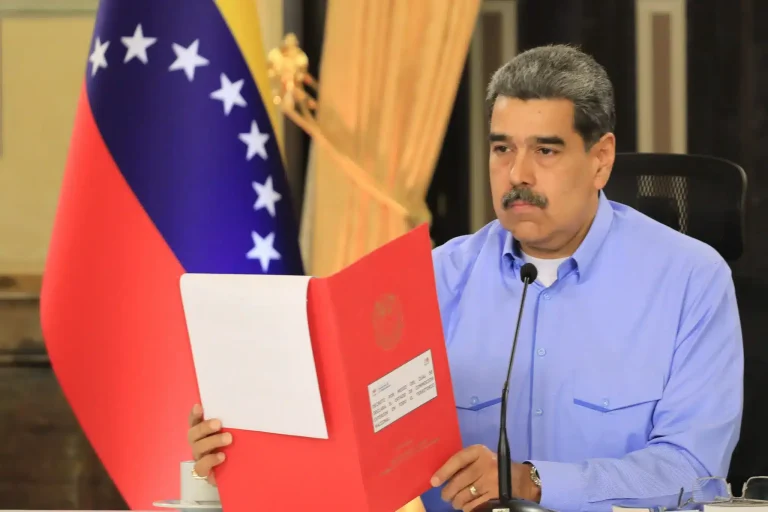
As if President Trump intended to meet professional US mercenary Erik Prince half way, US Attorney General Pam Bondi increased the existing US bounty on President Nicolas Maduro — originally set at $15 million — from $25m to $50m for anyone providing “information leading to his arrest or conviction.” In late 2024, Prince, a professional mercenary, alongside Venezuela’s far right, promoted a plan to deploy a private army to Venezuela. He suggested that if the US raised the bounty on Maduro’s head to $100 million, targeting not only the president but also Diosdado Cabello and the entire government, they could “just sit back and wait for the magic to happen.” Prince and Venezuela’s far right even launched a crowdfunding campaign, Ya Casi Venezuela (“Almost There, Venezuela”), to collect the $100 million.

Colombia Labels US Military Ops ‘Aggression’ In Latin America

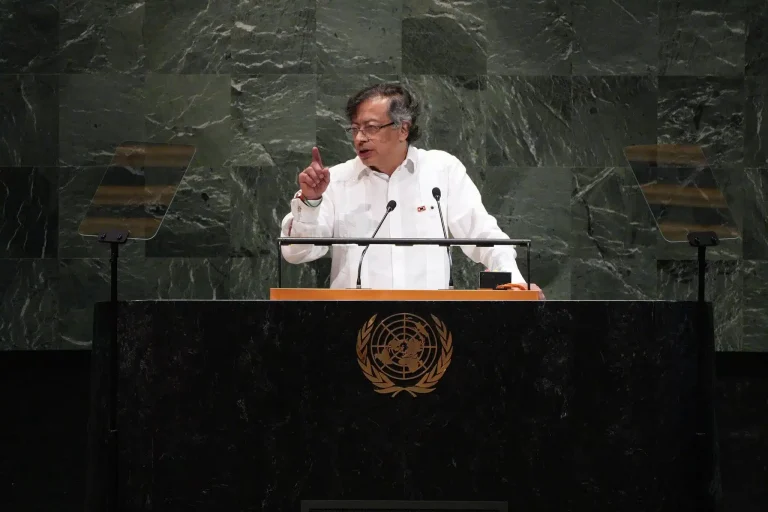
Through a message posted Sunday, August 10, on social media, Colombian President Gustavo Petro reaffirmed his strong support for Venezuelan President Nicolás Maduro. This followed recent threats from the Trump administration against the Venezuelan government, which is trying to link Maduro with drug trafficking, and the discovery by Bolivarian authorities of arsenals of weapons belonging to terrorist groups linked to the extreme right. Petro emphatically declared that “Colombia and Venezuela are the same people, the same flag, the same history.” He emphasized that “any military operation that is not approved by our sister countries is an aggression against Latin America and the Caribbean.”

US Increases Bounty On President Nicolás Maduro To $50 Million

The Venezuelan government has said that the increase in the reward for the arrest of President Nicolás Maduro by US Attorney General Pam Bondi is “ridiculous” and that it is part of a “propaganda operation” and a “desperate distraction” from the internal problems facing the United States. Bondi published a video on August 7, announcing that the US Department of Justice and Department of State are offering USD 50 million for “information leading to the arrest of Nicolás Maduro”. This is not the first time the US government has tried to pressure the Bolivarian government in this way. In 2020, the US Department of Justice offered USD 15 million for Maduro’s arrest. The accusations were based on alleged acts of “narco-terrorism” by the Venezuelan government.

Venezuela On The Verge Of Eradicating Hunger

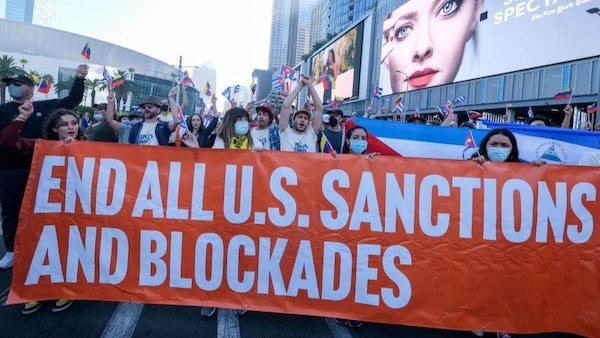
Since the imposition of illegal coercive measures (euphemistically referred to as sanctions) by the US and its allies on Venezuela in 2014, and after 11 years with a burden of 1,041 Unilateral Coercive Measures (MCU) on the nation, which places it between the fifth and sixth most sanctioned country in the world depending on the source, the country has once again reduced the hunger that appeared amid the economic, financial, and commercial blockade perpetrated against the national government as part of the war to stifle the economy, prevent the supply of essential goods, and negatively impact food security and sovereignty, with the goal of imposing the failed regime change.

Venezuela Opens Investigation Into Nayib Bukele Over Torture At CECOT

Venezuelan Attorney General Tarek William Saab reported that the 252 Venezuelans previously held at the CECOT in El Salvador were systematically subjected to cruel human rights violations, including unlawful deprivation of liberty, daily torture, prolonged isolation without sunlight or ventilation, being shot with pellets, receiving rotten food and unsafe water, being denied medical care, and numerous due process violations. During a media appearance on Monday, July 21, the head of the Public Ministry announced the opening of a formal investigation, through three designated prosecutors, into Salvadoran President Nayib Bukele, Salvadoran Minister of Justice and Public Security Héctor Gustavo Villatoro, and Director General of Penitentiary Centers and Deputy Minister of Justice and Public Security Osiris Luna Mesa.

Venezuelans Expose Horrors Experienced In El Salvador Prison

“We drank the water with which we bathed because they did not give us drinking water,” said a Venezuelan migrant who was repatriated after having been illegally imprisoned in a high-security prison in El Salvador since March. on a repatriation plane on Friday, July 18. He returned on one of the two repatriation flights that brought back the 252 migrants to Venezuela on Friday, July 18. They had been deported from the US and imprisoned in the Confinement Center for Terrorism (CECOT) in El Salvador without due process. Their repatriation was finally possible due to intense diplomatic negotiations by Nicolás Maduro administration with the US authorities.

Venezuela Rescues 252 Nationals Detained In CECOT ‘Concentration Camp’

As part of the Return to the Homeland program, two new flights returned 252 Venezuelan nationals to the country on July 18. They had been arbitrarily detained in the Terrorism Confinement Center (CECOT) in El Salvador after being deported from the US by order of President Donald Trump. These actions took place without access to justice or due process. Earlier Friday afternoon, the Venezuelan government announced via a statement the release of Venezuelan migrants abducted by the US regime. This followed a negotiation involving the handover of 10 US nationals prosecuted for crimes against national security and some imprisoned far-right politicians.

What July 5th Taught Me That July 4th Never Did

Growing up in Venezuela and now living in the United States, I’ve always felt caught between two independence days: July 4th and July 5th. Two celebrations. Two flags. Two very different ideas of what it means to be free. In the U.S., the Fourth of July comes with fireworks, parades, and an almost unquestioned belief in the righteousness of the revolution it commemorates. But in Venezuela, July 5th conjures up different thoughts. It is not just a break from colonial rule but the beginning of a long, unfinished struggle to define freedom on our own terms. It’s not something we inherited. It’s something we’re still fighting for.

Venezuela Condemns Abduction Of 18 Minors By United States

On Monday, June 30, Venezuelan United Socialist Party of Venezuela (PSUV) Deputy Jorge Rodríguez condemned the “kidnapping” of 18 minors in the United States. He showed photographs of several children who remain detained by the US government, despite formal requests for their liberation by Venezuelan authorities. Rodríguez demanded that the UN high commissioner for Human Rights, Volker Türk, and the UN resident coordinator in Venezuela, Gianluca Rampolla del Tindaro, at least speak out on behalf of the 18 minors kidnapped in the US. He also demanded the release of the 252 Venezuelans in El Salvador, “held against their will, without the right to defense, without due process, and in clear violation of international law,” Rodríguez added.

Cecosesola And The Art Of Commoning Within Capitalist Markets

One of the most singular and accomplished commons I’ve ever encountered is Cecosesola, a federation of Venezuelan cooperatives. The remarkable federation artfully manages multiple ventures as commons while deeply immersed within a system of capitalist markets. Founded in 1967 in the state of Lara in Venezuela, Cecosesola got its start when working-class people in poorest barrios of the region organized to set aside money every month to build their own cooperatives. G Nearly sixty years later, Cecosesola now coordinates a wide variety of enterprises. It works with farmers to supply 800 tons of vegetables to large urban produce markets serving 100,000 people a week.

Relatives Of Venezuelan Abductees Report Human Rights Violations At UN

Relatives of Venezuelan migrants detained in El Salvador for 100 days reported this Tuesday, June 24, to the Secretariat of the Working Group on Arbitrary Detention of the United Nations Human Rights Council in Geneva, on the violations of individual rights faced by the detained migrants. “We were received and heard individually and collectively, we presented our cases, 252 broken families, our relatives were violated and taken to a CECOT prison in an arbitrary manner, there was no notification, it was under deception, without due process,” declared Mairelys Cacique, who belongs to the committee of relatives of Venezuelan migrants detained in the Central American country.

Tenacious Bolivarian Resistance Against Obstinate US Aggression

On the eve of Venezuela’s presidential election on 29th July 2024, Guardian correspondents, Tiago Rogero (based in Rio de Janeiro) and Sam Jones (based in Madrid) predicted the vote “could end 25 years of socialist rule.” It did not. The following, 30 July, another group of Guardian correspondents gave prominent coverage to far-right wing Venezuelan politician Maria Corina Machado, quoting her claim that “Maduro’s exit was inevitable.” Yet, Nicolas Maduro was inaugurated as the re-elected president for the 2025-2031 term on 10 January 2025. The July 2024 presidential election was followed by the election for National Assembly deputies and all 24 governorships of Venezuela’s federal structure on 25 May 2025.

The Latest Chapter In The US Plunder Of CITGO

The auction of CITGO Petroleum, a key subsidiary of Petróleos de Venezuela (PDVSA) in the United States and illegally seized by the US government, is in its final stages, marking a crucial moment not only for Venezuela but also for other countries with investments in the US. According to recent reports, the judicial process, which will culminate in the illegal sale of Citgo, is continuing despite protests from President Nicolás Maduro’s government. The company, which owns strategic refineries in Texas, Louisiana, and Illinois, represents Venezuela’s most valuable asset outside its borders, with a significant pipeline network and more than 4,000 gas stations in the United States.

Why Washington Targets Iran And Venezuela: Empire, Energy, Ideology

Venezuela and Iran hold the largest and third-largest petroleum reserves in the world, respectively. Both have also been targeted for regime change by Washington. The two commonalities are not unrelated. Of course, the world’s hegemon would like to get its hands on all their oil. But it would be simplistic to think that would be only for narrow economic reasons. Control over energy flows – especially from countries with large reserves – is central to maintaining global influence. Washington requires control of strategic resources to maintain its position as the global hegemon, guided by its official policy of “full spectrum dominance.”

Washington Targets Achievements Of Cuba, Nicaragua, And Venezuela

“We look for the poorest patients,” the Cuban doctor in charge of the eye clinic said. “Often we travel to remote rural areas and bring them to the clinic in a bus.” The clinic, in Ciudad Sandino, Nicaragua, was part of Misión Milagro (Miracle Mission), run jointly by the Cuban and Venezuelan governments. The larger mission has treated over seven million patients in 33 countries since 2004. Local Nicaraguan doctors, trained by the Cubans, are now in charge in Ciudad Sandino. Misión Milagro is despised by US Secretary of State Marco Rubio. Washington has imposed sanctions on officials in countries using this and other Cuban medical missions. Supposedly aimed at stopping the “trafficking” of medical staff, the real intent is to destroy services that have proved immensely popular for their free, high-quality treatment, often in remote areas with few health facilities.
assetto corsa mods

Urgent End Of Year Fundraising Campaign

Online donations are back! Keep independent media alive. 

Due to the attacks on our fiscal sponsor, we were unable to raise funds online for nearly two years.  As the bills pile up, your help is needed now to cover the monthly costs of operating Popular Resistance.

Urgent End Of Year Fundraising Campaign

Online donations are back! 

Keep independent media alive. 

Due to the attacks on our fiscal sponsor, we were unable to raise funds online for nearly two years.  As the bills pile up, your help is needed now to cover the monthly costs of operating Popular Resistance.

Sign Up To Our Daily Digest

Independent media outlets are being suppressed and dropped by corporations like Google, Facebook and Twitter. Sign up for our daily email digest before it’s too late so you don’t miss the latest movement news.