Skip to content

Brazil

Ex-President Lula Defies Deadline To Surrender To Brazil Police

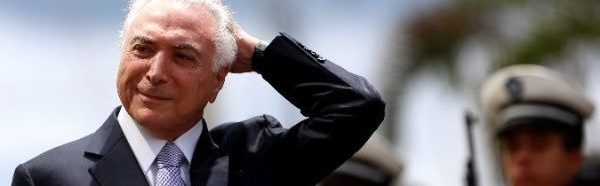
Brazil's embattled former President Luiz Inacio 'Lula' da Silva has defied a court order to turn himself into Curitiba police by 5 p.m. local time today to commence his 12-year jail sentence for corruption, triggering a stand-off between the presidential hopeful and Brazilian authorities. Federal authorities have reportedly said they will not execute any arrest warrant until Saturday at the earliest. Late Friday night, it emerged that Lula is planning to attend a mass at 9am Saturday – at the same metallurgical union in Sao Paolo in which he is currently ensconced – to commemorate the passing of his late wife Marisa Leticia. Earlier on Friday, lawyers representing the man who dominated Brazilian politics between 2003 and 2011 submitted a fresh habeas corpus writ after his previous bid to avoid incarceration while his appeals play out was shot down by a 6-5 vote in the Supreme Court shortly after midnight Wednesday.

Brazil’s Supreme Court Votes To Jail Former President Lula

The president of the Supreme Court broke what had been a tied vote, potentially ending Lula's bid for re-election and sending him to jail. Brazil's Supreme Court has voted 6-5 to deny former President Luiz Inacio 'Lula' da Silva habeas corpus while he appeals his corruption conviction, potentially bringing an end to his re-election campaign. The popular leftist leader must now begin serving his 12-year prison sentence for taking bribes, denying his plea to remain free until he has exhausted all possible appeals. Lula is still Brazil's most popular politician, despite his conviction and fighting six separate pending corruption trials. He is the front-runner in all opinion polls for the presidential election in October, but his sentence will likely bar him from running. The Supreme Court Justices deliberated for more than 10 hours before reaching their final verdict.

Protests Held Across Brazil After Rio Councillor Shot Dead

Protests were held across Brazil after a popular Rio city councillor and her driver were shot dead by two men in what appears to have been a targeted assassination. Marielle Franco, 38, was a groundbreaking politician who had become a voice for disadvantaged people in the teeming favelas that are home to almost one-quarter of Rio de Janeiro’s population, where grinding poverty, police brutality and shootouts with drug gangs are routine. Richard Nunes, Rio’s head of public security, said there would be a “full investigation” into the deaths, which came despite the military taking charge of policing in the city last month after a surge in violence. Two police officials told Associated Press that two men in a car fired nine shots into the vehicle carrying Franco and her driver, Anderson Pedro Gomes on Wednesday night.

Brazilian Rights Activist Marielle Franco Assassinated In Rio

Part of a generation of young Black Brazilians who are becoming increasingly vocal inside and outside statehouses, Franco was elected to office in 2016. A resident of the Favela da Maré, an impoverished community in Rio, she was one of the main defenders of human rights in the country.  Franco was shot dead in a car on Joaquim Palhares Street, in the Central Region of Rio, at about 9:30 p.m. on Wednesday, Globo.com reports. The driver of the vehicle, Anderson Pedro Gomes, was also fatally shot, and a passenger, Marielle's adviser, was struck by shrapnel.  Investigators at the Homicide Office told Globo.com that the main line of investigation is execution. The day before she was murdered, Marielle complained about the violence in the city in a post on her personal Twitter. In the post, she questioned the action of the Military Police.

Brazil: World Social Forum Kicks-off With ‘Resistance’ March

This year's World Social Forum will debate and define new alternatives and strategies to confront neoliberalism, anti-democratic coups and genocides. Thousands of people took to the streets of Salvador, Brazil in the name of democracy as the 13th edition of the World Social Forum on Tuesday. They marched to the slogan: “To resist is to create. To resist is to transform!” and other mottos representing the diverse groups united for the public demonstration. Ligia Barreto, a State University of Bahia professor who attended the march, said: “We are here because we believe in our country, so we won't stop going to the streets.” A member of the Countryside Education Forum, she stressed that “We must go to the streets to demand our rights, a better society, equality because education is everybody's right.”

Brazil: Professor Subpoenaed Over ‘2016 Coup’ Course

During an interview with Bahia Noticias, Zacarias said: “I have ten days to explain myself (to the court). Joao Carlos Salles, the university dean, was also cited (in the subpoena). In other words, the UFBA has been affected. It's under assault, being put to the test.” Zacarias was notified of the subpoena at the university. He defended his decision to organize the course, asking, “When will we be able to speak about the 2016 coup? When this government (administration) comes to an end? If we're only allowed to speak about it when it is finished, that means this government is authoritarian.”  Zacarias concluded that “There's a reasonable consensus about what constituted the 2016 coup and the risks that democracy faces in the country.”

Brazil’s Institutions Are Working, But Its Political Party System Is A Disaster

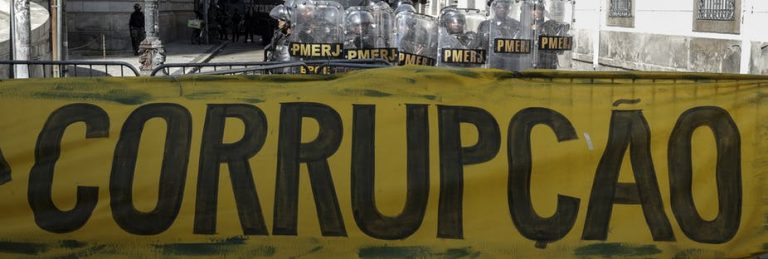
When Brazil’s former president, Luiz Inácio Lula da Silva, had his conviction for bribery and money laundering upheld this January, it once again forced Brazil to ask whether its government institutions are working, especially the judiciary. But while many on the left still decry Lula’s conviction as a thinly veiled “coup” against anti-neoliberal leaders, there is a growing consensus that due process has been thoroughly (if not always competently) observed. As the 2018 general elections loom, the integrity of government institutions and the rule of law – exhaustively examined following the impeachment of former president Dilma Rousseff in 2016 – is a no longer Brazil’s primary concern. Instead, recent developments have exposed the chronic weakness of another institution in the Brazilian political playing field...

The US Role In Regime Change In Brazil

Like its market forces alibi, US imperialism is considered elementary, as natural as the breeze, unnecessary background detail that we simply don’t need to question or talk about. This denial of empire is central to its persistence, and the accusation of “blaming the Yanqui for everything” is the dusty rhetorical device used by both US pundits and the comprador class across Latin America, to shut down any rational criticism of a status quo which has historically protected their privileges. In recent years commentators have even tried to deny the extensively documented US role in Brazil’s Military Coup of 1964, or point to Dilma Rousseff’s own diplomatic remark that “we have enough coup plotters of our own”.

BRAZIL: 200,000 Workers And Youth Protest Lula Conviction

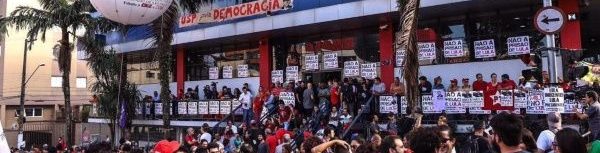
On January 24, despite having absolutely no proof to back their charges, the Federal Supreme Court of Brazil sentenced former President Inacio “Lula” da Silva to 12 years in prison. This court is an institution inherited from the military dictatorship. The court sentence aims, among other things, to prevent Lula from running for office in the presidential election next October. The São Paulo Stock Exchange reacted immediately by breaking new records. At the same time, on January 23 and 24, an estimated 200,000 workers, activists and youth took to the streets to protest this court conviction. More than 70,000 people gathered on January 23 in Porto Alegre, where the court hearing was held, and 50,000 gathered on January 24 in Republic Square in São Paulo. The main slogan on all the banners read: “An Election Without Lula Is a Fraud!”

Brazil’s Democracy Pushed Toward The Abyss

The rule of law and the independence of the judiciary are fragile achievements in many countries — and susceptible to sharp reversals. Brazil, the last country in the Wessstern world to abolish slavery, is a fairly young democracy, having emerged from dictatorship just three decades ago. In the past two years, what could have been a historic advancement ― the Workers’ Party government granted autonomy to the judiciary to investigate and prosecute official corruption ― has turned into its opposite. As a result, Brazil’s democracy is now weaker than it has been since military rule ended. This week, that democracy may be further eroded as a three-judge appellate court decides whether the most popular political figure in the country, former President Luiz Inácio Lula da Silva of the Workers’ Party, will be barred from competing in the 2018 presidential election, or even jailed.

Brazil Announces End To Amazon Mega-Dam Building Policy

An indigenous leader in April 2015 at the São Manoel dam construction site on the Teles Pires River in the Tapajós basin. Photo by Midia Ninja courtesy of International Rivers. In a surprise move, the Brazilian government has announced that the era of building big hydroelectric dams in the Amazon basin, long criticized by environmentalists and indigenous groups, is ending. “We are not prejudiced against big [hydroelectric] projects, but we have to respect the views of society, which views them with restrictions,” Paulo Pedrosa, the Executive Secretary of the Ministry of Mines and Energy, told O Globo newspaper. According to Pedrosa, Brazil has the potential to generate an additional 50 gigawatts of energy by 2050 through the building of new dams but, of this total, only 23 percent would not affect in some way indigenous land, quilombolas (communities set up by runaway slaves) and federally protected areas.

Indigenous Rights Victory In Brazil; Court Revokes License For Mine

In a powerful victory for indigenous rights in Brazil last week, the Toronto-based company Belo Sun Mining had its license to drill revoked by a federal court, dealing a significant setback to its efforts to gouge a mega-mine into the banks of the Amazon's Xingu River. In the unanimous ruling, the court cited Belo Sun's failure to uphold the right of local indigenous communities to prior consultation on the project's complex social and environmental impacts, which would compound the destruction already wrought by the adjacent Belo Monte hydroelectric dam.

Brazil: Tribe Defy Miners

By Staff of Survival International - The Waiãpi tribe in Brazil have defied a hostile government to defend their land rights. The tribe has circulated a powerful open letter in which they state: “We’re against mining because we want to defend our land and forest. We believe the land is a person”. The letter was written in response to the Brazilian government’s attempt to open up the Amazon forest around the tribe’s land to large-scale mining. Following a global outcry by indigenous peoples and campaigners, the government backed down. However, given the power of Brazil’s notorious agribusiness lobby, the Waiãpi are on the alert. In the letter they vow to defend their territory at all costs against mining interests. The tribe say mining will not bring benefits to them. They are concerned about conflict and disease brought by an influx of outsiders, and the opening up of their land to destructive economic interests such as hydro-electric dams, ranching and gold mining. This small Amazon tribe knows the devastating impacts of highways and mining. Sporadic contacts with outsiders hunting wild cats for their pelts and groups of gold prospectors in the latter part of last century introduced fatal diseases like measles to which the isolated Waiãpi had no resistance. Many died as a result.

“Fora Temer – Eleições Diretas Já!” Brazil’s Political Rupture And Left’s Opportunity

By Alfredo Saad-Filho for Open Democracy - The Brazilian Workers’ Party (Partido dos Trabalhadores, PT) won the country’s presidential elections four times in a row; first with Luís Inácio Lula da Silva (2003-06, 2007-10), then with his hand-picked successor, Dilma Rousseff (2011-14, 2015-16). During its 13 years in office, the PT changed Brazil in many ways; four are principally worth mentioning, as they would come to play key roles in the elite conspiracy to impeach Dilma Rousseff and destroy her party. First, the PT democratised the state. It implemented the social and civic rights included in the 1988 ‘Citizen’s Constitution’, and advanced Brazil’s emerging welfare state across several fields of social provision. Second, the PT changed the social composition of the state through the appointment of thousands of leaders of mass organisations to positions of power. For the first time in Brazilian history, millions of poor citizens could recognise themselves in the bureaucracy and relate to close friends and comrades who had become ‘important’ in Brasília. For the first time in Brazilian history, millions of poor citizens could recognise themselves in the bureaucracy.

Ranchers Mutilate Indigenous People Demanding Land Back

By Survival International. Brazil - Thirteen Brazilian Indians have been hospitalized after a brutally violent attack by men armed with machetes in the Amazon. One man appears to have had his arms severed in disturbing photos released to Survival International. The attack was in retaliation for the Gamela Indians’ campaign to recover a small part of their ancestral territory. Their land has been invaded and destroyed by ranchers, loggers and land grabbers, forcing the Gamela to live squeezed on a tiny patch of land. The Gamela are indigenous to the area in Maranhão state in northern Brazil. Powerful agribusiness interests – reportedly including the Sarney landowning family – have been in conflict with the tribe for some time. The family includes a former president of Brazil and a former governor of Maranhão state.
assetto corsa mods

Urgent End Of Year Fundraising Campaign

Online donations are back! Keep independent media alive. 

Due to the attacks on our fiscal sponsor, we were unable to raise funds online for nearly two years.  As the bills pile up, your help is needed now to cover the monthly costs of operating Popular Resistance.

Urgent End Of Year Fundraising Campaign

Online donations are back! 

Keep independent media alive. 

Due to the attacks on our fiscal sponsor, we were unable to raise funds online for nearly two years.  As the bills pile up, your help is needed now to cover the monthly costs of operating Popular Resistance.

Sign Up To Our Daily Digest

Independent media outlets are being suppressed and dropped by corporations like Google, Facebook and Twitter. Sign up for our daily email digest before it’s too late so you don’t miss the latest movement news.