Skip to content

Nicaragua

Why Defending Nicaragua Is Important

Since at least the start of the 21st century, if not earlier, two global trends have emerged very clearly. Firstly, increased North American and European aggression overseas has been accompanied by increased economic and political domestic repression in the US itself and its allied countries. This domestic repression has reached unprecedented levels over the last two years, Secondly, despite the apparent demise of Western led economic globalization, North American and European corporate influence under various guises has co-opted international policy making and governance, as writers from Cory Morningstar  to Iain Davis  have reported in detail for many years. In the context of these and other trends, Nicaragua’s resolute defence of its national sovereignty and its very successful economic, social and environmental policies have made this tiny country of around 7 million people the target of US and allied country aggression.

Who Will Pay For The Damage From Climate Change?

To people in developing countries, it seems clear, the wealthy countries that caused most of the problem of climate change should pay the most to adapt to it and to solve the problem.  But instead, countries like the United States lecture low low-emitting countries to do more while they extract their resources and destroy their forests. For example, Nicaragua was an outspoken critic of the Paris climate talks because they did not go far enough. It is one of the countries most impacted by climate change, yet its own greenhouse gas footprint is one of the smallest.  Nicaragua initially insisted that the Paris Accord did not reduce emissions enough (a position that was later adopted by a majority of countries and the IPCC).  Dr. Paul Oquist, Nicaraguan Minister and envoy to the talks, insisted in Paris that developing countries should receive the billions of dollars promised by the big greenhouse gas emitters to pay for greenhouse gas mitigation programs. 

Indigenous Leaders Speak Out Against Western Media And NGOs

Nicaragua has an election to choose their president and national assembly on November 7. According to polls, the Sandinista Front (FSLN) currently in government is expected to win the presidency and a majority of seats in the assembly.  At the same time, the Sandinista government is intensely disliked by Washington and there has been a steady stream of negative news and accusations.  One theme of accusations concerns the indigenous peoples. In October 2020, PBS Newshour broadcast an episode claiming the US is importing “conflict beef” from the indigenous regions of Nicaragua. This story relied on an Oakland Institute report which alleges rampant violence against indigenous communities and a complicit Nicaraguan government.

Nicaragua Is The Exception: Letter To A Cynic

“That’s unbelievable,” my father-in-law wrote me from Ireland after watching me give a statistic-heavy webinar on the advances for the poor in Nicaragua since 2007. “I know, right?” I replied. “No, I mean it’s actually unbelievable,” he wrote back. “For cynical people like me, our faith in humanity has been undermined. The story of a government really looking after ordinary people is too good to be true.” I understand what he means. If I hadn’t been living in Nicaragua for the last 20 years and hadn’t seen with my own eyes the changes since the Sandinista government came back in to power with a pro poor strategy 14 years ago, I know that I would also dismiss the statistics as nothing but propaganda.

When ‘Karens’ Flourished

In 2001, my main task in Nicaragua was to be a "Karen": the obnoxious, entitled white woman who uses her privilege to get her way. Although I was only 25, I was able to lend my white face, my American accent and my pushy “get-me-your-manager” skills to women’s cooperatives to gain them access to and help them navigate the Nicaraguan bureaucratic system. This was during the neoliberal years in Nicaragua, a time when the women we worked with – poor, working women – were simply dismissed by virtually any institution. Following on the popular Sandinista Revolution of the 1980s led by grassroots movements, the neoliberal governments from 1990 to 2006 were led by oligarchical elites who not only looked to the U.S. embassy for policy guidance, but culturally deferred to the U.S. as well.

Nicaragua’s New Way

In 1999, when I first came to Ciudad Sandino, a city of 180,000 located just outside Managua, Hurricane Mitch had recently created 2.7 million homeless people in Nicaragua and Honduras. The neoliberal government had pocketed the aid that came into the country. Ciudad Sandino had received 12,000 hurricane refugees who were living in black plastic tents, but those who had been living in Ciudad Sandino for decades weren’t in much better shape: most houses were walled with scrap wood and plastic. There was only one paved road in the city. Neighbourhoods had only sporadic access to water, no sewage system and most homes weren’t connected to the electrical grid with its frequent blackouts. The only hospital sat empty with no medicines or supplies. Children had to bring their own desks if they wanted to go to school.

What Does Health Care For All Look Like?

I’d like you to imagine for a moment that you are the parent of a child with asthma, living in Ciudad Sandino, just outside the capital of Nicaragua, in a barrio called Nueva Vida, which was recently founded after your family – along with 1,200 other families – was flooded out of your home along the lakeshore in Managua during Hurricane Mitch. The year is 2001, and although your family now has a concrete house and the bus runs regularly down your street in the daytime, nights are filled with rival gangs throwing rocks and bottles, and regular work has been nearly impossible to find. These days, you travel into the market in Managua before dawn to wash potatoes for a vegetable seller; with what you earn, you can usually bring home a little food for your family’s lunch.

United States Once Again Attacking Government Of Nicaragua

Since the house arrest of former president Violeta Barrios de Chamorro’s daughter Cristiana Chamorro for money laundering and other crimes, the US and international assault against the Sandinista government has grown. This is the continuation of an ongoing attack against Sandinismo that began long before the US and its regime change agents took advantage of Chamorro’s arrest. Precisely because the coup d’état against the Sandinista government failed in 2018 we see a continued offensive against Nicaragua. To achieve their goals, the US and its agents are throwing the kitchen sink of dirty tricks against the Sandinista government. One of the most damaging aspects is that the western media repeats US government and Nicaraguan opposition media disinformation talking points.

Nicaragua’s Rainforest And Indigenous Peoples

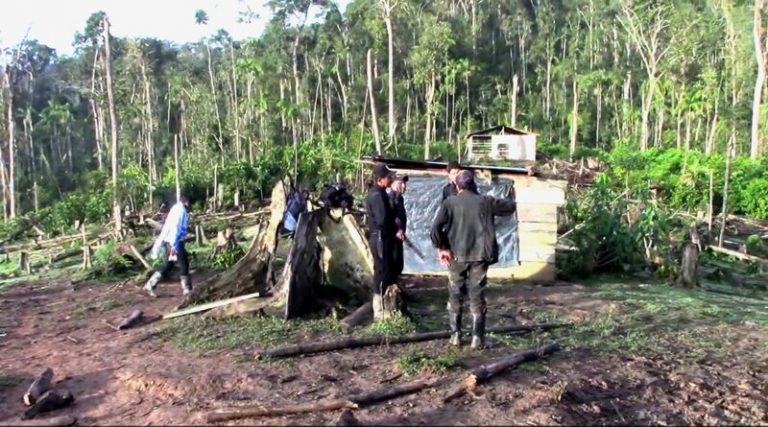
Masaya, Nicaragua - Indigenous peoples and the rainforests that many inhabit are under threat. Everyone knows it. In Latin America especially, international NGOs like Global Witness and Frontline Defenders tell a story which seems self-evidently true: outsiders are exploiting natural resources, governments are indifferent or actively complicit, Indigenous people defend the forests and in return face expulsion or death. But what happens when real life is more complicated? In Nicaragua, local and international NGOs pursuing a political agenda are twisting the evidence about environmental conflicts. Nicaragua has the largest area of tropical rainforest north of the Amazon. Attention often focuses on the country’s biggest forest reserve, Bosawás, a remote region in the north-east, close to Nicaragua’s Caribbean coast.

New Phase Of Economic Attacks And Hybrid War On Nicaragua

The US Congress Invited Neoconservative Regime-Change Strategists To Discuss The Next Stage Of Hybrid Warfare On Nicaragua’s Sandinista Government, Which Will Likely Involve Creating An Economic Blockade, Refusing To Recognize The Legitimacy Of President Daniel Ortega, And Borrowing Tactics The Trump Administration Used In Its Coup Attempt In Venezuela.

Stop US-Directed Regime Change In Nicaragua; Stop The RENACER Act

On Monday, September 13, solidarity activists protested outside the US Congress against the RENACER Act, which stands for the Orwellian title, "Reinforcing Nicaragua's Adherence to Conditions for Electoral Reform." The bill is part of the United States' effort to undermine the presidential election in Nicaragua this November to prevent President Ortega from being re-elected. The RENACER Act would place more unilateral coercive economic measures (aka Sanctions) on Nicaragua, facilitate greater coordination of the US' economic war on Nicaragua with Canada and the European Union, create stricter oversight of financial institutions doing business with Nicaragua and impose greater Visa restrictions.

Statement Of The International Delegation To Nicaragua

We have come to Nicaragua this week to see for ourselves the lived reality of the Nicaraguan people. We are here from the United States, Brazil, Canada, and Mexico. From July 18 to July 25 our delegation, organized by the Nicaragua Network, had the opportunity to visit Managua, Granada, Estelí and Masaya. We have seen the beauty of this country and its people — a people struggling mightily to live in peace and prosperity despite constant U.S. aggression and brutal sanctions. We heard from health care providers, teachers and vocational instructors in Estelí who are working to make sure that working class people and campesinos have access to medical attention and education - in addition to access to housing, employment and income promotion programs also offered by the Sandinista government.

Nicaragua Launches Plan To Fight Poverty And Promote Human Development

Ivan Acosta is Nicaragua’s minister of housing and public credit, with responsibility for key aspects of government planning. In July, he presented the country’s new “National Plan for the Fight against Poverty and for Human Development.” This builds on the achievements of Nicaragua’s Sandinista government since it returned to power in 2007 and sets out how they will continue if Daniel Ortega’s government is returned at November’s elections. Ivan Acosta is currently subject to personal US sanctions, along with many other Nicaraguan government officials and their family members. Codepinks’s Teri Mattson spoke to the minister in a Zoom call and asked him to explain the plan and its background.

Falling In Love With Your Community

Today's world is complex and messed up. All the suffering among the great majorities for many people is just one more number while an increasing number of human beings are or feel isolated, depressed and alone, burdened down by the social consequences of decadent capitalism. However, in this hostile context Nicaragua, physically small but morally gigantic, is making real efforts to rebuild the country's neighborhoods as social and political units, a mutual support network based on solidarity. Many people who have grown up within the walls of residential or prestigious districts the world of the barrios is a distant, hostile and even scary place. However, for those of us who grew up and live in these neighborhoods, the barrio is our native territory, the place where we all know each other and greet each other, eye to eye, the place where there are no secrets because people have natural journalistic insight.

Women In A Housing Cooperative Build Their Own Homes

Like every other country, Nicaragua needs more affordable housing. To deal with the shortage, in many places it’s trying out community-based solutions, sharing responsibility between the government, the local authority and the families that need better conditions. It relies on mutual aid: hours of work put in voluntarily by those benefitting from a scheme, to build not only their own houses but those of their neighbours. It’s a cooperative that really works. I talked to two women members of one such group, Yadira Aguirre and Margine Martínez, about their work building houses in their small community in La Dalia in the mountainous north of Nicaragua. They are working women, part of a group whose main earnings come from coffee harvesting on large farms for three months each year.
assetto corsa mods

Urgent End Of Year Fundraising Campaign

Online donations are back! Keep independent media alive. 

Due to the attacks on our fiscal sponsor, we were unable to raise funds online for nearly two years.  As the bills pile up, your help is needed now to cover the monthly costs of operating Popular Resistance.

Urgent End Of Year Fundraising Campaign

Online donations are back! 

Keep independent media alive. 

Due to the attacks on our fiscal sponsor, we were unable to raise funds online for nearly two years.  As the bills pile up, your help is needed now to cover the monthly costs of operating Popular Resistance.

Sign Up To Our Daily Digest

Independent media outlets are being suppressed and dropped by corporations like Google, Facebook and Twitter. Sign up for our daily email digest before it’s too late so you don’t miss the latest movement news.