Skip to content

State Legislatures

The Reparations Movement: Flourishing Amid Backlash

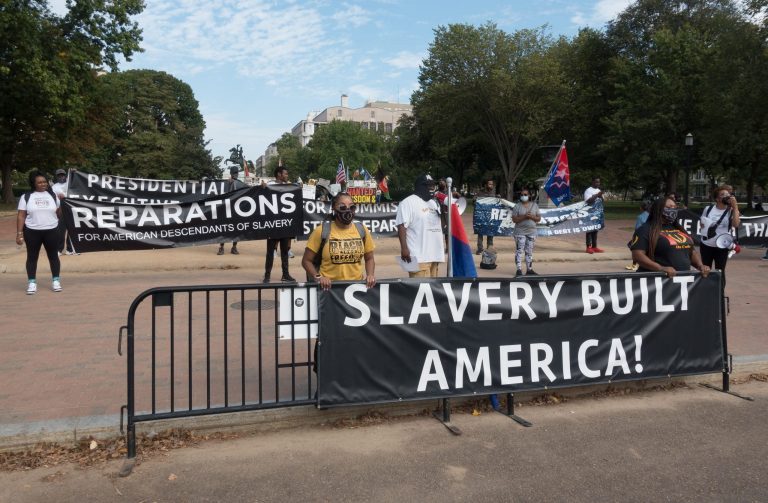
Across the United States, the demand for reparations has moved from the margins of debate to the center of local and state politics. While federal legislation has stalled for decades, cities like Evanston, Illinois, and Tulsa, Oklahoma, as well as states like California, are pioneering concrete steps to repair the harms of slavery, segregation, and systemic racism. From housing initiatives and educational funds to community development projects, these efforts are reshaping how justice can be pursued in practice. In his new report for the Rosa Luxemburg Stiftung New York Office, author John Feffer examines the resurgence of the reparations movement at a time when national politics are marked by backlash and regression on civil rights.
Illinois Restores Protections For Press Targeted With Frivolous Lawsuits

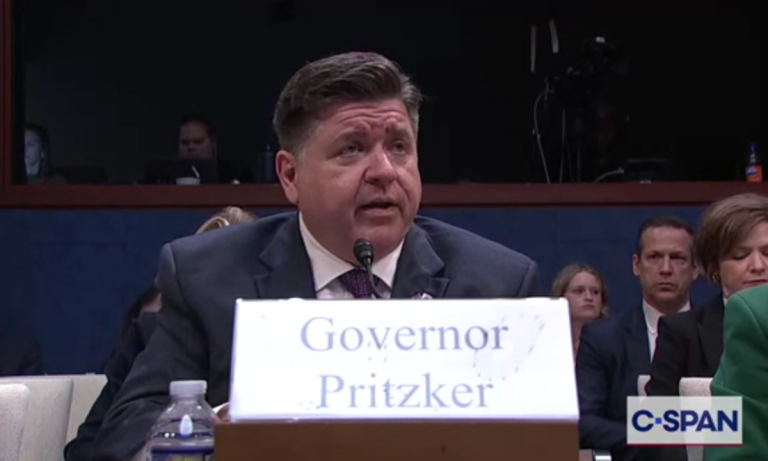
The Freedom of the Press Foundation (FPF) describes strategic lawsuits against public participation, or SLAPPs, as lawsuits that are “intended to chill and punish constitutionally protected speech, including journalism." Such “frivolous lawsuits” are typically pursued by “wealthy and powerful” elites against speech that they dislike. By forcing individuals or organizations to “spend time and money defending themselves,” elites are able to “chill reporting, activism, and criticism.” In the state of Illinois, several organizations and lawyers worked with legislators to clarify and expand protections for the news media after the Illinois Supreme Court significantly diminished the law in November 2024.

New Immigration Laws 2025: How States Are Criminalizing Migrants And Allies

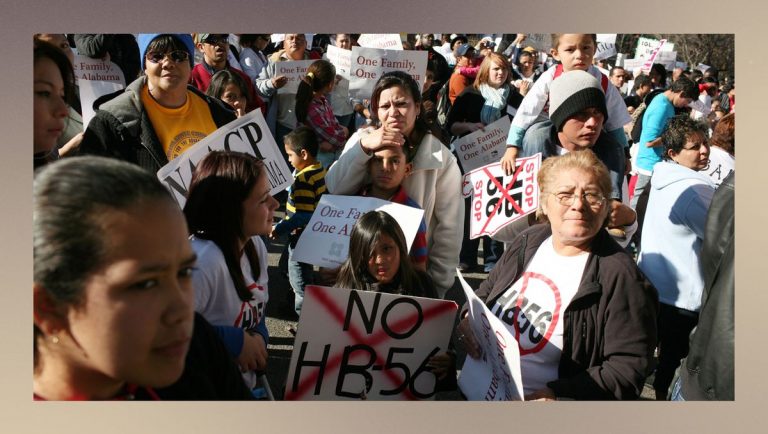
When Alabama lawmakers passed a sweeping anti-immigration bill in 2011, backlash was swift. Immigrant advocates warned that Latinos were fleeing the state, fearing arrests for their status or for "harboring" undocumented people. And some business leaders condemned the law after police arrested German and Japanese car executives for not having their licenses on them, a practice intended to funnel undocumented people from police stops into deportation proceedings. Civil rights groups sued, and courts overturned much of the law as unconstitutional. Activists thought the effort was behind them.

Chicagoans Call On Pritzker To Fund Transit, Other Public Services

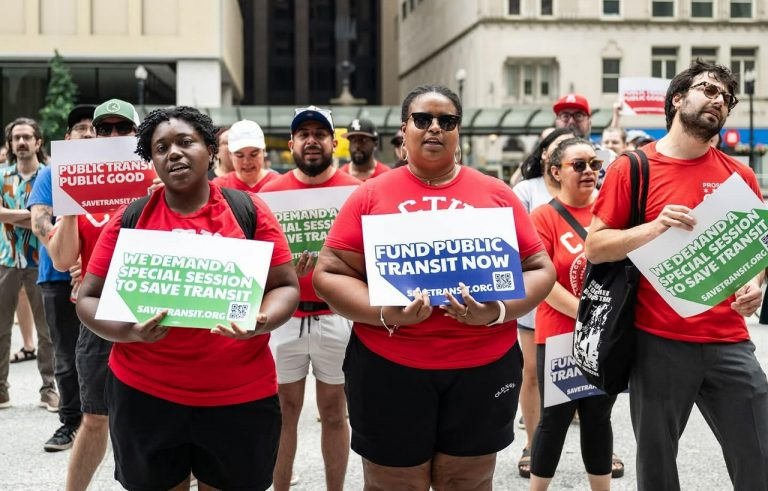
Chicago, IL – “We are here to demand that Governor JB Pritzker live up to his promise of standing up against the cuts and the cruelty of the Trump administration,” Chicago Teachers Union member Jesse Bostic said to the hundreds of people who rallied in Daley Plaza on Saturday afternoon, July 12. Better Streets Chicago organized the protest in response to the Illinois government’s failure to secure funding necessary to prevent 40% service cuts to public transportation. “This fight isn't just about buses and trains, it's about workers having dignity, it's about students being able to get to school. Let's build a system that shows up like we do,” said Jose Manuel Almanza, with Equicity Chicago.

Trans-Led Advocacy Wins Hard-Fought Victory In Colorado Legislature

On Tuesday, Colorado lawmakers passed a landmark bill aimed at strengthening protections for transgender people in the state. After the Senate passed the measure, the House quickly approved the amendments, clearing the way for the legislation to be signed into law by the governor. “In a time where trans people are feeling lost, alone, terrorized, and unsafe let this bill be a message. Trans people deserve to live,” Z Williams, co-executive director of Bread and Roses Legal Center, told Truthout. “Trans people can win. Trans people belong.” Named in honor of Kelly Loving — a transgender woman killed in the Club Q shooting — the Kelly Loving Act includes several provisions designed to make Colorado a safer, more affirming place for trans people.

The Need To Protect Direct Democracy

Direct democracy in America is under attack. That development has been underappreciated as we focus on the vibe shift represented by Donald Trump’s victory in the 2024 presidential election. Still, it tells us just as much about the strengths and weaknesses of America’s constitutional system. Direct democracy in some form — through citizen initiatives, popular referendums or both — is an option in 26 states and the District of Columbia. Citizens can petition to place statutes or constitutional amendments on the ballot or ask voters to approve or repeal actions of their legislatures.

Virginia House Unanimously Passes Defend The Guard Act

On Tuesday, the Virginia House of Delegates passed the Defend the Guard Act, legislation that would prohibit the deployment of the state’s National Guard to combat zones without a declaration of war from Congress, as required by the Constitution. The bill passed unanimously in a vote of 99-0, and it now heads to the Virginia Senate. “HB2193 Defend the Guard Act passes the Virginia House of Delegates 99-0. On to the Virginia Senate,” Delegate Nick Freitas, a retired Green Beret who sponsored the bill, wrote on X. “Thank you all and God speed!”

Eight Ways States Can Fight Inequality And Build Worker Power

With each passing day, we’re seeing more signs of our federal government becoming on oligarchy that puts the economic interests of the ultra-rich above the needs of ordinary Americans. In the face of this billionaire takeover in Washington, state governments need to step up and fight for the working class. Here are eight ways states can combat inequality and support economic justice. President Trump’s administration and right-wing judges are expected to repeal or block many of President Biden’s new labor protections, including safeguards against working in extreme heat, broader overtime pay coverage, and new organizing rights.

How The Fossil Fuel Industry Helps Spread Anti-Protest Laws Across US

Fossil fuel lobbyists coordinated with lawmakers behind the scenes and across state lines to push and shape laws that are escalating a crackdown on peaceful protests against oil and gas expansion, a new Guardian investigation reveals. Records obtained by the Guardian show that lobbyists working for major North American oil and gas companies were key architects of anti-protest laws that increase penalties and could lead to non-violent environmental and climate activists being imprisoned up to 10 years. Emails between fossil fuel lobbyists and lawmakers in Utah, West Virginia, Idaho and Ohio suggest a nationwide strategy to deter people frustrated by government failure to tackle the climate crisis from peacefully disrupting the expansion of fossil fuel infrastructure by enacting tough laws with lengthy jail sentences.

States Are Pushing Back With Anti-Labor Laws As Union Popularity Grows

Growing union organizing across the country has triggered an anti-labor legislative response in some states, but cities and counties are increasingly pushing back, a new report found. The report, released this month by the New York University Wagner Labor Initiative and Local Progress Impact Lab, a group for local elected officials focused on economic and racial justice issues, cites examples of localities all over the U.S. using commissions to document working conditions, creating roles for protecting workers in the heat and educating workers on their labor rights. In the face of increased worker organizing and Americans’ higher approval of labor unions in the past few year (hitting levels not seen since the 1960s), many states have introduced bills aimed at stopping payroll deduction for union dues and punishing employers that voluntarily recognize a union through the card check process.

Supreme Court’s Grants Pass Decision Fired Up Homeless Advocacy Groups

The Supreme Court’s momentous June ruling in the Grants Pass v. Johnson case removed a key protection for unhoused people, allowing criminalization even when there is no available shelter. While some Democrats condemned the decision, several leaders on the West Coast, where unsheltered homeless encampments are more pronounced, quickly moved to embrace it. California Gov. Gavin Newsom has issued an order for “hazardous” encampments to be dismantled, and San Francisco Mayor London Breed has declared that she will launch “aggressive” homeless sweeps that could include criminal penalties.

Green Amendments Gain Traction In More States Ahead Of Elections

A new wave of state legislators are pursuing the constitutional right to a safe environment, which attorneys say could strengthen climate lawsuits and policy if interpreted correctly. But the effectiveness of those amendments hinges on their legal language and other details. Nine states so far have proposed legislation that would let voters decide in November whether they want the right to a clean, safe environment spelled out in state constitutions. Washington state, New Jersey, and Hawaii are the farthest along, with committee hearings either recently held or scheduled for the coming weeks.

Wins At The Ballot Box For Abortion Rights Still Mean Court Battles

Before Ohio voters amended their constitution last year to protect abortion rights, the state’s attorney general, an anti-abortion Republican, said that doing so would upend at least 10 state laws limiting abortions. But those laws remain a hurdle and straightforward access to abortions has yet to resume, said Bethany Lewis, executive director of the Preterm abortion clinic in Cleveland. “Legally, what actually happened in practice was not much,” she said. Today, most of those laws limiting abortions — including a 24-hour waiting period and a 20-week abortion ban — continue to govern Ohio health providers, despite the constitutional amendment’s passage with nearly 57% of the vote. For abortion rights advocates, it’s going to take time and money to challenge the laws in the courts.

Colorado Looks To Rental-Car Fee To Fund Passenger Rail Projects

Denver, Colorado - Colorado legislators plan to introduce a bill that will increase the state fee on rental cars by $2 to $3 per day to help pay for proposed passenger rail service along the Front Range and to Craig, Colo., the Colorado Sun reports. The fee would generate as much as $50 million annually, which the state would use for matching funds for federal grant programs — specifically targeting the $60 billion for rail projects in the Infrastructure Investment and Jobs Act. “I really want to make sure Colorado gets some of that money,” state Senate President Steve Fenberg (D-Boulder) told the Sun.

Thousands March For Missing And Murdered Indigenous People

On Valentine’s Day, actions were staged throughout several Minnesota cities and  Indian reservations to memorialize Indigenous people who are missing, or have been murdered. Minneapolis, Duluth, Bemidji, Fargo-Moorhead, Mahnomen on the White Earth  Indian Reservation and the Red Lake Indian Reservation all organized events including opportunities for family members to speak of their lost loved ones and the community to show support. Nearly 300 braved the cold weather in Bemidji on Wednesday, also recognized as the Day of  Remembrance for Missing and Murdered Indigenous Relatives, to hear organizers and family members speak of lost relatives and their efforts to prevent future cases of missing, or murdered, people.
assetto corsa mods

Urgent End Of Year Fundraising Campaign

Online donations are back! Keep independent media alive. 

Due to the attacks on our fiscal sponsor, we were unable to raise funds online for nearly two years.  As the bills pile up, your help is needed now to cover the monthly costs of operating Popular Resistance.

Urgent End Of Year Fundraising Campaign

Online donations are back! 

Keep independent media alive. 

Due to the attacks on our fiscal sponsor, we were unable to raise funds online for nearly two years.  As the bills pile up, your help is needed now to cover the monthly costs of operating Popular Resistance.

Sign Up To Our Daily Digest

Independent media outlets are being suppressed and dropped by corporations like Google, Facebook and Twitter. Sign up for our daily email digest before it’s too late so you don’t miss the latest movement news.