Skip to content

Wages

The Unraveling Of Workplace Protections For Delivery Drivers

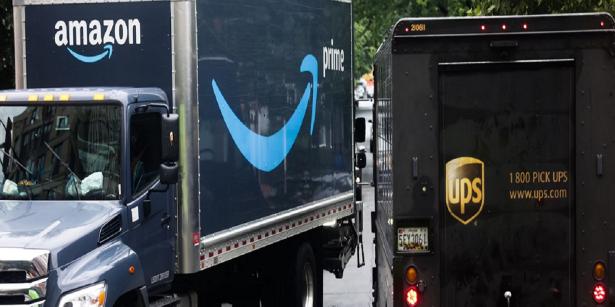
American households have become dependent on Amazon. The numbers say it all: In 2024, 83% of U.S. households received deliveries from Amazon, representing over 1 million packages delivered each day and 9 billion individual items delivered same-day or next-day every year. In remarkably short order, the company has transformed from an online bookseller into a juggernaut that has reshaped retailing. But its impact isn’t limited to how we shop. Behind that endless stream of packages are more than a million people working in Amazon fulfillment centers and delivery vehicles.

Wage Stagnation Vs. Living Wages For US Workers Today

At the end of last August, President Donald Trump asserted that average wages for U.S. workers had risen by $546 during the first six months since he returned to office in January 2025. As with virtually all of Trump’s pronouncements, this one bears little relationship to the truth. In fact, when using the most reliable government data on wages and then controlling for inflation, workers’ wages did still rise under Trump, but by $26—that’s 95% less than the $546 average pay raise proclaimed by Trump. The reality of wage stagnation under Trump is fully consistent with his broader attack on working people.

The Biggest Bargaining Mistake Unions Are Making In 2025

When unions get ready for bargaining, we tend to look at the wage scale in our existing contract and think something like, “Let’s open with a proposal for a 5 percent raise every year, and maybe eventually we’ll settle at 3.75 percent.” This type of proposal was made out of habit when inflation was around 2 percent. While that may seem like a logical way to approach negotiations, you’re making a big mistake if you don’t take a closer look at the numbers. The error that many bargaining teams make is not reviewing the cost of living each of the previous five years. Because of extreme inflation during the last five years, minimum increases of as much as 10 percent may be needed to restore purchasing power.

Unions Aren’t Just Good For Workers; They Benefit Communities, Democracy

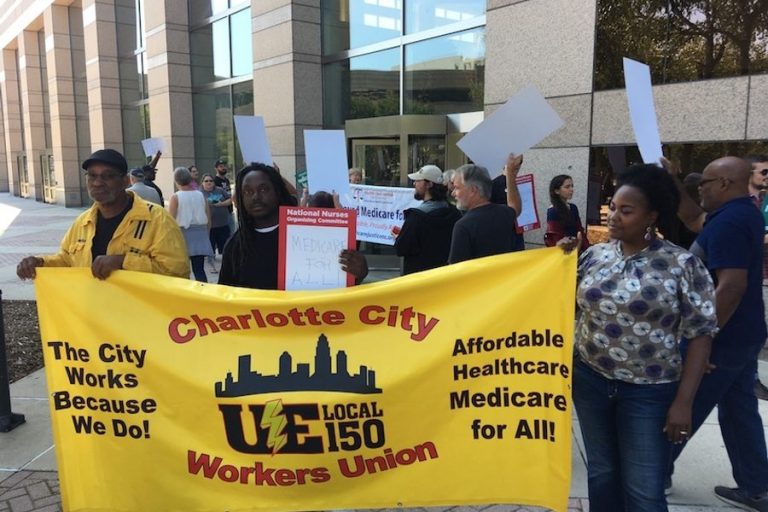
We know that unions promote economic equality and build worker power, helping workers to win increases in pay, better benefits, and safer working conditions. But that’s not all unions do. Unions also have powerful effects on people’s lives outside of work. They help foster solidarity, promote civic and political engagement, provide reliable information to working-class communities about how economic policies impact their lives, and serve as a counterweight to corporate power in our democracy. Throughout history, unions have been engines of resistance to entrenched and undemocratic power—mobilizing working people to challenge inequality, defend civil rights, and push back against authoritarianism in all its forms.

How Mexico’s Welfare Policies Helped 13.4 Million People Out Of Poverty

Toothless and frail, Gloria Palacios, 84, stooped as she set up her rickety sidewalk shop in Mexico City’s roughshod Doctores neighborhood. On sale: peanuts, cigarettes, chewing gum, chocolates and chips. When asked how much she made in a day, Palacios’s disabled son Gustavo, who helps run the tiny store, simply laughed. “If we make 100 pesos ($5) it’s a lot,” he said. Happily, said Palacios, the family has a different lifeline. With their house crumbling and bills piling up, the only thing keeping them afloat is a bimonthly transfer of 6,200 pesos ($330) implemented by the government of previous president Andrés Manuel López Obrador for adults over 65.

Air Canada And The Erosion Of Collective Bargaining

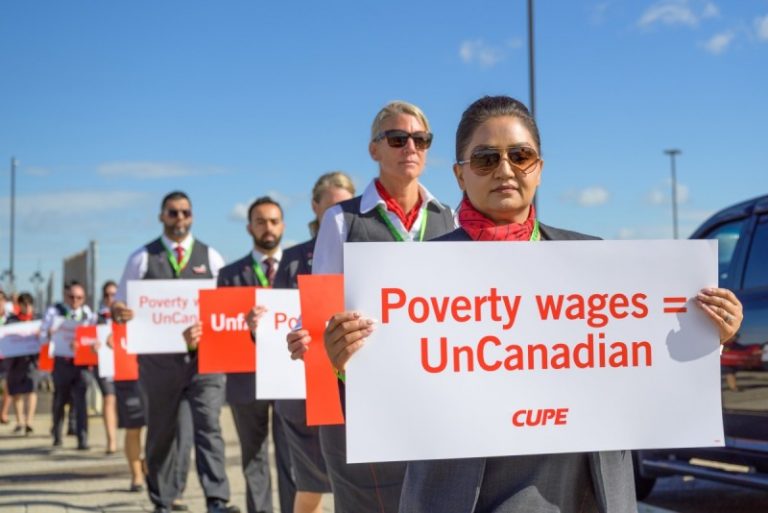
On August 16, 10,000 Air Canada flight attendants walked off the job. Three days earlier, their union, the Canadian Union of Public Employees (CUPE), had issued a 72-hour strike notice. In response, the airline served its own lockout notice, warning that it would cancel flights worldwide. The showdown came after months of stalled negotiations following the expiry of the attendants’ decade-old collective agreement in March. The strike did not last even a single day before the Carney government referred the parties to binding arbitration. A central issue in the negotiations is the flight attendants’ “ground pay.” Under the current system, they are only paid for time in the air, leaving the hours spent working before and after takeoff uncompensated.

Food Prices And Stagnating Wages Weigh On US Residents

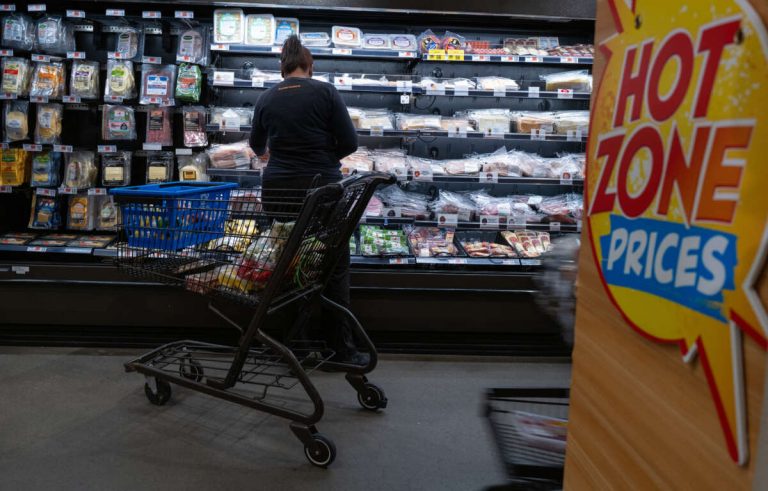
New economic data and surveys reveal growing financial anxiety among US nationals, who are grappling with rising food prices and slowing wage growth. Nearly seven months after Donald Trump returned to the White House, the promised “golden age” has not materialized for most, according to polls. According to a recent Associated Press–NORC Center for Public Affairs Research survey, the vast majority of US adults feel stressed about food costs. This concern is particularly acute for low-income US residents, among whom 64% say grocery prices are one of their top sources of stress.

What It Will Take To Get US Citizens To Work The Farm?

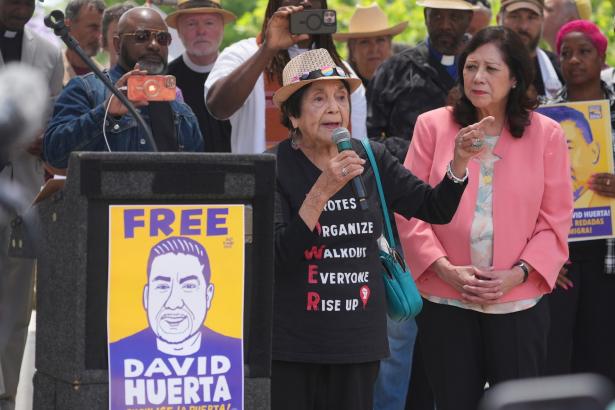
The agriculture sector is on edge like never before. With ICE officers chasing undocumented immigrants through fields and barging into meatpacking plants, workers are spooked. Even before the farm raids, workforce shortages and economic uncertainty rankled the industry. Now, as harvest season arrives for many crops, concerns are growing that there may not be enough workers out there to feed the country. To Dolores Huerta, it’s an unprecedented problem caused squarely by the Trump administration. “It’s an atrocity, what they’ve been doing to the immigrant community,” Huerta said in an interview with POLITICO Magazine.

Trash Pickup Strikes Spread Nationwide

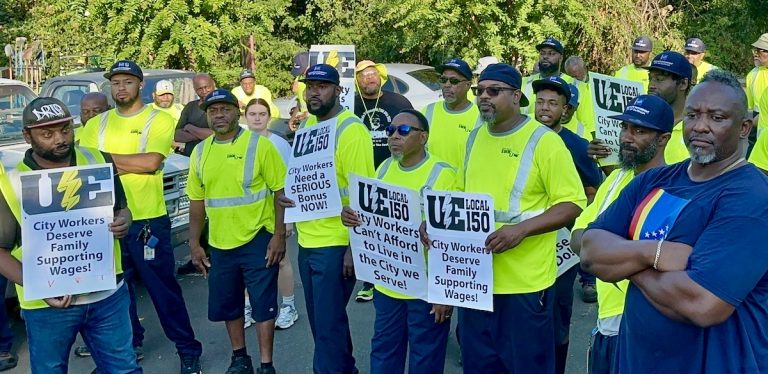
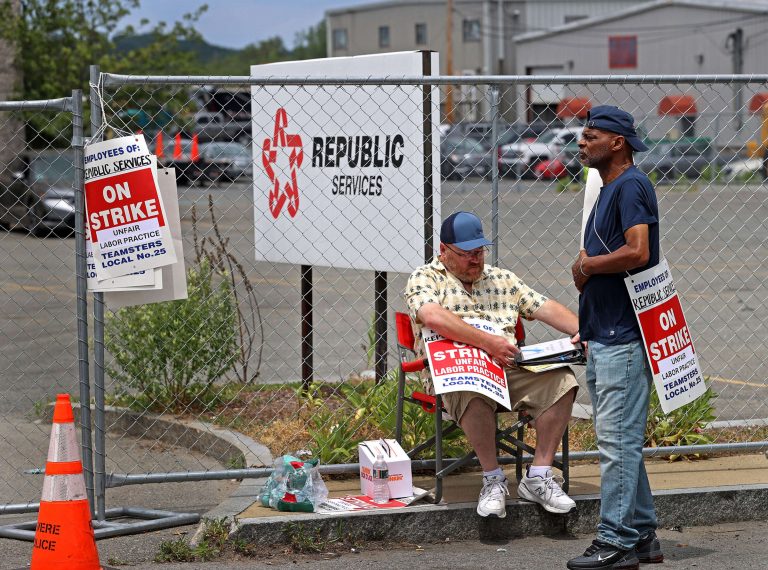
A local sanitation workers strike that began on July 1 in Boston, Massachusetts, and left trash unpicked across the city is now spreading nationwide in a series of labor actions coordinated by the Teamsters union as frustrated workers demand better pay and benefits from Republic Services, a major waste disposal company. The Teamsters said in an email on Friday that about 550 sanitation workers were on strike in multiple cities while 1,600 others refused to cross picket line extensions in solidarity with the strikers at local Republic Services sites in Massachusetts, Georgia, Illinois, Washington State, and California.

Anti-Worker Policies, Capitalism, And Privatization Keep South Poor

The central function of government should be to protect people from harm, exploitation, and abuse. Yet on this core task, many Southern state governments have performed abhorrently—largely by design. EPI’s Rooted in Racism and Economic Exploitation series1 has shown how for most of the past two centuries, Southern state governments have embraced an economic development strategy—the Southern economic development model—designed to undermine job quality and suppress worker power, particularly for Black and brown workers. The model aims to maintain a pool of exploitable, available labor, and preserve the racial and economic hierarchies established during slavery.

Wage Stagnation Has Made ‘Minimal Quality Of Life’ Out Of Reach For Most

The ability to afford basic needs and wants in line with living a “dignified life” in the U.S. is increasingly out of reach, new research finds, naming wage stagnation and soaring prices as factors driving unaffordability. According to an analysis released by the Ludwig Institute for Shared Economic Prosperity (LISEP) last week, a “minimal quality of life” is out of reach for the bottom 60 percent of American households, or those with incomes of about $100,000 a year or less. Researchers pinpoint stagnating wages and decreases in workers’ spending power as well as increases in costs as reasons for growing unaffordability. According to the researchers, the minimal quality of life has doubled since 2001, with 2023 seeing the largest single-year increase.

Unmoved By Tariff Threats, Mexican GM Workers Win Wage Hike

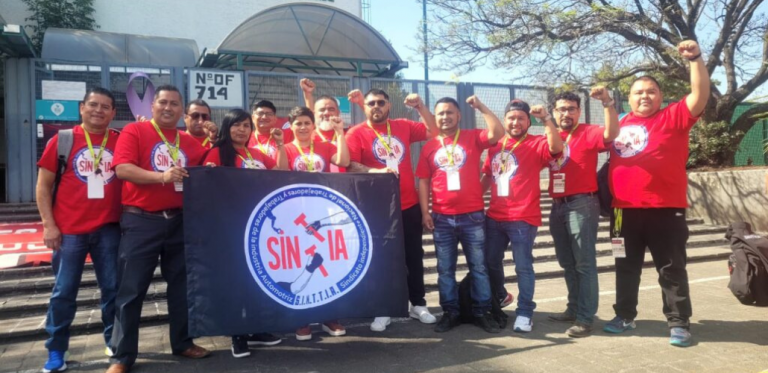
Mexican General Motors workers in the Silao, Guanajuato, factory complex clinched record raises after staring down company scaremongering about tariff threats. “They said, well, we’re offering 6 percent,” said Norma Leticia Cabrera Vasquez about management’s offer at bargaining. “We knew they were going to show up with that, but we said, ‘We still have weeks to negotiate, so we won’t let that intimidate us,’” said Cabrera Vasquez, who worked at the plant for 15 years, and now serves as a leader of the union’s Women’s Department. In spite of the company's efforts to stoke uncertainty, auto workers stood their ground, garnering wage increases of 10 percent on average.

A Return To Basics: Rasmus, The ‘Neoliberal’ Turn, And Exploitation

Instead of the conservative motto, 'A fair day's wage for a fair day's work!' they ought to inscribe on their banner the revolutionary watchword: 'Abolition of the wage system!' Karl Marx, Value, Price, and Profit Today, the point that Marx made in his 1865 address to the First International Working Men’s Association is largely lost on the trade unions and even with many self-styled Marxists. The distinction between the goal of “a fair day's wage” and the goal of eliminating exploitation-- the wage system embedded in capitalism-- is lost before a common, but unfocused revulsion to the exploding growth of inequality. It is one thing to deplore the growth of inequality, it is quite another to establish what would replace the logic of unfettered accumulation.

Inflation Poses Unique Challenges For Worker Co-Ops

Inflation is top of mind for many Canadian small and medium-sized businesses (SMEs) these days. A recent survey of Canadian SMEs found 90 percent of them had been impacted by inflation, and another survey of 500 Canadian accountants revealed inflation as the most significant financial threat to Canadian SMEs. With the vast majority of Canadian worker co-ops being SMEs, it’s reasonable to assume that they’re also feeling these pressures. But delving deeper into the issue suggests that while worker co-ops face some of the same challenges as conventional businesses regarding inflation, how they respond is likely to be different.

Corporate Fearmongering Over Fast Food Wage Hike Aged Like Cold Fries

In September 2023, California passed a law requiring fast food restaurants with more than 60 locations nationwide to pay workers a minimum of $20 an hour, affecting more than 700,000 people working in the state’s fast food industry. Readers will be unsurprised to hear that corporate media told us that this would devastate the industry. As Conor Smyth reported for FAIR (1/19/24) before the law went into effect, outlets like USA Today (12/26/23) and CBS (12/27/23) were telling us that, due to efforts to help those darn workers, going to McDonald’s or Chipotle was going to cost you more, and also force joblessness. This past April, Good Morning America (4/29/24) doubled down with a piece about the “stark realities” and “burdens” restaurants would now face due to the law.
assetto corsa mods

Urgent End Of Year Fundraising Campaign

Online donations are back! Keep independent media alive. 

Due to the attacks on our fiscal sponsor, we were unable to raise funds online for nearly two years.  As the bills pile up, your help is needed now to cover the monthly costs of operating Popular Resistance.

Urgent End Of Year Fundraising Campaign

Online donations are back! 

Keep independent media alive. 

Due to the attacks on our fiscal sponsor, we were unable to raise funds online for nearly two years.  As the bills pile up, your help is needed now to cover the monthly costs of operating Popular Resistance.

Sign Up To Our Daily Digest

Independent media outlets are being suppressed and dropped by corporations like Google, Facebook and Twitter. Sign up for our daily email digest before it’s too late so you don’t miss the latest movement news.