Create!
Along with direct action and other forms of resistance, a transformational movement must also have a constructive program that builds new institutions based on the values that the movement aspires to achieve. These may eventually replace the old systems. From small, worker-owned cooperatives to national advocacy groups, hundreds of thousands of people around the country are working to create democratic and sustainable systems that meet the basic needs of all people.

During the 11th Parliamentary Forum of BRICS, a bloc initially composed of Brazil, Russia, India, China, and South Africa, and recently expanded, Cuban deputy Alberto Núñez strongly rejected Washington’s blockade against the island, which he described as a “suffocating economic war.”
At the beginning of his speech, Núñez conveyed the gratitude of the island’s Parliament to the organizers and reiterated that Cuba’s participation as an associate country of BRICS represents an opportunity to build a more just multilateral order based on solidarity and cooperation among States with different levels of development.
The vice president of the International Relations Committee of the National Assembly and the Council of State of Cuba presented his country’s health model as a concrete and effective alternative.
Burkina Faso, Ibrahim Traoré, And The Land Of The Upright People
June 7, 2025
Pan Africanism Today Secretariat, People's Dispatch.
Create!
Africa, African Liberation Day, Alliance of Sahel States (AES), Anti-Imperialism, Burkina Faso, Ibrahim Traore, Imperialism, NATO, neo-colonialism, Pan Africanism, Sovereignty
Since his ascension to power on September 30, 2022, Captain Ibrahim Traoré has become a powerful symbol of Pan-Africanism and a stark contrast to the previous state of affairs in Burkina Faso. His leadership embodies unquestionable patriotism, committed sovereignty, and a clear vision for the future.
The emergence of Captain Ibrahim Traoré and a similar style of leadership in the Sahel has reignited confidence in Pan-Africanism and inspired the youth throughout Africa. This beacon of hope has triggered aspirations among citizens across the continent regarding how their countries should be governed. Indeed, due to his unwavering commitment and patriotism, Captain Ibrahim Traoré has become a star, an inspiration, and a champion of anti-imperialism, posing a genuine threat to imperialism in Africa.
Sociocracy In The Higher Education Classroom
June 7, 2025
Grassroots Economic Organizing.
Create!
Climate Justice, Democracy, Governance, Higher Education
What might sociocracy look like on the small scale, less formally, enacted by college students who have just begun to feel it out?
How might sociocracy’s resonance pervade an organization, even without the opportunity for thoroughly elaborated structure?
In this presentation, Juan Pablo will share how “Students for Environmental Justice” used Sociocracy as a subversion of the traditional, hierarchical classroom model. In exposing the intrinsic, but invisibilized, governance and decision-making processes of the classroom, this group was then empowered to take ownership of their collective class– from the curriculum at the foundation of it, to the grant money that would fund their community outreach projects around climate justice.
Criminalizing Homelessness Doesn’t Work; Housing People Does
June 5, 2025
Farrah Hassen, Scheer Post.
Create!
Criminalization, Homelessness, Housing First, Legal System
In the largest eviction of a homeless encampment in recent history, around 100 unhoused people were recently forced to vacate Oregon’s Deschutes National Forest — or else face a $5,000 fine and up to one year in jail.
The forest was the last hope for the encampment’s residents, many of whom were living in broken down RVs and cars. Shelters in nearby Bend — where the average home price is nearly $800,000 — are at capacity, and rent is increasingly unaffordable.
“There’s nowhere for us to go,” Chris Dake, an encampment resident who worked as a cashier and injured his knee, told the New York Times.
Public Transit Is In Crisis; Congress Can Fix It
June 4, 2025
Leeann Hall, Inequality.org.
Create!
Congress, Public Transit, Public transportation, Transportation
Transit is essential. It’s how we get to health care appointments, parks, school, and work.
Essential workers, small businesses, and under-served communities throughout the country depend on transit. Transit is a key component of economic opportunity, jobs, and a more environmentally sustainable society — and it’s a road to equity for disconnected communities.
But from coast to coast — in big cities and in rural areas, in red and blue states — transit agencies are facing massive budget shortfalls and reducing service. And recent actions by the Trump administration — from Elon Musk taking a chainsaw to the federal government to Secretary of Transportation Sean Duffy threatening to withhold key federal funding — will worsen a bad situation.
Federal Leaders Are Failing On PFAs
The Environmental Protection Agency is rolling back critical protections that ensure safe drinking water. These regulations help ensure that our water is free of PFAS, also known as “forever chemicals,” an especially hazardous form of industrial chemicals that linger in the environment indefinitely.
PFAS are damaging to human health at even the lowest doses. Exposure to PFAS can contribute to serious illnesses including kidney cancer, liver disease, thyroid disorders, or autoimmune disorders. There are no current treatments to remove PFAS from the body.
Despite the evidence of these dire health risks, the administration is shirking their responsibility to protect people across the country from PFAS exposure.
Tulsa Mayor Unveils Historic $105 Million Reparations Plan
June 3, 2025
Deon Osborne, The Black Wall Street Times.
Create!
Black Wall Street, Oklahoma, Reparations, Tulsa, Tulsa Massacre
Tulsa, Oklahoma – Exactly 104 years after Tulsa’s local government deputized white men to loot, bomb, burn, kill and kidnap Black residents of the Historic Greenwood District, the city’s first Black mayor announced the creation of a historic plan for reparations on Sunday.
Inside the Greenwood Cultural Center on the first annual celebration of the 1921 Tulsa Race Massacre Observance Day, newly elected Mayor Monroe Nichols announced the creation of a Greenwood Trust that will be used to collect $105 million to address racial disparities impacting Massacre survivors, descendants and the majority Black residents of north Tulsa.
Land Sharing: Prairie Farmers Lead The Way
June 2, 2025
Lois Ross, Rabble.
Create!
Canada, Indigenous Rights, Landback, National Indigenous Day (Canada), National Indigenous History Month (Canada)
Since the final report of the Truth and Reconciliation Commission was published in 2015, with its 94 Calls to Action, much more attention has been focused on recognizing the harms of colonization. Still, many of us wonder how we can involve ourselves in reconciliation in a meaningful, sincere, way. Reconciliation means much more than setting aside a month or a day to support and learn about Indigenous history. While gestures are important, how do we apply reconciliation in our own lives?
How does a settler, a farmer, whose ancestors were part of colonization, work to advocate for the treaty rights of Indigenous Peoples?
Sharing Seeds In A World Of Proprietary Agriculture
Seed sharing has been a venerable tradition since the dawn of agriculture. Sharing has been a way of honoring the renewal of life, developing new seedlines, and maintaining a farmer’s independence while helping other farmers. Modern capitalism, armed with new technologies and legal powers, has savaged this tradition of seed-sharing, with disastrous results.
For the past several decades, large biotech corporations have aggressively engineered seeds and the design of seed markets to make them proprietary monopolies. This has had profound consequences for farmers and global agriculture: legal bans on seed-sharing, a loss of biodiversity, less innovation in seed breeding, and higher prices that threaten sustainable agriculture and the economic sovereignty of farm communities, especially in the Global South.
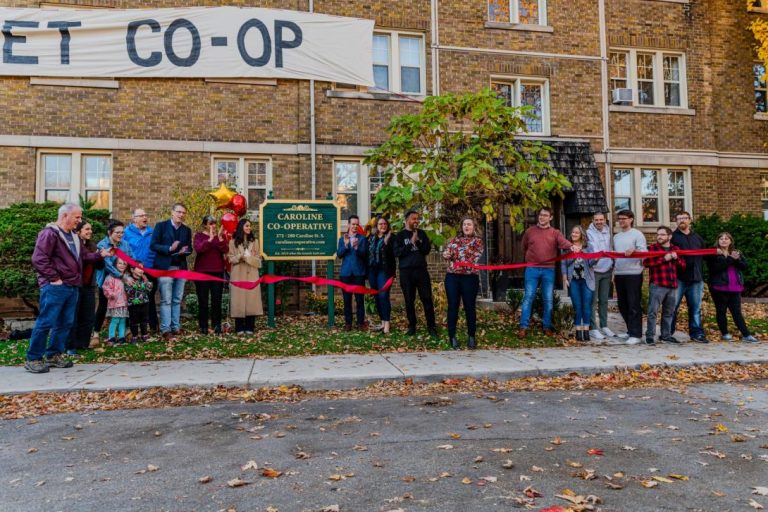
Building A Cooperative Economy In Cincinnati
May 29, 2025
John Duda, Inequality.org.
Create!
Cincinnati, Local Economy, Worker Cooperatives, Worker Rights
Zeke Coleman’s story says a lot about his worker cooperative, Our Harvest — part of Co-op Cincy’s growing network of worker and community owned businesses. But it also says a lot about America:
Before [here] I worked at a chicken processing plant. I got a raise one or two times, at fifty cents, and that was it. I didn’t receive another raise for the next four years. [It’s] different here, because I feel like I’m treated like a person, and it’s not a big corporation where the CEO is making millions and millions and millions while the workers are getting peanuts.
Coleman is a worker-owner and the food hub manager at Our Harvest, a worker co-op founded by Co-op Cincy in 2012. Growing healthy food across two urban farms, and sourcing more from community food system projects, Our Harvest connects local growers and producers to customers, creating good jobs along the way.
Anti-Poverty Experiment From The 1960s Could Inspire Housing Justice
May 28, 2025
Deyanira Nevárez Martínez, Portside.
Create!
Housing, Poverty, Racial disparities, Urban Design
In cities across the U.S., the housing crisis has reached a breaking point. Rents are skyrocketing, homelessness is rising and working-class neighborhoods are threatened by displacement.
These challenges might feel unprecedented. But they echo a moment more than half a century ago.
In the 1950s and 1960s, housing and urban inequality were at the center of national politics. American cities were grappling with rapid urban decline, segregated and substandard housing, and the fallout of highway construction and urban renewal projects that displaced hundreds of thousands of disproportionately low-income and Black residents.
These Urban Farms Are Filling The Gaps The Government Ignores
May 28, 2025
Iulia Lupse, Next City.
Create!
Food Deserts, Food Security, Urban Design, Urban Gardens
Rodrigo Martinez started working at Bonton Farms in 2018 while recovering from addiction. Now the Facilities Manager, he says the opportunity was more than just a job. “I’ve seen people come through the program, learn trades, develop healthy habits, and move on to better jobs, get their own place, buy their own vehicles — things like that.”
His story is proof that urban farming isn’t just about food. It’s about rebuilding lives and sparking real economic opportunity. More than 53 million Americans live in food deserts, far from fresh groceries, according to the USDA. In South Dallas’ Bonton neighborhood, 44.3% of residents fall below the poverty line, triple the national average. With groceries and jobs thin on the ground, residents scrap for the essentials.
Communist-Led Kerala Is Eradicating Extreme Poverty
In a region too often consumed by the drums of war, particularly between nuclear-armed neighbors India and Pakistan, the importance of a sustained ceasefire cannot be overstated. While military skirmishes and nationalistic posturing capture headlines, they divert critical attention and resources from the real battles against poverty, illiteracy, unemployment, and public health crises. A nation’s greatness lies not in its arsenal but in the well-being of its people. The ceasefire agreement between India and Pakistan in May 2025 offers an opportunity to reimagine national priorities, shifting focus from border conflicts to building equitable and just societies.
Park Revitalization Teaches About Balancing Safety And Community
One afternoon in the late 1980s, longtime Southwest Detroit resident Deb Sumner and her neighbors in Hubbard Farms gathered at Clark Park to discuss community improvements. Their meeting was interrupted by a gunshot overhead, forcing them to crawl through the park and take cover in the YMCA building. For Sumner, it was a pivotal moment.
“I said, ‘This is not going to happen again,’” Sumner recalls. “We’ll take it into our own hands.”
For decades, the park on Vernor Highway has reflected both the challenges and triumphs of the surrounding neighborhood. Once plagued by drug activity, violence, and neglect, the park is now a thriving community hub thanks to grassroots efforts.
Turning Banana Peels Into Coasters: Tales Of Food Waste Innovation
May 25, 2025
Nina Ignaczak, Next City.
Create!
Detroit, Food Waste, Michigan, Reuse, Science and technology
Inside the historic Book Depository at Michigan Central, now home to Newlab’s innovation campus, Brittanie Dabney is quietly building a different kind of startup. Her company, EcoSphere Organics, doesn’t make apps or mobility tech. It makes biodegradable coasters out of banana peels.
Dabney and her team collect food scraps from local restaurants like Alchemy and Johnny’s Speakeasy — coffee grounds, citrus rinds and eggshells—and process them into small-batch products like compostable packaging and plant-based leather alternatives.
Using dehydration and fermentation, Dabney aims to create materials that are both functional and regenerative.