Skip to content

History

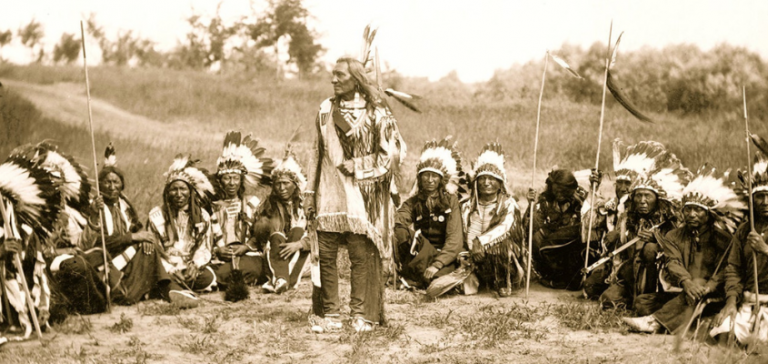
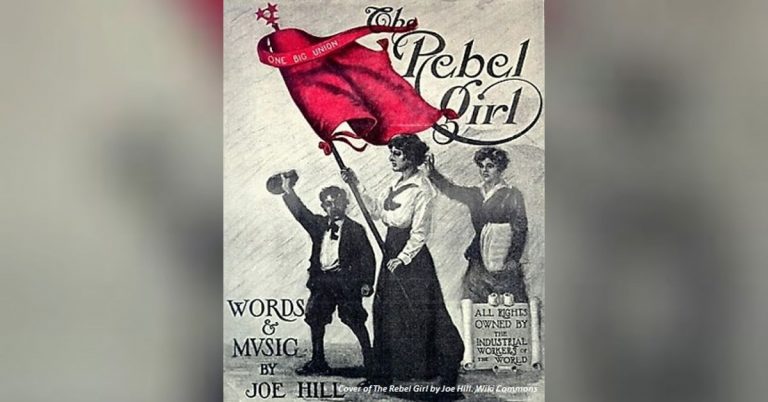
Missing Links In Textbook History: The American Left Part II

Years ago, I took a sociology course in which we were taught how social class was determined by looking at a mix of family wealth, income, occupation and education. We were taught that those categories were often impacted by complex disparities in opportunity determined by race and gender. Societies, we were taught, are stratified into class categories of upper, middle and lower, but those are often further divided into as many as six or seven groupings. At the time I could not imagine how these multiple divisions could be of much use. I still can’t. It was not until I saw Monty Python and the Holy Grail, that those bewildering categories were cleared up. In one scene, King Arthur, dressed in white, interacts with two very busy peasants, a man and a woman, both dressed in mud. The apparently confused king asks the peasants who owns the castle on a nearby hill. 
The Genius Act And The National Bank Acts Of 1863-64

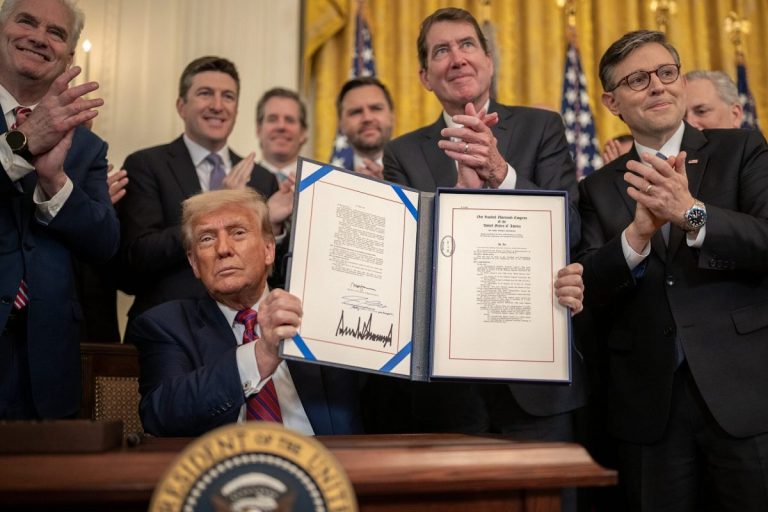
This month, Congress passed the GENIUS Act, an acronym for the “Guiding and Establishing National Innovation for U.S. Stablecoins of 2025.” Designed to regulate stablecoins, a category of cryptocurrency designed to maintain a stable value, the Act is highly controversial. Critics variously argue that it anoints stablecoins as the equivalent of “programmable” central bank digital currencies (CBDCs), that it lacks strong consumer protections, and that government centralization destroys the independence of the cryptocurrency market.

Remembering The Resistance That Helped Stop A Genocidal War

When the United States was carrying out its genocidal campaign against Vietnam in the 1960s and 70s, Canada welcomed tens of thousands of American war resisters to this country. Their actions, along with peace movements in the US and around the world, not only helped to end the war, but they may have even forced President Richard Nixon to abandon a plan to escalate the conflict with the use of tactical nuclear weapons. In light of the serious challenges we face today—including the wars in Gaza and Ukraine, rising poverty and inequality, and the deepening environmental crisis—it is more important than ever to remember, and draw inspiration from, the millions of Americans who resisted the US war in Vietnam, as well as in Cambodia and Laos. Just as importantly, we must remember the meaningful victories won by these peace movements.

The Struggle Against US Imperialism, Nicaragua Is A Model Of Sovereignty

Today, more and more US government officials, especially those in Donald Trump’s two administrations, have invoked the 200-year-old colonial Monroe Doctrine to claim that Latin America is supposedly Washington’s “backyard”, that the US empire should control it, and that China and Russia cannot have relations with the countries in the region. Given that the US government constantly violates the sovereignty of countries in Latin America, it makes perfect sense that several governments in the region have deepened their partnership with China and Russia, because they see that Beijing and Moscow actually respect their independence and have helped them to economically develop, while Washington has only sought to exploit them.

High Crimes And Misdemeanors; Not By Trump But Obama And Democrats

Increasing evidence emerges that confirms what ex-CIA analyst Ray McGovern suggests was a classic off-the-shelve intelligence operation initiated during the last year of Obama’s presidency against the Trump campaign by employees of, and others associated with, the CIA, FBI, and the NS. Yet the public is being counseled to ignore possible proof of state misconduct. The historic and unprecedented timing of Special Counsel Robert Mueller’s indictment of twelve Russia military intelligence officers on the eve of Trump’s meeting with Putin, was clearly meant to undercut Trump’s authority.

Red Channels: America’s Lasting Legacy Of Repression

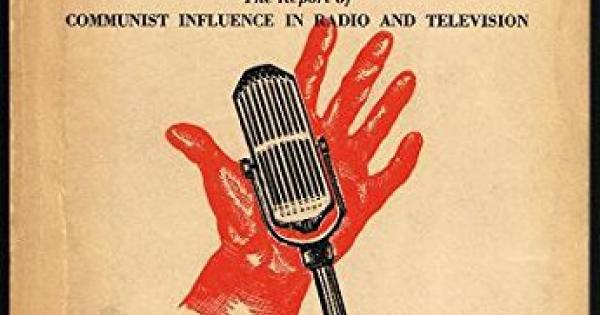
On June 22, 1950, a conservative anti-communist publication called Red Channels: The Report of Communist Influence in Radio and Television became key to the McCarthy-era Hollywood blacklisting campaign. Seventy-five years later, as President Donald Trump and his followers instigate similar attacks on artists, public cultural figures, and institutions, Red Channels represents more than just a past chapter in American history. Rather than a chronicle of antiquity, Red Channels and other texts of the 1940s and 1950s Red Scare provide real insight into Trump’s current inquisitions.

Longshore Workers Remember The Struggle To Free The Charleston Five

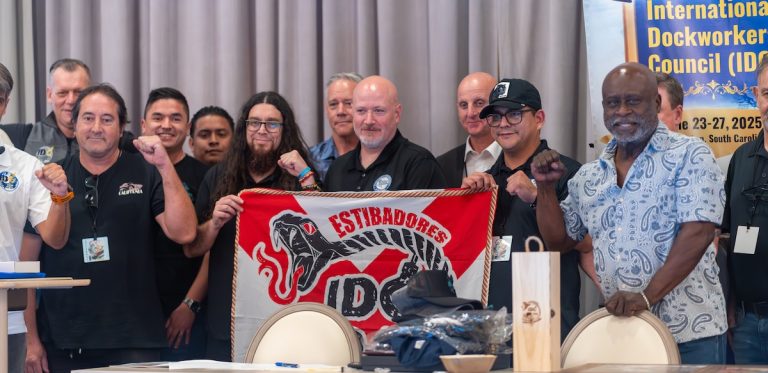
Dockworkers from around the world reunited in South Carolina for a week in June to commemorate the 25th anniversary of the successful campaign to “Free the Charleston 5” and the founding of the International Dockworkers Council. For nearly two years, five members of the International Longshoremen’s Association (ILA) faced felony rioting charges and prison sentences stemming from their roles in a January 2000 confrontation with police at the entrance to the Columbus Street Terminal in Charleston. The case sparked international outcry from unions and civil rights groups, who viewed the charges as a racist attack on organized labor by politically ambitious South Carolina Attorney General Charles Condon.

The Necessity Of Birthright Citizenship For Black People

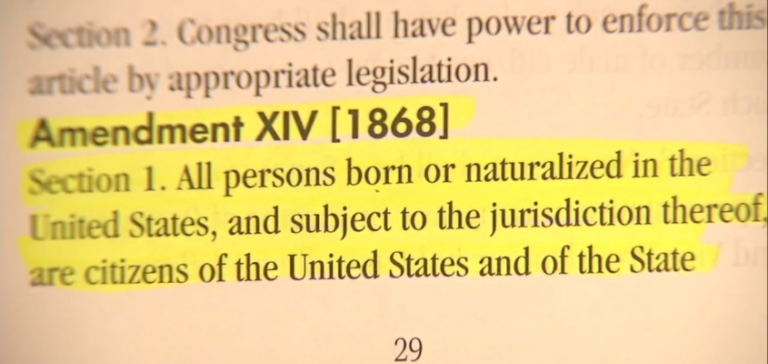
The idea of citizenship has always been a thorny one for Black people. The original United States constitution allowed the enslaved to be counted for purposes of determining congressional representation, but only as three-fifths of a person. The struggles for liberation during enslavement reached their nadir in the 1857 Supreme Court case of Dred Scott v. Sandford , in which not only were an enslaved man and his family wrongly deprived of their freedom, but Chief Justice Roger B. Taney infamously declared that not only were the Scotts not free, but that no Black person had any rights “which the white man was bound to respect.”

A Different Revolution

It’s long past time Americans face the truth about the Founding Fathers. A critique that places events being celebrated on the Fourth of July in a much larger world historical narrative is urgently needed. The power of empire is not only the power to control land, labor, armies and financial industries, but also to control minds. The dominion of the U.S. Empire has turned history upside down. It has transformed some of the biggest criminals into heroes. A history that emphasizes the U.S. as an exemplar of democracy and human rights and holds the constitution as sacrosanct is a history that lies by omission and ignores some of the most important events in its story.

Lessons from Vieques: Resisting US Militarism, Building Unity

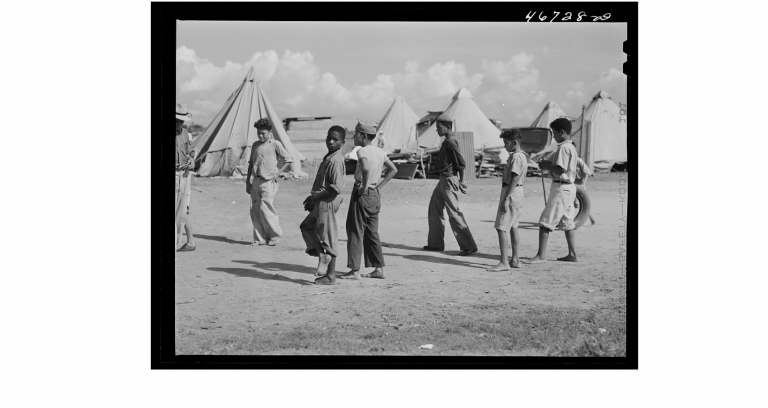
Around two years ago, I watched a puppet show, created by a group of eight to 16-year-olds at the summer camp where I worked, about the eviction of the U.S. Navy from the island of Vieques. After I conducted a few brief workshops reviewing the island’s history of military occupation and contamination, the campers immediately grasped the importance of the decades long struggle to evict the U.S. Navy, which they represented with a puppet of a venomous snake; on the other hand, they used the iconic native Puerto Rican frog, the coquí, to depict participants in the popular uprising against the U.S. military.

The Terrible Origins Of July Fourth

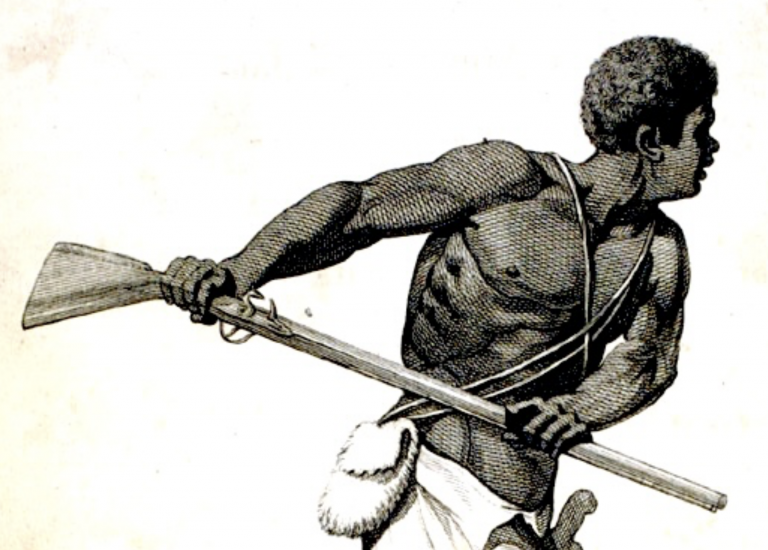
“He has excited domestic insurrections amongst us, and has endeavoured to bring on the inhabitants of our frontiers, the merciless Indian Savages, whose known rule of warfare, is an undistinguished destruction of all ages, sexes and conditions.” -- Declaration of Independence The July 4 holiday in the United States commemorates the signing of the Declaration of Independence in 1776. Anyone educated in this country has been propagandized with lies about patriotic colonists seeking freedom from a tyrannical British monarch. Our minds were filled with tales of Paul Revere and Betsy Ross which erase the role that indigenous and Black people played as they attempted to end true tyranny over their lives.

The Evolution Of Domestic Counterinsurgency In The US

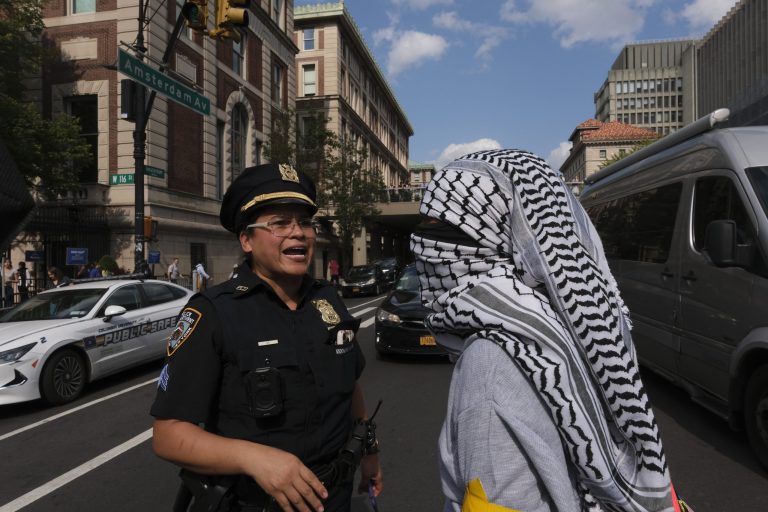
By the time DHS agents showed up at Mahmoud Khalil’s door, a full-spectrum campaign had already marked him as a target. Columbia professor Shai Davidai had posted Khalil’s name and image online, called him a terrorist, and urged Secretary of State Marco Rubio to deport him. The smear was picked up by a network of doxxing accounts like “Documenting Jew Hatred on Campus,” which publicly lobbied for the revocation of Khalil’s visa. Rubio repeated the call, Khalil received death threats, and the university stayed silent. Then, federal agents arrived. A professor’s tweet had become a trigger for federal enforcement. A tweet, a tag, a dossier — these were the new informant files. This time, professors, NGOs, and anonymous social media accounts were the new operators.

From Watts To D.C.: How 500 Black Neighborhoods Vanished In 45 Years

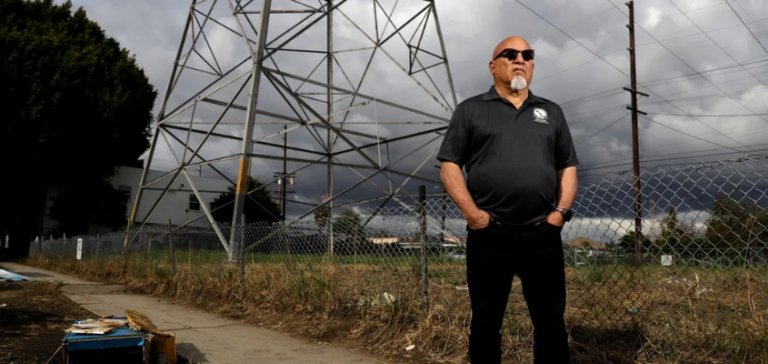
Ignited by a single arrest and fueled by decades of poverty and police brutality, the Watts Uprising of 1965 turned the Los Angeles neighborhood into a national symbol of Black struggle and resilience. Thousands of Black residents like Ted Watkins Sr. rose up in anger and desperation. They were fighting for resources to maintain their neighborhood. In the aftermath of the rebellion, Watkins founded the Watts Labor Community Action Committee to fight for continued investment in Black residents. Today, his son, Tim Watkins, is stuck in the same battles as president of the organization.

Fight Against ‘Alligator Alcatraz’ Unites Immigrant, Environmental, And Indigenous Movements

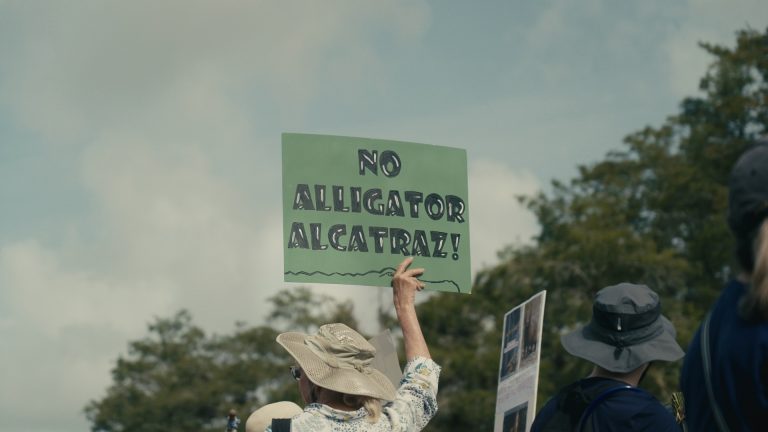
The first arrivals to Trump’s new controversial ICE detention facility, dubbed “Alligator Alcatraz” by Republican politicians for its location in the Florida wilderness, were set to arrive late on Wednesday, July 2. Since Trump came into office for the second time in January, his administration has been scrambling to meet the necessary benchmarks to fulfill Trump’s campaign promise to deport between 15 to 20 million people. The newly-opened detention center is part of Trump’s latest bid to escalate his regime of mass deportations, beginning to accept prisoners a month after the Trump administration raised the quota of immigration arrests to 3,000 per day. The facility is set to open with 3,000 beds ready, with plans to expand to up to 5,000.

50,000 Died In Nicaragua’s Struggle Against Dictatorship; Sócrates Was One Of The Last

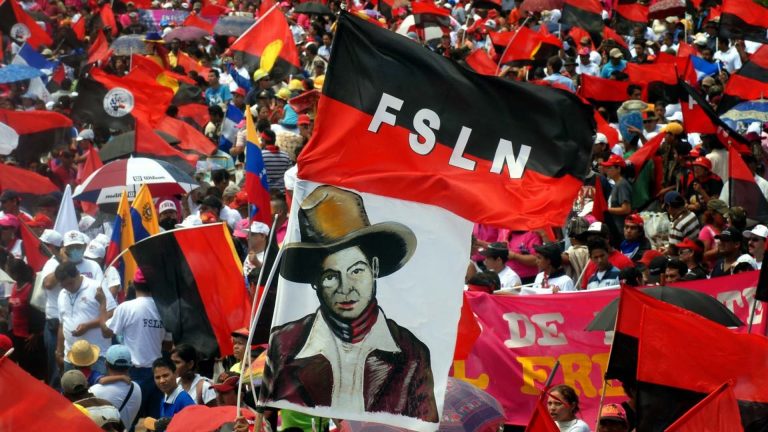
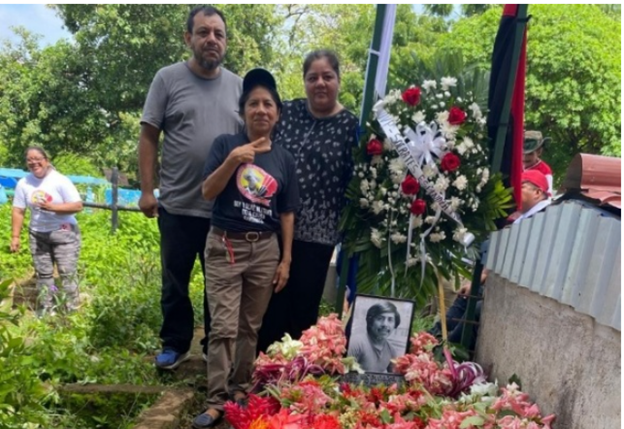
Nicaraguans will fill the streets later this month to celebrate the 46th anniversary of the Sandinista revolution. On July 19, 1979, the Somoza dictatorship finally fell, ending 18 years of guerilla fighting and urban insurrections. The regime had been supported for 43 years by successive US administrations (the history is told in Nicaragua: A History of US Intervention & Resistance). Only three weeks before, over the two days June 27-28, Sandinista forces had been forced to leave the capital, Managua, where the working-class barrios that they controlled in the east of the city came under aerial bombardment. Under cover of darkness, an enormous, silent retreat took place.
assetto corsa mods

Urgent End Of Year Fundraising Campaign

Online donations are back! Keep independent media alive. 

Due to the attacks on our fiscal sponsor, we were unable to raise funds online for nearly two years.  As the bills pile up, your help is needed now to cover the monthly costs of operating Popular Resistance.

Urgent End Of Year Fundraising Campaign

Online donations are back! 

Keep independent media alive. 

Due to the attacks on our fiscal sponsor, we were unable to raise funds online for nearly two years.  As the bills pile up, your help is needed now to cover the monthly costs of operating Popular Resistance.

Sign Up To Our Daily Digest

Independent media outlets are being suppressed and dropped by corporations like Google, Facebook and Twitter. Sign up for our daily email digest before it’s too late so you don’t miss the latest movement news.