Skip to content

Public transportation

Public Transit ‘Death Spiral’: A Warning For Other Underfunded Cities

Philadelphia’s transit system plunged into crisis on August 24, when the Southeastern Pennsylvania Transportation Authority (SEPTA) slashed bus, trolley, subway, and Regional Rail service by 20%. SEPTA eliminated 32 bus routes, shortened 16 more, and reduced the frequency of other bus and train lines. The crisis occurred as a result of state lawmakers failing to close a USD 213 million budget gap. The funding standoff left the city’s 746,500 SEPTA riders stranded and pushed the nation’s sixth-largest transit agency toward what officials call a “death spiral” – which has deeply impacted the disproportionately Black and lower-income SEPTA ridership.
Philadelphia: Hundreds Protest Transit Fare Increases, Service Cuts

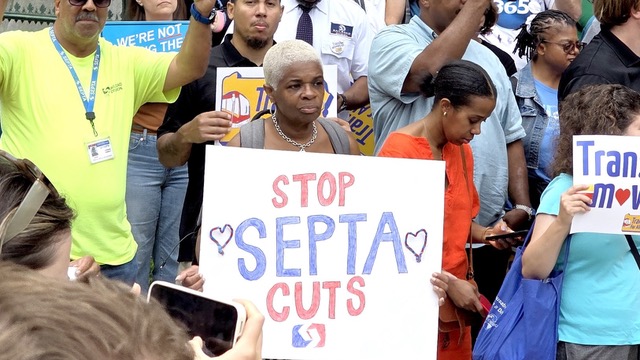
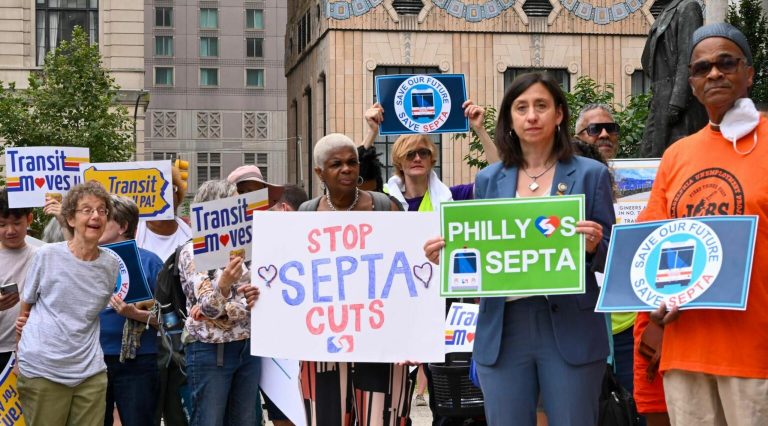
Over 300 people rallied outside Philadelphia City Hall on Aug. 6 to demand no cuts in services or fare increases for South East Pennsylvania Transportation Authority (SEPTA) trains, buses and trolleys. Faced with a $213 million deficit, SEPTA plans to cut 45% of its services in the coming year unless the Pennsylvania legislature increases its budget proposal to include $292 million in new funding for public transit statewide.  The first 20% cuts in SEPTA services are set to start on Aug. 24. Plans include eliminating 32 bus routes and shortening 16 additional routes, cutting frequency of SEPTA metro and regional rail line service by 20% and raising fares by 21.5% on Sept. 1. Another 18 bus routes would be shut down sometime between Aug. 24 and Jan. 1. 

Public Transit Is In Crisis; Congress Can Fix It

Transit is essential. It’s how we get to health care appointments, parks, school, and work. Essential workers, small businesses, and under-served communities throughout the country depend on transit. Transit is a key component of economic opportunity, jobs, and a more environmentally sustainable society — and it’s a road to equity for disconnected communities. But from coast to coast — in big cities and in rural areas, in red and blue states — transit agencies are facing massive budget shortfalls and reducing service. And recent actions by the Trump administration — from Elon Musk taking a chainsaw to the federal government to Secretary of Transportation Sean Duffy threatening to withhold key federal funding — will worsen a bad situation.

Philadelphia Protest Against Transit System’s Proposed Draconian Cuts

Philadelphia, PA - Philadelphia’s transit system, the Southeastern Pennsylvania Transit Authority (SEPTA), released a budget on April 10 that includes draconian cuts in services, increased fares and reduced hours of operation. Claiming a $213 million deficit, the budget due to take effect July 1 would impose a 45% service cut, a 21.5% fare increase and layoffs of transit workers. Under the proposed plan, some service cuts would go into effect on Sept. 1, along with the fare increase. Between Aug. 24, 2025, and Jan. 1, 2026, fifty bus routes would be shut down and 16 others shortened. On Jan. 1, 2026, five Regional Rail lines between neighboring suburbs and the city would be eliminated and a 9 p.m. rail curfew would go into effect.

Toronto And Montreal Move Ahead With Fossil Fuel Ad Restrictions

The city of Toronto has passed a motion aiming to restrict fossil fuel advertising on municipal property, one of several recent efforts to curtail fossil fuel advertising in major Canadian cities. The motion passed on Thursday, October 10, giving Toronto city councillors one year to come up with a draft of the proposed legislation. The effort comes as transit agencies in Canada’s two largest cities have either implemented or are considering similar restrictions on using public transit to advertise for Big Oil or related industries.

Statement On NYPD Mass Subway Shooting Over $2.90

Yesterday, the NYPD shot Derell Mickles, a Black man in Brooklyn for the alleged "crime" of jumping a turnstile. This marks the second NYPD shooting in just 48 hours. Amidst a landscape where Democrat political figures swiftly condemned recent assassination attempts on Donald Trump, proclaiming that "violence has no place in America," we ask: where is this sentiment when it comes to the NYPD shooting Black men? Once again, the state used the hollow excuse of "fare evasion" to justify an assassination attempt on a Brooklyn man. This is not an isolated incident but a pattern of state violence targeting the working class in general and Black people in particular.

What We Can Learn From Cities With Transit-Oriented Development

In my early twenties, I lived in Chofu, a city of over 240,000 people on the west side of Tokyo Metropolis. My apartment building was less than a 10-minute walk from Chofu Station, which is at the center of a bustling, fully “amenitized” mini-city, with easy pedestrian access to an urban-scale grocery store, ever-busy retail shops and restaurants, multiple schools, and small-but-mighty parks. Walking and taking transit every day was easy, and without question, my mode of choice. That was more than 20 years ago, but the memories of Tokyo’s transit system and the feelings I had experiencing it stayed with me. And they’ve informed my efforts to build vibrant, livable communities around — and integrated with — public transit stations in Vancouver, Toronto and Mexico.

When Transit Riders Refuse To Just Sit Back

Public transportation benefits everyone, and many people rely on buses and trains daily to get to work or school. But despite high-quality public transportation being so important for people and the planet, government doesn’t always adequately invest in it. “The analogy with labor unions is interesting because it’s obviously different in the sense that we don’t all work for the same employer, we can’t strike and bargain with our employer for benefits,” Katie Wilson said in 2012, six months after helping form the Seattle Transit Riders Union. ​“But it’s more of a political thing. This is the new working poor, organizing and trying to win political gains.”

Philly Is Giving Free SEPTA Rides To 25,000 Low-Income Residents

Getting to where you need to go is a matter of economic and social justice. Now, low-income Philadelphia residents are getting a boost. In August, the city began a two-year Zero Fare pilot program, distributing 25,000 SEPTA Key cards (valued at $204 each) for unlimited free rides — and the majority of participants don’t need to take any action to enroll. “Transportation has been identified as a barrier for folks seeking employment, especially in Philadelphia, because of the high poverty rate,” says Nicola Mammes, Zero Fare program director. Over 20% of Philadelphians live below the poverty line, and 50% of those households don’t own a car.

Youth Are Calling For Free Public Transit Across British Columbia

Public transportation is woven into the fabric of daily lives for teens. For many, it’s the bridge between home, school and extracurricular activities. What if public transit for youth was a public good? The Transit for Teens campaign aims to make that a reality across British Columbia. We are members of the Transit for Teens youth leadership coalition with the Centre for Family Equity, and we’re raising awareness in the lead-up to the provincial election this fall about how free transit is a globally tested approach that can meet climate, social inclusion and health goals here in B.C.

Lessons From San Francisco About Overcoming Our Transit Deficit

Many a scholar and policy analyst has lamented the United States’ dependence on cars and the corresponding lack of federal investment in public transportation throughout the latter decades of the 20th century. But as I show in my new book, “The Great American Transit Disaster,” our transit networks are bad for a very simple reason: We wanted it this way. Focusing on Baltimore, Atlanta, Chicago, Detroit, Boston and San Francisco, I trace the overwhelming evidence that transit disinvestment was a choice rather than destiny. There were a few exceptions to this mostly distressing story – such as San Francisco, where the publicly-owned Municipal Railway, or Muni, offers positive lessons for contemporary policymakers, politicians and voters.

What If Riding The Bus Were Free?

In May 2019, Winnipeg public transit drivers held a fare strike. Members of ATU Local 1505 had been working without a contract since that January, and they decided to make a point. On a Monday, they left leaflets at bus stops and advertised the strike on social media. That Tuesday they let people ride for free. The fare strike created a new and “visceral experience” for public transit users, says James Wilt, author of Do Androids Dream of Electric Cars? “Even just the ease of getting on board and not having to rummage for change. The feeling of being able to get on and off the bus at any point.” So: what if transit was always free of charge? What if it was fully accessible? What if it properly served rural, remote and suburban riders?

Leaving No One Behind In The City

There is a general consensus that cities and public transport will play a central role in the recovery from Covid-19. Some have called this the “urban opportunity”. From investments in sustainable mobility, to enhancing the role of public transport and the electrification of transport, these discussions have often centered on the potential for the transport sector to provide green jobs, lower emissions, to create access and reshape society along more equitable lines in the post-Covid world. The International Labour Organization (ILO) recently published a report highlighting the massive potential for jobs and for lowering emissions if we focus on investments which double down on public transport and electrification.

Silicon Valley Bus Drivers Restored Community Rides For Free

With Covid cases surging in their ranks, bus drivers in Santa Clara, California, demanded to resume rear-door boarding, which is proven to reduce the risk of infection. Management of the Valley Transportation Authority (VTA) balked, even blaming the workers for getting sick. Pressure mounted from the leadership of Transit (ATU) Local 265, and from rider and community groups. But it was rank-and-file bus drivers who forced management’s hand when they started planning to stop boarding at the front door whether the agency agreed or not. Bosses prefer anything to allowing workers to run the company. On February 3, the agency announced that it would resume rear-door boarding.

Transit Unions Join Forces To Win Safety Protections And Beat Back Layoffs

Transit workers have been hit hard by the pandemic. Last year at least 100 from the Amalgamated Transit Union and 131 from the Transport Workers lost their lives to Covid-19. Before Covid, transit unions in the Bay Area—six ATU locals, and one local each of TWU and the Teamsters—often faced their individual struggles in isolation. But during the pandemic, these locals united across the region and came together with riders to demand protections for all. That unity forced reluctant politicians to make Covid safety a priority. It also set the stage for the unions and riders to team up again to stave off layoffs. And there are more fights ahead.
assetto corsa mods

Urgent End Of Year Fundraising Campaign

Online donations are back! Keep independent media alive. 

Due to the attacks on our fiscal sponsor, we were unable to raise funds online for nearly two years.  As the bills pile up, your help is needed now to cover the monthly costs of operating Popular Resistance.

Urgent End Of Year Fundraising Campaign

Online donations are back! 

Keep independent media alive. 

Due to the attacks on our fiscal sponsor, we were unable to raise funds online for nearly two years.  As the bills pile up, your help is needed now to cover the monthly costs of operating Popular Resistance.

Sign Up To Our Daily Digest

Independent media outlets are being suppressed and dropped by corporations like Google, Facebook and Twitter. Sign up for our daily email digest before it’s too late so you don’t miss the latest movement news.