Skip to content

Water

Puerto Ricans Want A Clean And Just Energy Future

One year after Hurricane Maria ravaged the United States territory of Puerto Rico, leaving more than 3000 dead and, at its peak, the entire island of 3.5 million residents without electricity, youth and labour activists are calling for a just energy transition that would better protect the island’s economy and energy system for future climate-related disasters. “The transition to clean energy is very important because in Puerto Rico we suffered the onslaught of Hurricane Maria, and many of the deaths were people with health issues who depended on electric machines,” says Rosalina Alvarado, a science teacher and leader of the local environmental group, PANAS.

Flint Water Crisis Ongoing: ‘We Are Still Suffering’

The water, which was insufficiently treated, “leached lead from service lines and contaminated the city’s water, exposing 100,000 people,” AlterNet reported. On top of that disaster, there was an outbreak of Legionnaires’ Disease killing at least 12 people, which resulted in felony charges brought against many state officials. While the Michigan Department of Environmental Quality insists the lead levels are within acceptable limits today, residents don’t trust using the water in their homes. And scientists back the residents’ suspicion saying “many of the lead service lines that originally contaminated the water supply are still in use, and will not be replaced until 2020,” AlterNet reported.

Teaching My Sons That Water Is Life: A Father/Son Road Trip.

This was a special summer for me as a dad. For the first time I took my sons, Felix and Jaxson, on that classic TransCanada road trip so many of us did when we were young. We traveled across two provinces, from Manitoba to Alberta. It was a journey across our Treaty 6 territory. We drove across many bodies of water, with much of it flowing north. Water—both our Cree and Dene relatives, along with every other Canadian, depend on for life. As I drove with my sons, I wondered what would be their takeaways, what would they remember? Our destination was the Grassroots Grow Deep (GGD) - An Indigenous Climate Justice Training, a gathering I was supporting through my job as a campaigner with the global climate organization, 350.org.

Silence Is Leaden, The Revolutionary Power Of Art Behind Bars

More lead in more water and the grotesque parallels across the country with regards to testing, notification, repairs and accountability. Next, as the prison strike continues, we go inside with an artist who seeks to help prisoners defy their oppression through art. But beware, this isn’t therapy - this is revolution. From tweets to marching in the streets, this is Act Out!

Top Ranking Michigan Official Ordered To Go To Trial Over Flint Water Crisis

Nick Lyon will stand trial for involuntary manslaughter after a Legionnaires' disease outbreak reportedly killed 12 and sickened close to 90 people in 2014 and 2015. An investigation into the Flint, Michigan water crisis pins the state’s Department of Health and Human Services director, Nick Lyon, for involuntary manslaughter after a Legionnaires’ disease outbreak reportedly killed 12 and sickened close to 90 people in 2014 and 2015. Judge David Goggins ordered Lyon stand trial for the deaths of two of the 12 victims. He is also being charged with misconduct in office. The investigation is ongoing and looks at what happened when the Flint River was used for drinking water in Flint for 18 months in 2014 and 2015. According to the Associated Press, the water was corrosive from leached lead from pipes, which ended up in the water supply and was never treated.

Farmers Are Drawing Groundwater From The Giant Ogallala Aquifer Faster Than Nature Replaces It

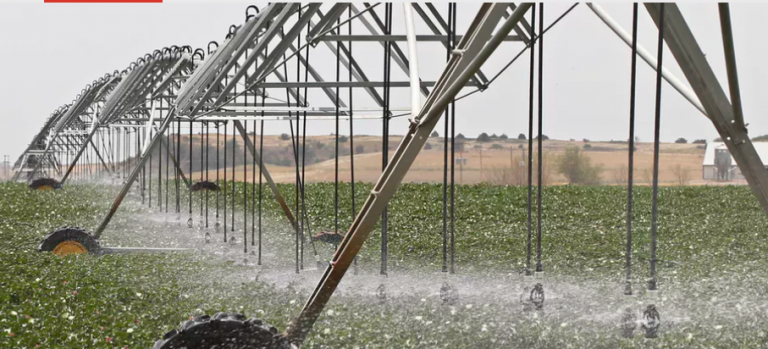
Every summer the U.S. Central Plains go dry, leading farmers to tap into groundwater to irrigate sorghum, soy, cotton, wheat and corn and maintain large herds of cattle and hogs. As the heat rises, anxious irrigators gather to discuss whether and how they should adopt more stringent conservation measures. They know that if they do not conserve, the Ogallala Aquifer, the source of their prosperity, will go dry. The Ogallala, also known as the High Plains Aquifer, is one of the largest underground freshwater sources in the world. It underlies an estimated 174,000 square miles of the Central Plains and holds as much water as Lake Huron. It irrigates portions of eight states, from Wyoming, South Dakota and Nebraska in the north to Colorado, Kansas, Oklahoma, New Mexico and Texas in the south.

Salvadorans Protest Renewed Attempts To Privatize Water Resources

Barely six weeks have passed since the newly elected, right wing-dominated legislature took office in El Salvador, but recent frictions between security personnel of the legislature and university students protesting the potential privatization of water already paint a grim picture of things to come for social movements. During the month of May, parliamentarians moved to ratify the mining prohibition approved in March 2016 and to shelve all pending requests related to the mining file. At the same time, the Environment and Climate Change Commission, ECCC, moved to reopen a long overdue discussion on water legislation, hinting at the possibility of privatization. Since 2006, environmental organizations in El Salvador have pressured lawmakers to approve laws that recognize water as a human right and as a common good that should be publicly managed, with a focus on sustainability, accessible domestic use, and regulation of commercial and industrial use.

After Latest Water Rate Hike, A Call To Pugh And Young For Help

A City Council bill to give poor residents a break on fast-rising water rates – promised a year ago by President Jack Young – is yet to be drafted As Baltimore water bills rose for the third year in a row, jumping nearly 10% yesterday, advocates for water customers again asked city officials to give poor residents some relief. Last summer they made the same plea for income-based billing legislation – and thought they were being heard. Council President Bernard C. “Jack” Young promised then to work with advocates on a measure that would limit rates for poor customers. But after a couple of months, those talks petered out and no bill has been introduced. “Since January, there’s been no movement,” said Molly Amster, of Jews United for Justice. A news conference held under a blasting-hot July sun in front of City Hall today drew about 25 activists and water customers.

Who Owns America’s Water?

Yes, water is a human right, fundamental to life - yet if you are an average American, you would be lucky to have access to it, at a price you can afford to pay and not be poisoned. Just ask the residents of Flint, Michigan - a low income community forced for years to use expensive bottled water for everything from cooking to showers - they believe their tap water is good for one thing, and one thing only: To flush the toilet. Flint first gained notoriety for lead-poisoned water in 2014, when the water source for the municipal water supply was changed from Detroit to Flint's own river.

Water Defenders Demand State Follow Law, Deny Permit To Nestlé

We ask all our supporters to stay informed on the issues through our website saveMIwater.org. We anticipate that those organizations and individuals who work as defenders of Michigan’s water commons will assist us in paying the bills for this contested permit. It isn’t cheap, but it is necessary. The State must not get away with ignoring its public trust responsibilities and illegally granting Nestle the water of the commons to convert to private profit at the expense of our environment and our use. Over 80,000 people already expressed their opposition and were ignored.

Battling The Indignities Of Detroit’s Water Shut-Offs

I never considered myself a politically active type. In fact, I abhorred politics for three decades. But about 25 years ago, I realized that I couldn’t fight my personal health insurance issues without dealing with the many other human rights issues I’d heard people debate on C-Span not realizing how they were affecting my life. So I got involved with my local Democratic party here in Detroit, then in fighting for school reform. After that, I began speaking out as a volunteer advocate for people who face water shut-offs because they couldn’t afford to pay their bills. This issue is finally making national headlines, but the city previously shut off Detroiters water 10 years ago, when large numbers of Detroiters began to struggle with the city’s high water rates. The city council passed an affordability plan that adjusted water rates based on a percentage of income.

‘People Have To Strengthen The Laws Protecting The Water’

Janine Jackson: It is impossible, really, not to connect two recent pieces of news: Residents of Flint, Michigan, have been told that the state that poisoned their drinking water will no longer provide them free bottled water. They’ll be going back to paying some of the highest prices in the country, some $200 a month, for water that may still be making them sick. The Washington Post reports at least 12,000 homes in Flint still waiting for replacement of lead pipes. At the same time, Michigan approved a permit letting the Nestlé Corporation pump more fresh water out of a well in the Great Lakes Basin to bottle and sell at a profit, more than half a million gallons a day, the right to which will cost Nestlé…wait for it…around $200 a year. And that won’t increase, although the amount of water they are taking will—by 60 percent.

Mexicali’s ‘Water Defenders’ Take Fight to Big Alcohol

In January 2017, the Mexican government implemented a 20 percent hike in gasoline prices, setting the stage for a nationwide rebellion and a people’s mobilization against the tightening screws of neoliberalism. To a population already struggling with poverty and low wages, this blatant exercise of power and greed was a wake-up call heard across Mexico. Today, the struggle continues, but in the desert border city of Mexicali it has expanded to the protection of water, as the people face off with a United States-based multinational corporation known as Constellation Brands. In a familiar scenario in which capitalism seeks to privatize the commons, and through secret backroom deals with corrupt politicians, Constellation Brands wants access to Mexicali’s precious water to produce alcohol for exclusive export to the U.S.

Coke, Nestle Near Ownership Of World’s Second Largest Aquifer

A concerted push is underway in South America that could see one of the world’s largest reserves of fresh water soon fall into the hands of transnational corporations such as Coca-Cola and Nestle. According to reports, talks to privatize the Guarani Aquifer – a vast subterranean water reserve lying beneath Argentina, Brazil, Paraguay, and Uruguay – have already reached an advanced stage. The deal would grant a consortium of U.S. and Europe-based conglomerates exclusive rights to the aquifer that would last over 100 years. Named after the Guarani indigenous people, the Guarani Aquifer is the world’s second largest underground water reserve and is estimated to be capable of sustainably providing the world’s population with drinking water for up to 200 years.

Corporations Profiting From Water Infrastructure Crisis

Here are some numbers to start. In 2014, 64 percent of bottled water was, essentially, filtered tap water -- up from 51.8 percent in 2009.  From 2010 to 2014, total federal funding for public water infrastructure fell from $6.9 billion to around $4.4 billion. In other words: as funding for safe public water fell 37 percent, bottled water companies were able to increase sales of what was basically just tap water under the guise that it was “safer.” Even though the U.S. government requires stricter safety monitoring of tap water than for bottled water. When Congress doesn't fund water infrastructure, Nestlé wins. And this is something they spend millions doing.  The International Bottled Water Association, Nestlé Waters NA, Nestlé USA and Coca-Cola lobbied Congress on issues including bottled water, water infrastructure...
assetto corsa mods

Urgent End Of Year Fundraising Campaign

Online donations are back! Keep independent media alive. 

Due to the attacks on our fiscal sponsor, we were unable to raise funds online for nearly two years.  As the bills pile up, your help is needed now to cover the monthly costs of operating Popular Resistance.

Urgent End Of Year Fundraising Campaign

Online donations are back! 

Keep independent media alive. 

Due to the attacks on our fiscal sponsor, we were unable to raise funds online for nearly two years.  As the bills pile up, your help is needed now to cover the monthly costs of operating Popular Resistance.

Sign Up To Our Daily Digest

Independent media outlets are being suppressed and dropped by corporations like Google, Facebook and Twitter. Sign up for our daily email digest before it’s too late so you don’t miss the latest movement news.