Skip to content

Create!

create-iconAlong with direct action and other forms of resistance, a transformational movement must also have a constructive program that builds new institutions based on the values that the movement aspires to achieve. These may eventually replace the old systems. From small, worker-owned cooperatives to national advocacy groups, hundreds of thousands of people around the country are working to create democratic and sustainable systems that meet the basic needs of all people.
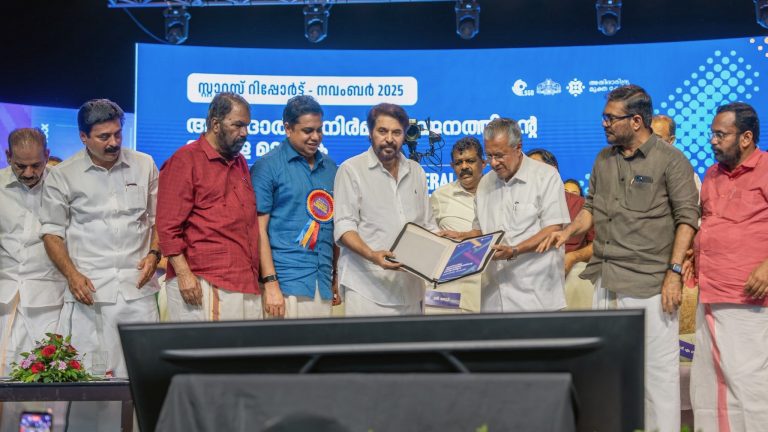
Kerala Becomes First Indian State To Eradicate Extreme Poverty

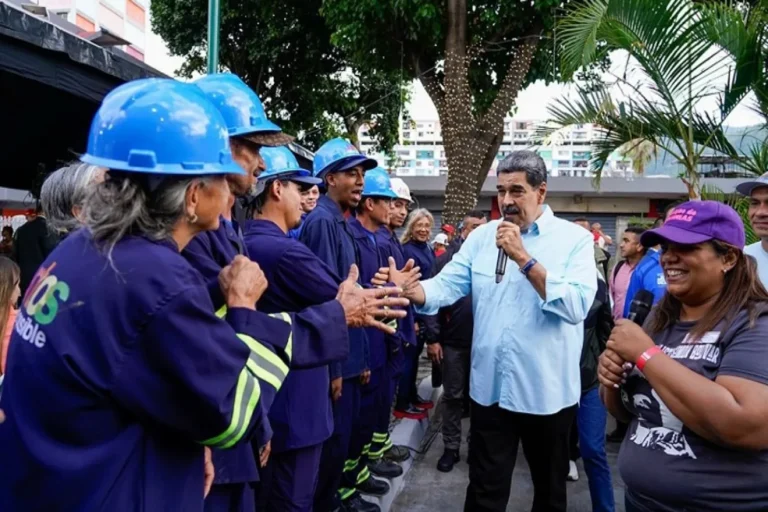
On Saturday, November 1, India’s southern state of Kerala officially declared itself free of extreme poverty. This makes the left-ruled state the first and only state in the country to achieve such a milestone. Announcing the achievement during a session of the state’s legislative assembly, left leader and Chief Minister of the state Pinarayi Vijayan called it a “historic and proud moment” for the state and its people and hoped that “our experiments will become a model that states in the country can benefit from.” India has the world’s largest population living in extreme poverty, as per the data released by the World Bank last year.

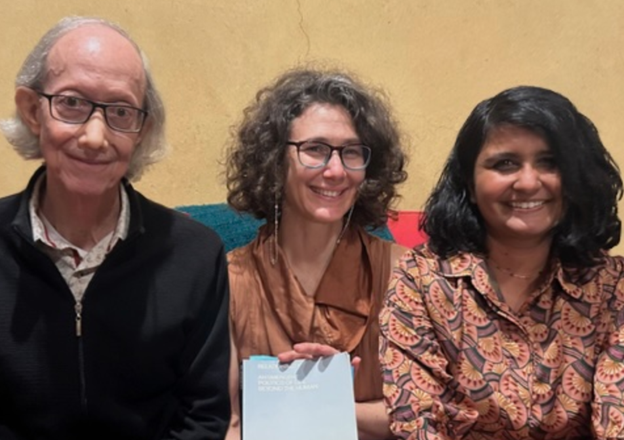
The Future Requires A Politics Of Relationality

At a time when the superstructures of human civilization seem terminally messed up – unable to address climate collapse, authoritarian capitalism, among many other wicked problems – I was thrilled to encounter a book that dares to imagine a fresh and compelling way forward. The book, Relationality: An Emergent Politics of Life Beyond the Human, is a big-hearted and poetic yet rigorous scholarly book. On my latest episode of Frontiers of Commoning (Episode #68), I interviewed the three authors -- noted anthropologist Arturo Escobar and global studies professor Michal Osterweil, both at the University of North Carolina at Chapel Hill, and Kriti Sharma, a professor of critical race science and technology studies at UC Santa Cruz.

Ten Principles Of Next Economy Enterprises

The 10 Principles of Next Economy Enterprises serve as critical guideposts for designing organizations from a socially just and environmentally regenerative perspective. They are emergent and malleable, derived from work with hundreds of social enterprises. Here is an outline of the 10 principles: Meet Basic Needs This principle prioritizes providing human-centered essentials like nourishing food, clean water, shelter, and medicine. It directly challenges the Business as Usual (BAU) economy, which is geared toward fulfilling greed rather than human need, by providing essentials without destroying habitat and ecosystems. Enterprises adhering to this principle also look for ways to consider ecosystem repair as an impact outcome of their business functions.

Disability Rights Are Workers’ Rights!

For the last few years, the monthly Second Sunday Dialogue public meetings of the Disability Justice and Rights Caucus of Workers World Party (DJRC) have been discussing the idea of a transitional demand: a “Disability Justice, Full Employment, Health Care and Education Second Bill of Rights” amendment to the U.S. Constitution. San Francisco Bay Area disabled activist Michael Karsh is the main architect of this proposal, which is an idea whose time has come. Karsh has written the following justification for such an amendment at this time: “The Disability Justice, Full Employment, Health Care & Education Second Bill of Rights Amendment to the U.S. Constitution would transform the U.S. Constitution into a human rights document.

Childcare Can Be Free And Universal

I was drawn to the childcare profession because of my love for children. I just love seeing their smiling, hopeful faces, watching them grow and learn, and welcoming the trust and love they bring to us every day. At the same time, working in this field can be challenging. Babies and young children require a great deal of love and care, informed by expertise in early childhood development. Low pay is challenging for providers, and high costs are challenging for families. But some states are looking for answers — and I believe mine has found one. New Mexico is now expanding its free, high-quality child care program so that all families can access it. It’s the first of its kind in the nation — and I hope other states will follow.

How A Fed Overhaul Could Eliminate The Federal Debt Crisis

There has been considerable discussion in recent years about reforming, modifying, or even abolishing the Federal Reserve. Proposals range from ending its independence, to integrating its functions into the U.S. Treasury Department, to dismantling it and returning monetary policy to direct congressional or Treasury oversight.  The Federal Reserve Board Abolition Act (H.R. 1846 and S. 869, 119th Congress, 2025-2026), introduced by Rep. Thomas Massie in the House and Sen. Mike Lee in the Senate on March 4, 2025, calls for abolishing the Fed’s Board of Governors and regional banks within one year of enactment, liquidating Fed assets and transferring net proceeds to the Treasury.

Rural America Deserves Dependable Broadband, Not Billionaire Handouts

Nearly a century ago, President Franklin Delano Roosevelt led a campaign of bold investment to electrify rural America. Until recently, we were on track to do the same for broadband internet in this century. Before President Trump’s second term, our country was on the cusp of a breakthrough. Billions in federal funding was set to deliver reliable high-speed internet service to every corner of America. Instead, the Trump administration has turned its back on millions of Americans, prioritizing profits for billionaire backers over the needs of families, students, and small businesses. Earlier this year, Commerce Secretary Howard Lutnick derailed the $42.5 Broadband Equity, Access, and Deployment Program (BEAD) when he upended the rules for it after all states had run extensive selection processes — and several had already submitted their final proposals.

With Federal Climate Progress Stalled, Simplify Solar Advances Local Solutions

“We have the groundwork in place to make solar power and renewable energy much more accessible than they are now,” celebrated climate activist Bill McKibben told people from all over the country on a Sept. 25 Zoom call. The virtual gathering was organized by Third Act, a national organization of people over 60 confronting the climate crisis. It took place just days after a Third Act-coordinated nationwide day of action called Sun Day, which saw over 500 events in 49 states draw attention to renewable energy’s vast potential. At a time when U.S. climate organizations are largely on the defensive, fighting the Trump administration’s rollbacks to climate action at the federal level, McKibben’s words underscored how Third Act has identified a rare opportunity to make real, short-term progress toward a clean energy future.

How To Feed The World And Save The Planet

Awareness about the destructiveness of the global food economy has become so widespread that large institutions are now forced to address it in the open. At the FAO Summit, the UN hyped a “transformation” of the global food system, and gave the floor to voices critical of globalised supply chains and corporate-led farming. Even big businesses have become remarkably proficient at speaking the language of “regenerative,” “diverse,” “local solutions” and “farmer-led.” But, in today’s world, rhetoric has been divorced from reality. Sure enough, if you follow the money instead of the language, you see a very different kind of transformation underway.

How The Rhizome Therapy Cooperative Counters Burnout

“One of the things I don't think a lot of people outside the mental health field realize,” says clinical social worker Evelyn Heflin, “is that a lot of community mental health agencies, because they're underfunded, and private practices that are larger agency format, really sort of take advantage of the therapists at the bottom.”  Faced with unsustainable caseloads, a lack of additional support, and inadequate pay for the work they do—a situation grown drastically worse since the COVID pandemic began—over half of mental health clinicians reported experiencing burnout in surveys conducted between 2021 and 2024.

In North Carolina, Immigrants Resist The US ‘Language Graveyard’

On a Friday evening in Emma, North Carolina, an unincorporated community west of Asheville, noise echoes across the Porvenir Community Center. Young children play in one room, laughing and shouting in Spanish and English. In the next room over, around 15 adults and children talk and sing in a different language – Hñähñu, an Indigenous language from the Mezquital Valley of Central Mexico.  Families sit together, leaning over textbooks and taking notes as the teacher, Abel González Bueno, writes example sentences on the whiteboard. At the end of the class, González leads his students in a traditional folk song. He says that music can be a great teacher, especially for his adult students who grew up speaking Hñähñu. 

Worker Cooperatives Make The World Better

I have been a witness to how worker ownership tends towards humanisation. In the lead up to Christmas 2014, Ingham Poultry announced that it was planning to shut its turkey processing facility near the town of McLaren Vale just outside of Adelaide on the Fleurieu Peninsula. The plant was represented by my union at the time — the National Union of Workers (NUW). The local manufacturing workforce, with the recently announced shut down of the Australian car manufacturing industry that hit South Australia particularly hard, did not have many other options. The local turkey and poultry farmers, meanwhile, did not have any other accessible processing facilities in the area. A group of workers and farmers got together to campaign to re-open the factory under the operation of a joint worker-farmer cooperative.

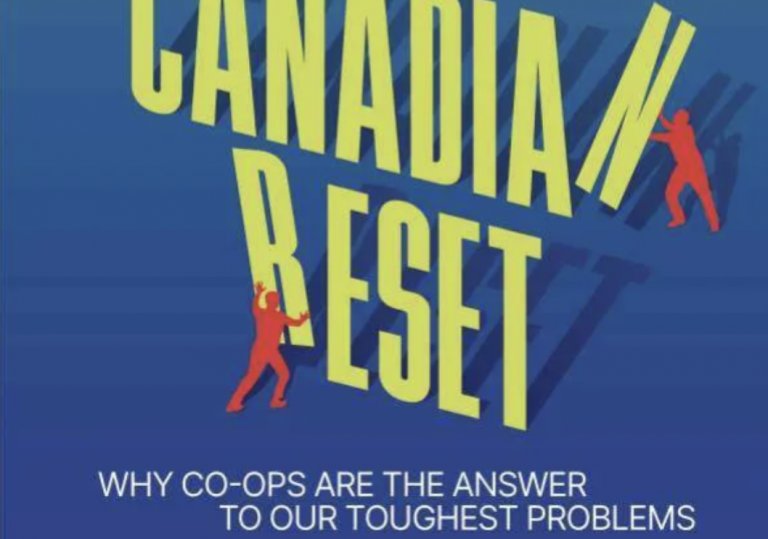
Canada Needs An Industrial Strategy That Serves Public Goods

Diversifying Canada’s economic strategy is essential in an era of tariff escalation and growing geopolitical volatility. Stellantis’s recent announcement that it’s heading south sent another Arctic chill to concerns over Canada’s industrial future. Billions in public subsidies are flowing to foreign multinational automakers, yet questions remain: Who benefits? What regions are being prioritized? And what kind of innovation are we actually funding? Last week Stellantis, formerly Chrysler, confirmed it would shift planned Jeep Compass production from its Brampton, Ontario plant to Illinois, part of a $13 billion expansion south of the border.

Communist Party Of China Opens Deliberations On 15th Five-Year Plan

The Fourth Plenary Session of the 20th Central Committee of the Communist Party of China (CPC) began this Monday, October 20, in Beijing, with the agenda focused on drafting proposals for the 15th Five-Year Plan (2026-2030) for the country’s economic and social development. The discussion of the five-year plan at the Fourth Session represents a change in the usual calendar, as this discussion normally takes place at the Fifth Plenary Session. The change may have occurred due to the delay of the Third Plenary Session, which did not take place until August 2024. Following the usual calendar, it was expected to take place in 2023.

Chile’s Solidarity Economy Is Growing

Chile has emerged from decades of often brutal dictatorship under General Augusto Pinochet with a dynamic and growing economy—and deepened social and economic inequalities. Pinochet’s neoliberal economic policies have concentrated wealth among the few and left significant portions of the population behind. In 2017, 56 percent of the lowest-income population earned, on average, only $258 per month. In contrast, the richest 5 percent of the population had a per capita income of over $2,900 per month—11 times higher, according to Observatorio Social, a division of the Chilean Social Development and Family Agency, in 2018.
assetto corsa mods

Urgent End Of Year Fundraising Campaign

Online donations are back! Keep independent media alive. 

Due to the attacks on our fiscal sponsor, we were unable to raise funds online for nearly two years.  As the bills pile up, your help is needed now to cover the monthly costs of operating Popular Resistance.

Urgent End Of Year Fundraising Campaign

Online donations are back! 

Keep independent media alive. 

Due to the attacks on our fiscal sponsor, we were unable to raise funds online for nearly two years.  As the bills pile up, your help is needed now to cover the monthly costs of operating Popular Resistance.

Sign Up To Our Daily Digest

Independent media outlets are being suppressed and dropped by corporations like Google, Facebook and Twitter. Sign up for our daily email digest before it’s too late so you don’t miss the latest movement news.