Skip to content

Capitalism

A World Of Free Movement Would Be $78 Trillion Richer

A HUNDRED-DOLLAR BILL is lying on the ground. An economist walks past it. A friend asks the economist: “Didn’t you see the money there?” The economist replies: “I thought I saw something, but I must have imagined it. If there had been $100 on the ground, someone would have picked it up.” If something seems too good to be true, it probably is not actually true. But occasionally it is. Michael Clemens, an economist at the Centre for Global Development, an anti-poverty think-tank in Washington, DC, argues that there are “trillion-dollar bills on the sidewalk”. One seemingly simple policy could make the world twice as rich as it is: open borders. Workers become far more productive when they move from a poor country to a rich one. Suddenly, they can join a labour market with ample capital, efficient firms and a predictable legal system. Those who used to scrape a living from the soil with a wooden hoe start driving tractors. Those who once made mud bricks by hand start working with cranes and mechanical diggers. Those who cut hair find richer clients who tip better.

Nader Open Letter To Jeff Bezos

You’ve come a long way from being a restless electrical engineering and computer science dual major at our alma mater, Princeton University. By heeding your own advice, your own hunches and visions, you’ve become the world’s richest person – at $141 billion and counting.  You must feel you are on top of the world. You are crushing your competition—those little stores on Main Street, USA, and other large companies that are still in business. Your early clever minimizing of sales taxes gave you a big unfair advantage over brick and mortar stores that have had to pay 6, 7, 8 percent in sales taxes. Your tax-lawyers  and accountants are using the anarchic global tax avoidance jurisdictions to drive your company’s tax burden to zero on a $5.6 billion profit in 2017, plus receiving about $789 million from Trump’s tax giveaway law, according to The American Conservative magazine (see Daniel Kishi’s article, “Crony Capitalism Writ Large,” in the May/June 2018 edition).

Warning Signs Point To A New Global Financial Crisis

(IPS) – There are increasing warnings of an imminent new financial crisis, not only from the billionaire investor George Soros, but also from eminent economists associated with the Bank of International Settlements, the bank of central banks. The warnings come at a moment when there are signs of international capital flowing out of some emerging economies, including Turkey, Argentina and Indonesia. Some economists have been warning that the boom-bust cycle in capital flows to developing countries will cause disruption, when there is a turn from boom to bust. All it needs is a trigger, which may then snowball as investors in herd-like manner head for the exit door.  Their behaviour is akin to a self- fulfilling prophecy: if enough speculative investors think this is the time to move back to the global financial capitals, then the exodus will happen, as it did in previous “bust” phases of the cycle.

Remembering Grenfell: Who Are Our Cities For?

One year ago this week I was in London, speaking at a conference on global inequality at the London School of Economics.  The morning of June 14, I could see smoke rising from the Kensington neighborhood, at the Grenfell Tower, a 24-story affordable apartment building.  I walked closer to see the inferno. Seventy-one people lost their lives and over 600 people lost their homes. As of a few months ago, 320 households were still displaced and living in hotels, including over 200 children. Meanwhile, in the immediate Kensington area around the charred remains of the tower, there are 1,800 vacant luxury homes and hundreds of empty commercial spaces. It is a luxury ghost town. London is an acute case of the problem of the “tale of two cities” opening up across the world.

Food, Coops, Capitalism

Last week, I travelled to Portland, Oregon to give a keynote presentation to the Consumer Coop Management Association—CCMA. My first experience with cooperatives had been in 1983 when I worked as a manager for the Stockton Farmers’ Market Coop. Long before the rise of the food movement, we used to sell fresh produce to the Berkeley Coop’s supermarkets. This allowed a small group of struggling farmers to sell a lot of good food to a big group of affluent consumers. But that was long ago. I needed to study up to face 500 experts in coop management. When I did background research, I was struck by the obvious: Capitalism and food coops emerged together. The first known food cooperative, the Rochdale Society of Equitable Pioneers, was formed in 1844 by a small group of craftspeople who had been de-skilled by England’s great textile factories in the thick of the Industrial Revolution.

How Much America’s Biggest Corporations Have Stolen From Their Own Workers

How do the biggest corporations earn such massive profits? They’d like you to think it’s the result of delivering a superior product or service. But one part of that story is years of wage theft from their employees. Good Jobs First, a policy resource center focused on government and corporate accountability, recently carried out a year-long investigation into wage theft by large employers, compiling information from collective action lawsuits brought by groups of ripped-off workers, as well as actions brought by the department of labor and state-specific regulatory agencies. The results, brought together in a report released this week titled Grand Theft Paycheck: the Large Corporations Shortchanging their Workers’ Wages, are eye-opening: 4,220 cases since the turn of the millennium with penalties totaling $9.2 billion.

Chaos In The Imperial Big House

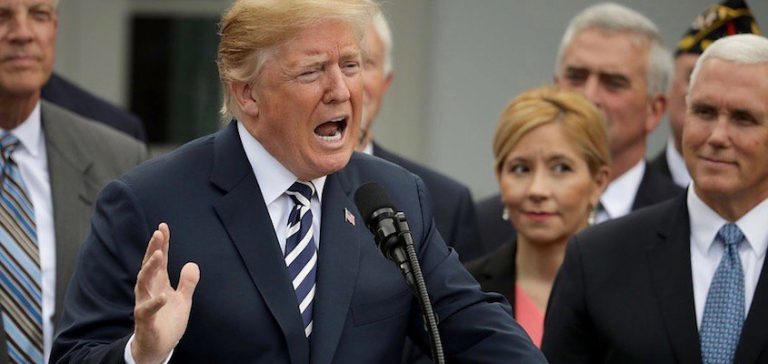
Donald Trump, the arch racist usurper of the Republican Party, is tearing the ruling class consensus to shreds, inflicting bigger shocks to the imperial system by accident, impulse and ignorance than any conceivable “progressive” elected U.S. president could achieve on purpose. In the space of a few weeks, Trump has 1) threatened to disrupt corporate global supply chains through his in-out stance  on NAFTA; 2) forced Washington’s European junior imperial partners to reconsider their subservience to U.S. foreign policy and their vulnerability to U.S.-controlled financial institutions in the wake of Trump’s rejection of the Iran deal and his tirades at the G7 summit in Canada; and 3) discarded 70 years of Uncle Sam’s “Comply or Die” dictum towards North Korea, thus consigning the whole “axis of evil” designation to the dustbin.

Venezuela After The Elections: More Concessions To The Capitalists, While Economic Crisis Worsens

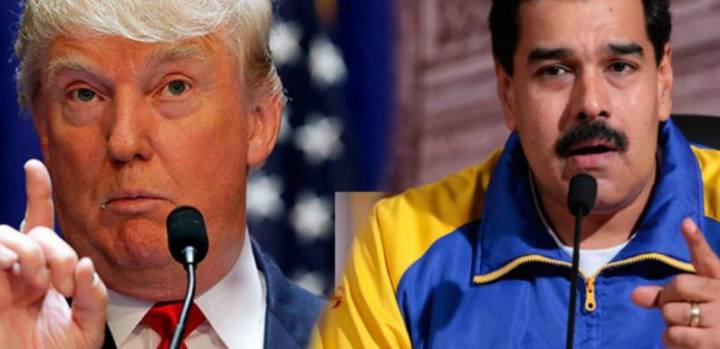
The Venezuelan elections on 20 May were merely an episode in a long saga of imperialist aggression, economic crisis and the deterioration of living conditions for the working class and poor. The reelected Maduro government has continued its policy of making concessions and appeals to the capitalists. If it wasn’t for the escape valves provided by subsidised food parcels, migration and the dollar-based economy, the situation would have led to a social explosion already. The mood of the chavista rank-and-file is increasingly angry and critical of the leadership. As had already been announced, the imperialist nations refused to recognise the results of the 20 May presidential election. Washington, Brussels and the so-called Lima Group issued stern statements to that effect.

New World Economic Order Minimizes US Dominance

Ahead of the crucial Shanghai Cooperation Organization (SCO) summit in Qingdao this coming weekend, three other recent events have offered clues on how the new world order is coming about.The Astana Economic Forum in Kazakhstan centered on how mega-partnerships are changing world trade. Participants included the president of the Asian Infrastructure Investment Bank (AIIB) Jin Liqun; Andrew Belyaninov from the Eurasian Development Bank; former Italian Prime Minister and president of the EU Commission Romano Prodi; deputy director-general of the WTO Alan Wolff; and Glenn Diesen from the University of Western Sydney.

Global Economy A Giant Debt Scam,What the Financial Elite Don’t Want You to Know

Capitalism collapsed in 2008, just as communism had collapsed in 1991 — the system we have now is something else This is an argument Varoufakis has made many times, including in his 2011 book “The Global Minotaur.” As he expressed it to me, the financial crisis of 2008 led to “a wholesale collapse of what used to be called capitalism,” which has not recovered nearly as much as most people believe. What we have instead is an almost galactic-scale system of moving debt around to conceal the various flaws and shortfalls in the system. Varoufakis calls it “bankrupt-ocracy,” in which enormous but endangered or bankrupt financial institutions wield enormous power over the rest of society. “That’s not capitalism.” And on the subject of shell games …

People’s Movements Protest Neoliberal Policies In Haiti

On the morning of May 25th, a large group of people’s organizations of Haiti mobilized in the capital, Puerto Principe, demanding the fulfillment of an extension agenda of demands from the State and the president Jovenel Moïse. The mobilization was called by an platform known as “January 22nd Movement”, that unites various sectors such as unions, peasants, students and urban fringes. The organizations also participate in the continental and global platforms: ALBA Movimientos and Vía Campesina. The gathering took place in Chal Sounè, the central point of the city, where the ministries of Finance, Justice and Social Issues, and the Car Insurance Office against Third Parties (OAVCT) are situated. The protesters exhibited posters of rejection to International Monetary Fund (IMF) and protested against the government’s attempt to increase fuel prices.

The World Is Dangerously Lowballing The Economic Cost Of Climate Change

It’s almost impossible to calculate how many trillions of dollars it could cost. Leading global forecasts widely underestimate the future costs of climate change, a new paper warns. The findings, to be released Monday in the Review of Environmental Economics and Policy, say projections used by the United Nations Intergovernmental Panel on Climate Change rely on outdated models and fail to account for “tipping points” ― key moments when global warming rapidly speeds up and becomes irreversible. The IPCC, established in 1988, is the leading international body for assessing climate change, and took on an expanded role after every country on Earth signed the Paris Agreement, the first global pact to cut greenhouse gas emissions.

Mind The Stop-Gap

The Left loves to argue. Infighting and petty tiffs abound – purity tests and religious-style righteousness hang like smog over so-called safe spaces, suffocating collaborations. One wonders sometimes whether or not the goal for many leftist individuals and organizations is not to fight for progress but rather to fight about it. And this is not to say that there isn’t vital work that is being done. There are so many powerful initiatives to both fight and build; ones that side step the privileged place of theoretical mind space and get shit done. The problem is that because many people lack a feeling of urgency. Add to this the simple truth that doing the work is a lot harder than talking about it and you find that people often just talk – and read.

Neo-Liberal Academia And The Death Of Education

Recent cases of personal information collecting for corporate interests highlight the urgency of revisiting the topic of higher education in its connection with the corporate sector and the government. We ought to reconsider at least some aspects of the complex web of the contemporary “education industry” and its social implications. Understanding how contemporary (Western) education works (or doesn’t work) can contribute to raising the awareness of the general population as to the scale of the problem, and making a change, no matter how small.

The Search For A New Politics

For the last four decades, political discourse has been dominated by the ideas of neoliberalism. This ideology has been promoted by elites to direct public policy not only in the US, but worldwide. Neoliberalism offers a simple story of our times by which people can make sense of the world in which they find themselves. British journalist George Monbiot has pointed to the importance of such stories in his recent book Out of the Wreckage: A New Politics for an Age of Crisis. His aim is to construct a new story to mobilize people into political action and create social change.
assetto corsa mods

Urgent End Of Year Fundraising Campaign

Online donations are back! Keep independent media alive. 

Due to the attacks on our fiscal sponsor, we were unable to raise funds online for nearly two years.  As the bills pile up, your help is needed now to cover the monthly costs of operating Popular Resistance.

Urgent End Of Year Fundraising Campaign

Online donations are back! 

Keep independent media alive. 

Due to the attacks on our fiscal sponsor, we were unable to raise funds online for nearly two years.  As the bills pile up, your help is needed now to cover the monthly costs of operating Popular Resistance.

Sign Up To Our Daily Digest

Independent media outlets are being suppressed and dropped by corporations like Google, Facebook and Twitter. Sign up for our daily email digest before it’s too late so you don’t miss the latest movement news.