Skip to content

Housing

Students Are Making Moves To Ditch Their Profiteering Landlords

As student housing reaches crisis point in the UK, one organisation is determined to break the mould – and the grip of rogue landlords – by creating co-operatives to run accommodation. Housing for university students is in chaos. As the Guardian reported, charities are saying it’s the worst crisis since the 1970s. Housing for university students is in chaos. As the Guardian reported, charities are saying it’s the worst crisis since the 1970s. It noted that the company StuRents did research that: suggests there is a shortfall of 207,000 student beds, and 19 towns and cities where there is more than a 10% undersupply of beds, ranging from 28% in Preston and 25% in Bristol to 10% in Birmingham and Swansea. Martin Blakey from the charity Unipol told the Guardian: purpose-built student accommodation has stopped expanding to the extent it was, and we don’t think that’s going to change. At the same time we think there’s a significant decrease in shared houses – [landlords] are moving back to renting to professionals or leaving the market. The reason for the chaos is fairly obvious: government-driven privatisation of the sector.

Sealing Criminal Records Benefits Us All

About 70 million people — 1 in 3 adults — have some kind of criminal record; background checks often turn up arrests, for example, even if no charges were ever filed. Nine in 10 employers weigh that past in their hiring decisions. And the collateral consequences go far beyond employment. Criminal records can disqualify people from housing, professional licensing and public benefits. In short, a record can sentence an individual — and their family — to lifelong economic hardship. Most states have laws allowing people to clear their records, but bureaucratic barriers and fees mean that many people never manage to do it. In Michigan, for example, a $50 application fee is just the first in a series of hurdles; fewer than 7% of eligible Michiganders succeed, according to a 2020 study.

Building Solidarity And Strength On The Streets Of Pittsburgh And Chicago

From ‘hood to ‘hood and city to city, we stand the most to gain in uniting, as an oppressed community capable of liberating ourselves from our collective social conditions! Over half a million people are experiencing homelessness here in the US, 580,466, as of January 2020. However, more than 16 million housing units in the United States are vacant. In Pittsburgh, Pennsylvania, the same social contradiction exists, where over 800 people are documented as homeless. According to the Pittsburgh Quarterly, however: The city of Pittsburgh has nearly 24,000 vacant properties, including 7,500 vacant houses and buildings, according to a market analysis by the Center for Community Progress, a national land-recycling nonprofit. About 22 percent of the vacant houses and buildings are owned by the city. Pittsburgh ghettos like Homewood, Hazelwood and the ‘Hill are socially situated much like Woodlawn, Englewood and Lawndale, here in Chicago. Vacant lots can be seen, not primarily downtown which is a lucrative tourist attraction; but outcasted from the world of the privileged.

The Grassroots Fight For Housing Justice In Baltimore

Baltimore, Maryland - Sonia Eaddy never lost faith that she would be able to save her home at 319 North Carrollton Ave. in the Poppleton neighborhood of West Baltimore. Like they have done to many predominantly-Black neighborhoods, developers have targeted Poppleton for years. Over the past decade, the city used eminent domain to evict residents and raze their houses, resulting in the displacement of longtime residents. But last year, Eaddy, who is a third-generation resident of Poppleton, was able to mobilize a citywide coalition that staged rallies, packed public hearings, and collected over 5,000 signatures to save homes like hers from destruction. Even after most of Eaddy’s neighbors were forced out of their homes, after surrounding blocks were demolished, and after she exhausted legal appeals, she never stopped fighting.

How Baltimore’s Inclusionary Housing Bill Got Hollowed Out

Today will be the first installment of our series called “Tax Broke”. It’s a five-year exploration of our hometown Baltimore’s policy of doling out tax breaks to developers to stimulate growth. And the centerpiece of the work is a documentary by the same name, which we have screened and we will publish next year. The essence of our findings is that the city of Baltimore has used a variety of tax breaks intended to stimulate growth, but has done far less to track their effectiveness or make the process transparent to account for them. We also found that this idea has primarily benefited wealthy neighborhoods while leaving poorer communities neglected. It has, in a sense, heightened the inequality of an already unequal city. But our 60-minute film only scratches the surface of this topic, but one important underlying question which our film raises is ultimately, how to build affordable housing as efficiently and fairly as possible.

Quarry Encampment Faces Eviction In Minneapolis

Minneapolis, Minnesota – With life-threatening cold this winter season, the City of Minneapolis continues to evict encampments, displacing unsheltered people and throwing away their personal belongings, including propane tanks they rely on for warmth. The longstanding Quarry encampment in Northeast Minneapolis is the latest under threat of eviction after being served a notice on Dec. 21 to leave by Dec. 28. In response, Quarry residents and advocates held a press conference on Dec. 27 demanding the authorities not evict the encampment and announcing that community would come to defend the residents. The next day, when the eviction was scheduled to occur, upwards of 100 to 150 encampment defenders showed up to the Quarry over the course of the morning. The city said the eviction was put on hold due to the large activist presence.

Indigenous Elders Evicted And Banished From Colony Without Trial

Winnemucca Indian Colony, Paiute and Shoshone lands, Nevada - The Winnemucca Indian Colony is an Indian Colony created by the 1916 executive order of Woodrow Wilson and an act of 1928 Congress for homeless Paiute and Shoshone Indians to live and work nearby the developing railroad and town in far northwest Nevada. While the history of the Colony is complex, it is undisputed that Residents engaged in self-governance of their homelands until the Bureau of Indian Affairs (BIA) and others asserted involvement in the group’s affairs. The community has suffered from years of litigious disputes, harassment, and violence over who has authority over the Winnemucca Indian Colony. See generally Winnemucca Indian Colony v. United States of America Department of the Interior ex rel Ayers, (9th Cir. No. 18017121).

With Nearly 60 Frostbite Injuries In Unhoused Community, Advocates Encourage Denver To Do Better

Denver, Colorado – Thursday’s weather is expected to be one of the coldest on record in the city of Denver due to an arctic cold front, bringing temperatures to well below zero degrees with the wind chill. In the weeks leading up to this potentially record breaking cold, medical health professionals with Denver Health and Hospital Authority and the Colorado Coalition for the Homeless (CCH) wrote a joint letter to two city directors recommending the city “take immediate steps to address current deficiencies in 1) criteria used to determine when warming centers are open, and 2) policies and procedures related to forced displacements of unhoused individuals during cold-weather months.” The letter sent on Dec. 12 stated that when unhoused individuals “spend a prolonged amount of time in damp clothing and/or shoes as often occurs following forced displacement from tents,” their “risks for weather-related illness and injury increase exponentially.”

Housing Rights Groups Renew Calls For Expropriation Of Private Properties 

Berlin, Germany - A coalition of housing rights activists and groups has condemned the Berlin State’s slow approach in implementing the mandate of the 2021 referendum on the appropriation of properties of large private corporations in the housing and real estate sector. Last week, the Deutsche Wohnen & Co Enteignen (Expropriate Deutsche Wohnen & Co Initiative, DWE), formed by housing rights activists and groups in Berlin, gave an ultimatum to the Social Democratic Party (SPD)-Greens-Die Linke (The Left) coalition to present a roadmap for the socialization of private real estate properties in the city without delay. On September 26 last year, alongside the federal and Berlin State elections, citizens of the city took part in a referendum which saw 59.1% votes in favor of expropriating the property of realtors who owned 3,000 or more residential units.

Nooksack Human Rights Saga Reaches Year Ten

Deming, Washington – Despite calls from the United Nations and two United States agencies for an eviction halt at Nooksack, tribal politicians are proceeding to eject nine households from their homes this winter. Nearly thirty Nooksack family members are slated to be ejected from federally subsidized, state regulated homes in northern Washington state this month. One family has already been ordered to vacate their home of 11 years by January 3, 2023.  The eviction imbroglio unfolds as the human battle raging at Nooksack reaches its tenth year today. Three other households await tribal court rulings.  Having been denied any right to legal counsel by Nooksack authorities, the families are representing themselves pro se.  

Making ‘The Right To The City’ Real For Urban Dwellers Worldwide

This International Human Rights Day, as our mostly urban world is increasingly challenged by rising poverty, migration, inequality and climate risk, let us think about what it would mean to truly enjoy the “right to the city.” From the United Nations Universal Declaration of Human Rights at the end of World War II to the ensuing drumbeat of further international rights covenants, conventions and declarations, the language of protection and universality of rights would seem to be ubiquitous and generally agreed. Yet discrimination persists. In cities, it most often manifests itself against low-income families, women, those in the LGBTQ+ community, those in Indigenous communities, the very young, the very old, those differently abled, non-nationals, the homeless, the formerly incarcerated and those representing other marginalized groups.

Media’s Crime Hype And Scapegoating Led To Crackdown On Unhoused People

New York City, New York - For some time now, news media have been conflating crime, homelessness and mental illness, demonizing and dehumanizing people without homes while ignoring the structural causes leading people to sleep on subways and in other public spaces. With New York City Mayor Eric Adams’ latest announcement that he would hospitalize, against their will, unhoused people with mental health conditions—even those deemed to pose no risk to others—in the name of “public safety,” the local papers once again revealed a propensity to highlight official narratives and try to erase their own role in conjuring the crime hysteria that drives such ineffective and pernicious policies. Adams, who made fighting crime the centerpiece of his 2021 campaign, announced his latest plan on November 29, his latest in a series of pushes to clear unsheltered people from the streets and subways of New York City.

Why Shelter Workers Are Going On Strike

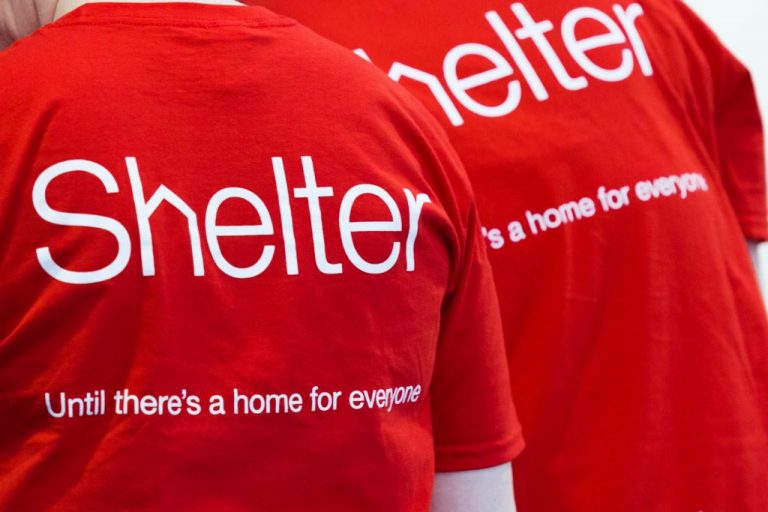
When it comes to understanding the homelessness crisis in Britain, few know it better than those who’ve experienced it first-hand. Mark found himself in that very situation ten years ago, and today, he still hasn’t escaped housing insecurity entirely. ‘To get out of my situation, I had to get private rented accommodation as opposed to the hostel system provided by the council,’ he tells Tribune. ‘My private rented flat was already massively expensive. And today it’s even worse.’ In those days he went on to volunteer for homelessness charity Shelter, and today he works there full-time. But the cost of living crisis is biting. Mark relies on a foodbank twice a month, and his general quality of life has rapidly deteriorated in the past year. ‘Every day’s a challenge,’ he tells Tribune.

There Is An Alternative: Social Housing In Vienna

Vienna, Austria - We all know we have a housing crisis all across our country.  Rents have skyrocketed; there are insufficient numbers of apartments and houses available; many people in our cities are unhoused; rent control is considered too radical; there are few protections against evictions.  The American dream has long included home ownership and stable safe neighborhoods.  But the dream has become a nightmare as racism and capitalism leave some without homes altogether, and have displaced so many more.  Most discouraging, few people see any alternatives to the current system of how housing is allocated and paid for. But there is an alternative.  Two members of Franklin County Continuing the Political Revolution (FCCPR) were in Vienna, Austria recently and saw how things could be different.

Camp Resolution Pushes Back Against Proposed Mass Eviction

Around 50 residents of a self-organized encampment known as Camp Resolution, which has been occupied since late September of this year, are now celebrating after the Sacramento City Council was pushed to pass a unanimous vote against a sweep by police, leading to a pause in a scheduled mass eviction. While the future of the space remains unknown, residents and supporters of the camp are currently rallying in support and gathering food and other supplies. What began as a safe place for people living in RVs and tiny homes, became another skirmish in an increasing war on the houseless, as Democratic run cities turned away from progressive policies towards an all out attack on the poor. 
assetto corsa mods

Urgent End Of Year Fundraising Campaign

Online donations are back! Keep independent media alive. 

Due to the attacks on our fiscal sponsor, we were unable to raise funds online for nearly two years.  As the bills pile up, your help is needed now to cover the monthly costs of operating Popular Resistance.

Urgent End Of Year Fundraising Campaign

Online donations are back! 

Keep independent media alive. 

Due to the attacks on our fiscal sponsor, we were unable to raise funds online for nearly two years.  As the bills pile up, your help is needed now to cover the monthly costs of operating Popular Resistance.

Sign Up To Our Daily Digest

Independent media outlets are being suppressed and dropped by corporations like Google, Facebook and Twitter. Sign up for our daily email digest before it’s too late so you don’t miss the latest movement news.