Skip to content

Africa

Corporate Theft Of $100 Billion Annually From Africa

A brand new World Bank report, The Changing Wealth of Nations 2018, offers evidence of how much poorer Africa is becoming thanks to rampant minerals, oil and gas extraction. Yet Bank policies and practices remain oriented to enforcing foreign loan repayments and transnational corporate (TNC) profit repatriation, thus maintaining the looting. Central to its “natural capital accounting,” the Bank uses an “Adjusted Net Savings” (ANS) measure for changes in economic, ecological and educational wealth. This is surely preferable to “Gross National Income” (GNI, a minor variant of Gross Domestic Product), which fails to consider depletion of non-renewable natural resources and pollution (not to mention unpaid women’s and community work).

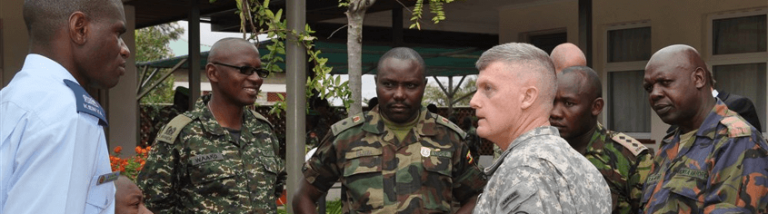
Why AFRICOM Matters And What You Can Do About It

The United States has a long history of intervention in Africa that is not widely discussed. Africa is a continent with tremendous resources that has been colonized and exploited by Western countries for more than 100 years. True to the practices of colonizers, the United States and its allies have made sure that African governments are controlled and the population is kept in poverty. These efforts expanded with AFRICOM (Africa Command) after its creation in 2008. We discuss AFRICOM with Margaret Kimberley of Black Agenda Report and the Black Alliance for Peace. Then Maurice Carney, co-founder of Friends of the Congo, digs deep into the history of the Democratic Republic of the Congo and U.S. involvement, which continues today.

Africa – Where The Next US Oil Wars Will Be

The Pentagon does not admit that a ring of permanent US military bases is operating or under construction throughout Africa.  But nobody doubts the American military buildup on the African continent is well underway.  From oil rich northern Angola up to Nigeria, from the Gulf of Guinea to Morocco and Algeria, from the Horn of Africa down to Kenya and Uganda, and over the pipeline routes from Chad to Cameroon in the west, and from Sudan to the Red Sea in the east, US admirals and generals have been landing and taking off, meeting with local officials.  They've conducted feasibility studies, concluded secret agreements, and spent billions from their secret budgets. Their new bases are not bases at all, according to US military officials.  They are instead "forward staging depots", and "seaborne truck stops" for the equipment which American land forces need to operate on the African continent. 

A Treacherous Crossing

On January 23rd an overcrowded smuggling boat capsized off the coast of Aden in Southern Yemen. Smugglers packed 152 passengers from Somalia and Ethiopia in the boat and then, while at sea, reportedly pulled guns on the migrants to extort additional money from them. The boat capsized, according to The Guardian, after the shooting prompted panic. The death toll, currently 30, is expected to rise. Dozens of children were on board. The passengers had already risked the perilous journey from African shores to Yemen, a dangerous crossing that leaves people vulnerable to false promises, predatory captors, arbitrary detention and tortuous human rights violations. Sheer desperation for basic needs has driven hundreds of thousands of African migrants to Yemen.

Tired Of US “Aid” (Exploitation), Africa And Global South Look To China

BEIJING — There has been a growing focus on the economic development underway in Africa. There is a reason behind this seemingly new interest of Western powers in events happening in Africa, and the reason is simple: China is a new power dominating business on the continent and has clearly caught the West’s attention. China now has partner nations spanning the entire continent from Mauritania to South Africa, in a growing number of relationships that challenge the perceived hegemony of the triumvirate of Western capital, military, and NGO operations. This is making the U.S. nervous, as more African nations begin to see China as the better choice as an economic partner, due to Beijing’s fewer-strings-attached approach.

Newsletter – Racism, Propaganda And Wars

By Margaret Flowers and Kevin Zeese. This week, the 100th anniversary of the Balfour Declaration, which promoted giving Palestine to the Jewish people, will be celebrated in London. Around the world, there will be protests against it calling for Britain to apologize for the damage it inflicted. Students from the West Bank and Gaza will send letters to the British government describing the negative impacts that the Balfour Declaration, and the Nakba in 1948, continue to have on their lives today. As Dan Freeman-Maloy describes, the Balfour Declaration is also relevant today because of the propaganda co-existing with it that justified white supremacy, racism and empire. British imperialists believed that democracy only applied to "civilized and conquering peoples," and that "Africans, Asians, Indigenous peoples the world over – all were ... 'subject races,' unfit for self-government."

The US, Africa And A New Century Of War

By William Rivers Pitt for Truthout - Most Americans' broad ignorance regarding Africa is a long-standing phenomenon, one perpetuated from the top down. In 2008, the campaign staffers tasked to wrangle Sarah Palin were terrified people would discover she thought Africa was one big country. In 2001, President George W. Bush told a gathering in Sweden, "Africa is a nation that suffers from incredible disease." Vice President Joe Biden, speaking to none other than the US-Africa Leaders Summit in 2014, said, "There's no reason the nation of Africa should not join the ranks of the world's most prosperous nations." That's twice in one sentence, Joe. After four elite US soldiers were killed in an ambush in Niger several weeks ago, and after President Trump made a gut-grinding botch of offering condolences to the families of the fallen, Africa policy has become a hot topic in US politics. Beyond the febrile fodder of yet another presidential humiliation lay the deeper question: What were those four soldiers doing in Niger? South Carolina Republican Sen. Lindsey Graham, who sits on the Armed Services Committee that oversees the Pentagon, apparently just found out that the US has roughly 1,000 troops stationed in Niger. When asked why they were there, he gave the standard reply we always hear in the age of the Authorization of Use of Military Force: fighting terrorists.

U.S. Military Activity “Recruiting Tool” For Terror Groups In W. Africa

By Nick Turse for The Intercept - THE MISSION NEVER made the front page of the New York Times or the Washington Post. It wasn’t covered on CNN or Fox News. Neither the White House chief of staff, the chair of the Joint Chiefs of Staff, nor the president ever addressed it in a press briefing. But from mid-January to late March 2013, Green Berets from the 10th Special Forces Group deployed to the impoverished West African nation of Niger. Working alongside local forces, they trained in desert mobility, the use of heavy weapons, and methods of deliberate attack. On May 15 of that year, another contingent of Special Forces soldiers arrived in Niger. For nearly two months, they also trained with local troops, focusing on similar combat skills with an emphasis on missions in remote areas. From the beginning of August until mid-September, yet another group of Green Berets traveled to the hot, arid country for training, concentrating on desert operations, heavy weapons employment, intelligence analysis, and other martial matters, according to Pentagon documents obtained by The Intercept via the Freedom of Information Act. One constant of all of these counterterrorism missions, which were carried out by small teams of elite U.S. troops operating alongside Nigerien forces, was a concentration on reconnaissance. Until recently, such missions were conducted without notice or media scrutiny.

‘U.S. Aims To Dominate Land, Resources & Labor Of African People’

By Abayomi Azikiwe for Muslim Press - “United States foreign policy towards Africa has not fundamentally changed since World War II. Washington's aim is to dominate the land, resources and labor of the African people,” Abayomi Azikiwe, the editor of the Pan-African News Wire, told Muslim Press in an interview. In what follows, the full transcript of the interview has been presented. Muslim Press: What has been the result of U.S. foreign policy in African countries? How has U.S. foreign policy in Africa changed since Donald Trump became president? Abayomi Azikiwe: United States foreign policy towards Africa has not fundamentally changed since World War II. Washington's aim is to dominate the land, resources and labor of the African people. Successive administrations backed the colonial policies of Britain, France, Portugal and the former settler-colonial regimes of Rhodesia and South Africa. In Feb. 1966, the administration of President Lyndon B. Johnson engineered a military and police coup against the First Republic of Ghana under President Kwame Nkrumah. Later in Oct. 1975, the administration of President Gerald Ford deployed the Central Intelligence Agency (CIA) to support a military intervention into Angola by the former racist apartheid South African Defense Forces (SADF) to prevent the genuine independence of that former Portuguese colony.

US Military Presence In 53 of 54 African Countries

By Rachel Blevins for Activist Post - While many Americans are aware that the United States is at war in countries such as Iraq, Syria and Afghanistan because of the media attention given to those conflicts, the news that four U.S. soldiers were killed in Niger came as a surprise that left some asking the question, “Since when is the U.S. at War with Africa?” Sgt. La David Johnson, Staff Sgt. Bryan Black, Staff Sgt. Jeremiah Johnson and Staff Sgt. Dustin Wright were killed on Oct. 4, after their team was reportedly ambushed by “ISIS-affiliated militants traveling by vehicle, carrying small arms and rocket-propelled grenade launchers.” Former Texas Congressman Ron Paul weighed in on the situation, and noted that this appears to be one more war the U.S. is fighting without approval from Congress—and it is a war that includes the presence of U.S. troops in 53 out of the 54 nations in Africa. “Now, when the Pentagon and the administration have had some pressure on them, you know, instead of having 100 people there, they’re admitting we have 6,000 people in Africa, and they even put a number on it. They say ‘we have some military in 53 of the 54 countries in Africa.’ That’s pretty expansive,” Paul said.

U.S. Soldier Died In Niger. What Is U.S. Doing There?

By Peter Certo for Other Words - In our military-revering culture, it’s a strange thing for a president to start a war of words with the grieving families of slain soldiers. Strange, yes. But from Donald Trump’s campaign season feud with the parents of Humayun Khan, who died protecting fellow soldiers in Iraq, to his recent feud with the mourning widow of La David Johnson, who died on patrol in Niger, it’s no longer surprising. At root in the latest spat is a comment Trump made to La David’s widow Myeshia Johnson: “He knew what he signed up for.” Myeshia thought that remark was disrespectful — she later said it “made me cry.” Beyond insensitive, though, there’s a good chance it simply wasn’t true. Why, after all, should La David have expected to die in a dusty corner of Niger — a Saharan country most Americans (and, one suspects, their president) couldn’t find on a map? And where the U.S. isn’t actually at war? If you were surprised to learn the U.S. has nearly a thousand troops in Niger, you’re not alone. Senator Lindsey Graham, a South Carolina Republican who serves on the Armed Forces Committee, told NBC he “had no idea.” Neither did Chuck Schumer, the Senate’s top Democrat. Well, the surprises may keep coming.

Chocolate Barons Devastate National Parks In West Africa

By Davis Harper for Eco Watch - For several years, chocolate barons have devastated forests to make room to plant cocoa, a crop that naturally grows in shade. Now, a report from Mighty Earth—a nonprofit that works to conserve threatened landscapes—shows new evidence that illegal deforestation is occurring in protected areas; specifically, in the national parks of West Africa. The Ivory Coast and Ghana produce a combined 2.6 million tons of chocolate—60 percent of the world's supply. It's no wonder so many of these nations' protected lands are at risk. According to Mighty Earth's report, 10 percent of Ghana's tree cover has been replaced by cocoa monocultures. The Ivory Coast, once heavily forested and extremely biodiverse, has lost seven of its 23 protected areas to cocoa. Due to habitat loss, its chimpanzees are now endangered, and its elephants are nearly extinct. This means that companies like Mars, Nestlé, Hersey's and Godiva are on the hot seat for making products using cocoa grown by uncertified sources. "Chocolate companies have taken advantage of corrupt governance in Ghana and the Ivory Coast to deforest parklands," saic Glenn Horowitz, CEO of Mighty Earth. With a rising demand for the world's guiltiest pleasure, chocolate companies are also taking advantage of farmers—on average, these growers are paid less than 80 cents a day.

Recolonization Of Africa By Endless War

By Dan Glazebrook for RT. Exactly six years ago, on October 20th, 2011, Muammar Gaddafi was murdered, joining a long list of African revolutionaries martyred by the West for daring to dream of continental independence. Earlier that day, Gaddafi’s hometown of Sirte had been occupied by Western-backed militias, following a month-long battle during which NATO and its ‘rebel’ allies pounded the city’s hospitals and homes with artillery, cut off its water and electricity, and publicly proclaimed their desire to ‘starve [the city] into submission’. The last defenders of the city, including Gaddafi, fled Sirte that morning, but their convoy was tracked and strafed by NATO jets, killing 95 people.

African Peasants Highlight Interconnected Struggles At Via Campesina Global Conference

By Boaventura Monjane for Toward Freedom - (Derio, Basque Country) Peasants across Africa are intensifying their struggles against land grabs and other harmful policies that promote industrial agriculture. At a recent international conference organized by the world’s largest peasants movement, Via Campesina, African peasants had opportunities to share their experiences of struggle and to learn. “It is amazing to see how linked our struggles are”. With a countenance showing enthusiasm and eagerness, Nicolette Cupido could not conceal her emotions. There are two main reasons for her excitement. It was the first time she attended a global conference of peasants’ movements starting July 16 in Derio, in the outskirts of Bilbao, Basque Country. Her movement, the Agrarian Reform for Food Sovereignty Campaign (FSC), South Africa, was among the new organizations accepted into membership of Via Campesina. A community organizer and a member of the FSC, Nicolette engages in food production at home and community gardens in Moorreesburg, a village in Western Cape, 120Km away from Cape Town. She grows a variety of vegetables, that is the way she contributes in building food sovereignty. “I plant tomato, unions, beetroot, cabbage and carrots. The struggle for food sovereignty has to be practical, too”, she said. Like Nicolette, about 20 other African peasants representing movements from Mozambique, Zimbabwe, Niger, Mali, Senegal and Ghana attended the conference.

The High Price Of Desertification: 23 Hectares Of Land A Minute

By Busani Bafana for IPS - BULAWAYO, Zimbabwe, Jun 15 2017 (IPS) - Urban farmer Margaret Gauti Mpofu would do anything to protect the productivity of her land. Healthy soil means she is assured of harvest and enough food and income to look after her family. Each morning, Mpofu, 54, treks to her 5,000-square-metre plot in Hyde Park, about 20 km west of the city of Bulawayo. With a 20-litre plastic bucket filled with cow manure in hand, Mpofu expertly scoops the compost and sprinkles a handful besides thriving leaf vegetables and onions planted in rows across the length of the field, which is irrigated with treated waste water. Mpofu’s act of feeding the land is minuscule in fighting the big problem of land degradation. But replicated by many farmers on a large scale, it can restore the productivity of arable land. “I should not be doing this,” Mpofu tells IPS pointing to furrows on her field left by floodwater running down the slope during irrigation. “The soil is losing fertility each time we irrigate because the water flows fast, taking valuable topsoil with it. I have to constantly add manure to improve fertility in the soil and this also improves my yields.”
assetto corsa mods

Urgent End Of Year Fundraising Campaign

Online donations are back! Keep independent media alive. 

Due to the attacks on our fiscal sponsor, we were unable to raise funds online for nearly two years.  As the bills pile up, your help is needed now to cover the monthly costs of operating Popular Resistance.

Urgent End Of Year Fundraising Campaign

Online donations are back! 

Keep independent media alive. 

Due to the attacks on our fiscal sponsor, we were unable to raise funds online for nearly two years.  As the bills pile up, your help is needed now to cover the monthly costs of operating Popular Resistance.

Sign Up To Our Daily Digest

Independent media outlets are being suppressed and dropped by corporations like Google, Facebook and Twitter. Sign up for our daily email digest before it’s too late so you don’t miss the latest movement news.