Skip to content

climate crisis

The Devastation In Melissa’s Wake And The ‘New Normal’

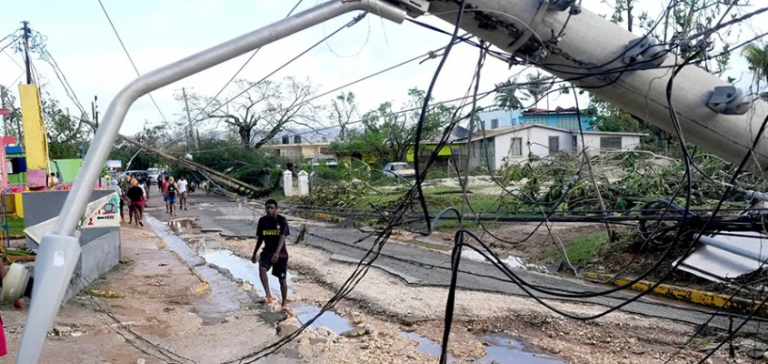
As the extent of the devastation Hurricane Melissa has caused across the Caribbean begins to emerge, at least one thing is clear: this is the new normal. Melissa, as the highest level Category 5 hurricane, was the second-strongest Atlantic storm ever recorded. But, according to experts, it will be something we are likely to see more frequently. The even worse news is that future storms may be even more intense than this one. There is now talk that we now need a new Category 6. Scientists currently classify storms by the five-level Saffir-Simpson scale.
Teachers Unions Leverage Contracts To Fight Climate Change

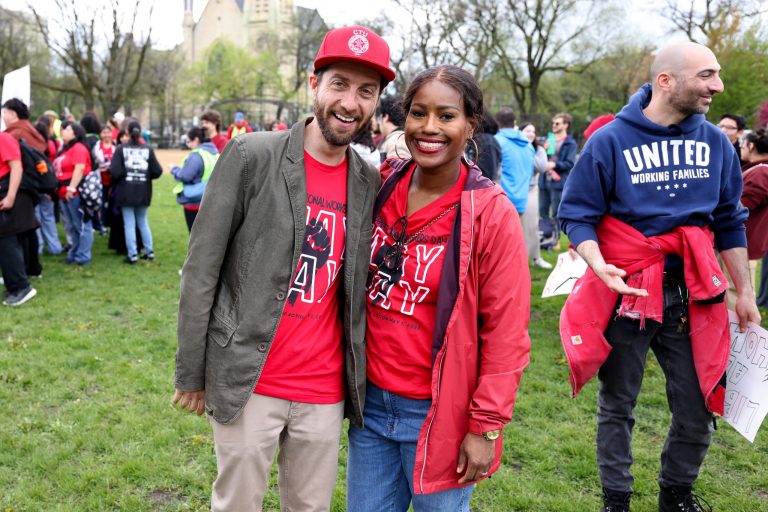
In Illinois, the Chicago Teachers Union won a contract with the city’s schools to add solar panels on some buildings and clean energy career pathways for students, among other actions. In Minnesota, the Minneapolis Federation of Educators demanded that the district create a task force on environmental issues and provide free metro passes for students. And in California, the Los Angeles teachers union’s demands include electrifying the district’s bus fleet and providing electric vehicle charging stations at all schools. 

What Futures Are Possible?

People have been forecasting the future for as long as they’ve had language. Premodern ideas of what’s to come often featured either a catastrophic end of the world or an eventual paradisiacal condition of peace and plenty. This was true both for many, though not all, Indigenous peoples and for followers of the world’s missionary religions (i.e., Christianity and Islam, and to a lesser degree Buddhism). For some cultures, the arc of time was imagined as a progression from ancient virtue to present corruption and eventual ruin or salvation; for others, time was cyclical, with multiple Golden Ages and periods of decline.

How Exxon Exported Climate Denial To The Global South

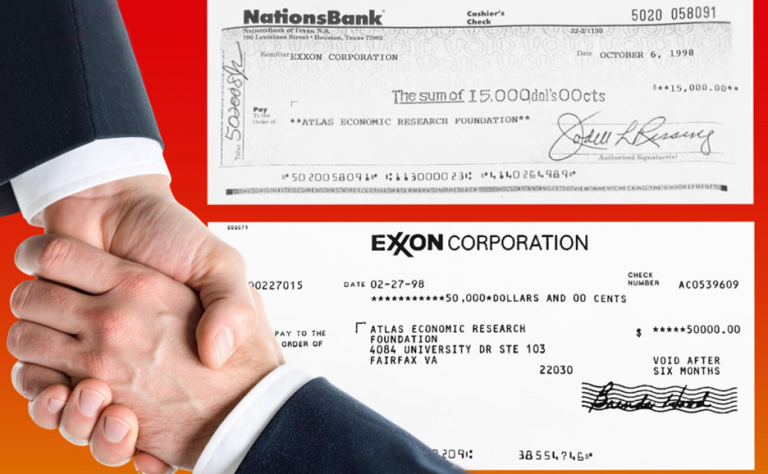
In early September, the Danish climate crisis denier Bjørn Lomborg travelled to São Paulo to deliver a stark warning. On the sidelines of a conference called the Forum Caminhos da Liberdade, happening just as Brazil was gearing up to host annual global climate talks (known as “COP30”) in November, Lomborg claimed that if implemented poorly, government efforts to address climate change could “destroy economic growth.” Lomborg had some behind-the-scenes assistance to help his message land, because one of the top 2025 sponsors of the conference (whose speakers in previous years have included Silicon Valley billionaire and Donald Trump ally Peter Thiel), was Atlas Network, a United States-based worldwide coalition of more than 500 free-market think tanks and allied partners.

Climate Justice At The University: Integrating Struggles For Liberation

Universities are not simply places for learning and research but are also centers of power and influence that can shape society. This idea about the power of higher education is cemented over and over again in the panel conversation between Fernando Racimo, Associate Professor of Molecular Ecology and Evolution at the University of Copenhagen and Jennie Stephens, Professor of Climate Change at the National University of Ireland Maynooth. They met at the Center for Applied Ecological Thinking at the University of Copenhagen to discuss the state of university institutions in the context of the urgent climate crisis.

The Future Requires A Politics Of Relationality

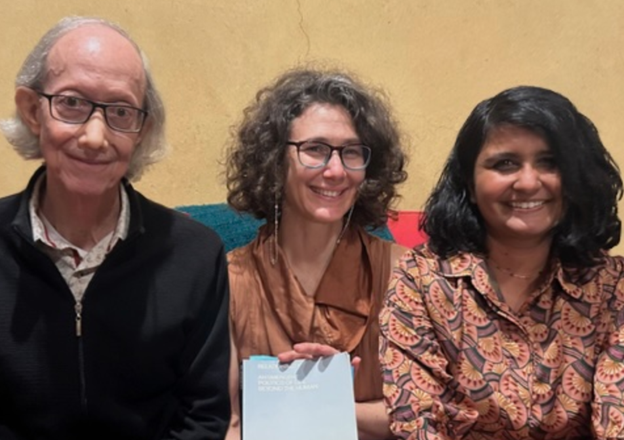
At a time when the superstructures of human civilization seem terminally messed up – unable to address climate collapse, authoritarian capitalism, among many other wicked problems – I was thrilled to encounter a book that dares to imagine a fresh and compelling way forward. The book, Relationality: An Emergent Politics of Life Beyond the Human, is a big-hearted and poetic yet rigorous scholarly book. On my latest episode of Frontiers of Commoning (Episode #68), I interviewed the three authors -- noted anthropologist Arturo Escobar and global studies professor Michal Osterweil, both at the University of North Carolina at Chapel Hill, and Kriti Sharma, a professor of critical race science and technology studies at UC Santa Cruz.

With Federal Climate Progress Stalled, Simplify Solar Advances Local Solutions

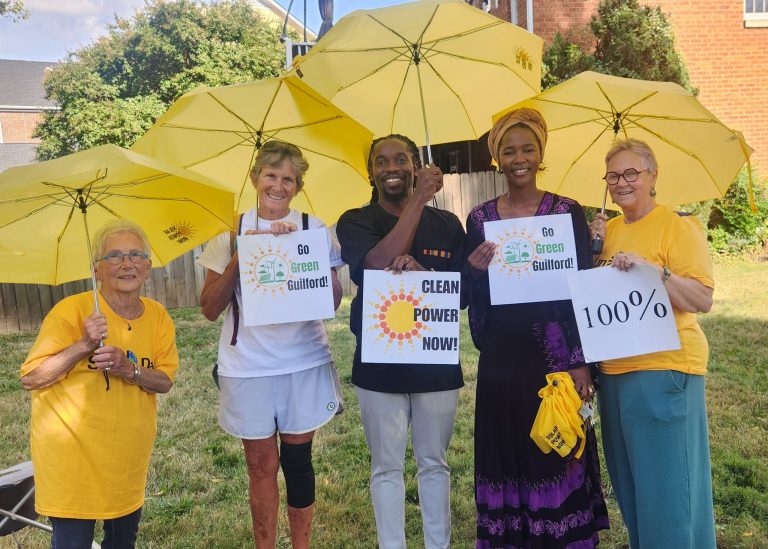
“We have the groundwork in place to make solar power and renewable energy much more accessible than they are now,” celebrated climate activist Bill McKibben told people from all over the country on a Sept. 25 Zoom call. The virtual gathering was organized by Third Act, a national organization of people over 60 confronting the climate crisis. It took place just days after a Third Act-coordinated nationwide day of action called Sun Day, which saw over 500 events in 49 states draw attention to renewable energy’s vast potential. At a time when U.S. climate organizations are largely on the defensive, fighting the Trump administration’s rollbacks to climate action at the federal level, McKibben’s words underscored how Third Act has identified a rare opportunity to make real, short-term progress toward a clean energy future.

Why We Need To Talk About Adaptation

I’m delighted to be writing today as the co-author of a new report called ‘We need to talk about adaptation’. This report is co-produced by the Climate Majority Project and the Glacier Trust (a leading adaptation-action NGO, mainly active in the global South). What we did together is investigate how much the biggest environmental organisations are talking about (and what they are doing about) climate adaptation now, in 2025. And here is the interesting bit: the same analysis was conducted in 2020. So we were able to compare then with now.   

New Documentary Bridges Militarism And The Climate Crisis

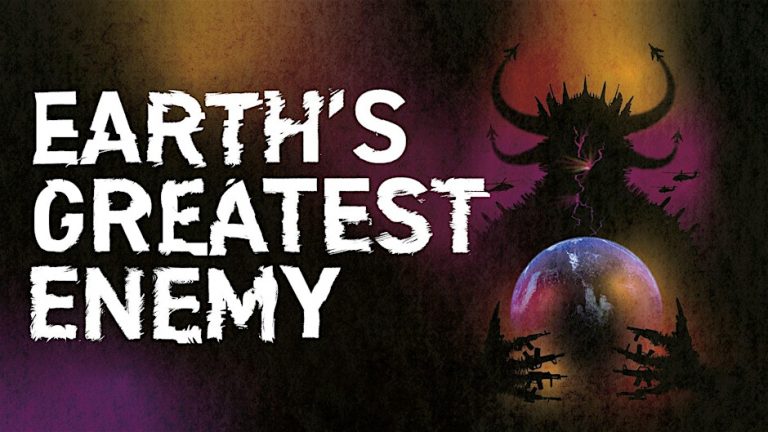
The US military is the greatest threat to the planet, not just for the violence that it commits but also for its carbon emissions and environmental destruction. Clearing the FOG speaks with Abby Martin about her new documentary, Earth's Greatest Enemy, which exposes the harm caused by the military. Martin and her spouse, Mike Prysner, traveled around the world to cover the damage caused by the military, the failure to hold the US military accountable, and the people resisting US foreign military bases. Martin also discusses the military's greenwashing efforts. This program includes a portion of a previous interview with Mike Prysner recorded at the beginning of this project.

Look Out For These Eight Big Ag Greenwashing Terms At COP30

Food and agriculture will be under the spotlight at the upcoming round of global climate negotiations in northern Brazil. Representatives from nearly every nation will gather from 6-21 November in Belém, a regional capital and gateway to the Amazon, with most countries far off target to deliver deep cuts to carbon emissions — the only way to halt the worst impacts of catastrophic climate change. Some food and climate groups hope this thirtieth annual Conference of the Parties (called COP30) summit can be a game changer for reforming food systems, which emit around a third of all a third of all greenhouse gases. After all, Brazil — which holds the presidency of COP30 — has a reputation for skilled diplomacy, and has made agriculture objective number three on the conference agenda.

Overcoming Divisions And Building Power For The Just Green Transition

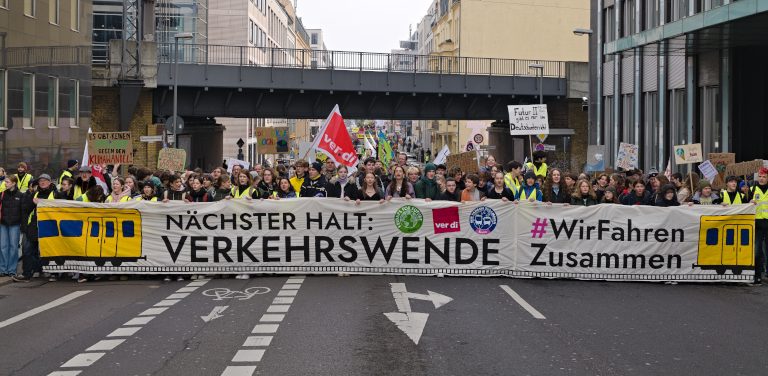
The working class: a major social group in any industrialised country, and historically a left-wing subject at the centre of demands for a worker controlled economy and better welfare, is now a growing base of support for right-wing parties. It is becoming essential for their electoral success across Europe, courted by these parties’ seeming concern for protecting wealth and jobs.[1] Climate activists on the other hand are increasingly demonised as fanatic eco-terrorists in mainstream media whose demands are framed as extremist and harmful to working people, making them seem like an out-of-touch elite of students and academics.

The Methane Hunters Of Melendugno

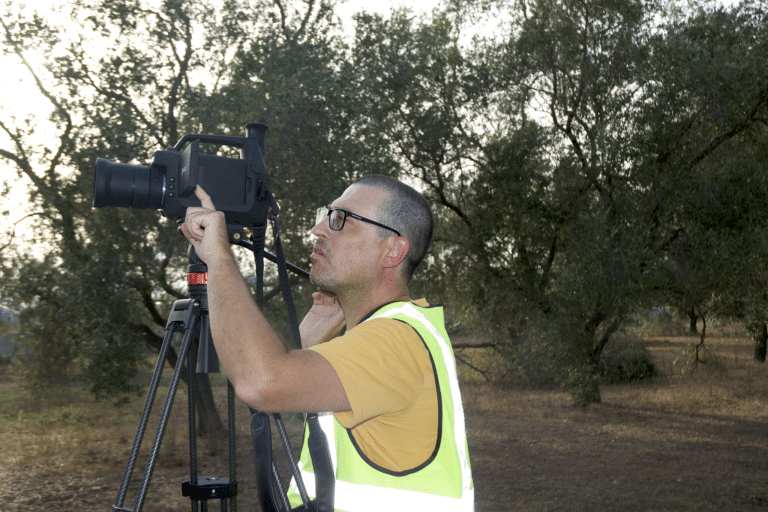
For centuries, farmers in Melendugno, a town located at the tip of southern Italy’s boot heel, built stone walls to mark the boundaries of their fields, shield their crops from the winds blowing out of North Africa, and divide farmland from pasture. Today, those same ancient stones stand watch over a changed landscape of parched olive groves, tall metal fences, and barbed wire. Beyond the fences, framed by a few remaining ancient olive trees, sits the Melendugno Reception Terminal — the western endpoint of the Trans Adriatic Pipeline (TAP).

Emissions From Global Meat And Dairy Companies Rival Fossil Fuels

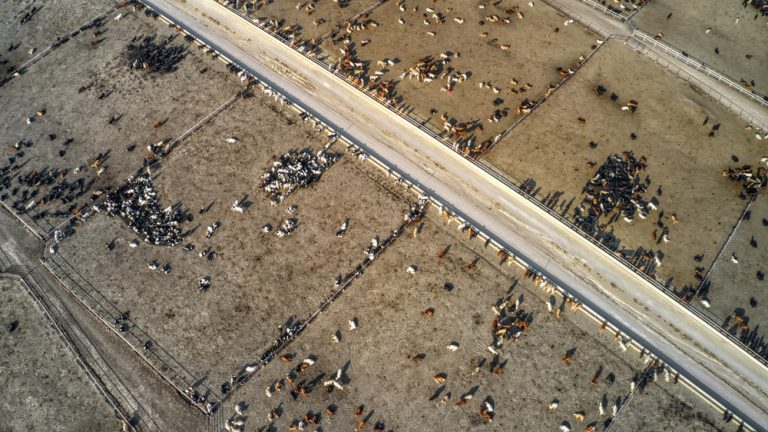
The world’s major meat and dairy companies are generating combined greenhouse gas emissions on par with some of the biggest fossil fuel producers, according to new estimates from environmental and food policy experts issued ahead of the COP30 climate talks in Belém, Brazil. More than half of the estimated emissions stem from methane, a powerful but short-lived gas that scientists warn must be sharply reduced in this decade to keep global warming within 1.5°C. The analysis, Roasting the Planet: Big Meat and Dairy’s Big Emissions, was published today by Foodrise, Friends of the Earth U.S., Greenpeace Nordic, and the Institute for Agriculture and Trade Policy.

Nuclear Goes Political

Climate change has a new partner in its quest to alter life as we know it: Nuclear, the power buzzword for the AI Holy Grail of human submission to digital electrons mimicking human brainpower. And AI can’t survive, can’t thrive without enormous amounts of electrical energy. Wall Street has the answer and politicians agree that nuclear is the big, beautiful answer to a whole new advanced level of human mental experience with electrons. The nuclear narrative is more positive than ever, “go for it,” but what if something goes wrong or is nuclear suddenly risks-free?

Tacoma Organizations Protest LNG Plant

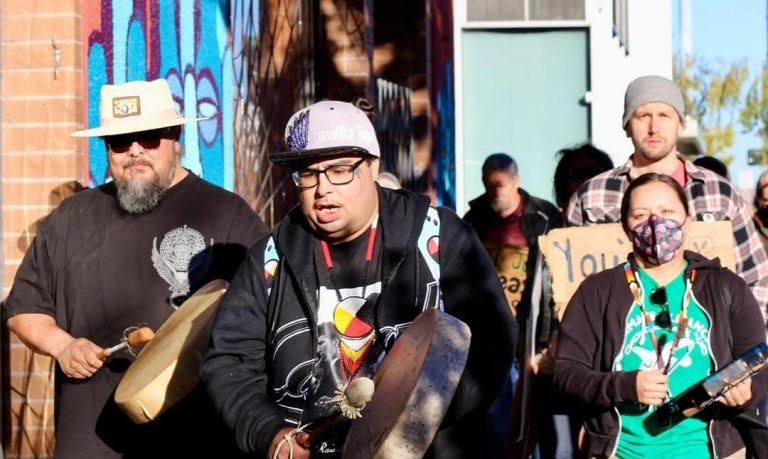
Tacoma, WA – On October 14, a group of several dozen Tacoma activists gathered in the sunset of Fireman's Park to oppose the expansion of the city’s liquid natural gas (LNG) plant. The event was organized by a broad coalition of Black, brown, indigenous, and other liberation movement groups, led by the of the Coast Salish Water Warriors (WW). Speaker Marilyn Kimmerling with Climate Alliance of the South Sound (CASS) explained that the LNG facility near the Port of Tacoma is both a refinery and storage place. The oil travels from across the country through underground pipelines to the LNG plant at Tacoma’s tide flats.
assetto corsa mods

Urgent End Of Year Fundraising Campaign

Online donations are back! Keep independent media alive. 

Due to the attacks on our fiscal sponsor, we were unable to raise funds online for nearly two years.  As the bills pile up, your help is needed now to cover the monthly costs of operating Popular Resistance.

Urgent End Of Year Fundraising Campaign

Online donations are back! 

Keep independent media alive. 

Due to the attacks on our fiscal sponsor, we were unable to raise funds online for nearly two years.  As the bills pile up, your help is needed now to cover the monthly costs of operating Popular Resistance.

Sign Up To Our Daily Digest

Independent media outlets are being suppressed and dropped by corporations like Google, Facebook and Twitter. Sign up for our daily email digest before it’s too late so you don’t miss the latest movement news.