Skip to content

climate crisis

Hurricane Katrina Revealed Why Climate Justice Must Include Right To Free Movement

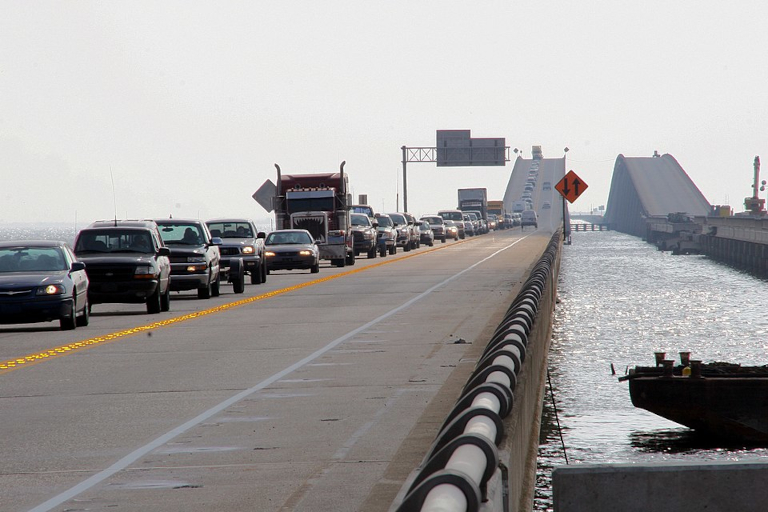
August 29, 2005 is a day that lives in infamy in the Gulf South. On that day, Hurricane Katrina slammed onto shore at the Mississippi/Louisiana state line as a powerful and massive hurricane. Twenty years later, it remains the costliest hurricane in U.S. history. For both of us, August 29 was the day that changed everything. The storm forced us to make the heart-wrenching decision to leave our homes, businesses, and families, uncertain if we would return again. Today, that experience shapes the way that we look at and participate in conversations around immigration and the artificiality of borders. We saw in real time what it meant to have the right to remain, to migrate, and to return.

Bioregioning Is Our Future

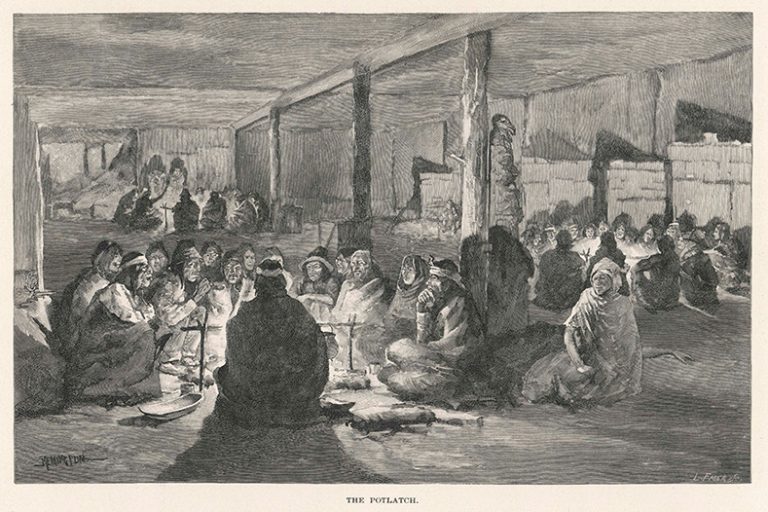
Lately I’ve been reading Andrew Schelling’s Tracks Along the Left Coast, a biography of linguist, anthropologist, and anarchist Jaime de Angulo (1887-1950). De Angulo was a character worth knowing about. His affluent Spanish parents gave him a civilized upbringing in fashionable Paris; nevertheless, he had a wild streak. So, before he turned 20, de Angulo hightailed it to San Francisco, arriving just in time for the Great Quake of 1906. During the next few years, he earned a medical degree, then worked as a cowboy trekking the California coast. The Native Americans he met fascinated and impressed him. As a way of documenting and preserving their way of life, which he regarded as perfectly adapted to the endlessly varied, stunningly beautiful landscape around him, de Angulo (often collaborating with his linguist wife, Lucy Shepard Freeland) learned and described 25 of the roughly 100 Native languages then spoken in California.

Indigenous Stewardship Is The Ignored Climate Solution

As the world stumbles toward climate tipping points, a growing body of scientific evidence suggests that among the most powerful defenders of nature are not satellites or carbon markets, but people – Indigenous peoples. From the rainforests of the Amazon to the boreal forests of Canada, Indigenous stewardship may be one of the most high-impact and cost-effective strategies to mitigate climate change, preserve biodiversity, and disrupt environmental crimes. Indigenous peoples occupy, use, or manage over a quarter of the Earth’s surface, including many of its most ecologically intact regions. These territories often overlap with areas of high carbon density and biodiversity richness.

How Does China’s System Really Work?

Today, I have the pleasure of being joined by the renowned Chinese scholar Zhang Weiwei. He is a professor at the prestigious Fudan University in Shanghai. He has millions of followers on Chinese social media. And we just participated in an academic conference. Professor Zhang, it is nice to meet you. I want to begin asking you about your idea of the “China model”. This is something you have been speaking about for many years, for almost 20 years now. If you look at China’s economic development in recent decades, it’s amazing. The statistics don’t lie. 

Climate Change Tests The Wildlife Conservation Model In Namibia

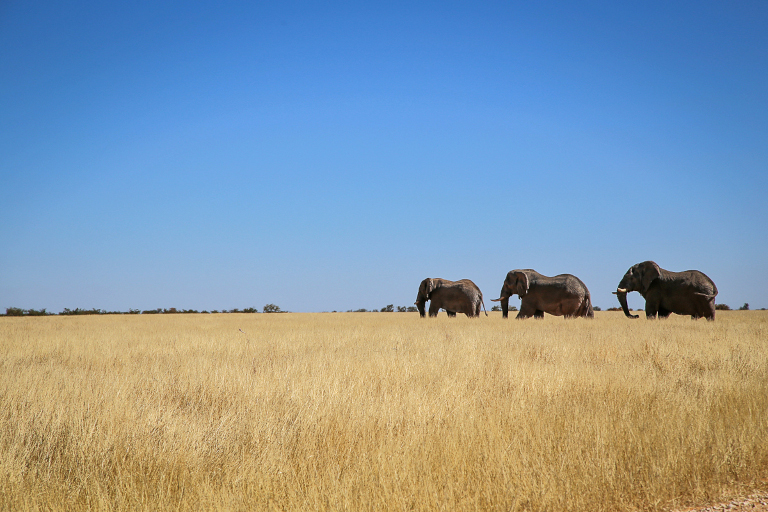
“I want my children to see a rhino with their own eyes — not only in Etosha [National Park],” says Sofia /Nuas, a member of the Sesfontein Conservancy Committee, located in Namibia’s arid northwest. She’s sitting in the shade of a large sausage tree, yet even on this winter morning temperatures have quickly soared to more than 30° Celsius (86° Fahrenheit). Life in this hot and dry region is already tough, but climate change will intensify it. With a population of less than 3,000, Sesfontein is a small settlement located in the Northwestern Escarpment and Inselbergs of the Nama Karoo Biome. Cattle and goats meander across dusty roads, but tourists are also drawn to the desert-like outpost for its enigmatic landscapes and a chance to glimpse some of the world’s last free-roaming, critically endangered black rhinos (Diceros bicornis), as well as Namibia’s famed desert-adapted lions (Panthera leo) and African savanna elephants (Loxodonta africana).

Could Poor Countries Hold The US Accountable For Climate Chaos?

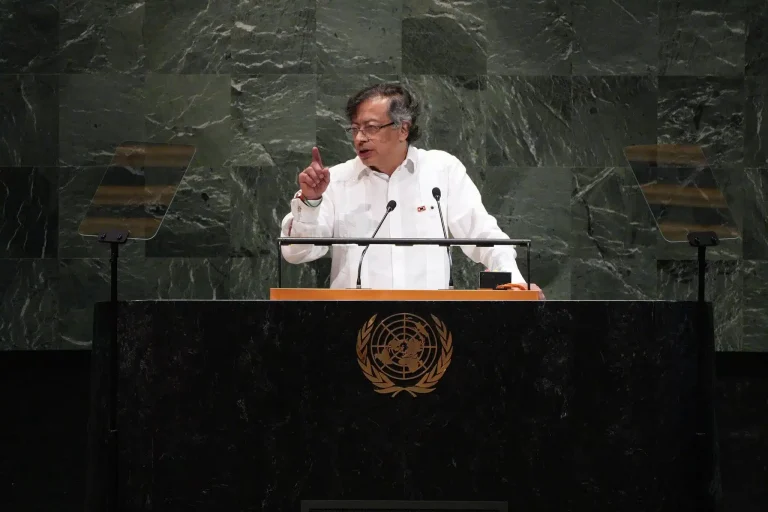
The verdict is in: Rich countries can be held responsible for their contributions to climate change. And that decision could leave the United States more isolated than ever. In late July, the UN’s highest court — the International Court of Justice (ICJ)—unanimously ruled that countries have an obligation to prevent catastrophic climate change by transitioning from fossil fuels and cutting greenhouse gas emissions. The ruling specifically condemned governments that subsidize fossil fuels and license their expansion — and said that these actions may make states liable for harmful climate impacts. In the last year, the Inter-American Court of Human Rights (IACHR) and International Tribunal on the Law of the Sea (ITLOS) have made similar rulings. The overarching conclusion: mainstream global institutions are calling for an end to fossil fuels.

The Monsters Of The Global Crisis Interregnum

The famous quote by Italian Marxist philosopher Antonio Gramsci seems to have been written for the moment humanity is currently experiencing: “The old is dying, and the new cannot be born. In this interregnum, monsters arise.” The world is going through a civilizational crisis in which the neoliberal capitalist order, although mortally wounded, continues to impose its predatory logic, that of the use of force and the resurgence of fascism, while emancipatory alternatives fail to consolidate. In this vacuum, monsters proliferate: wars and attempts at recolonization, climate crisis, structural hunger, collapse of multilateralism and international law placed at the service of the world’s powers that be.

Brazil’s Indigenous Peoples Present Climate Demands Ahead Of COP30

In a powerful call to action ahead of the UN Climate Conference (COP30) in Belém this November, a coalition of more than 300 Indigenous peoples from across Brazil has presented a sweeping set of demands for the country’s updated climate commitments, insisting that the demarcation and protection of Indigenous territories must be formally recognized as a central pillar of Brazil’s Nationally Determined Contribution (NDC) under the Paris Agreement. The 19-page declaration, signed by the Articulação dos Povos Indígenas do Brasil (APIB) and regional Indigenous federations, argues that Indigenous lands are “the last barriers to global collapse.”

Launching A Global Campaign Against The Insurers Of Israel’s Genocide

This September, activist groups across five continents plan to strike two of the world’s most powerful insurance companies: AXA and AIG. Together, they are launching a powerful wave of global resistance with a synchronised campaign of disruption. The aim is to expose the companies’ role in fueling genocide, climate destruction, and social collapse. Under the banner ‘Insure Our Survival‘, thousands of campaigners in Africa, Europe, Asia, and the Americas will take action from 8 September. Organisers are calling the wave of action a “coordinated global backlash” against the insurance giants underwriting fossil fuel expansion and weapons war criminal states are using in mass atrocities – particularly in Palestine.

New York Finalizes Rule For New Buildings To Be Electric

New York is now the first state in the U.S. to require new buildings to be built entirely electric, without hookups to fossil fuels including gas, the New York State Assembly reported. The rule was initially passed in 2023 as the All-Electric Buildings Act and was finalized with the State Fire Prevention and Building Code Council’s approval in late July 2025. According to the new mandate, residential buildings up to seven stories tall and commercial or industrial buildings up to 100,000 square feet with building permit applications for initial construction approved on or after Dec. 31, 2025 will be required to meet the requirements by that date.

Revoking EPA’s Endangerment Finding Isn’t Simple

Most of the United States’ major climate regulations are underpinned by one important document: It’s called the endangerment finding, and it concludes that greenhouse gas emissions are a threat to human health and welfare. The Trump administration is trying to eliminate it. Environmental Protection Agency Administrator Lee Zeldin announced on July 29, that the EPA would soon publish a proposed rule to rescind the endangerment finding and allow 45 days for public comment. A draft released by the EPA of the proposal argues that the agency didn’t have the authority to issue the endangerment finding in 2009 or regulations based on it.

Earth Overshoot Day Reaches Record For Earliest Date

Earth Overshoot Day is the point in the year when human demand for materials obtained from nature exceeds what the Earth can naturally regenerate in one year. For 2025, Earth Overshoot Day fell on July 24, the earliest it has been since the event was first calculated in 2006. The Earth Overshoot Day was first launched in 2006 by Andrew Simms, an author, political economist and campaigner, in collaboration with Global Footprint Network, as reported by Sustainability Magazine. Since then, Earth Overshoot Day is calculated and announced annually. Since 2006, the date has come earlier and earlier, signaling just how rapidly human consumption habits are growing and stripping the planet of its resources.

Wildfire ‘Apocalypse’ In Türkiye; Temperature Rises To Record 122.9º F

Türkiye is facing “apocalyptic” wildfires according to one official in the northwest Bursa region. Temperatures in central Anatolia hit an unusual 108.32º F [42.4º C.]. But the record-breaking temperature was recorded in the southeastern town of Silopi — of 122.9º F. [50.5º C.] — in the largely Kurdish Şırnak province. Although the very highest temperatures were elsewhere, it was so hot and dry in northwestern Turkey south of Istanbul that massive fires broke out at Bursa and elsewhere in that region, causing thousands of people to flee their homes.

Cheap Tricks For Hard Problems

The future is impossible to predict in its particulars. But if you understand the nature of a problem, and the nature of the economic incentive structure relating to the problem, and the nature of the political system and the personalities of the decision-makers surrounding the problem, it is very possible to make medium-term predictions about the general nature of what is going to happen with high confidence. Climate change. Big problem. It is hard to say to what extent humanity as a whole, as embodied by all the governing structures of the world, will rally itself to respond wisely to the problem, and how much damage to humanity’s well-being will occur in the meantime.

The Drying Planet

As the planet gets hotter and its reservoirs shrink and its glaciers melt, people have increasingly drilled into a largely ungoverned, invisible cache of fresh water: the vast, hidden pools found deep underground. Now, a new study that examines the world’s total supply of fresh water — accounting for its rivers and rain, ice and aquifers together — warns that Earth’s most essential resource is quickly disappearing, signaling what the paper’s authors describe as “a critical, emerging threat to humanity.” The landmasses of the planet are drying. In most places there is less precipitation even as moisture evaporates from the soil faster.
assetto corsa mods

Urgent End Of Year Fundraising Campaign

Online donations are back! Keep independent media alive. 

Due to the attacks on our fiscal sponsor, we were unable to raise funds online for nearly two years.  As the bills pile up, your help is needed now to cover the monthly costs of operating Popular Resistance.

Urgent End Of Year Fundraising Campaign

Online donations are back! 

Keep independent media alive. 

Due to the attacks on our fiscal sponsor, we were unable to raise funds online for nearly two years.  As the bills pile up, your help is needed now to cover the monthly costs of operating Popular Resistance.

Sign Up To Our Daily Digest

Independent media outlets are being suppressed and dropped by corporations like Google, Facebook and Twitter. Sign up for our daily email digest before it’s too late so you don’t miss the latest movement news.