Skip to content

COVID-19

Workers At Beverage Giant Refresco Defeated A ‘Notorious’ Union Buster

As the spread of Covid-19 forced millions of workplaces to close in March 2020, Cesar Moreira continued to report to a bottling plant in Wharton, N.J., where he works as a batching technician. During 12-hour shifts, Moreira mixes vats of powdered concentrate and sugar to churn out brand-name beverages like Gatorade and Arizona Iced Tea. Management for Resfresco Beverages Inc., the owner of the plant and one of the largest bottling companies, told workers these operations fell under the umbrella of “essential services.” Moreira was incredulous. “One batch of 8,000 gallons of lemon-lime Gatorade contains 5,500 pounds of liquid sugar,” he says, speaking to In These Times in Spanish. That the company would risk the health of its employees to maintain the supply of sugary drinks angered him.

Digital Vaccine Passports Pave Way For Surveillance Capitalism

The death by starvation of Etwariya Devi, a 67-year-old widow from the rural Indian state of Jharkhand, might have passed without notice had it not been part of a more widespread trend. Like 1.3 billion of her fellow Indians, Devi had been pushed to enroll in a biometric digital ID system called Aadhaar in order to access public services, including her monthly allotment of 25kg of rice. When her fingerprint failed to register with the shoddy system, Devi was denied her food ration. Throughout the course of the following three months in 2017, she was repeatedly refused food until she succumbed to hunger, alone in her home. Premani Kumar, a 64-year-old woman also from Jharkhand, met the same demise as Devi, dying of hunger and exhaustion the same year after the Aadhaar system transferred her pension payments to another person without her permission, while cutting off her monthly food rations.

‘Days Of Shame’ Highlights Failure To Back TRIPS Waiver For COVID Vaccines

Health activists gathered at Geneva’s central train station on Wednesday, October 13, calling on the EU, the UK, Norway and Switzerland to endorse the TRIPS waiver proposal at the World Trade Organization (WTO). “As Europeans, we are ashamed that our political leaders are among the last opponents to a just solution to end the pandemic and save lives,” said the campaigners in a press release. “If patents were lifted today, we could vaccinate the whole world in less than one year,” stressed Frank Prouhet, a doctor and activist from the collective Stop patents on Covid-19 vaccines, citing research by Public Citizen. Stéfanie Prezioso from the left platform Ensemble à Gauche (Together on the Left) said it was high time to admit that COVAX is not ensuring equitable access to vaccines in the Global South, and that people there continue to die because European governments do not want to stand up to Big Pharma.

Supply Chain Crisis: Workers’ Health And Safety Vs. Capitalists’ Profits

At the beginning of the coronavirus pandemic in 2020, panic buying seemed to create a shortage of different necessities, including toilet paper. Midway through the COVID-19 pandemic, housing prices started rising drastically, as demand surpassed supply due to shortages of construction materials. As students returned to in-person learning, schools found nutritious food for school lunches more difficult to get, and the U.S. relaxed requirements that schools must comply with federal nutrition standards. Visit any grocery store recently and you are likely to find shelves bare of any number of items. A global shortage of computer chips has created a drastic reduction in the production of cars, computers and appliances.

A New Deal For Eds And Meds

Now, organizers who have built power at the local level are beginning to unite nationally. Earlier in the pandemic, higher education workers had to struggle for survival mostly on their own. The battles, even when successful, took place in isolation; each group of workers in each separate institution, system, or state focused on its own specific setting, even though the problems are national phenomena demanding national solutions. In recent months, organizers have shifted their attention. They recognize that to reconstruct higher education as a public good—one that converts adjunct, outsourced, part-time, and precarious jobs into full-time, well-paid, dignified, stable positions at scale; one that ends the student and institutional debt crises; and one that rebuilds in the interests of students, workers, and communities—they must fight and win at a national scale.

Electric Utilities Took $1.25 Billion In Bailouts, Shut Off Power Nearly 1 Million Times

The report shows that utilities wielded political power to secure beneficial tax-code changes in the CARES Act but defied calls to grant their own customers temporary relief. Instead, 16 utilities suspended or canceled electric service to nearly 1 million households between February 2020 and June 2021, leaving people without hot water, refrigeration, air conditioning and medical devices.

Health Advocates Bring Pile Of Bones To Biden Chief Of Staff, Moderna CEO

Washington — Activists gathered outside the homes of the White House chief of staff and the CEO of Moderna to demand the Biden administration and private drug companies do more to address the global vaccine shortage. "Really, we're bringing attention to the fact that both Moderna and the U.S. government have been completely inadequate in scaling up vaccine access globally," James Krellenstein, co-founder of the AIDS advocacy group, PrEP4All told Sinclair Broadcast Group. Activists with PrEP4All, Health GAP, the Global Health Justice Partnership and experts in epidemiology and global health joined the protests which were staged simultaneously at White House chief of staff Ron Klain's house in Chevy Chase, Md. and Moderna CEO Stéphane Bancel's home in Cambridge, Mass.

Rural Hospitals Can’t Find The Nurses They Need To Fight COVID

On any given day, Mary Ellen Pratt, CEO of St. James Parish Hospital in rural Lutcher, Louisiana, doesn’t know how she’s going to staff the 25-bed hospital she manages. With the continued surge of the COVID-19 delta variant, she’s had to redirect resources. Her small team, including managers, has doubled up on duties, shifts and hours to care for intensive care patients, she said. “We’re having to postpone elective surgeries that require hospitalizations because we can’t take care of those patients in the hospital,” Pratt said. “The staff working in outpatient services have been redeployed to bedside care.” Since the beginning of the pandemic, Pratt said, she’s lost nurses who decided to retire early. The hospital offered salary bumps for current staff and incentive pay earlier in the pandemic, Pratt said.

Covid Funds Spent On Police And Prisons

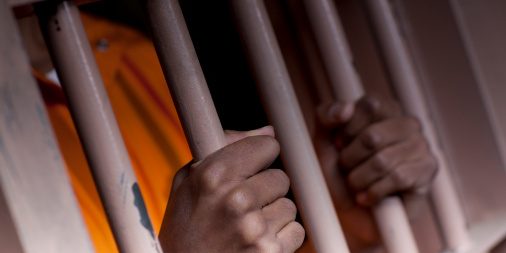
The health and financial impacts of the covid pandemic have been enormous. More than 42 million people have been infected and 679,000 have died in this country. Individuals, businesses and every level of government have suffered as they lost income and revenue. Many workers are unemployed and certain sectors of the economy still suffer disproportionately. There is an easy case to make in favor of the $1.9 trillion American Rescue Plan (ARP) which was passed in order to relieve these many crises. The argument is harder to make when those funds are being used for police and prisons, and which is happening across the country. The state of Alabama is poised to use ARP funds to build three new prisons . Philadelphia is paying for police and for jails.

NY Times Advises China On Covid-19: Abandon Success, Try Failure

The recent outbreak of the Delta variant in China “shows that its strategy no longer fits. It is time for China to change tack.” So declared a lead essay atop the New York Times Opinion/Editorial section on Sept. 7 by Yanzhong Huang, a senior fellow at the Council on Foreign Relations.  The Delta outbreak that “changed the game” in Huang’s words emerged after an outbreak at Nanjing international airport in July traced to a flight from Russia.  Did this outbreak change anything in fact?  Let’s do the numbers.  Let’s do something that Huang did not; let’s look at the numbers from July 1 until Sept. 7 the date of the article, a period that brackets the Delta outbreak cited by Huang. During that period China experienced 273 new cases, about 4 per day, and no new deaths. That hardly seems like a failure.

New Report On US’ Illegal Sanctions; A Day Of Reckoning Is Coming

One of President Biden's first statements included an intention to review the United States' sanctions, which are actually unilateral coercive measures, to determine if they 'unduly hinder' the ability of targeted countries to respond to the COVID-19 pandemic. That review, to be conducted by the US Treasury and State Department, has not been made public, if it has been done at all. The Sanctions Kill coalition conducted its own report on "The Impact and Consequences of US Sanctions," which was released last week. Clearing the FOG speaks with two of the authors, John Philpot and David Paul, about what sanctions are, why they are illegal and the findings of the report. They explain that the US' sanctions are not just impacting the 39 targeted countries but are also restraining countries and companies that do business with those countries. Given the growing backlash against the US' overreach, Philpot, an international lawyer, predicts the US will be held accountable for its crimes and required to pay reparations.

25 Years Of Kerala’s ‘People’s Plan’

The Left Democratic Front (LDF) of the south Indian State of Kerala, led by the Communist Party of India (Marxist), came to power for the second consecutive time in April this year, securing 99 out of 140 seats in the State Legislative Assembly. This victory broke a 40-year-old trend of incumbents losing the elections. One of the key factors behind this victory was the successful response of the government to natural disasters, such as floods, and the COVID-19 pandemic. The highlight of this response was a community-centered approach with thorough people’s participation. People’s participation has been a feature of many other important initiatives in the State too. The ‘Public Library Movement’ helped set up reading rooms and little libraries while the ‘Literacy Movement’ contributed to Kerala becoming the most literate State in the country.

Marxist Epidemiologist Calls Bullsh*t On Antivaxxers

Anti-scientific conspiracy theories are spreading, not just among the right, but even even among some segments of the left. To address this issue from a Marxist perspective, Rania Khalek spoke with Rob Wallace, an evolutionary epidemiologist at the Agroecology and Rural Economics Research Corps in St. Paul and author of “Dead Epidemiologists: On the Origins of COVID-19.” Rania asks "How do we as leftists deal with the fact that the pharmaceutical industry is the one that has the infrastructure to really rapidly produce these vaccines even if they're motivated by profit and not public good but at the same time they are making a massive profit? How do we deal with that contradiction?"

How US Media Misrepresent The Wuhan Institute Of Virology’s Laboratories

Wuhan, China — While many people have already criticized the lack of evidence and scientific basis for the hypothesis that the Covid-19 pandemic originated from a laboratory, both critics and proponents of the lab-leak theory appear to have uncritically accepted false or unproven premises regarding work done at the laboratory most often implicated in these speculations, the Wuhan Institute of Virology (WIV). Some of the most prominent accusations pointed at the WIV are that it was conducting research as part of China’s alleged biowarfare program, and was conducting its experiments in substandard biosafety conditions. The implication is that if the WIV lied about not having SARS-CoV-2 before the outbreak, the virus would also be more likely to have originated from there owing to their inadequate biosafety standards.

Most States Have Cut Back Public Health Powers Amid Pandemic

Republican legislators in more than half of U.S. states, spurred on by voters angry about lockdowns and mask mandates, are taking away the powers that state and local officials use to protect the public against infectious diseases. A Kaiser Health News review of hundreds of pieces of legislation found that, in all 50 states, legislators have proposed bills to curb such public health powers since the COVID-19 pandemic began. While some governors vetoed bills that passed, at least 26 states pushed through laws that permanently weaken government authority to protect public health. In three additional states, an executive order, ballot initiative or state Supreme Court ruling limited long-held public health powers. More bills are pending in a handful of states whose legislatures are still in session.
assetto corsa mods

Urgent End Of Year Fundraising Campaign

Online donations are back! Keep independent media alive. 

Due to the attacks on our fiscal sponsor, we were unable to raise funds online for nearly two years.  As the bills pile up, your help is needed now to cover the monthly costs of operating Popular Resistance.

Urgent End Of Year Fundraising Campaign

Online donations are back! 

Keep independent media alive. 

Due to the attacks on our fiscal sponsor, we were unable to raise funds online for nearly two years.  As the bills pile up, your help is needed now to cover the monthly costs of operating Popular Resistance.

Sign Up To Our Daily Digest

Independent media outlets are being suppressed and dropped by corporations like Google, Facebook and Twitter. Sign up for our daily email digest before it’s too late so you don’t miss the latest movement news.