Skip to content

Inequality

US Inequality Is Way Past Revolution Time

One would think that perhaps the greatest benefit of being a cog in the wheel of a bloodthirsty, predatory, wholly unaccountable, rapacious global empire is being rich. Not rich in an Elon Musk / Monopoly Guy kinda way but rich in a not languishing in poverty kinda way. …But this is not true. A large percentage of Americans never get to touch the spoils of hegemony. “Over 40% of the U.S. population—including 48.9% of children—is considered poor or low income.” You read that right. According to a new Oxfam report, half of all American children live in poor or low-income homes. …HALF.
Public Transit ‘Death Spiral’: A Warning For Other Underfunded Cities

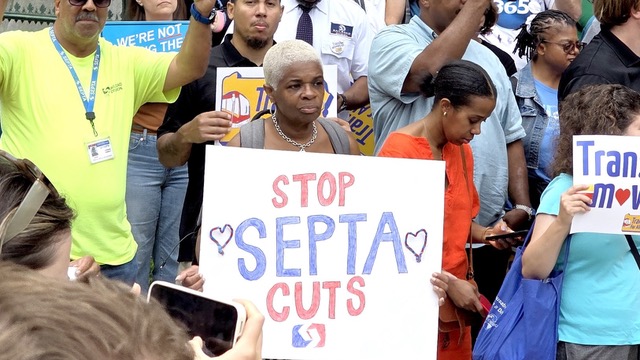
Philadelphia’s transit system plunged into crisis on August 24, when the Southeastern Pennsylvania Transportation Authority (SEPTA) slashed bus, trolley, subway, and Regional Rail service by 20%. SEPTA eliminated 32 bus routes, shortened 16 more, and reduced the frequency of other bus and train lines. The crisis occurred as a result of state lawmakers failing to close a USD 213 million budget gap. The funding standoff left the city’s 746,500 SEPTA riders stranded and pushed the nation’s sixth-largest transit agency toward what officials call a “death spiral” – which has deeply impacted the disproportionately Black and lower-income SEPTA ridership.

African Union Joins Calls To End Use Of Mercator Map That Shrinks It’s Size

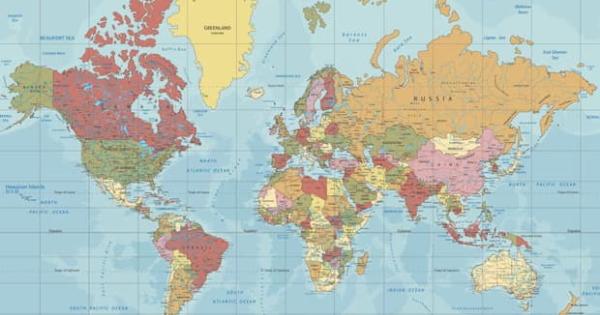
The African Union has backed a campaign to end the use by governments and international organisations of the 16th-century Mercator map of the world in favour of one that more accurately displays Africa’s size. Created by the cartographer Gerardus Mercator for navigation, the projection distorts continent sizes, enlarging areas near the poles like North America and Greenland while shrinking Africa and South America. “It might seem to be just a map, but in reality, it is not,” the African Union Commission deputy chair, Selma Malika Haddadi, told Reuters, saying the Mercator fostered a false impression that Africa was “marginal”, despite being the world’s second-largest continent by area, with more than 1 billion people. The union has 55 member states.

One Of Hurricane Katrina’s Most Important Lessons Isn’t About Storm Preparations

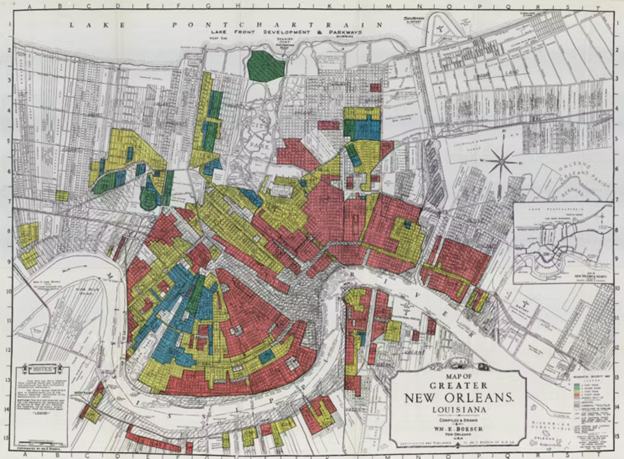
Twenty years after Hurricane Katrina swept through New Orleans, the images still haunt us: entire neighborhoods underwater, families stranded on rooftops and a city brought to its knees. We study disaster planning at Texas A&M University and look for ways communities can improve storm safety for everyone, particularly low-income and minority neighborhoods. Katrina made clear what many disaster researchers have long found: Hazards such as hurricanes may be natural, but the death and destruction is largely human-made. New Orleans was born unequal. As the city grew as a trade hub in the 1700s, wealthy residents claimed the best real estate, often on higher ground formed by river sediment.

When The Empire Chokes, The South Breathes

The story they sell is that “order” was built by reasoned men in sensible suits. The story we live is different. Multipolarity did not grow out of seminars or summits; it is the aftershock of five centuries of plunder, the recoil from wars and sanctions, and the refusal of the colonized to keep paying for someone else’s civilization. Its genealogy runs from the Bandung Communiqué (1955)—the first great gathering where the majority of humanity spoke in its own name—through the long detour of debt, structural adjustment, and counter-insurgency masquerading as “development.” Bandung’s promise was simple and subversive: sovereignty, peaceful coexistence, cooperation, and a say in the world economy for those who actually make the world economy run.

The Monsters Of The Global Crisis Interregnum

The famous quote by Italian Marxist philosopher Antonio Gramsci seems to have been written for the moment humanity is currently experiencing: “The old is dying, and the new cannot be born. In this interregnum, monsters arise.” The world is going through a civilizational crisis in which the neoliberal capitalist order, although mortally wounded, continues to impose its predatory logic, that of the use of force and the resurgence of fascism, while emancipatory alternatives fail to consolidate. In this vacuum, monsters proliferate: wars and attempts at recolonization, climate crisis, structural hunger, collapse of multilateralism and international law placed at the service of the world’s powers that be.

Our Smartphone-Dependent Culture Is Repeating The Mistakes Of Car-Centric Infrastructure

Our inventions offer solutions and convenience; the systems we build bind us to them. Just look at our roads, wide strips of asphalt laid down for one invention: the car. Designed for mobility and convenience, the car quietly restructured our lives. Most of us spend our days behind the wheel, navigating a system built for cars. I see roads as canyons stretching between cities and suburbs, isolating homes, schools, offices and stores. In a car, we glide through them — we are part of the system. On foot, we are stranded, as if the world were not built for us.

Can We Build Public And Political Support For Tackling Inequality?

Wherever you live these days, you’re likely seeing plenty of evidence that political polarization is increasing all around you. Some of this polarization is reinforcing conventional left-right fault lines. Elsewhere in the world, other divisions — cultural, social, geographic, intergenerational — have ripped up and replaced those traditional polarizations. Socio-economic inequality has, of course, long rated as one of those conventional fault lines. The right has typically seen inequality as an inevitable — perhaps even necessary and desirable — byproduct of the dynamism that drives prosperity. Inequality, this argument contends, incentivizes and rewards effort and entrepreneurial risk-taking.

South Africa’s Long Road To Land Reform

On January 23, 2025, South Africa enacted an Expropriation Act, updating the methods for land expropriation for the first time in fifty years. The new Act allows for land expropriation for public purposes and interests whilst introducing the possibility of zero compensation for expropriated land. Consequently, the Act’s scope has been broadened since its 1975 version. Land can still be expropriated for public purposes, such as constructing roads, an uncontroversial and universally accepted practice. The expansion of the scope to include public interest, however, also enables the Act to address a long-standing issue of land reform.

Artificial Intelligence Means ‘Oh No’ For Low-Income Americans

The billions of dollars poured into artificial intelligence (AI) haven’t delivered on the technology’s promised revolutions, such as better medical treatment, advances in scientific research, or increased worker productivity. So, the AI hype train purveys the underwhelming: slightly smarter phones, text-prompted graphics, and quicker report-writing (if the AI hasn’t made things up). Meanwhile, there’s a dark underside to the technology that goes unmentioned by AI’s carnival barkers — the widespread harm that AI presently causes low-income people. 

Ni Una Menos Is ‘Building A New Generation Of Militancy’

The rise of Ni Una Menos marks a before and after in the history of Argentine. The movement against sexist violence, established in 2015, changed the history of Argentine feminism and showed the rise of the transfeminist masses as a political subject. In nearly 10 years of struggle, the movement shone a spotlight on all forms of violence against women and dissident subjectivities through protesters’ bodies occupying the streets, marching and organizing assemblies in working-class neighborhoods and universities. It has named femicides in plain language and made them impossible to sweep under the rug.

There’s A Severe Housing Crisis In The US: The Work To Make Housing A Right

A new report, Billionaire Blowback on Housing: How concentrated wealth disrupts housing markets and worsens the housing affordability crisis, explains how the United States has entered a state of hyper-gentrification in which the average person has to compete with a large corporation when it comes to buying or renting a home. There are currently 28 vacant homes for every homeless person. Clearing the FOG speaks with Chuck Collins, a co-author of the report, and Mehrdad Azemun of Peoples Action, about the housing crisis, the vision for a homes guarantee and how people are working to make housing a human right.

Who Will Care For Americans Left Behind By Climate Migration?

When Hurricane Helene, the 420-mile-wide, slow-spinning conveyor belt of wind and water, drowned part of Florida’s coastline and then barged its path northward through North Carolina last week, it destroyed more than homes and bridges. It shook people’s faith in the safety of living in the South, where the tolls of extreme heat, storms and sea level rise are quickly adding up. Helene was just the latest in a new generation of storms that are intensifying faster, and dumping more rainfall, as the climate warms. It is also precisely the kind of event that is expected to drive more Americans to relocate as climate change gets worse and the costs of disaster recovery increase.

France’s ‘President Of The Rich’ Macron Steals Election He Lost

France’s leader Emmanuel Macron, a multimillionaire investment banker known popularly as the “president of the rich”, has been accused by the country’s left-wing opposition of stealing the election and carrying out a “coup”. In June and July, France held two rounds of voting. Macron lost the election, while a coalition of leftist parties came in first place. But Macron refused to allow them to form a government. Instead, Macron made a tacit alliance with the French far right to keep the left out of power, and he appointed as prime minister a conservative politician from an unpopular party that came in fourth place and earned just around 6% of the vote.

Newsflash: Inequality In Neoliberal America

If anyone is perplexed or surprised  why Americans are so upset about the economy, they should look no further than the Income Distribution and Dynamics in America (IDDA) recent report by the Federal Reserve Board of  Minneapolis and its data site that looks at the stagnation of American income and economic mobility in America.  It unfortunately confirms what we already know—the neoliberal state benefits unevenly and in ways that confound an ability to challenge it.. America is built upon two myths, the myth of equality and the myth of the American dream. The myth of equality is the idea that we all have an equal opportunity to succeed. 
assetto corsa mods

Urgent End Of Year Fundraising Campaign

Online donations are back! Keep independent media alive. 

Due to the attacks on our fiscal sponsor, we were unable to raise funds online for nearly two years.  As the bills pile up, your help is needed now to cover the monthly costs of operating Popular Resistance.

Urgent End Of Year Fundraising Campaign

Online donations are back! 

Keep independent media alive. 

Due to the attacks on our fiscal sponsor, we were unable to raise funds online for nearly two years.  As the bills pile up, your help is needed now to cover the monthly costs of operating Popular Resistance.

Sign Up To Our Daily Digest

Independent media outlets are being suppressed and dropped by corporations like Google, Facebook and Twitter. Sign up for our daily email digest before it’s too late so you don’t miss the latest movement news.