Skip to content

Homelessness

Kentucky’s Anti-Camping Law Has Pushed Rural Homelessness Into Hiding

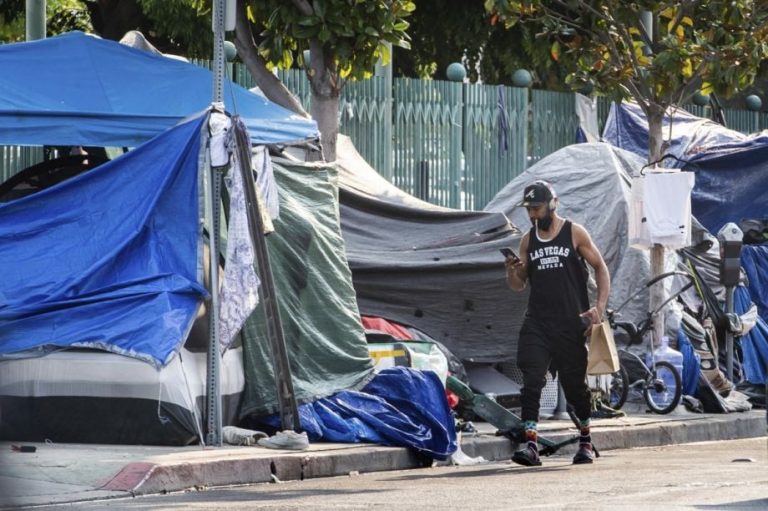
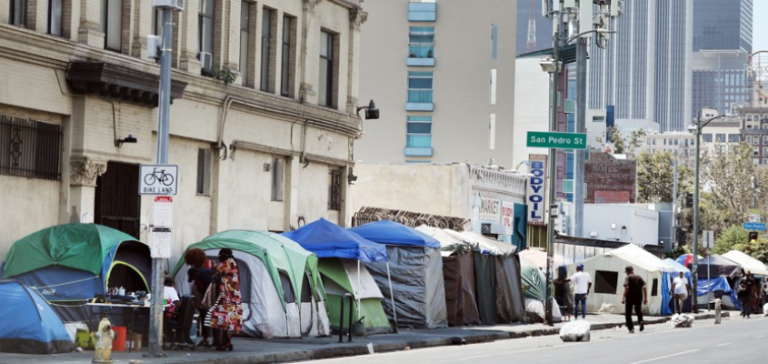
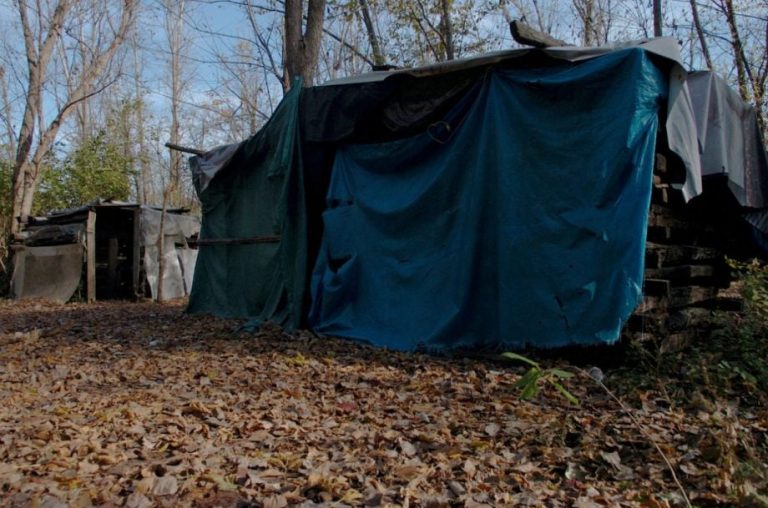
In many U.S. cities, advocates for America’s growing homeless population say, homelessness itself is being treated like a crime. Last year, the Supreme Court gave cities the green light to ban people from sleeping and camping in public, allowing them to crack down on encampments even when there are no shelter beds available. In July, the White House announced an executive order making it easier for cities and states to remove unsheltered people from the streets and force them into medical facilities and institutions. That headline came alongside news of broad, Trump-backed encampment sweeps in Washington, D.C. and the threat of federal mobilization in other big cities.
Closing The Gap Between Housing And Home With Upcycled Furniture

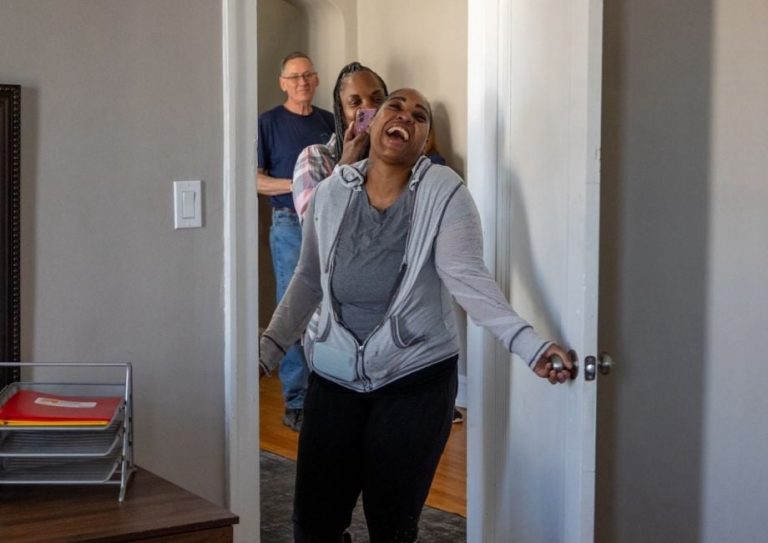
Homelessness in Chicago has surged in recent years, with the number of unhoused Chicagoans tripling last year. As housing costs climb and public funding shrinks, more families are cycling in and out of shelters without the resources to make a new place feel like home. One local nonprofit is tackling that gap, offering support that social service agencies aren’t able to provide. By collecting and upcycling donated furniture, the Chicago-based nonprofit Digs With Dignity designs and furnishes homes for families transitioning out of homelessness, creating spaces that feel comfortable, functional and dignified.

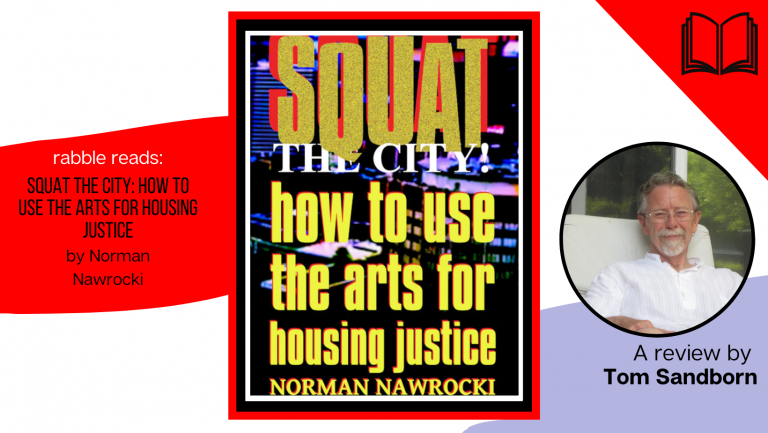
‘Squat The City’ Is A Brilliant Organizer’s Handbook

The great American organizer and songwriter Woody Guthrie, scrawled  on his instrument the memorable phrase, “This machine  kills fascists” during World War II. Norman Nawrocki, Vancouver born and Montreal based organizer, author, musician, dramatist and educator, would likely not make that grand or lethal a claim for his latest book, Squat the City: How To Use the Arts for Housing Justice. But he does want the book to serve as a tool, a weapon and an inspiration for people around the world who are facing our own era’s capitalist authoritarians and their murderous lust for profits and power. Nawrocki has spent most of his time as an organizer fighting for housing justice, and his book is a fond memoir of some of the many artistic projects he has co-created with precariously housed and unhoused people struggling against evictions and homelessness.

Amid Local Failures And Federal Cuts, Advocates For Unhoused Step Up

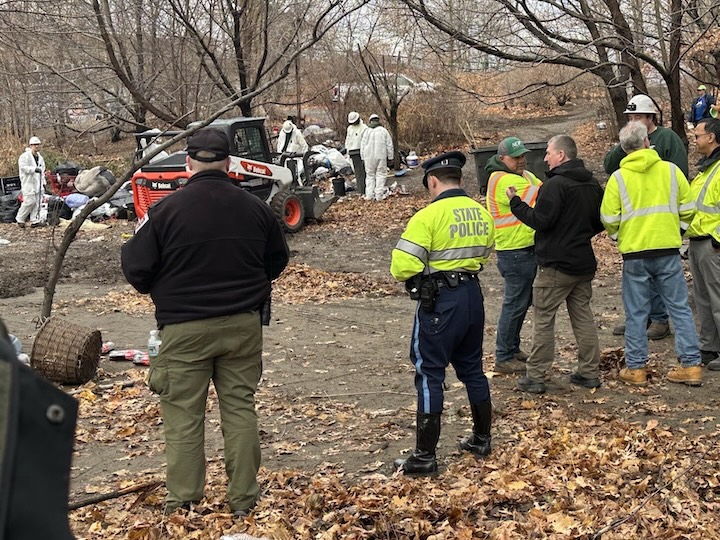
It’s been more than half a year since the state’s Department of Conservation and Recreation spent four days clearing out an encampment near the BU Bridge in Cambridge, and Gemma Byrne has yet to see any of the people who were displaced by what one witness described as “the most inhumane sweep she has seen in her approximately 10 years of being unhoused.” Byrne is an organizer for the material aid and harm reduction program Warm Up Boston, which distributes supplies to encampments and has developed connections with their residents. Homelessness and fringe housing get more attention in the bitter cold months, but the work continues in the heat, as do haunting memories of what came last December.

Trump’s Invasion Of Washington DC Costs Over $1 Million A Day

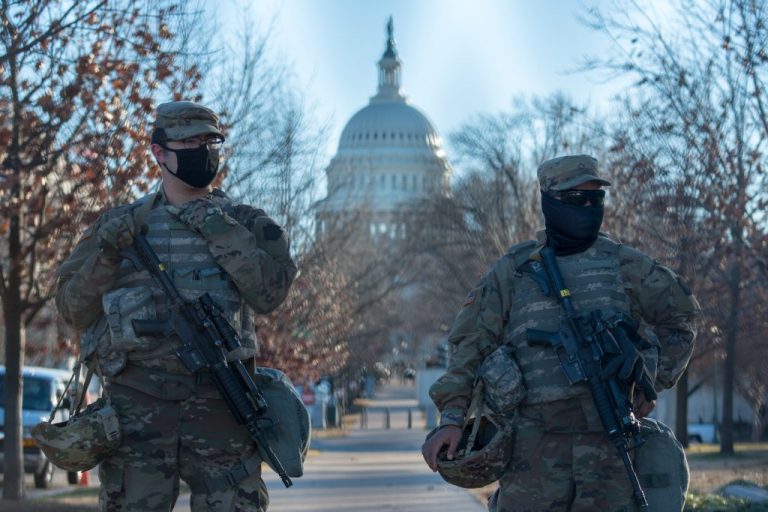
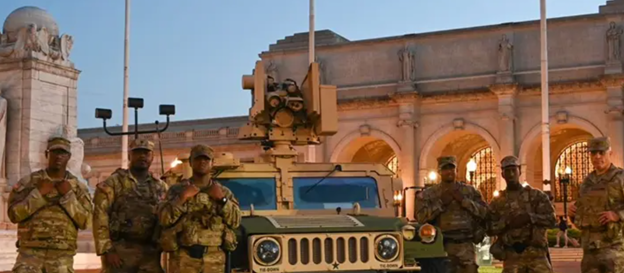
President Trump mobilized the D.C. National Guard under the guise of restoring security in the nation’s capital — despite D.C.’s crime rate being at a 30-year low. What began as a deployment of 800 D.C. National Guard troops has grown to encompass 2,091 as of this writing, as Republican governors send hundreds more. Trump hasn’t just complained about alleged crime in the district — he’s placed a target on people experiencing poverty and homelessness. Claiming that we’re “getting rid of the slums,” Trump has called on troops and police to forcibly remove unhoused people from the city. Federal law prohibits deploying the military on U.S. soil, except under certain extraordinary circumstances.

Washington DC Wakes Up Packed With Federal Agents And National Guard

Since Wednesday night, hundreds of federal agents and National Guard members have been patrolling the streets of Washington, D.C., after President Donald Trump placed the city’s police under federal control. The Federal Bureau of Investigation (FBI), the Drug Enforcement Administration (DEA) and U.S. Immigration and Customs Enforcement (ICE) set up checkpoints in several areas of the city and increased patrols in shifts covering 24 hours a day. On Thursday, White House Press Secretary Karoline Leavitt said 19 agencies were part of a task force created by Trump, Attorney General Pam Bondi and Defense Secretary Pete Hegseth.

What Free Transit Looks Like In Albuquerque, Nearly Two Years Later

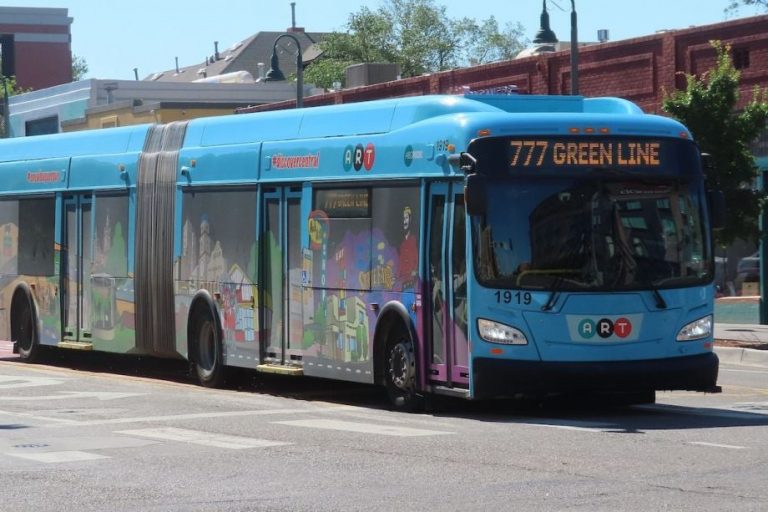
Sabina Wohlmuth’s days used to include long, hot walks across the city of Albuquerque, sometimes two or three miles at a time. Wohlmuth relies on the bus, but when she was short on cash, she walked instead of paying the fare. “It was only a dollar for a one-way trip, but still, if you’re homeless and you’re poor that’s a lot of money,” Wohlmuth says. Wohlmuth now takes the bus every day, to her job at McDonald’s, to the store, and to the sober living facility where she stays. And each of those bus trips cost Wohlmuth zero dollars.

New Study: Criminalizing Homelessness Doesn’t Reduce Homelessness

A recent study shows that encampment bans and other policies that criminalize homelessness don’t keep people from living on the street. The analysis did not find any reduction in homelessness in any of the cities studied as a result of such ordinances. The study examined the effect of ordinances enacted between 2000 and 2021 across the 100 most populous U.S. cities, using data pulled from Continuums of Care — local entities that administer federal homelessness funding from the Department of Housing and Urban Development. The study, published in May in the Policy Studies Journal, looked beyond camping bans and included laws criminalizing public drunkenness, urination or other actions that are criminalized when conducted in public but not behind closed doors.

Unhoused Why? It’s Always About The Land

In 2024, the U.S.’ unhoused population increased by 18%, which translates into approximately 770,000 individuals living on the streets. This is a consistent annual increase over the previous years. (This information was recently removed from HUD’s website.) It is not that the U.S. does not have enough land or buildings to house its people, but that capitalist greed ensures significant segments of the population remain unhoused on purpose. Compounding the current homelessness crisis, also surging in other industrialized countries, is that the ruling class engages in global land grabs, what Marx/Engels dubbed “the clearings.”

Criminalizing Homelessness Doesn’t Work; Housing People Does

In the largest eviction of a homeless encampment in recent history, around 100 unhoused people were recently forced to vacate Oregon’s Deschutes National Forest — or else face a $5,000 fine and up to one year in jail. The forest was the last hope for the encampment’s residents, many of whom were living in broken down RVs and cars. Shelters in nearby Bend — where the average home price is nearly $800,000 — are at capacity, and rent is increasingly unaffordable. “There’s nowhere for us to go,” Chris Dake, an encampment resident who worked as a cashier and injured his knee, told the New York Times.

The Homeless Garden Project: Opening Doors To The Unhoused

An analysis of data from 2017 and 2022 by the Pew Charitable Trusts points to a direct connection between high housing costs and homelessness rates in the United States. Unsurprisingly, a Santa Cruz County Civil Grand Jury 2024 report stated that the city, which the National Low Income Housing Coalition ranked as America’s most expensive rental market in 2023 and 2024, has the most people experiencing homelessness in California per capita. A University of California, Santa Cruz (UCSC), research project called No Place Like Home labeled Santa Cruz as “the least-affordable small city in the U.S.”

Biden’s Legacy: Genocide Abroad, Economic Despair At Home

46th US President Joe Biden officially leaves office Monday, January 20, to be succeeded by former President Donald Trump. Trump’s promises in the name of “saving American workers” have raised alarm for people across sectors of society, including migrant workers who are gearing up for mass deportations, and unionized workers who are preparing for Trump’s attacks on labor rights. Trump’s loyalty to multi-billionaires has also given the working class of the US great cause for concern. Meanwhile, in contrast, the Democrats have attempted to position themselves as the real defenders of working people.

The Homelessness Crisis Is About To Get A Lot Worse

With just weeks to go before Donald Trump waltzes back into the White House, America has an additional problem on its hands. The homelessness rate has surged, rising by 18% in 2024 compared to last year. According to the Department of Housing and Urban Development’s annual assessment report, more than 770,000 people were experiencing homelessness on a single night in January. Nearly 150,000 children experienced homelessness on a single night in 2024, a whopping 33% increase from 2023. The number of homeless older Americans also rose, with more than 140,000 people over the age of 55 going unhoused in the U.S. this year. Nearly half of these older Americans reported living in places not meant for humans.

One Year Ago, Brazil Banned Hostile Architecture

In February 2021, at the height of the pandemic, images of a lone priest standing beneath an overpass with a sledgehammer in his hands captured Brazil’s attention. Father Julio Lancellotti, a São Paulo-based priest known for his work with trans people and those living on the streets, had crushed hundreds of stones placed there by São Paulo’s mayor to prevent homeless people from taking shelter beneath the overpass. Lancellotti was protesting hostile architecture, the design of public spaces or structures to discourage their use. From removing seating from train stations to installing metal dividers on benches, hostile architecture attempts to keep the “unwanted” away from certain spaces — especially keeping unhoused people from seeking shelter, sleeping, sitting or existing in the public.

US Report Finds Homelessness Soared 18% This Year

The controversial federal system for tracking homelessness in the United States recorded an 18% increase from 2023, breaking the record previously set last year, according to a report released Friday. The U.S. Department of Housing and Urban Development's (HUD) process—which advocates and experts have long argued is flawed and results in inaccurate data that understates the homelessness crisis—provides a snapshot of how many people are unhoused for a single night each January. This year, the HUD report states, "a total of 771,480 people—or about 23 of every 10,000 people in the United States—experienced homelessness in an emergency shelter, safe haven, transitional housing program, or in unsheltered locations across the country."
assetto corsa mods

Urgent End Of Year Fundraising Campaign

Online donations are back! Keep independent media alive. 

Due to the attacks on our fiscal sponsor, we were unable to raise funds online for nearly two years.  As the bills pile up, your help is needed now to cover the monthly costs of operating Popular Resistance.

Urgent End Of Year Fundraising Campaign

Online donations are back! 

Keep independent media alive. 

Due to the attacks on our fiscal sponsor, we were unable to raise funds online for nearly two years.  As the bills pile up, your help is needed now to cover the monthly costs of operating Popular Resistance.

Sign Up To Our Daily Digest

Independent media outlets are being suppressed and dropped by corporations like Google, Facebook and Twitter. Sign up for our daily email digest before it’s too late so you don’t miss the latest movement news.