Skip to content

Privatization

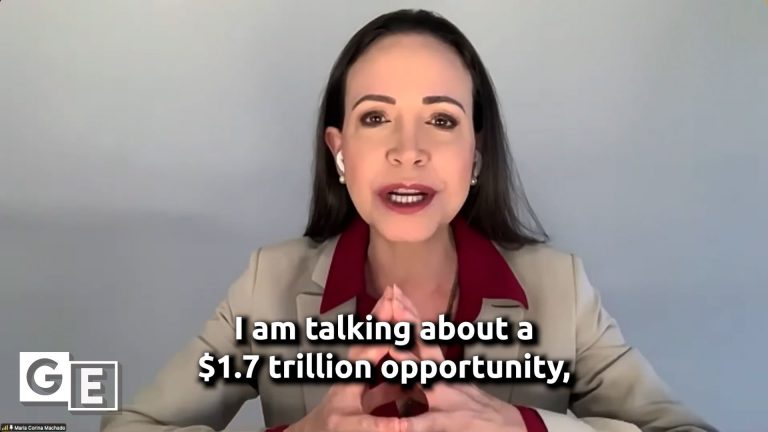
Machado Offers To Sell $1.7 Trillion Of Venezuela’s Assets To US Corporations

María Corina Machado is a far-right Venezuelan coup leader who has been funded by the US government since at least 2003. The Donald Trump administration is waging war on Venezuela, and if it can succeed in overthrowing the leftist government of President Nicolás Maduro, Machado would help to lead the new pro-US regime in Caracas. Machado won the 2025 Nobel Peace Prize, despite the fact that she openly supports Trump’s war on her country. She has for years called for a US military intervention to violently topple President Maduro.

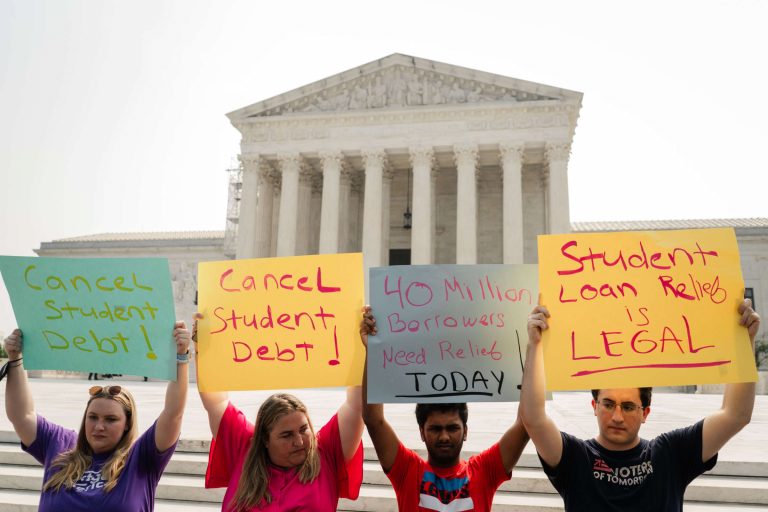
If Trump Sells Student Loan Portfolio, Paths To Debt Cancellation Could Close

Trump administration officials are once again exploring the possibility of selling portions of the federal government’s $1.6 trillion student loan portfolio, held by about 45 million borrowers, according to recent reporting by Politico. Federal law dictates that such a sale cannot cost taxpayers any money. But, as Eileen Connor, executive director of the Project on Predatory Student Lending, told Politico, executing a deal that benefits both taxpayers and borrowers is nearly impossible. The federal government enjoys extraordinary powers of collection that private lenders do not — such as garnishing tax refunds, disability benefits, and Social Security payments. Absent those collection methods, private lenders make money through higher interest rates and longer repayment plans.

The Privatization Crisis At Canada Post

In 2001, Canada Post invested $1 million to acquire a 50 percent ownership stake in Intelcom, then operating as Intelcom Express, a package delivery company. The purchase quickly stirred controversy because of Intelcom’s connections to the Liberal Party of Canada, prompting critics to question whether the Crown corporation’s decision-making had been influenced by political favouritism. In response, Intelcom bought back its shares from Canada Post six years later, in 2007. At the time, Intelcom was a major Liberal donor. Its founder and CEO, Daniel Hudon, was both a fundraiser and a former member of the finance committee of the Québec wing of the Liberal Party.

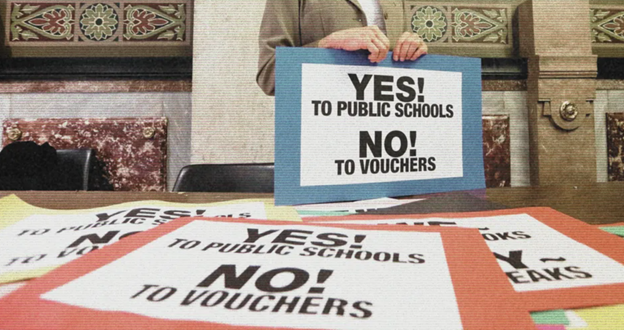
Private Equity’s New Playground: America’s Schools

President Donald Trump’s Big, Beautiful Bill is poised to accelerate the privatization of the nation’s school systems — and private equity aims to cash in. By some estimates, the law’s new school voucher provision — which uses public funds to help parents pay for private-school tuition — is expected to transfer anywhere from $4 billion to $51 billion to private schools and companies that contract with public school districts. That includes companies owned by private equity firms. Thanks to the provision, starting in late 2026, individuals can contribute up to $1,700 to qualifying “scholarship-granting organizations” and receive a 100 percent tax credit in return, entirely bankrolled by the federal government.

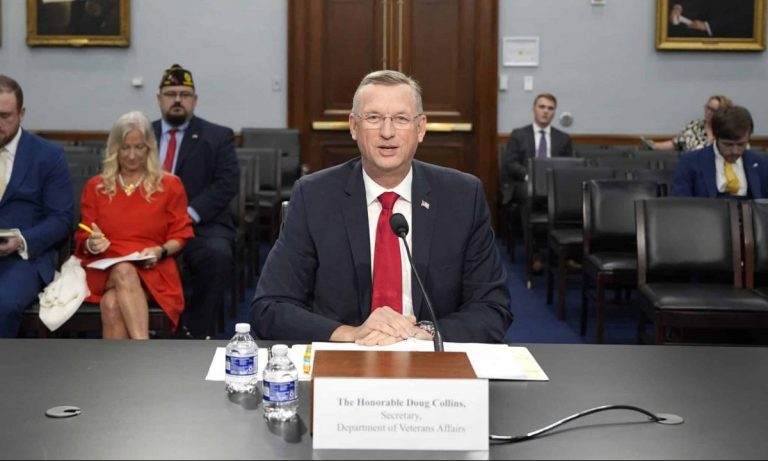
The False Promises Of VA Privatization

James Jones is a 54-year-old disabled Army veteran. After four years of active duty—some of it in the Gulf War—and four years in the reserves, Jones says he has a “multitude” of health care problems. Ask him to list his health care needs and he sighs and reels off a long list. “Oh my, I have a multitude of stuff. There’s PTSD [post-traumatic stress disorder], a right arm injury, my right shoulder, chronic rhinitis from toxic exposure during the Gulf War, dental. It all adds up,” he says, laughing, “to a 100% disability rating in VA math.” That’s why he depends on the services provided by the health care system—the nation’s largest—run by the Department of Veterans Affairs (VA). Jones is also one of the hundreds of thousands of disabled veterans who work for the federal government, in his case the National Park Service. Plus, he’s one of the 25% of vets who live in a rural area like Wakauga County, North Carolina.

For-Profit Corporations Are Buying Up More Psychiatric Hospitals

As the share of U.S. adults receiving mental health care treatment steadily grows, for-profit companies are playing an increasingly important role. More than 40% of inpatient mental health beds were operated by for-profit entities as of 2021, according to unpublished data from Morgan Shields, an assistant professor at Washington University in St. Louis who studies quality in behavioral health care. That’s up from about 13% in 2010. (The number of mental health beds held relatively constant during that time.) Experts tie this growth to provisions of the Affordable Care Act, which made mental health care an essential health benefit that all insurance plans are required to cover.

A Handbook For Public Power Campaigns

The Public Power Handbook is a guide for communities exploring models of publicly owned power, such as a municipal electric utility, as a path toward local control, clean and affordable energy investment, and democratic accountability. The handbook provides step-by-step guidance for advocates and community members on how to municipalize (or take over) a private utility, from building a winning coalition to anticipating and countering utility pushback. The handbook also outlines alternatives to full municipalization that still further the goals of local energy control and utility accountability.

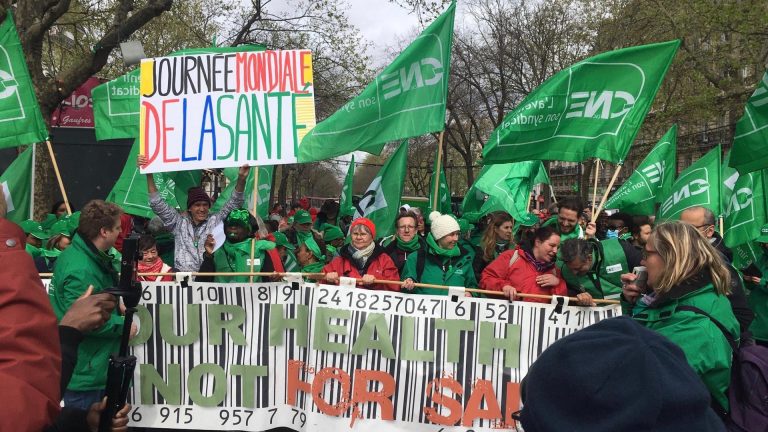
Universal Health Coverage At A Crossroads

Universal Health Coverage (UHC) continues to dominate the global health agenda. At this year’s World Health Assembly (WHA78), UHC was again hailed as the cornerstone of resilient health systems. However, while governments reaffirmed their commitments, millions of people continue to face catastrophic health costs, essential services remain out of reach, and primary healthcare systems are stretched beyond breaking. The world is not on track to achieve UHC – and it is not because of a lack of guidance. It’s because of the wrong strategy.

As Private Equity Comes For The Utility Sector, Minnesota Is A Test Case

There’s been a significant development in hotly contested proceedings happening in northern Minnesota over whether Allete, owner of the region’s main electric utility, Minnesota Power, will be acquired by two new private equity owners, including the asset management behemoth BlackRock. After months of hearings, an administrative law judge published a report that unambiguously recommended state regulators deny approval of the deal, concluding that, based on the evidence from proceedings, Allete and the acquiring partners “have not met their burden of proof to show the transaction is consistent with the public interest.”

Medicare Advantage Is Such A Threat To Workers, They Wrote A Paper On It

This past April, labor advocates for single payer health care published a white paper called, “Medicare Advantage: What Labor Leaders Need to Know.”In it, the authors remind labor leaders—including those in New York City who spent the last four years trying to push 250,000 municipal retirees into Medicare Advantage—that Medicare Advantage is “neither Medicare (the public, universal program without intermediaries between patients and the healthcare they need), nor is it an Advantage, except to profit-driven insurance companies.”

Repression Of Protests Continues In Panama

On July 5, nearly 800 people from 17 countries signed a letter addressed to the president of Panama, José Raúl Mulino, calling for international observation due to the increasing repression of protests in Panama. The document, signed by academics, artists, activists, workers, and trade unionists, also points out that the Central American country is witnessing growing criminalization of political dissent, which, according to the document, is reminiscent of the darkest years in its national history. Furthermore, the letter adds that the government is demonstrating an “authoritarian drift”.

New Social Housing Programs Seek To Make Homes Permanently Affordable

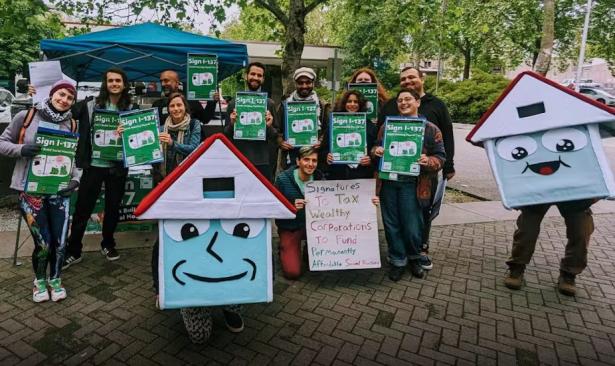
Seattle astounded housing advocates around the country in February 2025, when roughly two-thirds of voters approved a ballot initiative proposing a new 5% payroll tax on salaries in excess of US$1 million. The expected revenue – estimated to amount to $52 million dollars annually – would go toward funding a public development authority named Seattle Social Housing, which would then build and maintain permanently affordable homes. The city has experienced record high rents and home prices over the past two decades, attributed in part to the high incomes and relatively low taxes paid by tech firms like Amazon. Prior attempts to make these companies do their part to keep the city affordable have had mixed results.

The Threat Of Privatization-By-Stealth Looms Over The US Postal Service

The USPS is one of the most popular federal agencies, due to its mission to “bind the nation together”, providing universal mail and delivery services to all. However, its unrivaled delivery network and huge real estate portfolio have also made it a long-standing target for corporate greed. U.S. Mail Not For Sale has already documented Wall Street’s moves to engineer a corporate takeover of the Postal Service. We sounded the alarm when reporters were briefed that the Trump Administration planned a takeover of the USPS, as a precursor to privatization. In recent weeks, we have seen signs that a longer and perhaps more dangerous game is at play – a gradual corporate takeover of the people’s Post Office that degrades the service and hurts its popularity.

America For Sale! Everything Must Go!

The U.S. government has fallen into the hands of people who lack proper metaphors; all they know is business. The nation should be ​“run like a business” according to these unimaginative suits among the GOP, who haven’t read or studied enough to consider how the government might be run like anything else. The problem with this thinking is it will, by inevitably following the profit motive, lead to a terminal phase. With the House passage of President Donald Trump’s budget legislation ​“One Big Beautiful Bill,” the United States has reached the private equity looting stage of the metaphor. The logic of this scheme will collapse, but it might bring us all down with it.

Anti-Worker Policies, Capitalism, And Privatization Keep South Poor

The central function of government should be to protect people from harm, exploitation, and abuse. Yet on this core task, many Southern state governments have performed abhorrently—largely by design. EPI’s Rooted in Racism and Economic Exploitation series1 has shown how for most of the past two centuries, Southern state governments have embraced an economic development strategy—the Southern economic development model—designed to undermine job quality and suppress worker power, particularly for Black and brown workers. The model aims to maintain a pool of exploitable, available labor, and preserve the racial and economic hierarchies established during slavery.
assetto corsa mods

Urgent End Of Year Fundraising Campaign

Online donations are back! Keep independent media alive. 

Due to the attacks on our fiscal sponsor, we were unable to raise funds online for nearly two years.  As the bills pile up, your help is needed now to cover the monthly costs of operating Popular Resistance.

Urgent End Of Year Fundraising Campaign

Online donations are back! 

Keep independent media alive. 

Due to the attacks on our fiscal sponsor, we were unable to raise funds online for nearly two years.  As the bills pile up, your help is needed now to cover the monthly costs of operating Popular Resistance.

Sign Up To Our Daily Digest

Independent media outlets are being suppressed and dropped by corporations like Google, Facebook and Twitter. Sign up for our daily email digest before it’s too late so you don’t miss the latest movement news.