Skip to content

Xi Jinping

Understanding The Changes Unseen In A Century

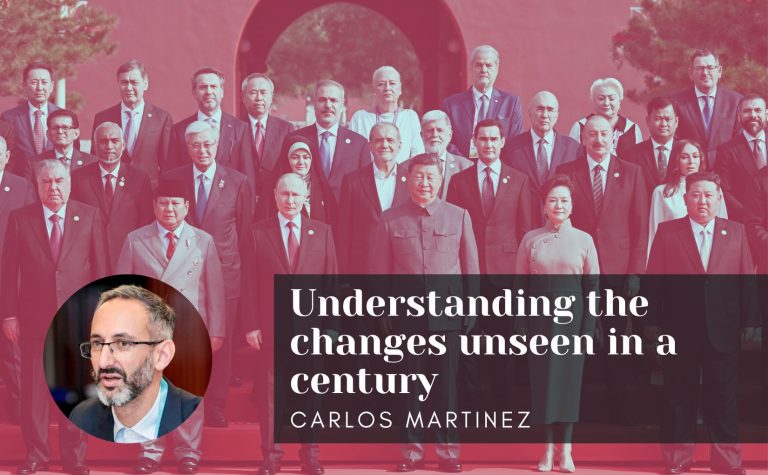
General Secretary Xi Jinping has observed several times that “the world is undergoing profound changes unseen in a century”. What are these changes, and what are their implications for the current global situation? Before addressing the changes the world is experiencing today, it is worthwhile reflecting on the major changes that occurred a century ago, since the dramatic shifts of that time laid the foundations for the transformations we are witnessing now. The October Revolution of 1917 was a watershed moment marking the beginning of humanity’s transition from capitalism to socialism.
Trump Rattles Markets With New 100 Percent Tariffs On Chinese Goods

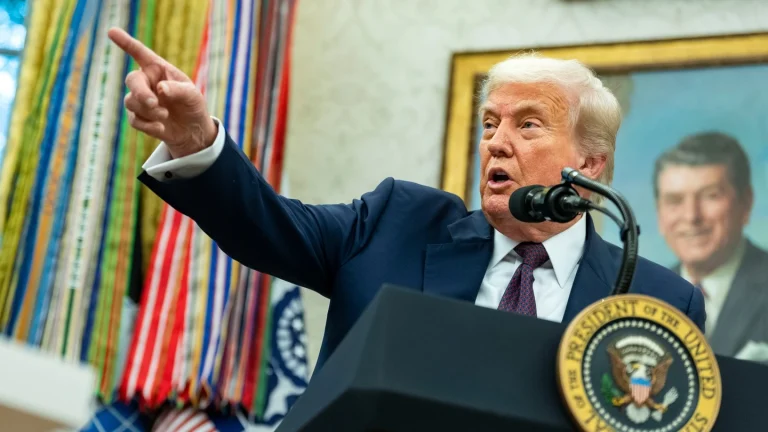
US President Donald Trump announced new 100 percent tariffs on Chinese goods on 10 October and threatened to cancel his meeting with President Xi Jinping. Trump said the levies would take effect on 1 November, describing them as “retaliation” for what he called Beijing’s “extraordinarily aggressive” actions. “It is impossible to believe that China would have taken such an action, but they have, and the rest is History,” he wrote on social media. He added that the new measures would target “any and all critical software” exports, accusing China of holding the world “captive” through its dominance of rare earth minerals. “There is no way that China should be allowed to hold the World captive,” he said.

Elephant And Dragon Choose Dialogue

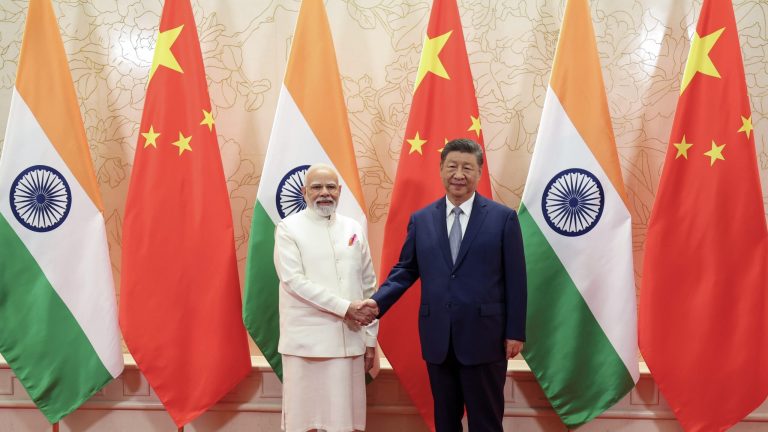
At the Shanghai Cooperation Organization (SCO) summit in Tianjin on September 1, 2025, Indian Prime Minister Narendra Modi and Chinese President Xi Jinping met and publicly framed the relationship as “partners, not rivals.” Their readouts stressed dialogue on differences and cooperation on development – language that marks the clearest thaw since the 2020 Ladakh crisis. Two moves gave the reset substance, not just optics. First, India and China re-activated the Special Representatives (SR) dialogue on the boundary question in New Delhi on August 19, 2025, and second, they agreed to restart direct flights and expand people-to-people and business links, after a five-year freeze. These are communications channels that reduce miscalculation and restore some weight to a battered relationship.

Trump’s Tariffs Backfire: India Moves Closer To China

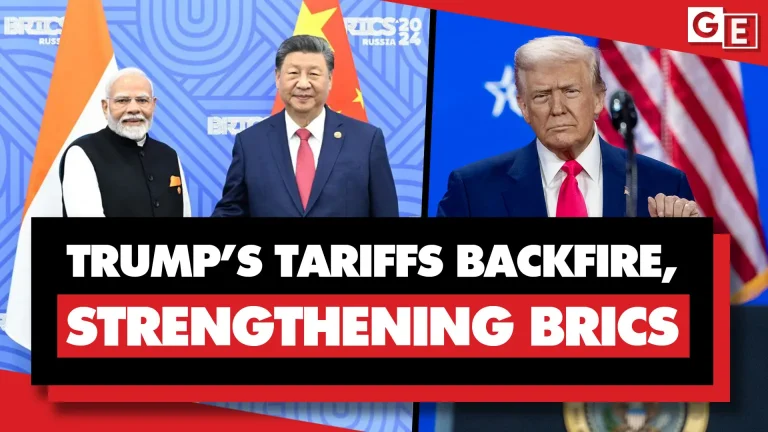
US President Donald Trump is a very contradictory leader. He constantly implements policies that go against his stated goals. The perfect example of this is how Trump has treated BRICS, the Global South-led organization that now represents the majority of the planet. Trump sees BRICS as a major threat to US hegemony, and, in particular, the dominance of the US dollar as the global reserve currency. The US president has openly threatened members of BRICS to try to stop them from seeking alternatives to the dollar. In a press conference at the White House on July 8, Trump complained (emphasis added): BRICS was set up to hurt us. BRICS was set up to degenerate our dollar, and take our dollar as the standard, take it off as the standard.

China-Central Asia Summit Concludes With Call For Multipolar World Order

The second China-Central Asian summit concluded in Astana, Kazakhstan on Tuesday with countries signing a treaty on eternal good neighborliness, friendship, and cooperation as well as a joint Astana declaration. The summit was attended by Chinese President Xi Jinping and the five Cental Asian presidents, Kassym-Jomart Tokayev of Kazakhstan (the host country, Sadyr Japarov of Kyrgyzstan, Emomali Rahmon of Tajikistan, Serdar Berdimuhamedov of Turkmenistan, and Shavkat Mirziyoyev of Uzbekistan. The Astana declaration, signed by all the participants, talks about enhancing cooperation in agriculture, energy, technology and transport sectors apart from intensifying cooperation on the global platforms with a common objective of upholding the basic principles of the UN charter and developing a joint stand against hegemonic politics.

The Economic ‘Protracted War’ Between The US And China

China and the U.S. have come to a 90-day trade agreement. This was a clear victory in the first battle of the “trade war” for China — as was admitted even in the U.S. media. As Bloomberg, a fiercely anti-China source, summarised the analysis of the overwhelming majority of Western media: “Xi Jinping’s decision to stand his ground against Donald Trump could hardly have gone any better for the Chinese leader.” But it would be an error to mistake this decisive victory for China in the first battle with a belief that the U.S. will abandon the economic struggle against China – it will not. This is in economic terms a “protracted war”, not a single battle.

Trump’s Far-Fetched Attempt To Divide Russia And China Is Clearly Failing

US President Donald Trump claimed he would “un-unite” Russia and China. However, this divide-and-conquer strategy — which prominent US officials like Henry Kissinger have advocated since the 1970s — is clearly failing. In a meeting in Moscow celebrating the 80th anniversary of their nations’ shared victory in World War Two, Presidents Xi Jinping and Vladimir Putin reaffirmed that “China-Russia relations have reached the highest level in history”. In a lengthy statement, Beijing and Moscow vowed to “jointly resist any attempts to interfere with and disrupt the traditional friendship and deep mutual trust between China and Russia”.

Ukraine Resembles The Fall Of Saigon In 1975

The governing regime in Kiev is desperately trying to maintain its US support, as a defeat of the US-led, NATO proxy war in Ukraine looms. It is citing the collapse of the government in South Vietnam in April 1975 as a warning, saying that something similar could happen in Ukraine. At the time, the US defeat in Vietnam was a huge blow to the image and standing of US imperialism in the world. Such pronouncements by the Kiev regime reveal a recognition that ‘its’ Ukraine has become a satellite of the United States – much as South Vietnam was widely recognized to be half a century ago. Then as now, Washington and its allies are desperately seeking to maintain their economic and military dominance over the world and to stop rising movements of liberation by the peoples of Asia, Africa and Latin America.

Xi Jinping: Global South Countries March Together To Modernisation

The summit meeting of the BRICS cooperation mechanism was held, October 22-24, in Kazan, the capital city of the Republic of Tatarstan in the Russian Federation, and was hosted by Russian President Vladimir Putin. Alongside dozens of other events within its framework, the summit of the nine full members of BRICS was held on October 23, under the theme “Strengthening Multilateralism for Equitable Global Development and Security”. This was the first such gathering in which Brazil, Russia, India, China and South Africa were joined by Ethiopia, Egypt, the United Arab Emirates (UAE) and Iran, since the 2023 summit meeting held in South Africa invited the latter four countries to take up full membership in the first wave of BRICS expansion.

US Or China, Which Is Truly Democratic?

Who do we want to lead? With genocide ongoing, regional wars brewing, and climate change records breaking, who is a safe pair of hands? Today a choice exists; an alternative to the US-led international order is being built, with China at its center. A Western survey, the Edelman Trust Barometer, found China to be the country rated highest globally in terms of people’s trust in their government. China has held the top spot every year but one since 2018, with a comprehensive trust index of 79 in 2024. The US is down at a mere 46.

CPC Charts Path To Achieve An Advanced Socialist Society By 2050

The third plenary session of the 20th Central Committee of the Communist Party of China (CPC) was held in Beijing from Monday July 15 to Thursday, July 18. It adopted a resolution listing a set of reforms with the objective of deepening the modernization process in the country in the path to complete building an advanced socialist market economy in China by the year 2035 and an advanced socialist society by 2050. Chinese President Xi Jinping who is also the general secretary of the CPC presided over the meeting attended by 199 members and 165 alternate members. Each elected Central Committee, the highest decision making body between two party Congresses, holds seven plenums or meetings during its five year term.

China And Russia Strengthen Friendship, Blast Western ‘Neocolonialism’ And Militarism

As the United States imposes more and more sanctions on China and Russia, this has only driven the Eurasian powers closer together. The leaders of the two countries convened in Beijing in May. It was their 43rd meeting. There, Presidents Xi Jinping and Vladimir Putin signed a joint statement commemorating the 75th anniversary of diplomatic relations. In the document, China and Russia blasted Western “colonialism and hegemonism”, called to build a more multipolar world with increased representation for the Global South, and expressed support for de-dollarization and expansion of BRICS.

China-Russia Joint Statement On ‘New Era’, Marks 75th Anniversary Of Relations

Russia’s President Vladimir Putin traveled to China from May 16-17, 2024, where he met with Chinese President Xi Jinping. This was the 43rd meeting between the two leaders, although it held particular significance as it marked the 75th anniversary of the relations between their countries. While in Beijing, Xi and Putin signed a lengthy joint statement, which when translated into English amounts to roughly 8000 words. The document is available in Chinese and Russian on the websites of the respective governments. As of May 25, there is no official translation of the full text in English. Only short excerpts of the statement have been reported on in the English-language media.

The Sahel’s ‘Axis Of Resistance’

The emergence of in various geographies is an inextricable byproduct of the long and winding process leading us toward a multipolar world. These two things – resistance to the Hegemon and the emergence of multipolarity – are absolutely complementary. The Axis of Resistance in West Asia – across Arab and Muslim states – now finds as its soul sister the Axis of Resistance spanning the Sahel in Africa, west to east, from Senegal, Mali, Burkina Faso, and Niger to Chad, Sudan, and Eritrea. Unlike Niger, where the change in power against neocolonialism was associated with a military coup, in Senegal, the power change comes straight from the polls.

95% Of Trade Between China And Russia No Longer Done In US Currency

On a recent visit to China, Russian First Deputy Prime Minister Andrei Belousov stated that this year the use of the Russian ruble and Chinese yuan in trade between the two countries has already reached 95%. At the same time, from January to October, 68% of all Russian trade was carried out in the two countries’ currencies, according to Russian Minister of Economic Development Maksim Reshetnikov. The yuan has also been used by Russia in commercial transactions with Mongolia, the Philippines, Malaysia, the United Arab Emirates, Thailand, Japan, Tajikistan, and Singapore.
assetto corsa mods

Urgent End Of Year Fundraising Campaign

Online donations are back! Keep independent media alive. 

Due to the attacks on our fiscal sponsor, we were unable to raise funds online for nearly two years.  As the bills pile up, your help is needed now to cover the monthly costs of operating Popular Resistance.

Urgent End Of Year Fundraising Campaign

Online donations are back! 

Keep independent media alive. 

Due to the attacks on our fiscal sponsor, we were unable to raise funds online for nearly two years.  As the bills pile up, your help is needed now to cover the monthly costs of operating Popular Resistance.

Sign Up To Our Daily Digest

Independent media outlets are being suppressed and dropped by corporations like Google, Facebook and Twitter. Sign up for our daily email digest before it’s too late so you don’t miss the latest movement news.