Skip to content

New Economy

By the Best Definition, The Poverty Rate Should Be Tripled

The World Bank defines poverty as "pronounced deprivation in well-being," not only of material needs but also of health and education and security and public voice and the "opportunity to better one's life" and the "capability of the individual to function in society." Surveys of tens of thousands of people throughout the world found that "the poor did not focus on their material need; rather, they alluded to social and psychological aspects of poverty."  The United Nations calls poverty the "denial of choices and opportunities, a violation of human dignity." It's not just a lack of money, but also the "lack of basic capacity to participate effectively in society."

Sweden Has A 70 Percent Tax Rate And It Is Fine

Alexandria Ocasio-Cortez recently suggested raising the top tax rate to 70 percent in order to raise money to fund climate change investments. Conservatives were dismayed by the proposal while liberals and leftists generally defended the proposal by pointing to the fact that top tax rates in the US were once 91 percent and by pointing to tax scholarship that says rates that high (or even higher) are optimal. One thing missing from the discussion so far is the point that a 70 percent top tax rate exists, not merely in midcentury US tax codes or in academic papers, but also in the real world right now. Sweden has a 70 percent marginal tax rate and it kicks in, not at $10 million like AOC proposes, but at around $98,000. AOC’s proposal is quite modest by comparison.

How Activists Are Moving The Dial On Student Loan Debt

Student loan debt has just reached an all-time high of $1.465 trillion. That’s double the $675 billion in loan debt amassed in June 2009, according to a recent report from Bloomberg. With more than 44.5 million people in some type of student loan debt, it’s increasingly becoming part of the platforms of high-profile progressive policymakers. The national conversation has come a long way in the years since activists started pushing the issue of student debt during the 2008 recession. Now, incoming Rep. Alexandria Ocasio-Cortez is vocal about the idea of student loan debt cancellation and Sen. Bernie Sanders talked about making public college tuition-free during his presidential campaign.

Research Shows Affluent Americans Barely Recognize US Income Gap

A new report from the Federal Reserve highlights the bleak economic prospects for young Americans, concluding that millennials are in much worse financial shape than earlier generations (at the same age) in terms of their relative income and wealth. These findings are not encouraging for those concerned with the problem of growing inequality. Despite the rise of populist anger in President Trump’s USA, inequality received little attention in 2018 from both major parties. But make no mistake, the story of early 21st century US is one of record inequality – and a growing divide between two groups: the haves and the have-nots. 

Southern Illinois To Revive Economy With Industrial Hemp

Last May Illinois passed legislation to remove restrictions on industrial hemp, and in August Governor Rauner signed the bill into law.  We are grateful to our elected officials who worked to pass the law, and we’ve been waiting patiently for the first draft of the rules. On Friday the rules were made public, on the heels of the Federal Farm bill which removed industrial hemp from the Controlled Substance Act.  Industrial hemp and hemp derived products including cannabidiol, “CBD”, are now legal to grow, transport and sell. The federal law prohibits interference with interstate transport of hemp or hemp products.

Upcoming Opportunities For The Movement

There will be important opportunities in the next few years to advance the movement for economic, racial and environmental justice as well as peace. This article will focus on three opportunities: the 2020 elections, the decline of US empire and an economic slowdown. The movement is in a stronger position than it has been in for years. The current movement took off during Occupy in 2011. Occupy's headline was “We Are The 99%,” which emphasized inequality and money corrupting government. Occupy included every major front of struggle, e.g., economic insecurity, racial injustice, climate change, massive debt, never-ending wars, the crisis of capitalism and more.

This Is How We Build And Fight

As 2018 comes to a close, we bring back this interview with Kali Akuno from January, 2017, just prior to President Trump's inauguration. Akuno has been an organizer in the South for decades and is currently active with Cooperation Jackson in Mississippi. He started a movement called "Ungovernable" to encourage resistance to oppressive policies and the building of alternatives. Akuno brings a wealth of experience and wisdom when it comes to organizing, political analysis and the state of the movement in the US. This is a must listen as we prepare for 2019 and beyond.

Viewpoint: What’s Good For The Country? New Owners For GM

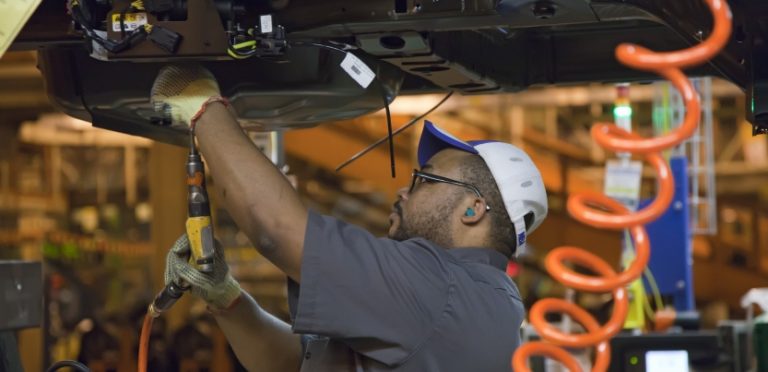
Just after Thanksgiving, GM declared that in 2019 it will close three major assembly and two smaller transmission facilities in North America. The bombshell announcement, which came despite GM’s recent robust profit reports, ensures unhappy holidays for some 6,000 production employees and their families, along with the communities where the assembly plants are located: Detroit-Hamtramck; Lordstown, Ohio; and Oshawa, Ontario. The Grinch only threatened to ruin one day for a tiny town. GM’s decision devastates the future for thousands of workers across North America.

Status Of Women In Cooperatives

Women and cooperation play a significant role in the Indian economy especially as no other country in the world has a co-operative movement as large and as diverse as India. Even prior to the current day cooperatives, the concept of cooperation & its activities prevailed in several parts of India known differently i.e., Devarai or Vanarai, Chit funds, Kuries, Bhishis, Phads (some of these were utilized by women solely). The co-operative movement can be defined as a “Voluntary movement of the people carried out democratically by pooling together their resources on the given activity, with the purpose of achieving certain benefits or advantage, which are given to people that cannot get it individually and with the purpose of promoting certain virtue and values such as self help, mutual help...

Green New Deal Has Overwhelming Bipartisan Support, Poll Finds. At Least, For Now.

Eighty-two percent of Americans say they have heard “nothing at all” about the sweeping proposal to generate 100 percent of the nation’s electricity from clean sources within the next 10 years, upgrade the United States’ power grid, invest in energy-efficiency and renewable technology, and provide training for jobs in the new, green economy. But when asked “how much do you support or oppose” the aforementioned suite of policies, 81 percent of registered voters say they either “somewhat support” or “strongly support” the plan, according to new survey results shared exclusively with HuffPost from the Yale Program on Climate Change Communication and George Mason University.

The Fund For Needy Millionaires

Many people imagine the state as a kind of referee — a transcendent mediator enforcing theoretically neutral rules, arbitrating as fairly as possible between different interest groups in society. This faith in the state’s basic neutrality leads even people who care about inequality to miss the big picture, which is that the capitalist minority is absolutely pummeling the working majority and has enlisted the referee to assist their victory. From the Supreme Court’s assault on unions, to cities shamelessly prostrating themselves before corporations, to big companies taking gobs of public money and then instituting mass layoffs, to bank bailouts to regulatory capture to deadly austerity...

General Motors’ Factories Should Not Be Closed. They Should Be Turned Over to the Workers

General Motors’ November 26th announcement that it will be eliminating more than 14,000 jobs and closing seven factories worldwide by the end of next year, including four factories in the U.S. and one in Canada is an opportunity. These facilities should be condemned by government authority and turned over to the workers whose labor created the wealth and profits that General Motors’ shareholders enjoy. They could then, with government assistance, be retooled and placed under the ownership and control of their workers, organized into democratic cooperatives for that purpose.

Congress And States Should Enact A Green New Deal

While many candidates in 2018 used the phrase the Green New Deal to highlight that a transition to renewable energy would help create living wage jobs, AOC’s proposal for a plan for 100% clean energy by 2030, single payer health care and other economic measures comes much closer to the GND developed by the Green Party. What is still left out is the necessity of reducing the size of the Military Industrial Complex and termination of its imperial agenda. AOC’s proposal also needs to be expanded, including an immediate halt to any new fossil fuel infrastructure, a focus on public ownership and democratic control of the energy systems, and paying for it by enacting a cut of 50% or more in the military budget.

Pigs, From Crisis To Self-Organisation

In his brilliant book about the history of Latin America – “Las Venas Abiertas de América Latina”, (The Open Veins of South America) originally published in 1971 – Eduardo Galeano (1940-2015) starts by writing that the international division of work consists of defining that some countries specialise in winning and others in losing. Galeano describes a history of the region that is made by its own People, a history that does not depend on the greatness and the richness of the Country. A system where development deepened inequalities and popular sovereignty had to be bonded because There Is No Alternative. “It’s a problem of mindsets”, would declare the canny eurocrat after reading Galeano’s introduction.

Financing The Future Of Cooperative Low-Income Housing

In the late 1970s and early 1980s, New York City went through a devastating financial crisis. Buildings in neighborhoods across the city were essentially abandoned by their landlords. In some cases, tenants banded together to take over managing their buildings. Clusters of such buildings emerged in some neighborhoods, including Manhattan’s Lower East Side, East Village, and Harlem. The city created the Housing Development Fund Corporation program, offering reduced property taxes to cooperatively-owned buildings reserved for low- and moderate-income residents, known as limited-equity cooperatives.
assetto corsa mods

Urgent End Of Year Fundraising Campaign

Online donations are back! Keep independent media alive. 

Due to the attacks on our fiscal sponsor, we were unable to raise funds online for nearly two years.  As the bills pile up, your help is needed now to cover the monthly costs of operating Popular Resistance.

Urgent End Of Year Fundraising Campaign

Online donations are back! 

Keep independent media alive. 

Due to the attacks on our fiscal sponsor, we were unable to raise funds online for nearly two years.  As the bills pile up, your help is needed now to cover the monthly costs of operating Popular Resistance.

Sign Up To Our Daily Digest

Independent media outlets are being suppressed and dropped by corporations like Google, Facebook and Twitter. Sign up for our daily email digest before it’s too late so you don’t miss the latest movement news.