Skip to content

Strategize!

strategy-iconThe section provides articles on strategy to assist you in making your campaigns more effective. They include case studies of social movements and information about the current resistance environment. Visit the Resources Page for links to organizations that provide both online and in-person training on strategy and tools for designing and evaluating your campaigns and actions.

The Restoration Of The Monroe Doctrine

Since Donald Trump’s reelection as president of the United States, the world has watched in shock as US foreign policy has grown increasingly unilateral and aggressive, raising deep concerns about the future of international politics. These concerns stem not only from the record of his previous term but also from the growing resurgence of interventionist and unilateral policies that have gradually regained prominence in recent years—developments that have accelerated during the early days of Trump’s new administration. Given the campaign promises made under the familiar slogan Make America Great Again (MAGA), such concerns were far from unfounded. And they were only amplified by the administration’s early actions.

Sweeping Immigration Raid At Hyundai Plant Is An Attack On All Workers

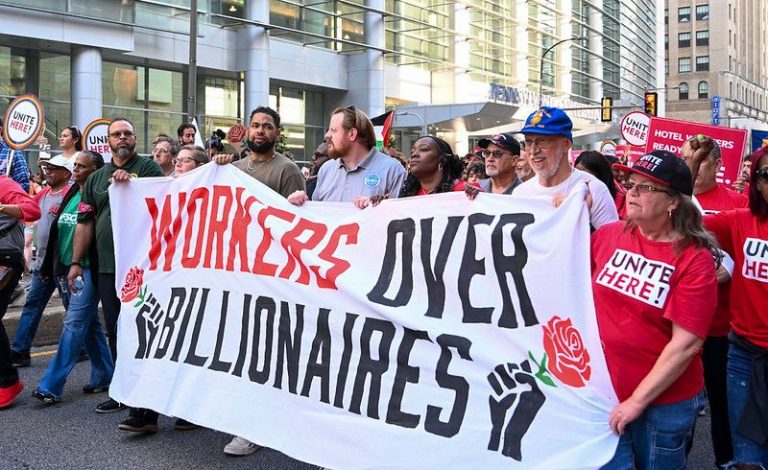
Hundreds of masked federal agents flooded the construction site of a future electric vehicle battery factory at Hyundai Motor’s massive manufacturing complex in Georgia on September 4 to conduct a sweeping immigration raid and a vicious attack on immigrant workers. Over 450 people were arrested at the end of their work day in what is the largest single-site workplace raid since the Trump administration launched its brutal deportation campaign across the country. Those workers are now detained in ICE facilities, cut off from their families, and threatened with deportation. Hyundai and LG Energy Solution, the two companies building the plant, have given carte blanche to law enforcement to conduct its investigation and target the workers building the factory; meanwhile, they have assured their investors that production has not stalled at the other sites at the complex.

Labor: Turning The Corner? It Will Take More Than Mobilization

It has been called the postwar labor-management accord, social compact or contract, industrial truce, accommodation, and detente. By whatever name, out of the years during and immediately following World War II emerged a system of labor relations markedly different from that preceding the war. The New Deal-era labor movement which had been engaged in sharp, seemingly intractable conflicts with the nation’s corporate giants, had been guided by solidarity, militant collective action, considerable membership initiative and authority, and a broad sense of class interest — earning it the characterization as “social movement” unionism. It included a significant number of workers who questioned the very assumptions on which capitalist production relations were founded and who had an alternative socialist vision for society.

The State Of The ‘State Of Palestine’

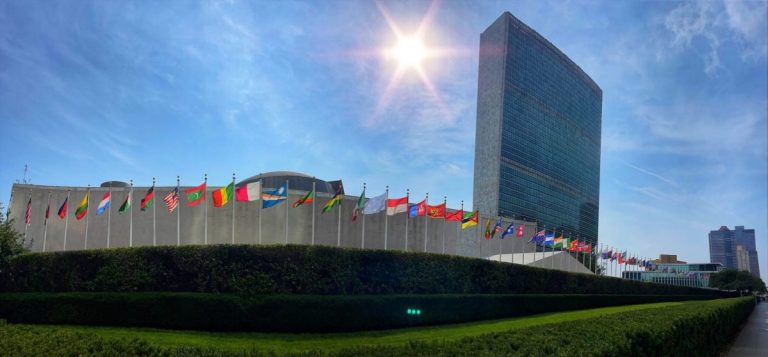
United Nations General Assembly sessions, held each September since 51 nations convened in a Methodist church hall in London in 1946, come and go and mostly go without event. The General Assembly is set to begin its 80th session come Sept. 9, and it is difficult to imagine this one will go off uneventfully. To put the point simply, Israel has murdered, starved and terrorized too many Palestinians for this year’s gathering at the Secretariat in Manhattan to conclude without some conclusions. It remains only what these conclusions will be. Several weeks ago a group of 15 nations — among them prominent members of the Atlantic alliance — stated their intention to announce their formal declaration of Palestinian statehood at this year’s session.

Venezuela And The Heart Of The Struggle For A New World

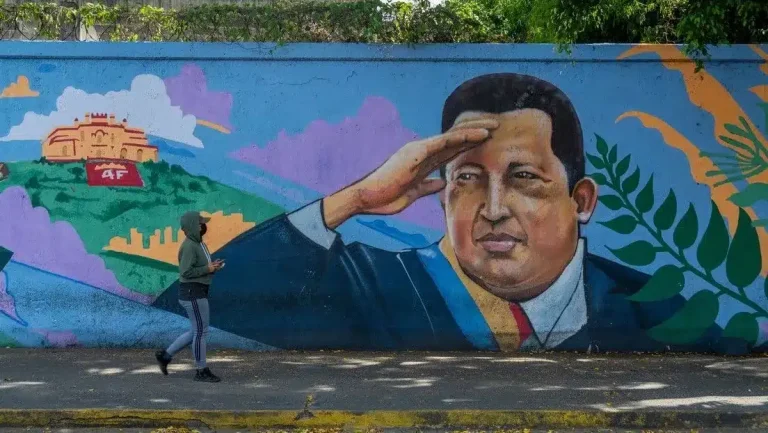
“We will defend our independence with all the means at our disposal and we will raise our protest before the Spanish nation and its intelligent people, who we believe do not dispute the legality of our demands,” said Abd el-Krim, a Riffian revolutionary leader who resisted French and Spanish colonial occupation in the early 20th century. These words, which distinguish between the power that oppresses and the people who can understand and resist, resonate today more strongly than ever from Venezuela. Because Venezuela is not only a country beset by imperialism: it is an ethical, political, and cultural trench in the midst of a world collapsing amid wars, genocides, recycled fascisms, and markets that devour peoples.

The Taiping Rebellion And The Spectre Of Peasant Communism

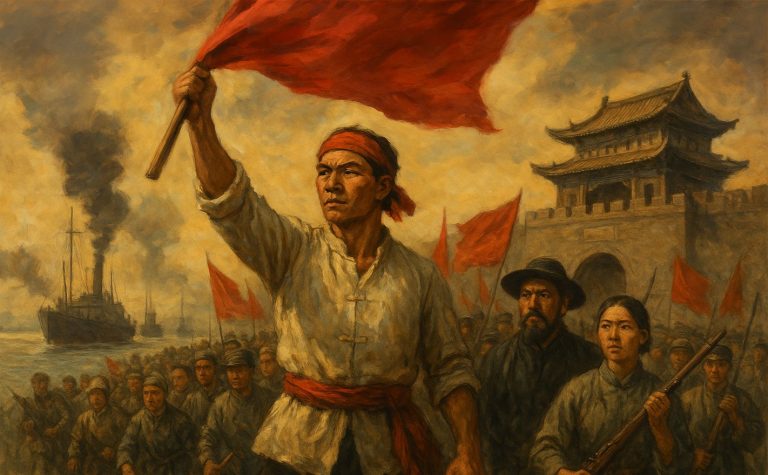
In the following article, originally published on his website Weaponized Information, Prince Kapone gives an acute analysis and mounts a trenchant defence of China’s Taiping Rebellion (1850-1864), generally regarded as one of the greatest peasant rebellions, as well as bloodiest conflicts, in human history. Describing it as the “spectre of peasant communism”, Kapone situates the rebellion against the background of the stagnation and decline of China’s feudal system, of the Qing dynasty in particular, and the way this opened up the country to imperialist depredations, most notably the British Opium Wars (1839-1842; 1856-1860). He explains: “The opium-induced decomposition of Chinese society was no accident; it was policy."

Why Arab Campaigns To Boycott Israel Aren’t Working

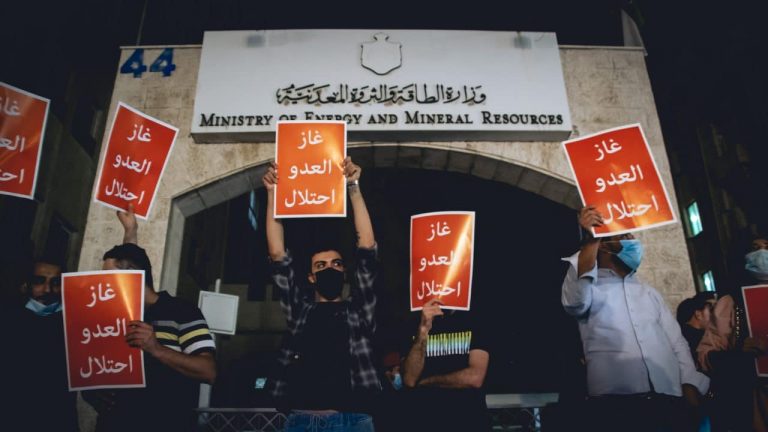
Under the urgency of the ongoing genocide in Gaza, many of the public tactics adopted by grassroots Arab movements to pressure their governments to boycott Israel and reflect the will of their people simply aren’t working. After nearly two years of genocide, the conventional tools of the Arab boycott campaign are hitting a wall. This failure is not only about tactics — it is also about a deeper misreading of where the centers of power lie in Arab countries. This has led to the inability to pressure governments into taking action. Power is no longer centralized in a colonial regime that directly governs us, but is rather scattered and diffused everywhere. But if we understand hegemonic power in this way, then how can we channel our energies strategically into where the boycott movement can have a larger impact?

Essentials For Fighting ICE

Since Donald Trump’ s inauguration, ICE has ramped up aggressive attempts to abduct and deport community members across the country. ICE’s tactics and strategies aren’t new. It’s important to remember that every president (yes, even Barack Obama & Joe Biden) and congress has increased ICE’s budget since its creation in 2003. ICE threatening more and more people has always been a logical conclusion of its existence. ICE must be abolished. Trump’s current “Border Czar” Tom Homan (a West Carthage, New York native who began his career as a West Carthage Police Officer) was first appointed to an executive director position with ICE in 2013 by Obama. Obama gave Homan a Presidential Rank Award as a “Distinguished Executive” after Homan began arguing children should be separated from their parents in immigration custody.

Bioregioning Is Our Future

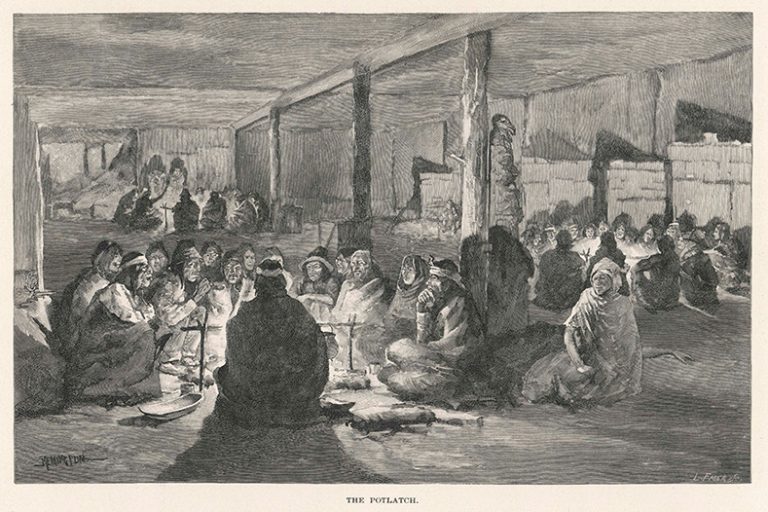
Lately I’ve been reading Andrew Schelling’s Tracks Along the Left Coast, a biography of linguist, anthropologist, and anarchist Jaime de Angulo (1887-1950). De Angulo was a character worth knowing about. His affluent Spanish parents gave him a civilized upbringing in fashionable Paris; nevertheless, he had a wild streak. So, before he turned 20, de Angulo hightailed it to San Francisco, arriving just in time for the Great Quake of 1906. During the next few years, he earned a medical degree, then worked as a cowboy trekking the California coast. The Native Americans he met fascinated and impressed him. As a way of documenting and preserving their way of life, which he regarded as perfectly adapted to the endlessly varied, stunningly beautiful landscape around him, de Angulo (often collaborating with his linguist wife, Lucy Shepard Freeland) learned and described 25 of the roughly 100 Native languages then spoken in California.

War Against Workers In United States Intensifies

It has been a month-long whirlwind of fascistic maneuvers by President Donald Trump’s administration. First came the firing of Erika McEntarfer as director of the Department of Labor’s Bureau of Labor Statistics (BLS) on Aug. 1. Trump then immediately nominated Project 2025’s Heritage Foundation chief economist E.J. Antoni as her replacement. Next came the staging of hundreds of National Guard troops in the streets of Washington, D.C. All of this intensifies the war against workers and oppressed peoples coast to coast. McEntarger’s firing immediately followed the BLS’s monthly “jobs report,” which claimed that from May through July 2025, only 73,000 jobs had been created in the world’s largest capitalist economy.

What Is APEC?

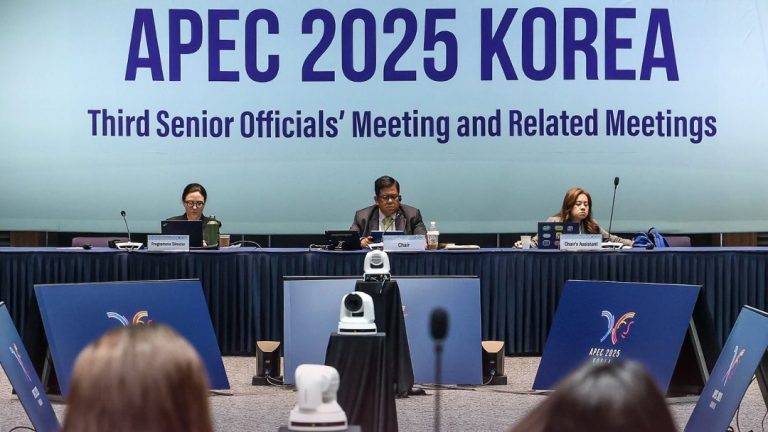
If you look at the news, the media treats the Asia Pacific Economic Cooperation (APEC) Forum more like a gala than a policy forum about regional economic policies. Despite high level meetings having occurred between the government and business interests (i.e., the APEC Business Advisory Committee), despite two senior official meetings having taken place, the media has done a negligible job of bringing the agenda and discussions in these meetings to public consciousness or debate. Instead, it has mostly focused on who will be there – K-pop megastar G-Dragon was named APEC Ambassador – or whether the accommodations and infrastructure are adequate.

Stop Martial Law In DC! No To MAGA Storm Troopers!

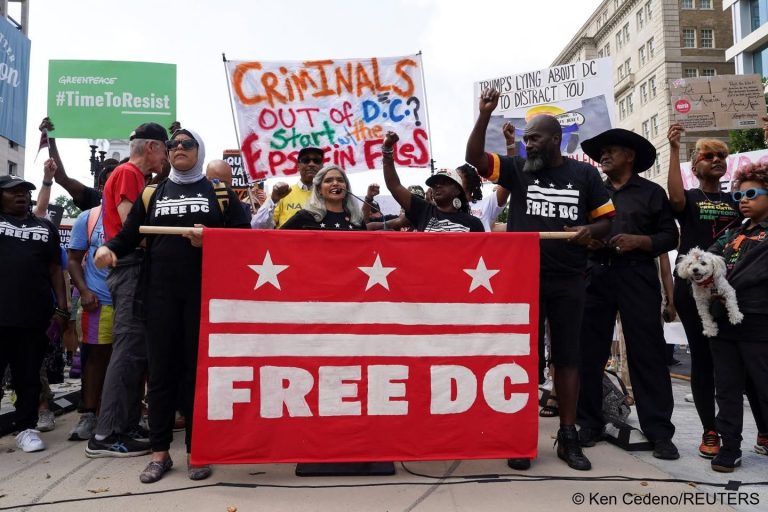
It’s hard to keep track of all of the Trump administration’s many violations of people’s rights. But there’s one that workers and oppressed people need to pay particular attention to: Trump’s deployment of National Guard troops to occupy the Black and migrant communities in Washington, D.C., and his attempt to take over policing in that city. Why is this important? Because it is a test case for martial law in urban, working-class areas where a large portion of the population is people of color — the case in D.C. despite the recent drop in the percentage of Black residents. This represents an effort to further ethnically cleanse D.C. — while the U.S. funds the ethnic cleansing that Israel is committing in Gaza and the West Bank. 

Black August: We Turn Destructive Spaces Into Laboratories For Liberation

The concrete tomb they built to bury our revolution has become the very ground from which it grows. From behind these concrete walls and steel bars, where time moves differently and hope becomes a revolutionary act, I write to you about Black August — a month that prison administrators would rather see forgotten, but which burns eternal in the hearts of those who understand that freedom is not a privilege to be granted, but a right to be seized. To understand why this resistance continues, we must first understand its origins. Black August, observed each August since 1979, commemorates the deaths of Black liberation fighters who died in prison. Particularly, Black August pays homage to Jonathan Jackson, who was killed on August 7, 1970, while attempting to liberate his brother George Jackson and other prisoners.

When The Empire Chokes, The South Breathes

The story they sell is that “order” was built by reasoned men in sensible suits. The story we live is different. Multipolarity did not grow out of seminars or summits; it is the aftershock of five centuries of plunder, the recoil from wars and sanctions, and the refusal of the colonized to keep paying for someone else’s civilization. Its genealogy runs from the Bandung Communiqué (1955)—the first great gathering where the majority of humanity spoke in its own name—through the long detour of debt, structural adjustment, and counter-insurgency masquerading as “development.” Bandung’s promise was simple and subversive: sovereignty, peaceful coexistence, cooperation, and a say in the world economy for those who actually make the world economy run.

Liberatory Unionism In The US Art Museum Labor Movement

Art museum workers in the U.S. are in the midst of the most exciting period of labor organizing in decades. Since the launch of the New Museum Union in January 2019, there has been a 223% increase in new organizing at private, not-for-profit art museums alone. Though precarious working conditions long predate the COVID-19 pandemic, there was a boom in organizing in its wake after institutional responses exposed and exacerbated worker exploitation, unsafe working conditions, and layoffs and furloughs, predominantly affecting front-of-house workers.  Museum workers are also enacting liberatory unionism, a term I borrow from labor journalist Eve Livingston. In liberatory unionism, workers are not simply organizing for higher pay and better working conditions, but are also connecting labor struggles with resistance to racism and gender oppression.
assetto corsa mods

Urgent End Of Year Fundraising Campaign

Online donations are back! Keep independent media alive. 

Due to the attacks on our fiscal sponsor, we were unable to raise funds online for nearly two years.  As the bills pile up, your help is needed now to cover the monthly costs of operating Popular Resistance.

Urgent End Of Year Fundraising Campaign

Online donations are back! 

Keep independent media alive. 

Due to the attacks on our fiscal sponsor, we were unable to raise funds online for nearly two years.  As the bills pile up, your help is needed now to cover the monthly costs of operating Popular Resistance.

Sign Up To Our Daily Digest

Independent media outlets are being suppressed and dropped by corporations like Google, Facebook and Twitter. Sign up for our daily email digest before it’s too late so you don’t miss the latest movement news.