Skip to content

Canada

Corporate Pressure Mounts On Chileans Opposing Copper Mine

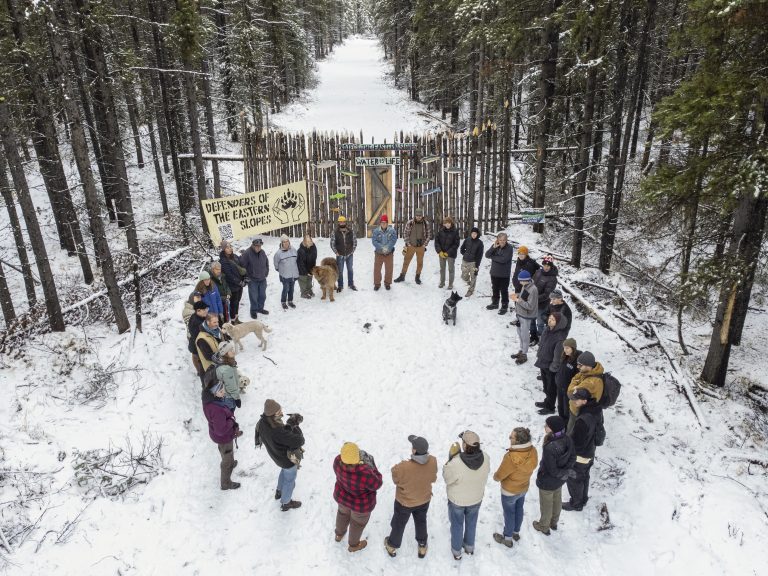
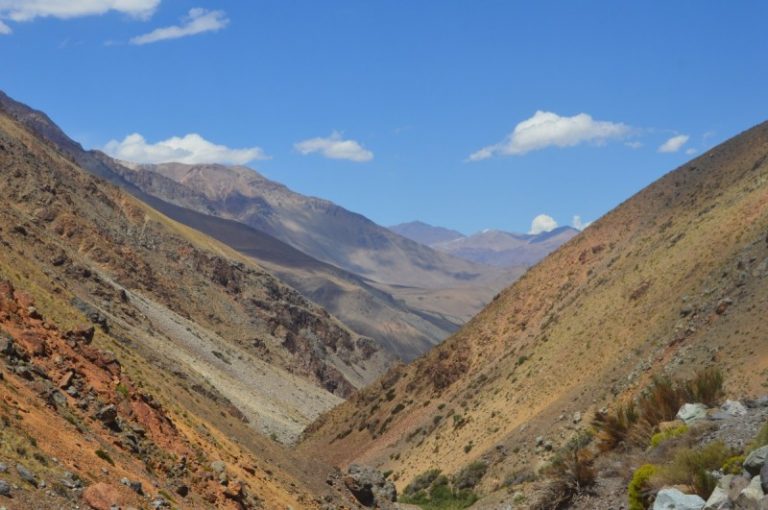
Vancouver-based Los Andes Copper, developer of the proposed Vizcachitas copper-molybdenum mine in Chile’s Valparaíso region, has launched an aggressive campaign targeting the municipality of Putaendo’s mayor, Mauricio Quiroz, and local biologist Arón Cádiz-Véliz. The company is pressing legal and media challenges against them for opposing the mine and leading scientific efforts to protect the area. The conflict centres on a report and technical study commissioned by the municipality, aimed at designating the Rocín River Valley—a high-altitude ecosystem with glaciers, wetlands, and endemic species—as a protected area.

After Canadian Police Raid Homes, Six Peace Activists Face Charges

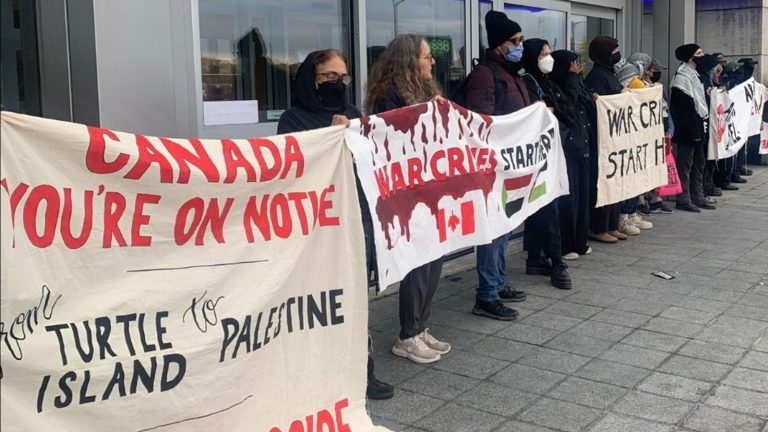
London, Ontario police carried out coordinated pre-dawn raids on November 25 against four homes across southern Ontario, targeting members of the anti-war and Palestinian-solidarity group World Beyond War (WBW). The raids bring to six the number of peace activists charged in relation to a protest of more than 100 people against the Best Defence Conference in London at the end of October, an arms-industry gathering attended by Israeli-linked weapons manufacturers and Canadian military officials. The sweeping operation saw officers burst into homes at 6 a.m., frighten children, seize personal electronic devices and haul activists hours away from their communities.

The Ontario Federation Of Labour Adopts ‘Hot Cargo’ Resolution

The Ontario Federation of Labour (OFL) became the fourth Canadian labour federation to adopt a hot cargo resolution against Israeli goods last week. The resolution has the OFL declare trade relationships and services with Israel to be “hot cargo” that workers will not touch. “Hot cargo” is used to define goods that workers will not handle due to its association with exploitation or oppression. The New Brunswick Federation of Labour was the first to adopt a resolution supporting the boycott of Israel when it passed a resolution against handling weapons bound for Israel in May. Since then, three other provincial federations of labour have taken similar actions in Nova Scotia, Newfoundland and Labrador, and Ontario.

Unifor Workers Threaten To Occupy GM Plant

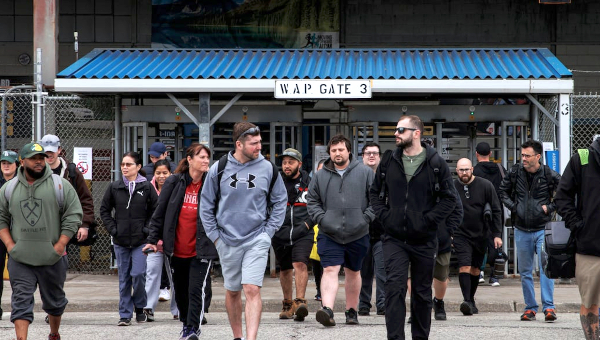
Unifor Local 88 has threatened to take over the GM CAMI Assembly Plant in Ingersoll, Ontario if the company attempts to remove anything from the building. This comes after GM announced last month that it was pausing production of an electric cargo van at the plant which put more than 1,000 jobs at risk.  Members of Unifor Local 88, which represents the workers employed by the plant, quickly took to the streets to call for the protection of Canadian jobs.  “For nearly four decades, Unifor Local 88 members at the GM CAMI Assembly Plant in Ingersoll have built vehicles that drive Canada’s auto industry forward,” a web post by Unifor reads.

Canadian Auto Isn’t In ‘Crisis’, It’s In Danger Of Extinction

Canadian autoworkers have faced many crises over the years, but the present threat is distinct. Lana Payne, President of Unifor, has warned that “If we don’t push back hard against him [US President Donald Trump] and against these companies, we’re going to lose it all.” So far, the debate over what to do has started and stopped with Trump’s tariffs. But the threats go deeper, both for auto companies and for our ability as workers and citizens to determine democratically what kind of society we want – that is, for Canada’s substantive and not just formal sovereignty.

Envisioning A Co-Operative Reset For Canada

The title of Ludovic Viger’s new book The Great Canadian Reset says it all. Faced with a series of interlocking political, economic, and environmental crises, the current system isn’t sustainable and can’t be fixed with some minor tweaks. Instead, a full “reset” is required. The subtitle of his book is clear on what he believes it is: Why Co-ops Are the Answer to Our Toughest Problems. “I was looking for one model, or one solution that could help at least make it viable for most Canadians to live in an era of decline,” he says. “And that’s why I came across cooperativism.”

The Deficit Is Not An Economic Problem; It’s A Political Weapon

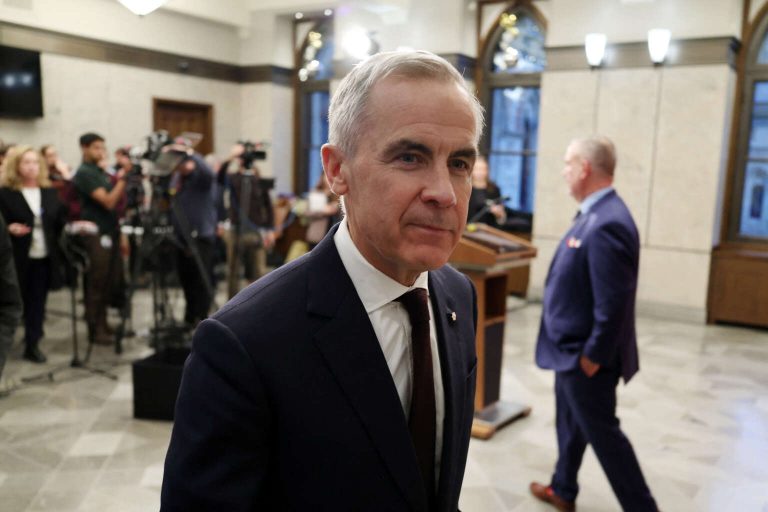
Mark Carney’s long-anticipated investment-austerity budget has finally been tabled before Parliament and it’s set to raise the deficit to $78 billion. While the details of the budget will be debated over the coming weeks, the big picture is that the prime minister delivered on his promises: expanded defence and infrastructure spending “offset” by more than $50 billion in cuts and other savings. For months Carney has been laying the groundwork for these moves, making high-profile statements about Canada’s supposed spending problem and promising to discipline government workers in order to restore fiscal sanity.

General Strike In Alberta Possible

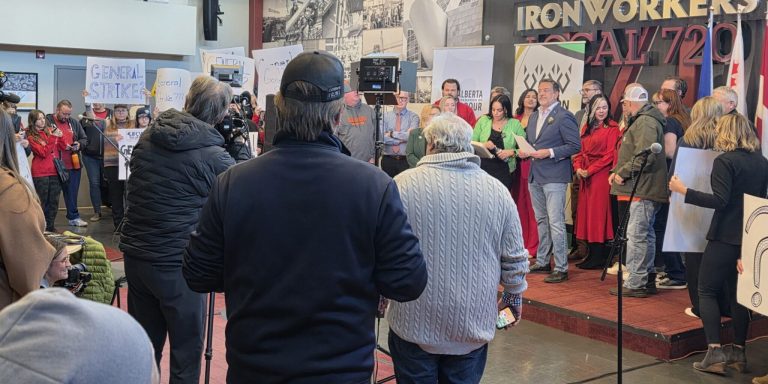
Workers across Alberta have begun the process of organizing a general strike after the province legislated an end to the teacher’s strike using the notwithstanding clause, according to the Alberta Federation of Labour.  Teachers across the province were on strike from October 6 until the government passed Bill 2 early Tuesday morning, forcing teachers to be back in classrooms the next day. Teachers were calling for better pay, more per-student funding in public education and smaller class sizes.  “Although this legislation will end the strike and lift the lockout, it does not end the underfunding and deterioration of teaching and learning conditions—our schools will not be better for it,” the union wrote on their website. 

McGill University Professors And Librarians Endorse Boycott Of Israel

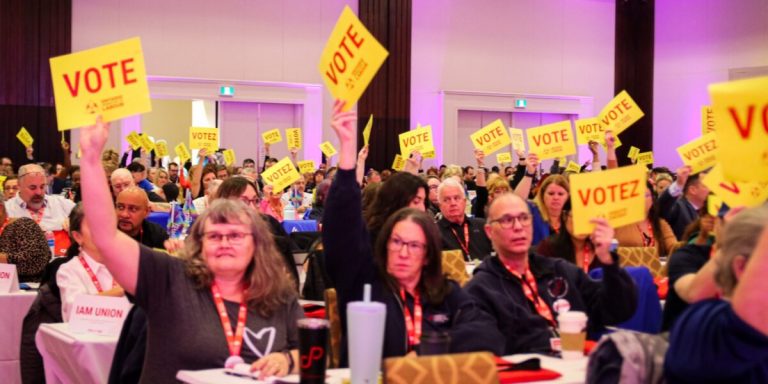
On October 10, 2025, the McGill Association of University Teachers (MAUT) succeeded in passing a resolution at a special general meeting endorsing the academic and cultural boycott of Israel. The resolution calls for the association to “take all necessary steps to implement the boycott of Israeli academic institutions, while ensuring that the boycott applies to institutional partnerships and agreements, not individual Israeli academics.” This principled stance taken by full-time professors and librarians is a major victory at a university where such an action was thought to be impossible until recently.

Canada Needs An Industrial Strategy That Serves Public Goods

Diversifying Canada’s economic strategy is essential in an era of tariff escalation and growing geopolitical volatility. Stellantis’s recent announcement that it’s heading south sent another Arctic chill to concerns over Canada’s industrial future. Billions in public subsidies are flowing to foreign multinational automakers, yet questions remain: Who benefits? What regions are being prioritized? And what kind of innovation are we actually funding? Last week Stellantis, formerly Chrysler, confirmed it would shift planned Jeep Compass production from its Brampton, Ontario plant to Illinois, part of a $13 billion expansion south of the border.

Appeal In Nuclear Waste Case Tests Limits Of First Nations Consent

A contentious radioactive waste disposal facility near the Ottawa River is back in court, and the outcome will set an important precedent for Indigenous Rights and consultation. Canadian Nuclear Laboratories (CNL) is trying to overturn a federal court’s decision that found Kebaowek First Nation was not properly consulted on a near-surface nuclear waste disposal facility near Chalk River, Ont. This development is the latest in a long saga of court challenges and appeals since the Canadian Nuclear Safety Commission greenlit the proposed facility on Jan. 9, 2024.

Canadians Are On Year Three Of A People’s Recession

A new Deloitte report is projecting 1.3 percent GDP growth for Canada this year. The same report says that as long as Donald Trump keeps the CUSMA carve-outs in his tariff plan—meaning that most of the goods we export to the United States won’t face tariffs—we can look forward to 1.7 percent growth next year. This would mark a return to the growth rates we saw in 2023 and 2024. Economists seem cautiously optimistic that Canada will avoid a recession and return to a period of relative stability. This should be great news. On paper, the economy has proved its resilience in the face of serious challenges. But why then do things feel increasingly precarious?

The Privatization Crisis At Canada Post

In 2001, Canada Post invested $1 million to acquire a 50 percent ownership stake in Intelcom, then operating as Intelcom Express, a package delivery company. The purchase quickly stirred controversy because of Intelcom’s connections to the Liberal Party of Canada, prompting critics to question whether the Crown corporation’s decision-making had been influenced by political favouritism. In response, Intelcom bought back its shares from Canada Post six years later, in 2007. At the time, Intelcom was a major Liberal donor. Its founder and CEO, Daniel Hudon, was both a fundraiser and a former member of the finance committee of the Québec wing of the Liberal Party.

Postal Banking Once Made Canada Post Profitable

Mark Carney clearly loves a nation-building project — as long as it’s wildly expensive and is pleasing to corporate interests. That seems to be the takeaway from the prime minister’s decision last week to largely abandon Canada Post, an institution with a vast network of 5,900 outlets across the country that’s been tying Canada together since Confederation. In recent years, Canada Post has lost large amounts of money and is currently in the midst of a strike by postal workers. Carney’s response is to effectively gut it, ending door-to-door mail delivery (where it still exists) and resuming the closure of post offices across the country.

Renewables Are A Global Economic Engine, Not A Culture War Threat

Alberta Premier Danielle Smith boasted in June that a private sector proponent for a new bitumen pipeline to British Columbia’s coast would come forward “within weeks.” Three months have passed and exactly zero companies have bet their own money to back up the pipeline hype constantly coming from Smith.  Prime Minister Mark Carney announced the first tranche of infrastructure projects to be fast tracked by the federal government, which also conspicuously included no bitumen pipelines. What gives? It is almost as if the oil industry does not share the giddy enthusiasm of the Alberta government for somehow doubling the province’s heavy oil production. Perhaps companies have been reading recent news, which has not been good for those still believing that oil prices and demand would justify billions in long-term investments.
assetto corsa mods

Urgent End Of Year Fundraising Campaign

Online donations are back! Keep independent media alive. 

Due to the attacks on our fiscal sponsor, we were unable to raise funds online for nearly two years.  As the bills pile up, your help is needed now to cover the monthly costs of operating Popular Resistance.

Urgent End Of Year Fundraising Campaign

Online donations are back! 

Keep independent media alive. 

Due to the attacks on our fiscal sponsor, we were unable to raise funds online for nearly two years.  As the bills pile up, your help is needed now to cover the monthly costs of operating Popular Resistance.

Sign Up To Our Daily Digest

Independent media outlets are being suppressed and dropped by corporations like Google, Facebook and Twitter. Sign up for our daily email digest before it’s too late so you don’t miss the latest movement news.