Skip to content

History

Chris Hedges Report: The Death Of Holocaust Studies

Raz Segal, an Israeli historian and an associate professor of Holocaust and Genocide Studies at Stockton University, analyzes how the weaponization and distortion of the Holocaust, in the midst of the genocide in Gaza, has been used to serve the narrative of Zionists and the Israeli government. He tells host Chris Hedges on this episode of The Chris Hedges Report: “We know that Holocaust education eventually was more focused on transmitting this feeling of exceptionality than actually teaching about Holocaust as history, as real history, as normal history, as a part, indeed, of the making of the modern and late modern world.” Segal recounts his personal experience learning about the Holocaust in Israel, revealing a Zionist perspective that is both skewed and contradictory.


‘We Will Not Be Silent’: Hearing Stilled Voices Of The Gaza Genocide

In his last minutes of freedom before the Israeli army arrested him, Dr. Hussam Abu Safiya, clad in a medic’s white coat, walked alone toward two Israeli tanks. His captors awaited him amid the rubble of Gaza’s Kamal Adwan hospital. An artist swiftly created a dramatic poster showing Dr. Safiya striding through the ruins of the hospital he directed. The artist, David Solnit, recently updated the poster’s caption. It now reads: Free Dr. Abu Safiya, Eight months in prison Dec. 27, 2024 – August 27, 2025. Dr. Safiya had already endured agonizing losses at the Kamal Adwan hospital. In late October 2024, an Israeli drone attack killed his son, also a doctor.

What Is An American? Ask The People Who Were Here First

The National Museum of the American Indian — with locations in New York City and Washington, D.C. — is one of eight Smithsonian institutions under audit in accordance with President Donald Trump’s Executive Order 14253, Restoring Truth and Sanity to American History. The directive came from the White House last month in a letter to Smithsonian Institution Secretary Lonnie G. Brunch III that demanded a full audit of content — from exhibit texts and online materials to curatorial process documents and grant records. This entire process represents an effort to sanitize history by emphasizing only the positive events while ignoring negative ones.

A Story Of Resistance And Renewal: The Palmarito Afro-Descendant Commune

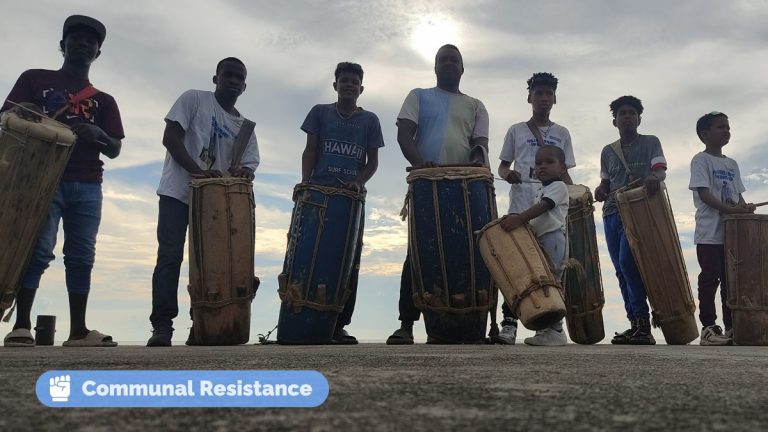
On the southern shore of Lake Maracaibo, Palmarito is an Afro-Venezuelan community shaped by centuries of history, culture, and resilience. Its people carry forward traditions rooted in their African heritage and in the fishing trade. Central to Palmarito’s way of life is the socialist commune, a form of popular self-government that transforms everyday life and work into a shared project. The town forms part of the “pueblos santos,” a cluster of Afro-descendant communities bound together by devotion to San Benito of Palermo, the “Black saint,” and the ritual rhythms of the Chimbánguele. Life in Palmarito has always revolved around the lake—its fish provide sustenance and its water routes connect those living along its shores.

United Nations Turns Eighty

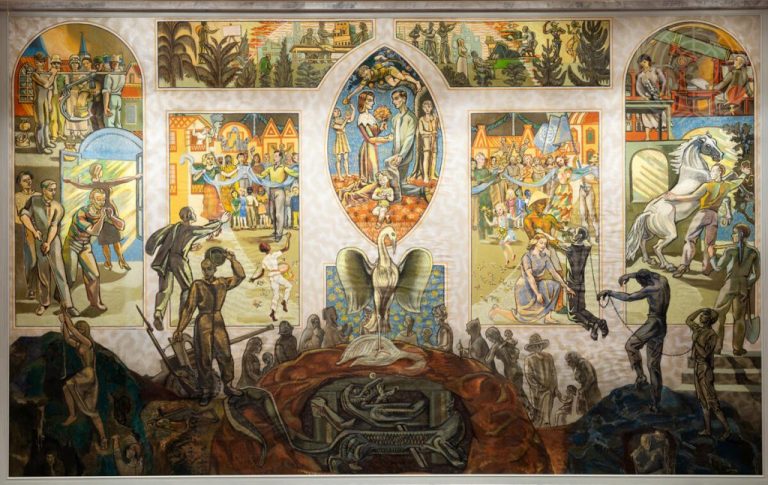
There is only one treaty in the world that, despite its limitations, binds nations together: the United Nations Charter. Representatives of fifty nations wrote and ratified the UN Charter in 1945, with others joining in the years that followed. The charter itself only sets the terms for the behaviour of nations. It does not and cannot create a new world. It depends on individual nations to either live by the charter or die without it. The charter remains incomplete. It needed a Universal Declaration of Human Rights in 1948, and even that was contested as political and civil rights had to eventually be separated from the social and economic rights. Deep rifts in political visions created fissures in the UN system that have kept it from effectively addressing problems in the world.

Labor: Turning The Corner? It Will Take More Than Mobilization

It has been called the postwar labor-management accord, social compact or contract, industrial truce, accommodation, and detente. By whatever name, out of the years during and immediately following World War II emerged a system of labor relations markedly different from that preceding the war. The New Deal-era labor movement which had been engaged in sharp, seemingly intractable conflicts with the nation’s corporate giants, had been guided by solidarity, militant collective action, considerable membership initiative and authority, and a broad sense of class interest — earning it the characterization as “social movement” unionism. It included a significant number of workers who questioned the very assumptions on which capitalist production relations were founded and who had an alternative socialist vision for society.

The Taiping Rebellion And The Spectre Of Peasant Communism

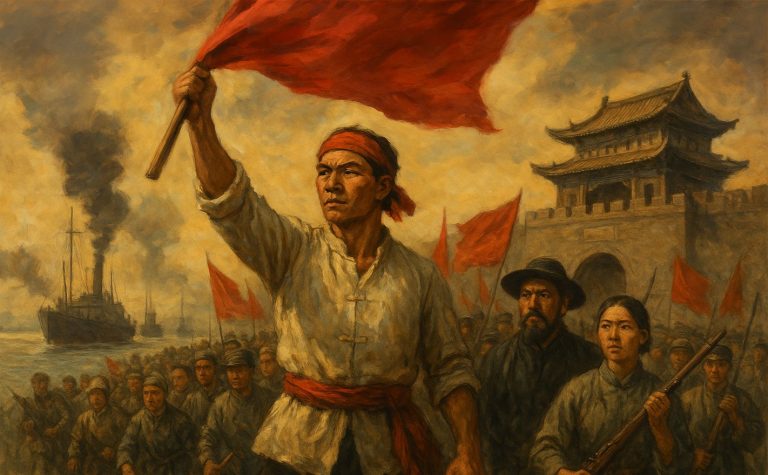
In the following article, originally published on his website Weaponized Information, Prince Kapone gives an acute analysis and mounts a trenchant defence of China’s Taiping Rebellion (1850-1864), generally regarded as one of the greatest peasant rebellions, as well as bloodiest conflicts, in human history. Describing it as the “spectre of peasant communism”, Kapone situates the rebellion against the background of the stagnation and decline of China’s feudal system, of the Qing dynasty in particular, and the way this opened up the country to imperialist depredations, most notably the British Opium Wars (1839-1842; 1856-1860). He explains: “The opium-induced decomposition of Chinese society was no accident; it was policy."

Fred Ross Changed Community Organizing

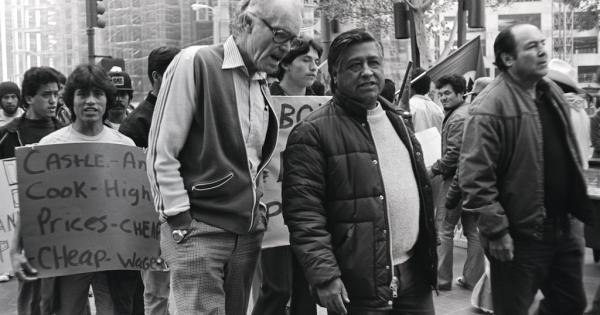
"A good organizer is a social arsonist,” Fred Ross Sr once said. “One who goes around setting people on fire.” Ross may be the most influential political activist you’ve never heard of. This anonymity was intentional. Carey McWilliams of the Nation called Ross “a man of exasperating modesty, the kind that never steps forward to claim his fair share of credit for any enterprise in which he is involved.” He believed organizers should be behind the scenes, getting others to take leadership in their unions, community organizations, and civil rights groups. Ross was a California community organizer for the better part of the twentieth century. He started in the 1930s farmworker camps that inspired John Steinbeck’s novels and went on to pioneer methodical tactics that transformed American organizing.

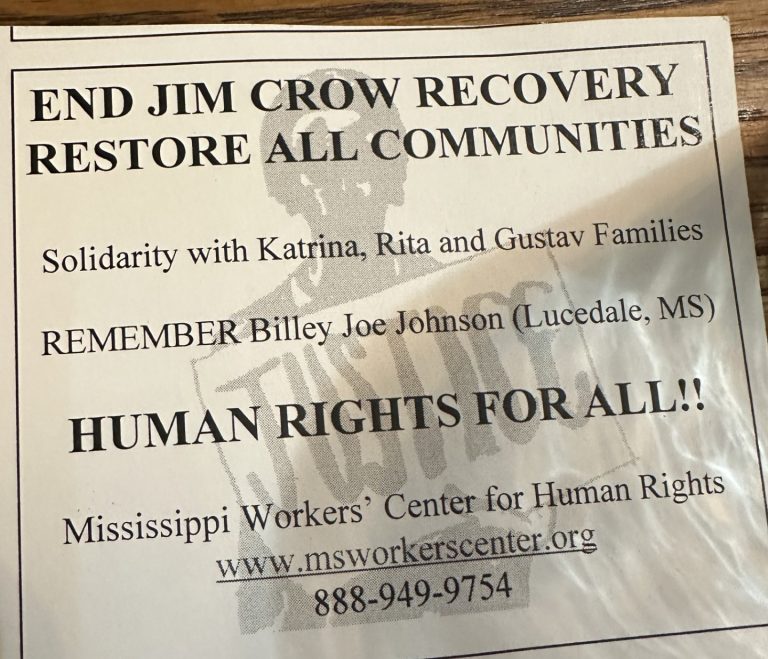
Solidarity, Not Charity, End Jim Crow Recovery, Restore All Communities

When I got the call, I was just leaving Magnolia Bar’s Summit at Tougaloo College. It was one of the courageous Ingalls Shipyard workers, whom I had the honor of representing in a race discrimination case. We were advised not to try to come back to the coast. Hurricane Katrina had touched down and the roads are blocked. Our clients packed up our hotel rooms and put our belongings in storage. What followed were harrowing calls and text messages, describing widespread loss of homes, deaths, evictions and injuries. The levies had broken! The sagging infrastructures gave way. Lives already hit hard from other storms and inequities, were once again embattled. It is no surprise that those who had very little to begin with, were the ones who were abandoned by the system.

Missing Links In Textbook History: The American Left Part III

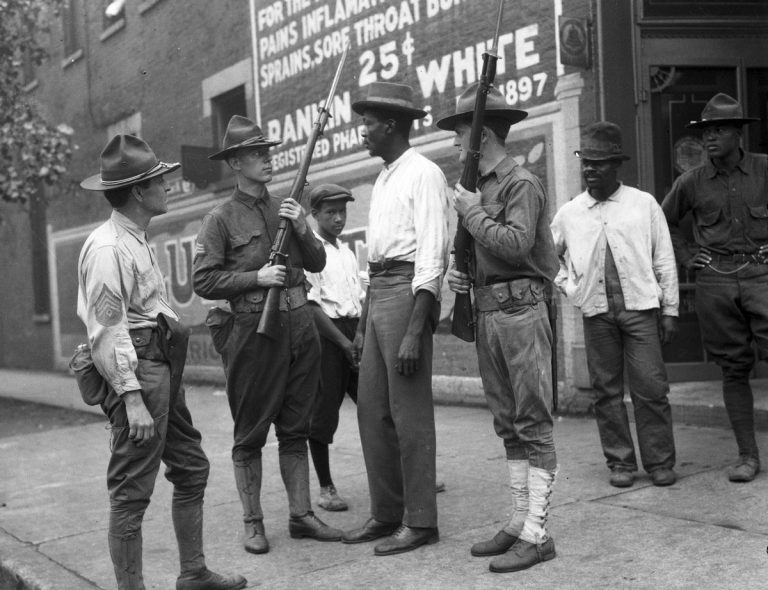
Is it not predictable that when segments of a population are harassed, marginalized and enslaved, they will eventually revolt? Does that not constitute a demand for justice? According to American historian Herbert Aptheker, in North America from the 1600s to the end of the Civil War, there were at least 250 revolts each involving at least 10 enslaved persons. The largest revolt of about 500 enslaved people took place in Louisiana in 1811. All of these rebels, widely cursed by those in power as threats, might better be remembered as America’s Black huddled masses, yearning to breathe free. Throughout American history episodes of racist violence intensified when African Americans — and other people of color — made legitimate claims to full citizenship. In the twentieth century, given the right conditions, any of those incidents should have triggered a renewed civil rights movement, but for a variety of reasons, most did not.

Beyond Defeat In Bolivia: Limits Of Left Electoral Strategy In Latin America

Bolivia’s left lost big in Sunday’s election, and a lot of the analysis in progressive circles has focused solely on the feud between former president Evo Morales and sitting president, Luis Arce. Morales was barred from running in the elections by Arce’s government and subsequently called for a null or blank vote in the contest. On Sunday, August 17, two right-wing candidates, Rodrigo Paz and Jorge Quiroga, emerged victorious, and they will proceed to the second round in October. The feud between the two former comrades definitely played a factor in the demise of the once-vibrant and electorally successful party, MAS (Movement Towards Socialism). But the real story and the bigger lesson for the Latin American left is about more than just political rivalries. The roots of this defeat are deeper.

Black August: We Turn Destructive Spaces Into Laboratories For Liberation

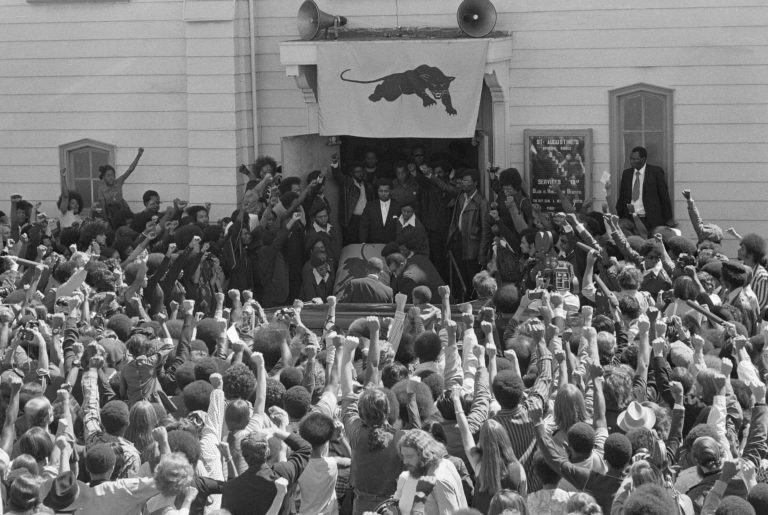
The concrete tomb they built to bury our revolution has become the very ground from which it grows. From behind these concrete walls and steel bars, where time moves differently and hope becomes a revolutionary act, I write to you about Black August — a month that prison administrators would rather see forgotten, but which burns eternal in the hearts of those who understand that freedom is not a privilege to be granted, but a right to be seized. To understand why this resistance continues, we must first understand its origins. Black August, observed each August since 1979, commemorates the deaths of Black liberation fighters who died in prison. Particularly, Black August pays homage to Jonathan Jackson, who was killed on August 7, 1970, while attempting to liberate his brother George Jackson and other prisoners.

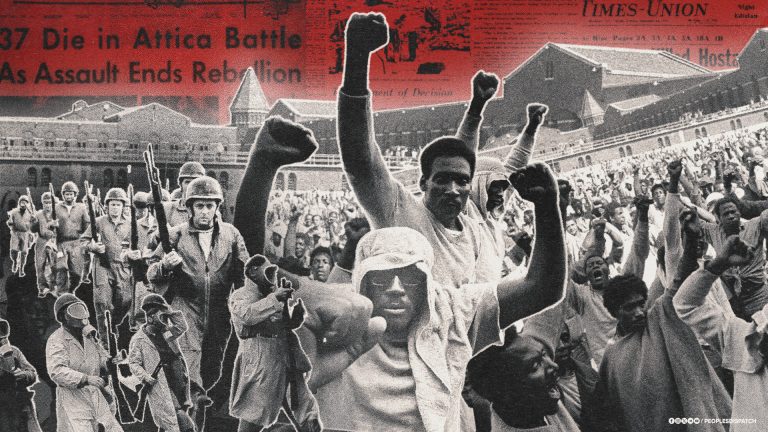
Attica: When Prisoners Revolted

Each August marks the annual commemoration of a month honoring the legacy of Black prisoners kept behind bars for political activism. Black August is a month to honor the history of struggles for Black liberation, in defiance of racial, colonial, and imperialist oppression, both inside and outside prison walls. The 1971 Attica prison revolt, in which incarcerated people rose up in a struggle against oppression and inhumane conditions, and were subsequently repressed by state forces with horrifying brutality, is honored each year during Black August. On September 9, 1971, Attica prisoners took over a part of the prison in an event especially notable for its mass participation. Out of roughly 2,200 men imprisoned at Attica, 1,281 seized control of the facility.

Starving Indigenous Peoples Then And Now

There is increasing evidence that “widespread starvation, malnutrition and disease” are driving a rise in hunger-related deaths“ in Gaza, a group of United Nations and aid organizations have repeatedly warned. A July 29 alert by the Integrated Food Security Phase Classification, a global initiative for improving food security and nutrition, reported that the “worst-case scenario of famine is currently playing out in the Gaza Strip,” as access to food and other essential items is dropping to an “unprecedented level.” More than 500,000 Palestinians, one-fourth of Gaza’s population, are experiencing famine, the U.N. stated. And all 320,000 children under age 5 are “at risk of acute malnutrition, with serious lifelong physical and mental health consequences.”

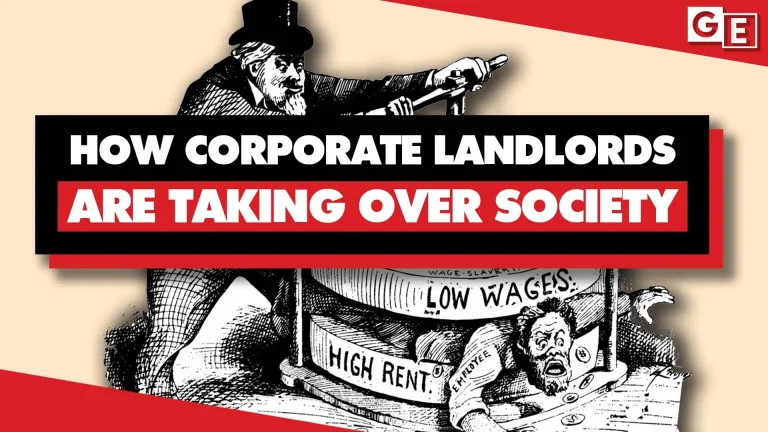
Corporate Landlords Are Taking Over Society, Making Life Unaffordable

Landlords are taking over society. For many average working people, it has become impossible to buy a house. And the cost of renting housing has become prohibitively expensive. This problem is especially bad in the United States. But it’s not only a problem in the US; it’s a problem in many countries around the world — especially in Western countries in North America and Europe, whose economies have become financialized. In the United States, for instance, the largest landlord is not an individual; it’s a massive Wall Street investment firm: Blackstone, the private equity fund. Blackstone owned more than 300,000 rental housing units in the US as of 2023. The number has only increased since then. Blackstone and other Wall Street investment funds have been gobbling up residential housing. Then they ratchet up the cost of rent, which has fueled homelessness, as many people are being evicted from their homes.
assetto corsa mods

Urgent End Of Year Fundraising Campaign

Online donations are back! Keep independent media alive. 

Due to the attacks on our fiscal sponsor, we were unable to raise funds online for nearly two years.  As the bills pile up, your help is needed now to cover the monthly costs of operating Popular Resistance.

Urgent End Of Year Fundraising Campaign

Online donations are back! 

Keep independent media alive. 

Due to the attacks on our fiscal sponsor, we were unable to raise funds online for nearly two years.  As the bills pile up, your help is needed now to cover the monthly costs of operating Popular Resistance.

Sign Up To Our Daily Digest

Independent media outlets are being suppressed and dropped by corporations like Google, Facebook and Twitter. Sign up for our daily email digest before it’s too late so you don’t miss the latest movement news.