Skip to content

Sanctions

Rethink Sanctions: They’re Killing As Many People As War Does

Broad economic sanctions, most of which are imposed by the U.S. government, kill hundreds of thousands of innocent people each year — disproportionately children. This week the Lancet Global Health journal published an article that estimated that number at about 564,000 annually over a decade. This is comparable to the annual deaths around the world from armed conflict. Sanctions are becoming the preferred weapon of the United States and some allies — not because they are less destructive than military action, but more likely because the toll is less visible.

Europe’s Betrayal Of Gaza

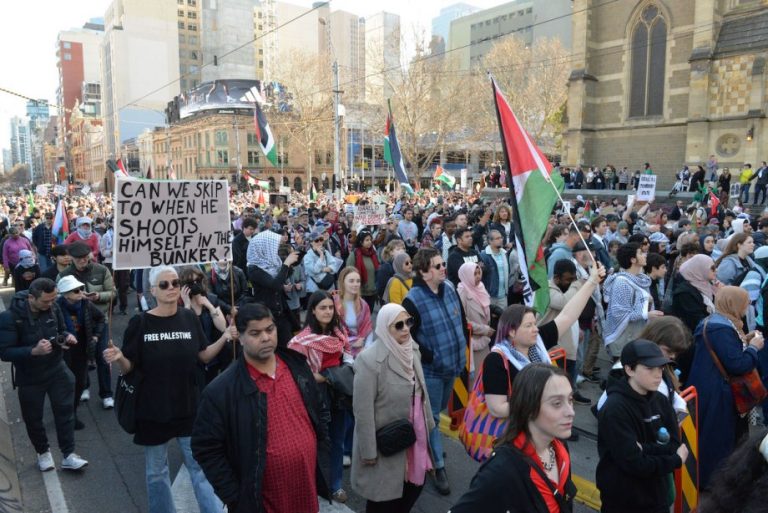
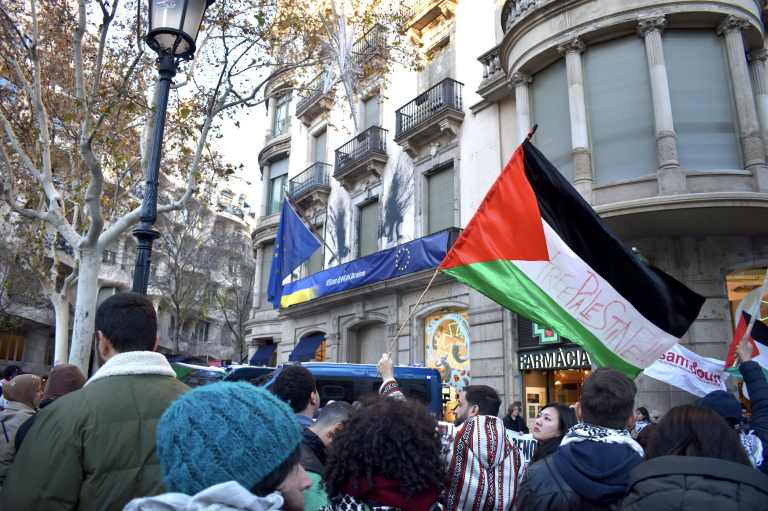
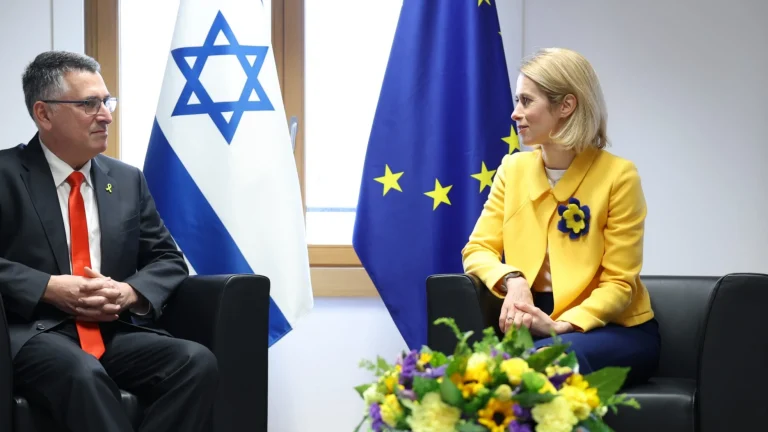
While the U.S. government has given Israel carte blanche to commit genocide, many of us held out hope that Europe would be different — more principled, more bound by its own human rights commitments. But Europe has proven no better; it has been complicit through trade deals, a steady flow of weapons, and brutal crackdowns on pro-Palestine protesters across the continent. At the July 15 meeting of the European Union-Israel Association Council, European foreign ministers had a chance to act, but they refused to take punitive action under the agreement’s human rights clause.

Iran Agrees To Nuclear Talks With European States

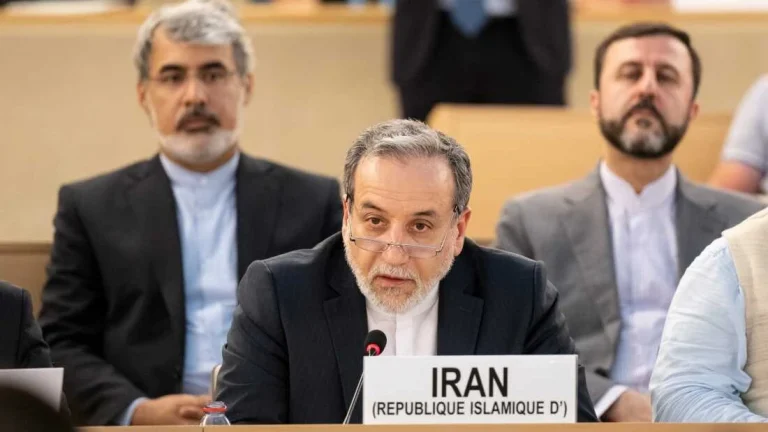
Iran has agreed to hold nuclear talks with the UK, France, and Germany, an informed source told the semi-official Tasnim News Agency on 20 July. “Tehran and the European troika have come to an agreement in principle on the resumption of the talks about Iran’s nuclear program, but the timing and location of the negotiations are under debate,” the Iranian source said. “The decision as to which country will be hosting the upcoming talks has not been finalized yet,” the source added. The report goes on to say that “Iran was considering a request from the EU3 about the resumption of talks on the nuclear issue and the removal of sanctions.”

European Union Refuses To Sanction Israel Over Genocide In Gaza

The EU has decided against imposing sanctions on Israel over its war crimes against Palestinian civilians in the Gaza Strip, which have continued unabated on a daily basis.  “The EU Council failed yesterday to take a decision on Israel´s violation of the Association Agreement´s Human Rights clause. But this is in itself a decision: Europe decides not to punish Israel's continued war crimes and allows the Gaza genocide to proceed unabated,” said former EU foreign policy chief Josep Borrell on 16 July.  Palestinian Authority (PA) Foreign Affairs Minister Varsen Aghabekian Shahin described the lack of action as “shocking and disappointing.”

Spying On Iran: How MI6 Infiltrated The IAEA

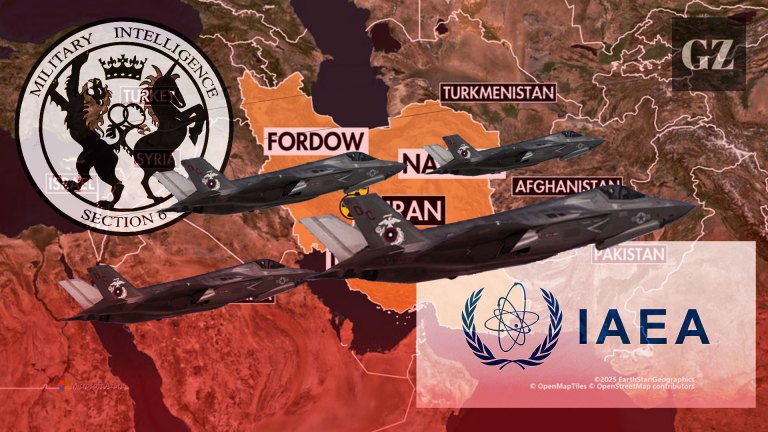
A notorious British MI6 agent infiltrated the International Atomic Energy Agency (IAEA) on London’s behalf, according to leaked documents reviewed by The Grayzone. The agent, Nicholas Langman, is a veteran intelligence operative who claims credit for helping engineer the West’s economic war on Iran. Langman’s identity first surfaced in journalistic accounts of his role in deflecting accusations that British intelligence played a role in the death of Princess Diana. He was later accused by Greek authorities of overseeing the abduction and torture of Pakistani migrants in Athens. In both cases, UK authorities issued censorship orders forbidding the press from publishing his name. But Greek media, which was under no such obligation, confirmed that Langman was one of the MI6 assets withdrawn from Britain’s embassy in Athens.

Standing Up To Sanctions

We often hear about countries sanctioning one another as a punitive measure in place of military action, to spare lives and civil infrastructure. But there is strong academic criticism of the effectiveness of sanctions, with a key concern being that, even broad economic actions can have disastrous consequences to real people just trying to live and work. Some of these consequences are straightforward: sanctions can reduce access to fuel, food, power and so on, but they also impact some areas of society with wide reaching and lasting effects. Education, in particular, can suffer greatly, affecting lives in a worrying number of ways.

EU Sanctions Red. Media For Covering Crackdown On Palestine Protests

The EU Council’s latest sanctions, intended to deter Russia’s war with Ukraine, include red. media founder Hüseyin Doğru, and AFA Medya (which operates red.), citing their coverage of Germany’s pro-Palestine protests which the council claims “supports” Russia. Since the EU began rolling out one sanctions package after another in the wake of Russia’s 2022 invasion of Ukraine, the targeting of Doğru marks the first time the EU has used this weapon in the service of Germany’s crackdown on Palestine solidarity, a crackdown which has been condemned by UN officials and human rights groups.

Britain, France, and Canada Threaten Israel If Gaza War Is Not Halted

Britain, France and Canada issued a statement on Monday, demanding that the Israeli government of Benjamin Netanyahu cease its military campaign against the people of Gaza and halt its months-long blockade of food and medical aid, which has left the Strip on the verge of widespread famine. The three threatened Tel Aviv with “concrete steps” should it fail to do as they insist. The three NATO powers went further than a 22-nation petition to Israel to halt its food and aid blockade issued on Monday, which they also signed. The other 19 countries apparently declined to go so far as to demand an end to the war, as well.

The Human Cost Of Syria Sanctions

On May 13, Trump announced he is ordering the removal of sanctions on Syria. Some of the U.S. sanctions can be quickly terminated because they were issued by Executive Order. Other sanctions, including the extremely damaging 2019 "Caesar" sanctions, were imposed by Congressional legislation and may require Congressional action to terminate. The Syrian people are joyous at the prospect of the end of their country's economic nightmare. In 2010, before the conflict began, Syria was a middle-income country with free education, free healthcare, and no national debt. It was largely self-sufficient in energy and food. After fourteen years of war, occupation, and strangulating Western sanctions, the U.N. reports that "nine out of ten Syrians live in poverty and face food insecurity".

The Hypocrisy Of US Imperialists And Syrian Reactionaries

The Trump regime’s decision to lift sanctions on Syria exposes the true purpose of sanctions: to deliberately impoverish ordinary citizens, force regime change and extend U.S.-led imperial control. For 15 years, the United States imposed draconian sanctions on the Assad government, isolating Syria from international banking, trade and essential sectors such as energy, health and education, with the explicit intent of undermining its self-sufficient socialist economy. These measures were designed to demoralize ordinary Syrians and force a change in leadership by targeting the elected coalition government of Syria under President Assad, who had defended the Palestinian cause and refused to normalize relations with the Zionist entity.

Iran, United States Begin Indirect Nuclear Talks In Oman

Indirect talks between Iran and the US have begun in Oman regarding Iran's nuclear program and economic sanctions imposed by Washington on Tehran as a result of it. Foreign Minister Abbas Araghchi leads the Iranian delegation, while Steve Witkoff, the US President's Special Representative for the Middle East, will represent the US side. Omani Foreign Minister Badr al-Busaidy will mediate. Iran maintains that these talks are solely about nuclear issues and has rejected negotiations regarding any of its defense capabilities, such as its missile ballistic program. "What is clear now is that the negotiations are indirect and, in our view, only on the nuclear issue, and will be carried out with the necessary will to reach an agreement that is from an equal position and leads to securing Iran's national interests," Araghchi stated Saturday.

What Can And Cannot Be Done, Cannot Be Undone

The sediment of history accumulates through class struggle, imperial conquest, and the shifting modes of production. The wreckage promoted by U.S. exceptionalism does not erase this sediment—it lies atop it like a hideous flesh, giving the skeleton of history a monstrous form, shaping its contours while masking its deeper truths. This neoliberal flesh is not merely ideological but structural—built into the very institutions that manage global capital and coercion. What has been done in the name of democracy, security, or market liberalization reflects not just policy choices, but the material interests of a ruling class determined to privatize and reproduce its dominance.

Europe Insists On Continued Sanctions, Troop Deployment In Ukraine

European leaders gathered in Paris on March 27 for another summit on the war in Ukraine, continuing discussions launched alongside peace negotiations initiated by the Trump presidency. The stated goal of the meeting was shaping a roadmap towards a “robust peace.” Judging from the conclusions of the summit, European heads of state continue to believe such a peace will be achieved by prolonging sanctions on Russia, financing more weapons for Ukraine, and preparing a so-called “reassurance force” to be deployed after a future ceasefire.

Swarthmore Students Punished For Gaza Protests

Swarthmore College issued sanctions on March 6 against 15 students for participating in anti-genocide activism for Palestinians in Gaza. Their peaceful demonstrations of solidarity with Gaza occurred between October 2023 and March 2024. The college in Media, Pennsylvania, is located outside of Philadelphia. The most extreme sanctions are aimed against one graduating senior who was suspended, nine who received one-semester probation and one who received a two-semester probation. The second-semester senior set to graduate was suspended on the charge of “assault” for the use of a megaphone indoors.

Unilateral Coercive Measures And The War On Women

In 1945, when the United Nations Charter was drafted, its authors and those who first adopted it carefully crafted language on how to deal with armed conflict in the world. Between the signing of the charter in June and its coming into force in October, the United States dropped atomic bombs on two Japanese cities: Hiroshima, on 6 August, and Nagasaki, on 9 August. It is hard to digest the fact that as the charter’s solemn preamble was being formalised, setting out to ‘save succeeding generations from the scourge of war, which twice in our lifetime has brought untold sorrow to mankind’, the United States armed forces were preparing to destroy two civilian cities in a country already on the brink of surrender.
assetto corsa mods

Urgent End Of Year Fundraising Campaign

Online donations are back! Keep independent media alive. 

Due to the attacks on our fiscal sponsor, we were unable to raise funds online for nearly two years.  As the bills pile up, your help is needed now to cover the monthly costs of operating Popular Resistance.

Urgent End Of Year Fundraising Campaign

Online donations are back! 

Keep independent media alive. 

Due to the attacks on our fiscal sponsor, we were unable to raise funds online for nearly two years.  As the bills pile up, your help is needed now to cover the monthly costs of operating Popular Resistance.

Sign Up To Our Daily Digest

Independent media outlets are being suppressed and dropped by corporations like Google, Facebook and Twitter. Sign up for our daily email digest before it’s too late so you don’t miss the latest movement news.