Skip to content

Working Class

Why A Caribbean Zone Of Radical Peace Is Vital

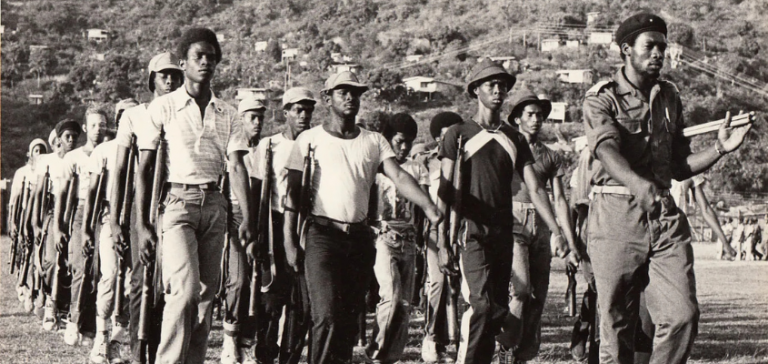
The Caribbean Sea has once again become a theater for the renewed geopolitical ambitions of a waning US empire, which is strategizing to bolster its last bastion of hegemony. The arrival of the nuclear-equipped USS Gerald R. Ford on November 15, 2025—the largest and most advanced aircraft carrier, spearheading the most intense military deployment in the region in decades- signals a stark attempt to reaffirm US domination. It reminds us of the Caribbean’s central position in the history of empires and why our only option is to resist these machinations through the pursuit of a radical peace and working-class unity.

SNAP Axe Could Fall On Grocery Shoppers And Workers Alike

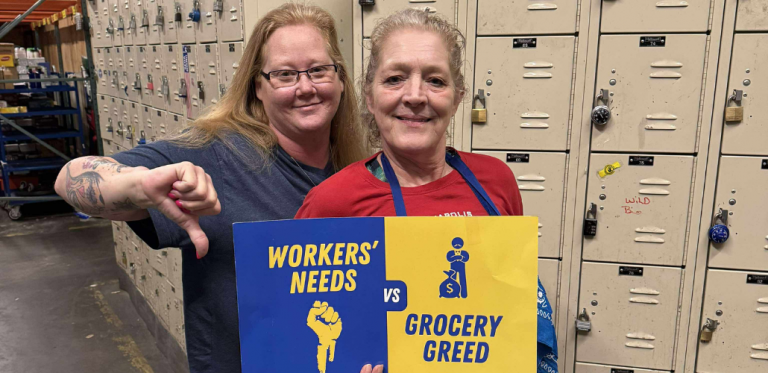
Beginning November 1, 42 million Americans who rely on the Supplemental Nutrition Assistance Program, more commonly known as “food stamps,” are set to go without benefits. Among them are union members in underpaid industries like grocery and retail. SNAP keeps millions of Americans and their families from going hungry. Due to the government shutdown, new SNAP funding has not been allocated by Congress, and existing funding has run out. This would be the first time in the program’s 61-year history that SNAP benefits have not been paid. For years Congress has appropriated a SNAP contingency fund to cover emergencies like a shutdown. UFCW Votes, the United Food and Commercial Workers’ political arm, has launched a petition calling for the release of these funds, something the AFL-CIO and 25 other unions are also calling for.

Washington DC Premier Of Occupy Wall Street: An American Dream

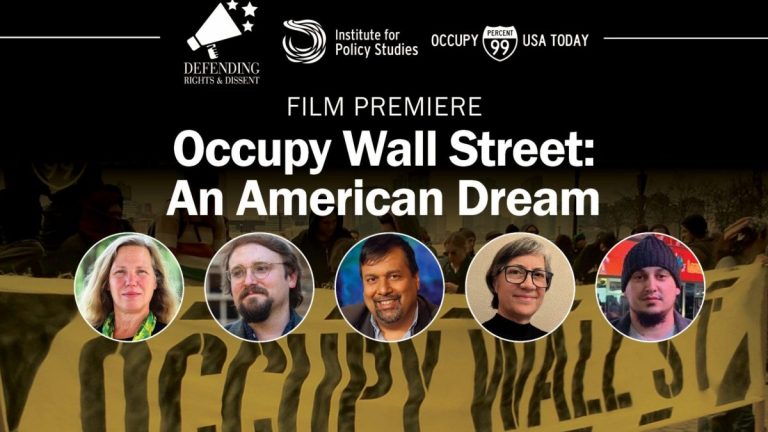
In 2011, millions rose up against Wall Street gangsters who crashed the global economy. Occupy Wall Street: An American Dream (dir. Michelle Fawcett, 2025, 51 min.) is an electrifying look at how a populist upsurge swept the nation, put oligarchs on their back foot, and revived working-class politics. Reserve your seat to see the DC premier of this new documentary followed by a conversation with Dr. Margaret Flowers, Chip Gibbons, Omar Ocampo, and Arun Gupta.

Overcoming Divisions And Building Power For The Just Green Transition

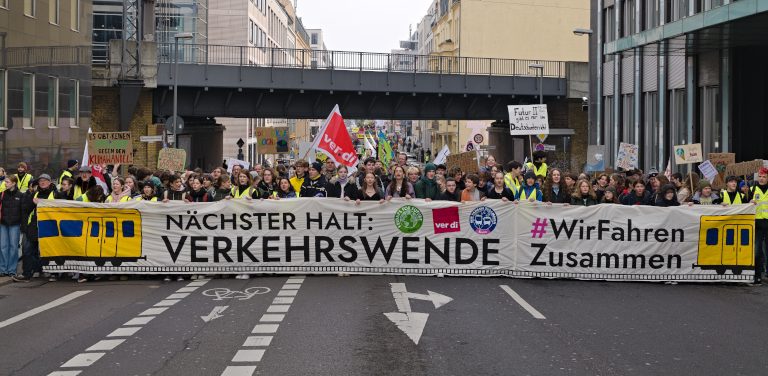
The working class: a major social group in any industrialised country, and historically a left-wing subject at the centre of demands for a worker controlled economy and better welfare, is now a growing base of support for right-wing parties. It is becoming essential for their electoral success across Europe, courted by these parties’ seeming concern for protecting wealth and jobs.[1] Climate activists on the other hand are increasingly demonised as fanatic eco-terrorists in mainstream media whose demands are framed as extremist and harmful to working people, making them seem like an out-of-touch elite of students and academics.

Climate Change Sets Workers’ Feet On Fire

This summer, there were days in tropical cities when it was unbearable to walk out in the sunlight. In Mango, Togo, for instance, the temperature soared to 44°C in March and April. Heat maps depict a world on fire, red hot flames licking the planet from the equator outwards. If the air temperature is around 44°C, then the temperature of asphalt and concrete surfaces can exceed 60°C. Since second-degree burns occur in less than five seconds at 60°C, those exposed to that heat are liable to burn their skin. Walking the streets of these burning cities is hard enough with shoes – imagine what it must be like for the millions of people who lack appropriate footwear but must work outdoors during the hottest parts of the day.

Labor Needs An Independent Political Program

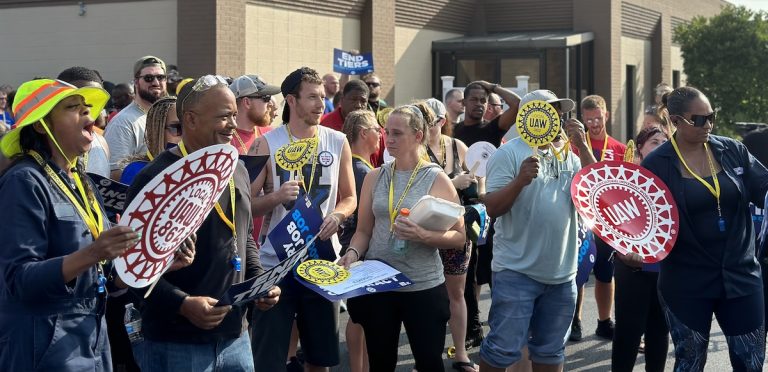
United Auto Workers President Shawn Fain recently laid out four priorities he says should form the nucleus of a workers’ political program. And he said that a broad strike in May 2028 is one way to fight for those priorities. Fain spoke on September 30 at the release of a new report by the Center for Working Class Politics and allied groups. The report, titled “Democrats’ Rust Belt Struggles and the Promise of Independent Politics,” is based on a new survey showing that workers in four states battered by decades of mass layoffs—Pennsylvania, Ohio, Michigan, and Wisconsin—are eager to see their basic issues addressed in the political arena.

Quantico: A Challenge To The US Working Class

Some 800 U.S. generals, admirals and their closest staff were summoned from their assignments all over the world to the military base in Quantico, Virginia, on Sept. 30. There, following their orders, they sat silently as they heard “War Secretary” Pete Hegseth insult them — then stayed silent as their commander in chief Donald Trump ranted for over an hour and advised them to use assaults on U.S. cities to train their troops. The most important takeaway is that Trump declared war on the working class and all oppressed sectors of U.S. society in his usual racist and misogynist style.

Fisherfolk Resisting Imperialism: The Palmarito Afro-Descendant Commune

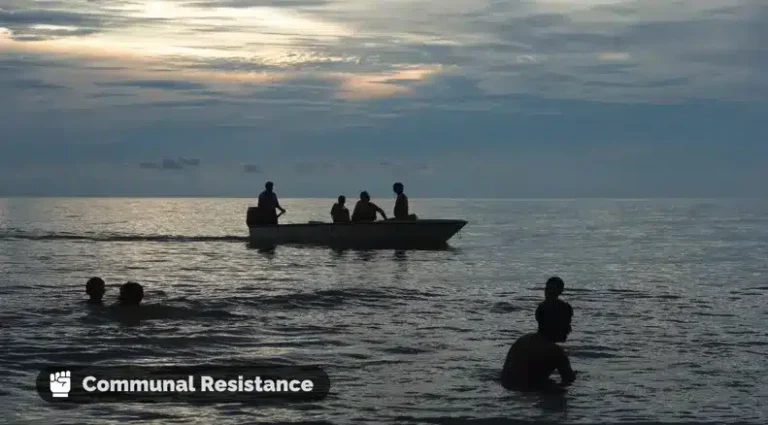
On the southern shore of Lake Maracaibo, Palmarito is an Afro-Venezuelan community shaped by centuries of history, culture, and resilience. Its people carry forward traditions rooted in their African heritage and in the fishing trade. Central to Palmarito’s way of life is the socialist commune, a form of popular self-government that transforms everyday life and work into a shared project. The town is part of the “pueblos santos,” a cluster of Afro-descendant communities bound together by devotion to San Benito of Palermo, the “Black saint,” and the ritual rhythms of the Chimbánguele. Life in Palmarito has always revolved around the lake—its fish provide sustenance and its water routes connect those living along its shores. From the struggle against enslavement and the creation of maroon communities to today’s communal self-governance, Palmarito’s story is one of resistance and collective action.

NYC’s Oldest Working-Class Theater Is Fighting Against Displacement

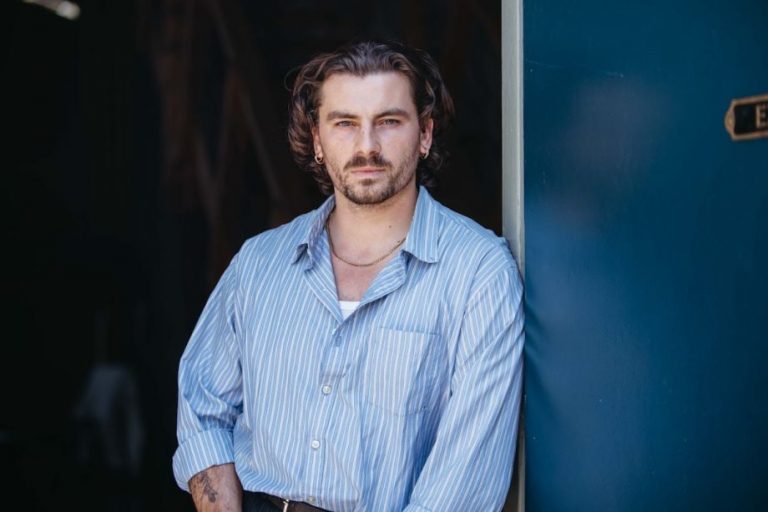
When Colm Summers stepped into the role of artistic director at New York City’s Working Theater in 2023, he inherited a legacy nearly four decades in the making. Founded in 1985 by actors from working-class backgrounds, the company was the first in the city to introduce sliding-scale ticketing — starting at zero dollars — and to bring professional theater directly into neighborhoods through mobile productions. Today, Summers’ team is focused on creating “non-extractive art” that furthers the city’s social movements. This year, their Stage Left festival presented six plays based on experiences from the frontlines of progressive movements; each developed alongside a community partner, including REI Soho Union, Workers’ Justice Project and Releasing Aging People in Prison.

In Albuquerque, Developers Turn Old Motels Into Affordable Housing

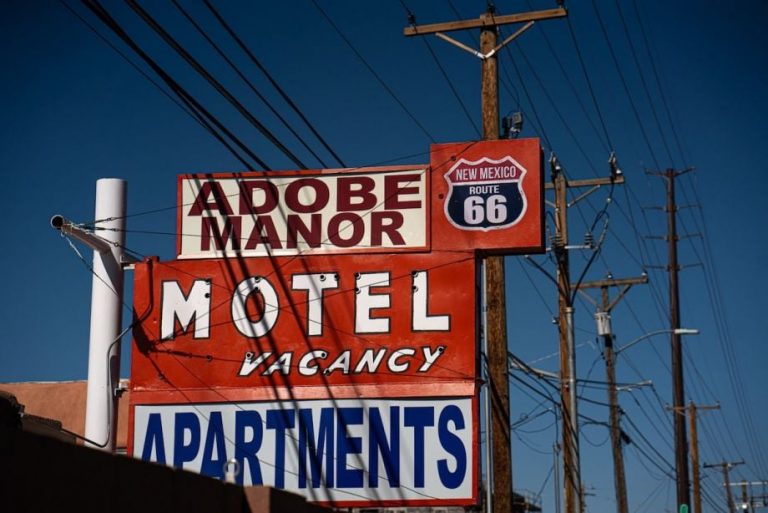
As a housing crisis pummels the West, from Sun Valley, Idaho, to Tucson, Arizona, there’s a dull irony in the number of abandoned houses and old hotels. Some of them cluster around former mining boomtowns; Bannack, Montana, for instance, was briefly the state’s capital before the veins of gold ran dry and the 10,000 residents moved on. Today, some 60 buildings still stand, including the handsome red-brick Hotel Meade. Two Guns, Arizona, once served Dust Bowl migrants and other travelers along Route 66, but when the interstate highway passed it by, the town collapsed. Today, its ruins include homes and motels as well as campgrounds for travelers and the remnants of a zoo that once housed mountain lions and Gila monsters.

Fast Food Nation Revisited

De-industrialization in the northeast spawned a service sector that didn’t quite match the employment opportunities of the old, manufacturing-based economy.  The resulting lower wages, limited job benefits, and reduced job security propelled many workers, their families, and communities into a downward spiral. Two great regional story tellers—Russell Banks and Richard Russo—ploughed this field, with great personal insight. Both endured difficult childhoods, marked by absent or unreliable blue-collar fathers who left single moms in charge. In their short fiction and novels, both Banks and Russo chronicled the tragedies and tribulations of white-working class people living in hometowns like their own.

Shining A Spotlight On The Federal Reserve’s War On The Working Class

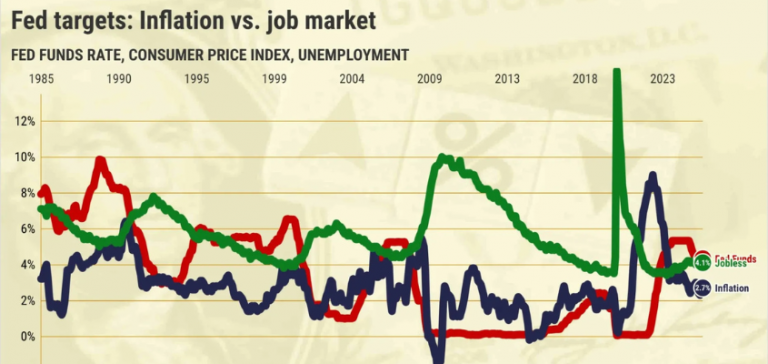
Describing the Federal Reserve chair’s monetary policies as “ill-advised,” the President and his Treasury Secretary doubled down on the White House’s urgent message: the central bank’s steadfast refusal to lower interest rates was strangling the economy by making it too costly for creditworthy borrowers—from prospective homebuyers to small business owners—to take out a loan. In a television interview, the President took aim at the Federal Reserve’s monetarist approach, which relies too much on a single factor—the money supply or the actual pool of banknotes in circulation—to tame inflation. Tightening the money supply through high interest rates tends to exert downward pressure on inflation, but it also discourages borrowing, and consequently, business activity that drives a consumer economy.

New Report Documents Disparities In Workers’ Health Care Coverage

As Congressional Republicans weigh major cuts to Medicaid and the Affordable Care Act (ACA), a new research paper reveals troubling disparities in how workers obtain health insurance in the United States.  The new paper from the Center for Economic and Policy Research (CEPR) – A Complicated Maze: How Workers Navigate the US Health Care System – finds major gaps in the availability of employer-based insurance. The complicated public and private system that attempts to fill those gaps, however, falls short of providing universal coverage – and Congress is considering changes that threaten to end coverage for millions of workers.

Repression Of Panama’s National Strike Draws More Workers

After 11 days of strike, Panamanian workers from across sectors are not giving up their struggle against the economic plans of the government of President José Raúl Mulino, its security agreements with the US government, and its plans to reopen a huge copper mine that closed in 2023. Not only have workers continued to mobilize, but they have been joined in their struggle by more sectors of society. Workers claim that Law 462, passed on March 18, 2025, opens the door for the privatization of Social Security, increases the retirement age, and halves the amount of money for future pensions, among other things.

Class War At Universities: Workers, Students Unite Against Fascism!

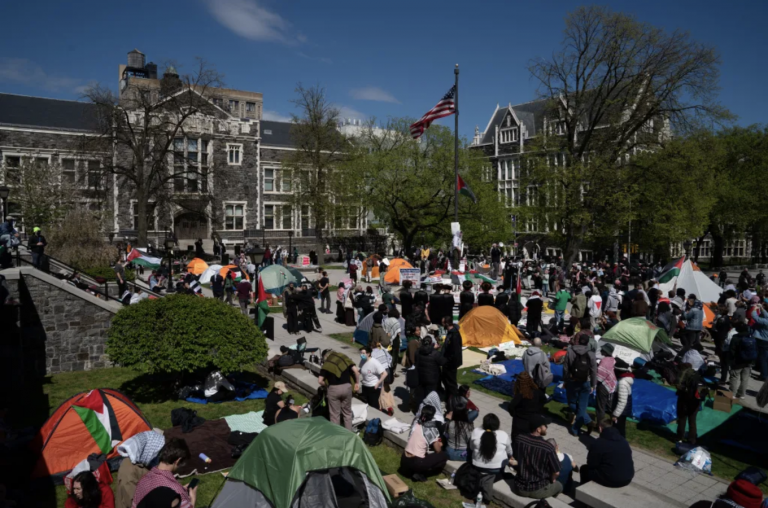
Boston - Students, professors and workers are confronting the Trump administration’s fascist crackdown at universities across the U.S. Since President Donald Trump took office on Jan. 20, immigration officials have revoked at least 1,700 student visas. In the Boston area alone, hundreds of students at Harvard, Northeastern, Emerson, Berklee School of Music, Massachusetts Institute of Technology and Tufts have already lost legal protection and face deportation.  Over the past few months, authorities have kidnapped and detained dozens of students and university workers who have opposed the ongoing Zionist genocide in Palestine.
assetto corsa mods

Urgent End Of Year Fundraising Campaign

Online donations are back! Keep independent media alive. 

Due to the attacks on our fiscal sponsor, we were unable to raise funds online for nearly two years.  As the bills pile up, your help is needed now to cover the monthly costs of operating Popular Resistance.

Urgent End Of Year Fundraising Campaign

Online donations are back! 

Keep independent media alive. 

Due to the attacks on our fiscal sponsor, we were unable to raise funds online for nearly two years.  As the bills pile up, your help is needed now to cover the monthly costs of operating Popular Resistance.

Sign Up To Our Daily Digest

Independent media outlets are being suppressed and dropped by corporations like Google, Facebook and Twitter. Sign up for our daily email digest before it’s too late so you don’t miss the latest movement news.