Skip to content

Strategize!

strategy-iconThe section provides articles on strategy to assist you in making your campaigns more effective. They include case studies of social movements and information about the current resistance environment. Visit the Resources Page for links to organizations that provide both online and in-person training on strategy and tools for designing and evaluating your campaigns and actions.
Building Power for Palestine and for a New World Order

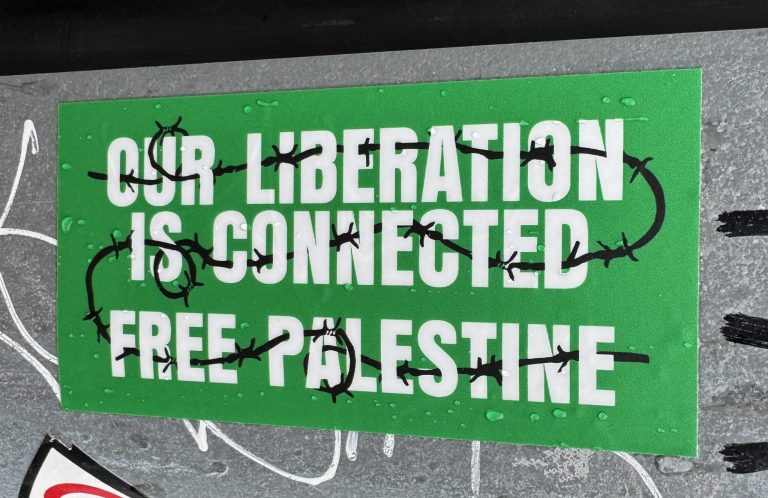
From 15–16 July 2025, thirty states met in Bogotá, Colombia at an Emergency Conference on Palestine, which was convened jointly by Colombia and South Africa as co-chairs of the Hague Group. The Hague Group, which began organizing in January 2025, formed as a bloc of countries to coordinate legal and diplomatic measures in solidarity with the Palestinian people. The Hague Group is compromised of Bolivia, Colombia, Cuba, Honduras, Malaysia, Namibia, and South Africa. The Bogotá conference in July brought together additional countries from across Africa, Asia, Europe, and the Americas. In response to Israel’s continuing and intensified genocide of Palestinians, conference participants unanimously agreed “that the era of impunity must end—and that international law must be enforced without fear or favour through immediate domestic policies and legislation.”


How Displaced Black Families Won Reparations In Portland

For decades, the Albina district in Portland, Oregon, was the center of the city’s Black community. Local musicians transformed the neighborhoods into a hotspot for the West Coast’s jazz, blues and soul music scenes, earning Albina the nickname “Jumptown” in the 1940s and ‘50s. Milestones in Oregon’s civil rights struggle grew out of meetings in Albina’s parks and gathering halls. It was residents of Albina who started a citywide tree-planting program responsible for many of Portland’s now-famous blooming cherry trees. But by the ‘70s, much of it was gone.

Iran Sets Conditions For US Nuclear Talks

Iranian Foreign Minister Abbas Araghchi said in an interview published on 31 July that Tehran is seeking financial compensation for Israel’s war, an explanation on why Iran was attacked during negotiations, and security guarantees for any resumption of nuclear talks with Washington. Araghchi told the Financial Times (FT) that Iran will not accept going back to “business as usual” after Israel launched its unprovoked war on the country in mid-June. “They should explain why they attacked us in the middle of … negotiations, and they have to ensure that they are not going to repeat that [during future talks]. And they have to compensate [Iran for] the damage that they have done,” Araghchi added.

Cheap Tricks For Hard Problems

The future is impossible to predict in its particulars. But if you understand the nature of a problem, and the nature of the economic incentive structure relating to the problem, and the nature of the political system and the personalities of the decision-makers surrounding the problem, it is very possible to make medium-term predictions about the general nature of what is going to happen with high confidence. Climate change. Big problem. It is hard to say to what extent humanity as a whole, as embodied by all the governing structures of the world, will rally itself to respond wisely to the problem, and how much damage to humanity’s well-being will occur in the meantime.

China’s Five-Year Plans Democratic, People-Centred And Grounded In Material Reality

In a wide-ranging interview with Global Times, Friends of Socialist China co-editor Carlos Martinez describes China’s Five-Year Plans (FYPs) as democratic, people-centred, and grounded in material reality. He emphasises that China’s success in planning stems from its ability to align governance with popular needs and long-term strategy. “China is known globally for its effective governance and for its record of keeping its promises”, he notes, citing the 13th FYP’s targeted poverty alleviation campaign as a key example of practical planning based on extensive grassroots research. Carlos stresses that these plans are not top-down decrees but involve widespread consultation, making them highly democratic and responsive to the needs of the people.

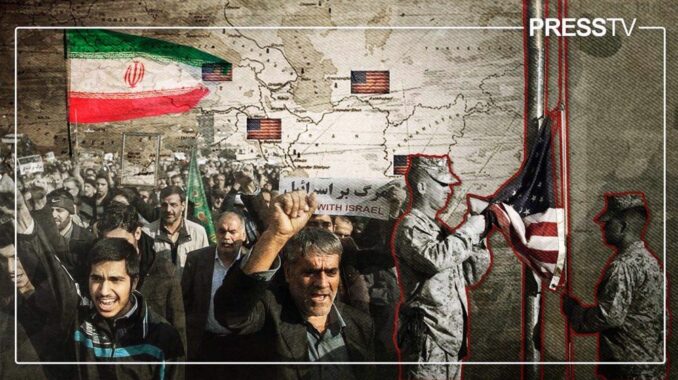
Why Ouster Of US Occupation Forces From West Asia Is Key To Lasting Peace

Since entering politics, former real estate tycoon and reality TV star Donald Trump has made a conscious effort to cultivate the image of himself as a peacemaker. He often boasts of avoiding major wars, takes credit for de-escalating global tensions and has even audaciously claimed that he deserves a Nobel Peace Prize! His 2024 campaign mantra, “ending endless wars,” struck a chord with a U.S. public weary of entanglements in West Asia. Yet, this carefully crafted image proved to be a mirage. Far from extinguishing flames, Trump poured gasoline on simmering conflicts.

Will Brazil Host A Conference That Saves The World’s Climate?

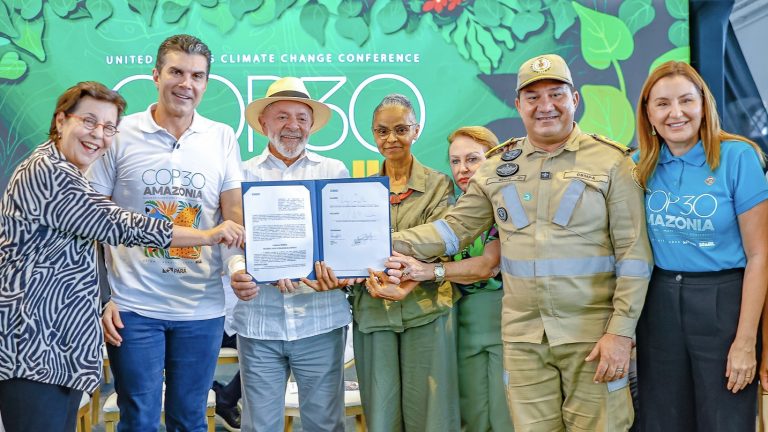
Thirty years have passed since the first Conference of the Parties (COP) of the United Nations Framework Convention on Climate Change (UNFCCC) was held in Berlin (Germany). Since then, successive agreements, targets, and definitions have been ineffective in addressing the two main issues that have lingered at the COP since 1995: first, the responsibility of the rich countries for the climate catastrophe, and second, the need to reduce greenhouse gas emissions. At the COP30 in Belém do Pará (Brazil), the world will once more have to see if these questions are addressed or ignored.

Our Smartphone-Dependent Culture Is Repeating The Mistakes Of Car-Centric Infrastructure

Our inventions offer solutions and convenience; the systems we build bind us to them. Just look at our roads, wide strips of asphalt laid down for one invention: the car. Designed for mobility and convenience, the car quietly restructured our lives. Most of us spend our days behind the wheel, navigating a system built for cars. I see roads as canyons stretching between cities and suburbs, isolating homes, schools, offices and stores. In a car, we glide through them — we are part of the system. On foot, we are stranded, as if the world were not built for us.

Can The Poorer Nations Build A New Architecture For Development And Sovereignty?

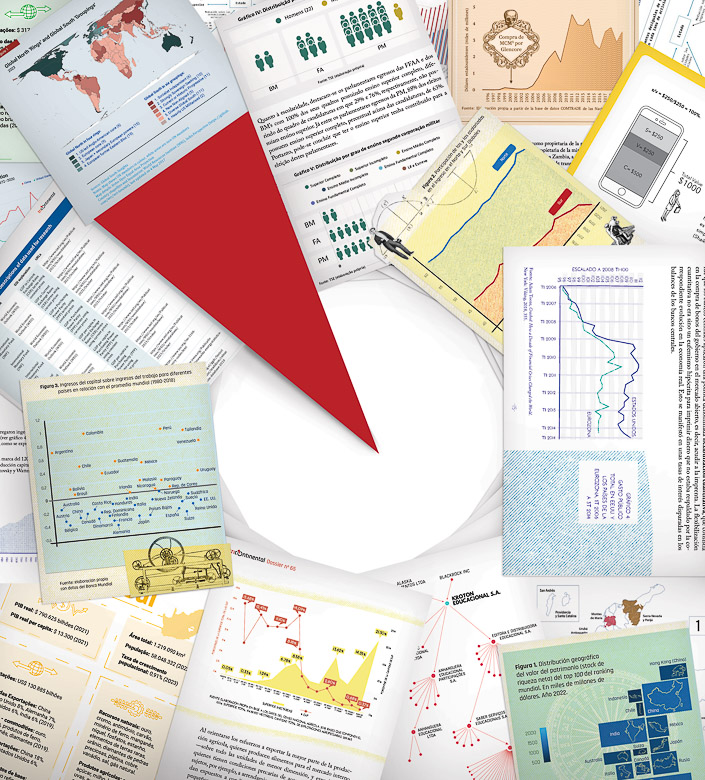
A horrifying statistic hovers over the poorer nations: 3.4 billion people now live in countries that spend more on interest payments for public debt than on education or health. In 2024, according to a new report from the United Nations Conference on Trade and Development (UNCTAD), global public debt reached $102 trillion – a third of which is held by developing countries. The impact on these countries is especially severe: credit markets charge poorer nations far higher interest rates than they do richer nations, making debt servicing payments proportionately higher for the Global South.

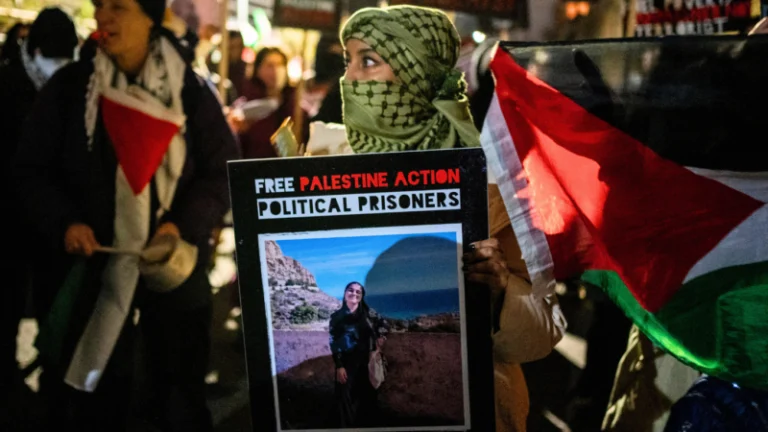
Voices From The Terror List: Palestine Action Members Speak Out

On July 1, British Home Secretary Yvette Cooper announced that Palestine Action (PA), a crusading campaign effort, would be proscribed as a terrorist group. Describing the movement as “dangerous,” she charged that its “orchestration and enaction of aggressive and intimidatory attacks against businesses, institutions and the public” had “crossed the thresholds established in the Terrorism Act 2000.” As a result, PA is now the country’s first protest group to be formally branded a terrorist entity, placing it in the same league as al-Qaida and ISIS.

Stop The Nationwide Repression Of The Pro-Palestine Movement

Columbia University just suspended nearly 80 students for participating in a teach-in honoring Palestinian writer and revolutionary Basel al-Araj — marking the largest student suspension in the university’s modern history. The escalation comes amid growing repression against the pro-Palestine movement nationally, and just days before Columbia is expected to finalize an agreement with the Trump administration and the Anti-Defamation League (ADL). The deal would restore $400 million in canceled federal funding in exchange for adopting policies that criminalize criticism of Israel.

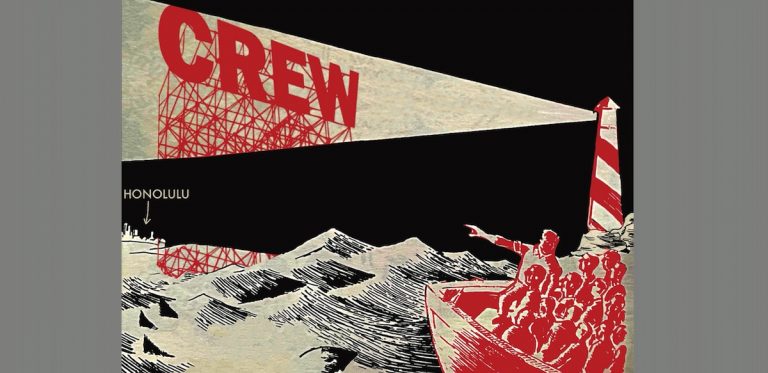
In Uncertain Times For Entertainment, IATSE Reformers See A Way Forward

The International Alliance of Theatrical and Stage Employees (IATSE) will hold its Quadrennial Convention in Hawaii starting July 28. The 2025 “Quad” convention would be business as usual, if not for an upstart group of IATSE members in a reform caucus called CREW that believes they can fix some of their union’s worst flaws. The union covers 170,000 entertainment workers in the U.S. and Canada. “When I first started working in the film industry in the summer of 2021, I began to notice that many IATSE members had little faith that our union leadership could change anything in regards to bettering work conditions like eliminating ‘fraturdays” [work days that start Friday night and end Saturday morning],” said Juniper Jensen, a Local 700 Assistant Editor.

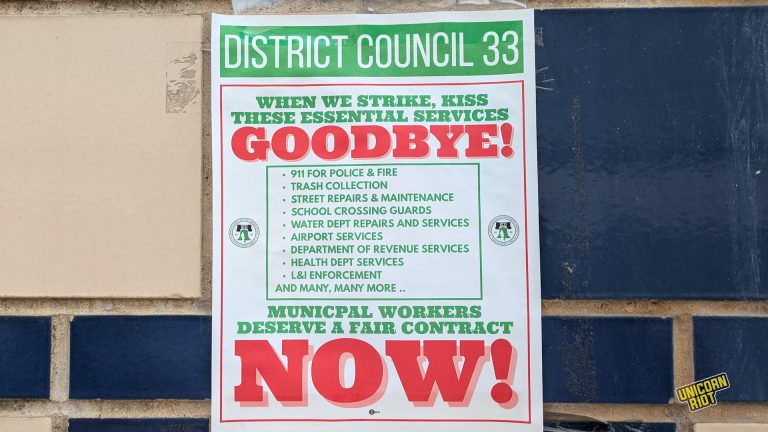
Philly’s DC 33 Union To Vote On Agreement To End Historic Strike

Philadelphia, PA — American Federation of State, County and Municipal Employees (AFSCME) District Council 33 (DC 33), the city’s largest blue-collar union, launched a historic strike earlier this month, halting sanitation services on a scale not seen since 1986. Despite the pro-union image Philadelphia Mayor Cherelle Parker wishes to project, legal injunctions were used to force many city employees back to work – creating pressure to end the strike. “The city was trying to pick us apart with injunctions all over the place,” requiring water department employees, 911 dispatchers, and city medical examiners to return to work immediately, DC 33 President Greg Boulware explained in a recent interview.

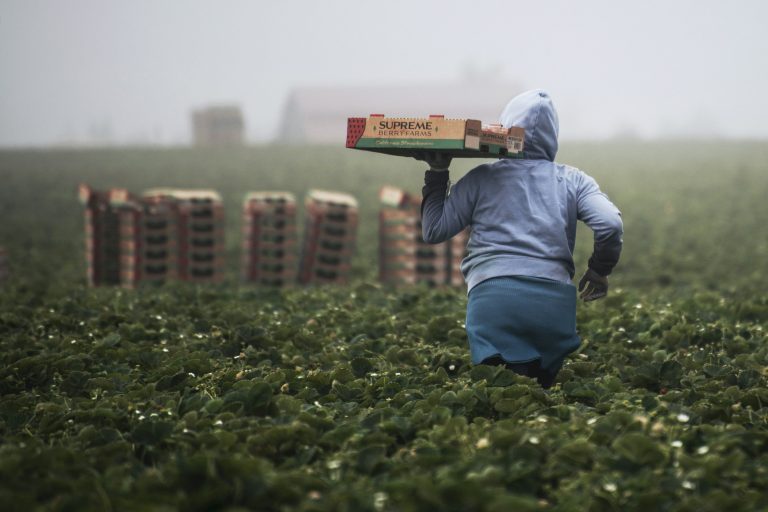
Farmworker Fear Of A General Strike Exposes Stranglehold On Migrants

This week, California farmworkers protesting the recent death of 57-year-old Jaime Alanís García after he broke his neck fleeing militarized ICE agents in Ventura County on July 10, chose to observe the “Huelga para la dignidad,” or “Strike for Dignity.” Most, however, did not. And the reason they did not has everything to do with Trump administration policies designed to perpetuate an unrepresented class of workers in this country consigned to a state of virtual slavery. The Trump-directed raids on poor California farmworkers makes zero economic sense when you consider the current president’s supporters in agribusiness simply cannot do without the cheap, exploitable labor that makes their profits possible.

From Workplace To Wall Street; Technologies Impacting Mine Workers

When considering workplace artificial intelligence (AI), automation, and new digital technologies, one might envision workers in Silicon Valley or remote factory robotics. However, coal miners represented by the United Mine Workers of America (UMWA) are addressing the effects of technological change in coal mines and Wall Street from New York City to the Navajo Nation.  In the workplace, contemporary mining technologies and practices without adequate regulations and implementation of safety technologies have resulted in a surge of silica-dust-induced Black Lung disease.
assetto corsa mods

Urgent End Of Year Fundraising Campaign

Online donations are back! Keep independent media alive. 

Due to the attacks on our fiscal sponsor, we were unable to raise funds online for nearly two years.  As the bills pile up, your help is needed now to cover the monthly costs of operating Popular Resistance.

Urgent End Of Year Fundraising Campaign

Online donations are back! 

Keep independent media alive. 

Due to the attacks on our fiscal sponsor, we were unable to raise funds online for nearly two years.  As the bills pile up, your help is needed now to cover the monthly costs of operating Popular Resistance.

Sign Up To Our Daily Digest

Independent media outlets are being suppressed and dropped by corporations like Google, Facebook and Twitter. Sign up for our daily email digest before it’s too late so you don’t miss the latest movement news.