Skip to content

European Union (EU)

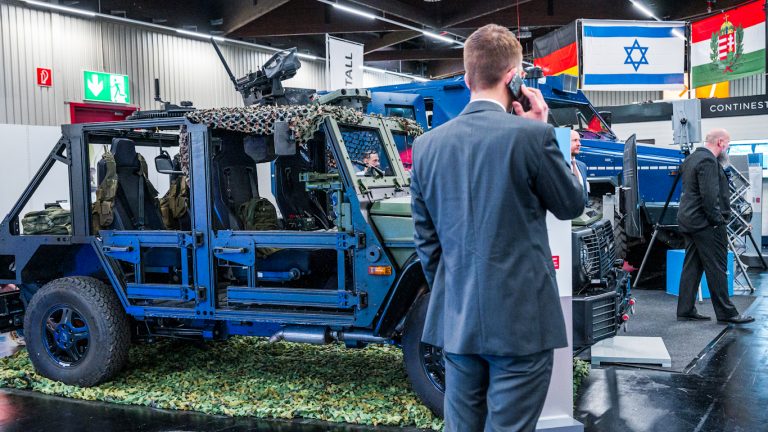
EU Nations Condemning Gaza Genocide Secretly Ink Arms Deals With Israel

NATO Secretary General Mark Rutte and European Commissioner for Defence and Space Andrius Kubilius believe Russia could launch a full-scale attack on Europe by 2030, a fear that has prompted governments across the continent to prepare for war. As European citizens stockpile food and governments ramp up military readiness, one country sees opportunity in that fear: Israel. The European Union is planning to increase its military budget by €800 billion ($900 billion) over the next four years. With the United States pulling back military support for NATO, EU member states are seeking new defense partners, and Israel is stepping in, offering weapons tested on occupied and besieged populations.

Hegseth Demands Nato Allies ‘Spend More’ To Ensure US Support

US Defense Secretary Pete Hegseth has called on NATO allies to adopt US President Donald Trump's former demand that member states increase defense spending to five percent of their gross domestic product (GDP), a significant jump from the current target of two percent. Hegseth made the remarks on 5 June during a NATO defense ministers meeting in Brussels, with the aim of finalizing commitments before the upcoming summit in The Hague scheduled for 24–26 June. “We're here to continue the work that President Trump started, which is a commitment to five percent defense spending across this alliance,” Hegseth said, emphasizing that the increase “has to happen by the summit.”

Roads To War: The EU’s Security Action For Europe Fund

As the world was readying for the Second World War, the insightful humane Austrian author Stefan Zweig made the following glum observation: “Openly and flagrantly, certain countries express their will to expand and make preparations for war. The politics of rearmament is pursued in broad daylight and at breakneck speed; every day you read in the papers arguments in favour of armaments expansion, the idea that it reduces unemployment and provides a boost to the stock exchange.” This is not so different from the approval by European Union countries on May 27 of a €150 billion loan program known as the Security Action for Europe (SAFE) borrowing scheme.

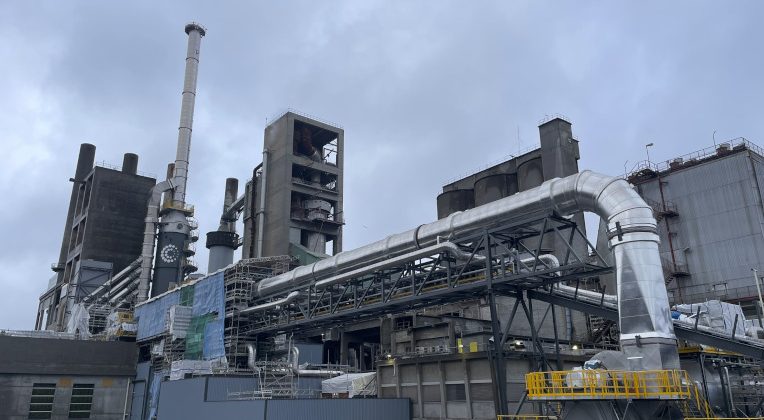
Green Goals, Dirty Fuel: Europe’s Fertiliser Industry Bets On Shale

The coastal city of Freeport, Texas is a dense tangle of metal pipes, tanks and towers. Located 60 miles south of Houston, it’s home to a sprawling petrochemical complex – one of the largest and most polluting in the United States.    Among its facilities is a plant dedicated to the production of ammonia, a colourless compound of nitrogen and hydrogen, and a key ingredient in fertilisers widely used on industrial arable farms – including on fields of barley, wheat and maize across Europe. Chemicals giants Yara and BASF opened the “world-scale” factory to great fanfare in 2018, promising “cost-efficient” and “sustainable” ammonia production.

Carbon Capture And Storage: The Frivolous Gamble Of Climate Policy

Carbon Capture and Storage (CCS) has become an essential part of European and global climate policy. The logic is simple: we capture CO2 emissions from factories and store them deep underground. This way we save the planet and the industry. Industrial emissions account for about 25% of European emissions. To become climate neutral by 2050, they must disappear. CCS is also being counted on to green some of the energy sector’s emissions. Governments are willing to provide supportive regulation and invest heavily in it. However, there are fundamental concerns about the feasibility of the technology, both technically and economically. Its failure could prove disastrous and undermine Europe’s climate strategy altogether.

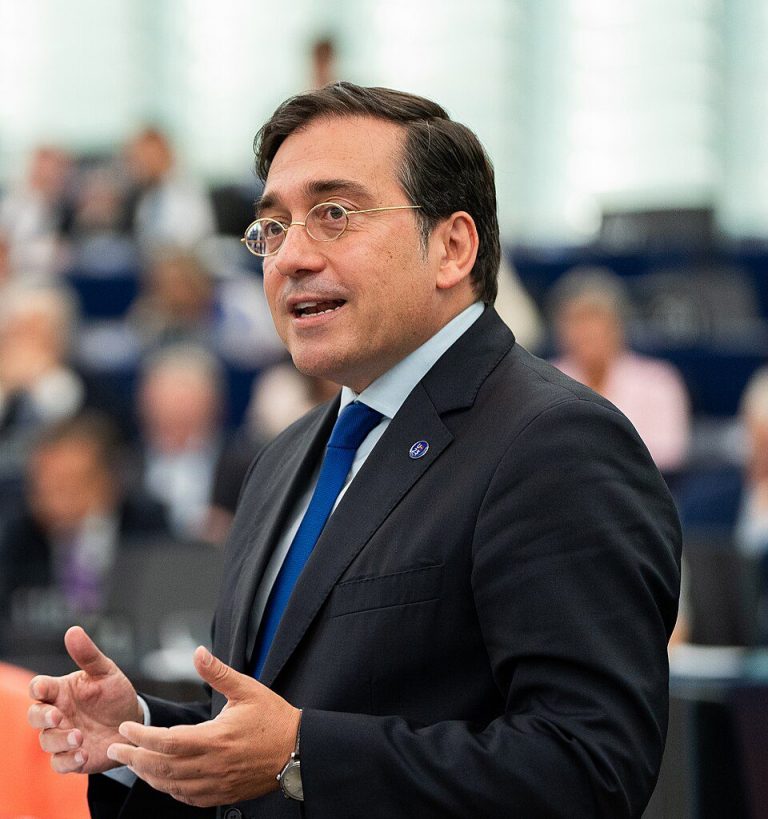
Spain: International Conference To Call For Arms Embargo On Israel

The Spanish wire service EFE reports that delegations from 20 countries met Sunday in Madrid in a push to pressure Israel to halt its total war on Gaza and to establish a Palestinian state. Convened by Foreign Minister José Manuel Albares, the conference sought to move to concrete actions. Israel had blocked all humanitarian aid for two months beginning in March, provoking a crisis of malnutrition in Gaza, almost all of whose people have been made internal refugees several times over by the Israeli military. Israel began letting a small amount of aid in last week, apparently under the pressure of the Trump administration, but United Nations officials decried it as “a drop in the ocean” compared to the urgent needs of 2.2 million Palestinians.

Europe Is Finally Taking Action For Palestine, But It’s Too Little, Too Late

On Wednesday, Israeli forces in the West Bank opened fire in the direction of a delegation of European, Arab, and Asian diplomats. In yet another mark of Israeli hubris, the Israeli military said it “regrets the inconvenience.” The timing of this incident is not coincidental. Earlier this week, the European Union, many of its member states, and other Western countries issued statements and took steps that appeared to finally represent concrete actions to pressure Israel to change its behavior in Gaza and the West Bank. The question is whether that is really what happened. It started with a letter from a coalition of states that fund international humanitarian efforts.

Is The Bioeconomy A Sustainable Solution For The Planet?

On 10 February, representatives of 14 bioeconomy organisations from 11 EU Member States signed a Memorandum of Understanding (MoU) officially establishing the European Bioeconomy Cluster Alliance (EBCA). The agreement is an important step towards fostering collaboration and innovation in the bioeconomy sector. In Spain, regions such as the Basque Country and Catalonia, in particular, are strongly committed to the transition towards a bioeconomy model. The bioeconomy has emerged in recent decades as a transformative proposal for our economic system aimed at achieving climate neutrality and moving away from the use of fossil fuels, cement and other materials, such as plastics.

The Global Gateway To Nowhere

European development aid has entered a new phase of the European Union’s neocolonialist agenda. Its “Global Gateway” plan is a wishlist for infrastructure projects to be launched across the world by European companies, backed by liberal reforms to pave the way. At its heart: Africa, where at least half of all investments are set to land. The Global Gateway was introduced by the EU’s technocratic institutions in Brussels as a branding exercise for a new direction for European aid in the world, following the cracks the COVID-19 pandemic revealed in Europe’s supply chains. In effect, this plan has sought to secure access to raw materials as well as energy with a view to reducing reliance on China’s minerals and Russia’s gas.

EU Sanctions Red. Media For Covering Crackdown On Palestine Protests

The EU Council’s latest sanctions, intended to deter Russia’s war with Ukraine, include red. media founder Hüseyin Doğru, and AFA Medya (which operates red.), citing their coverage of Germany’s pro-Palestine protests which the council claims “supports” Russia. Since the EU began rolling out one sanctions package after another in the wake of Russia’s 2022 invasion of Ukraine, the targeting of Doğru marks the first time the EU has used this weapon in the service of Germany’s crackdown on Palestine solidarity, a crackdown which has been condemned by UN officials and human rights groups.

Trump’s Tariffs Are Uniting China, Europe, Japan, South Korea, And ASEAN

Trump’s Treasury Secretary Scott Bessent revealed that the US government has what he called a “grand encirclement” strategy aimed at isolating and weakening China. Trump hit China with tariffs of 145%, imposing what is essentially a trade embargo. The Trump administration wanted to pressure Japan, South Korea, Vietnam, and India to follow the US and “approach China as a group”, Bessent said, according to Bloomberg. This strategy is clearly failing. The finance ministers and central bank governors of China, Japan, South Korea, and members of the Association of Southeast Asian Nations (ASEAN) met in Italy on May 4 and published a joint statement pledging “to further strengthen regional financial cooperation”.

Eighty Years On: Remembering The Defeat Of Fascism

As we approach a major anniversary – 80 years since the defeat of fascism – a strange silence hangs over my country, Macedonia, and the broader region we now call the territory of former Yugoslavia. National authorities have been under sustained external (Western) pressure for years: May 9 must no longer be associated with the victory over fascism. Year after year, in both public memory and the education system, May 9 has been rebranded as Europe Day. Older generations still remember, but what do younger ones know about Yugoslavia’s enormous human sacrifice, second only to the USSR, in the struggle against Evil? Almost nothing.

The US/EU/NATO’s Regime Change Playbook For Burkina Faso

On April 3, US Africa Command (AFRICOM) Commander Michael Langley testified to the Senate Armed Services Committee during an excruciating two hours obsessively devoted to the ill-fated project of preserving US hegemony. Langley’s testimony was all about stopping Russia and China’s advances on the continent. Some Senators expressed concern that Trump had dispensed with the soft power—their term—projected by USAID and worried that China is stepping in to fill the breach. Alarm bells went off in Africa, the African diaspora, and peace and justice communities all over the world when he turned attention to Burkina Faso and its leader, Captain Ibrahim Traoré, accusing him of using the gold reserves he nationalized “to protect his junta.”

NATO Fraud Exposed: Europe Defenceless Without ‘US Cavalry’

On April 23rd, Politico published an extraordinary article, “The US cavalry isn’t coming”, documenting in forensic detail the extent to which European defence planning and infrastructure has for decades been exclusively “built on the assumption of American support,” and “speeding American reinforcements to the frontlines.” Now, “the prospect of that not happening is throwing military mobility plans into disarray,” and the continent “stands alone” – defenceless, directionless, and bereft of solutions to the disastrous results of their prostration to US hegemony over many decades.

European Decoupling From US Imperialism Is A Matter Of Global Security

At the end of a four-year term, the Blinken-Sullivan-Austin trio, showcase of the Biden administration, will have distinguished itself by multiplying hotbeds of tension all around China, a NATO-Russia hybrid war, two genocidal wars, one televised in Gaza, the other covert, in Eastern Congo, a bloody conflict in Sudan, with millions of refugees, and the umpteenth attempt to kill Haiti – all topped off by mass mutilation in Lebanon and the devastating fall of Syria. As for extraterritorial sanctions and regime-change operations, from Georgia to Venezuela, via Iran, Pakistan and Bangladesh, they have either been maintained or intensified.
assetto corsa mods

Urgent End Of Year Fundraising Campaign

Online donations are back! Keep independent media alive. 

Due to the attacks on our fiscal sponsor, we were unable to raise funds online for nearly two years.  As the bills pile up, your help is needed now to cover the monthly costs of operating Popular Resistance.

Urgent End Of Year Fundraising Campaign

Online donations are back! 

Keep independent media alive. 

Due to the attacks on our fiscal sponsor, we were unable to raise funds online for nearly two years.  As the bills pile up, your help is needed now to cover the monthly costs of operating Popular Resistance.

Sign Up To Our Daily Digest

Independent media outlets are being suppressed and dropped by corporations like Google, Facebook and Twitter. Sign up for our daily email digest before it’s too late so you don’t miss the latest movement news.