Skip to content

Bolivia

People Across Asia And Latin America Mobilize In Support Of Gaza Flotilla

Protests broke out in various countries in Asia on Thursday, October 2, following the Israeli attack on the Global Sumud Flotilla (GSF) on Wednesday and the abduction of hundreds of activists. The GSF, consisting of over 40 ships with hundreds of activists onboard, was heading towards the besieged Palestinian territory of Gaza in order to break the Israeli siege and deliver crucial humanitarian aid to its people forced to starve by Israel. The ships were attacked by the Israeli forces on the night of October 1, an attack which continued until October 3, when they were scores of miles away from the Gaza coast. Israeli forces abducted the activists and seized the aid the ships were carrying for the people of Gaza.

Mass Mobilizations Needed To Protect Bolivian And Venezuelan Revolutions

On August 17, in the Bolivian presidential elections, the leftwing candidates lost for the first time in twenty years. Some are calling this a continuation of the US-backed coup there. Just days before the election, the Trump administration announced that it was sending naval destroyers and 4,000 troops to Latin America that could be used in 'targeted strikes' against Venezuela. Clearing the FOG speaks with William Camacaro, a senior analyst for the Council on Hemospheric Affairs and a co-founder of the Venezuela Solidarity Network, about divisions within the left in Bolivia that led to their current demise and how Venezuela is mobilizing millions of civilians to defend their sovereignty against US aggression.

Beyond Defeat In Bolivia: Limits Of Left Electoral Strategy In Latin America

Bolivia’s left lost big in Sunday’s election, and a lot of the analysis in progressive circles has focused solely on the feud between former president Evo Morales and sitting president, Luis Arce. Morales was barred from running in the elections by Arce’s government and subsequently called for a null or blank vote in the contest. On Sunday, August 17, two right-wing candidates, Rodrigo Paz and Jorge Quiroga, emerged victorious, and they will proceed to the second round in October. The feud between the two former comrades definitely played a factor in the demise of the once-vibrant and electorally successful party, MAS (Movement Towards Socialism). But the real story and the bigger lesson for the Latin American left is about more than just political rivalries. The roots of this defeat are deeper.

Five Myths About The Crisis Of The Left In Bolivia

I have read with great attention many comrades, people whom I love and respect a lot, simplifying the situation of the crisis of the left in Bolivia. I know that these criticisms come from honest people, born out of genuine concerns and solidarity with the Bolivian people. However, a series of common points emerge that deserve an explanation, given the unique characteristics of Bolivia, its social movements, and its left. It is not egos, lack of generosity, or meanness that marked the break between the social movements and the government of Luis Arce. This is a reductionism that hides a lack of understanding of what the MAS, the political instrument of the social organizations that came to conquer political power in Bolivia in December 2005, means.

US Counterinsurgency Wins In Bolivia

On Sunday August 17, 2025, the first round of presidential elections in the Plurinational State of Bolivia were held in the small Andean nation of 12 million people. Now the country is headed to an October 19 run-off between centrist Christian Democratic Party Senator Rodrigo Paz, the son of a former president, and former right wing President Jorge “Tuto” Quiroga of the Libre Party. The election results on Sunday ended twenty years of MAS-IPSP (Movement Towards Socialism - Political Instrument for the Sovereignty of the People) in power with MAS candidate and current Interior Minister Eduardo del Castillo polling at between 1-2%, effectively completing the objectives of the 2019 coup. 

The Bolivian Left’s Self-Destructive Path

The Bolivian political landscape is currently characterized by a deep, self-inflicted crisis within the Movement Toward Socialism (MAS) which has culminated in a devastating electoral defeat yesterday. As the country approached the crucial presidential elections of August 17, 2025, the party’s leaders—specifically former President Evo Morales and President Luis Arce Catacora—engaged in a series of personal attacks and internal conflicts that paved the way for their own defeat. This political irresponsibility, driven by ambitions and factionalism, has enabled the return to power of the very right-wing forces that the MAS struggled for years to overcome.

Bolivia Turns To The Right

With more than 95.41% of the votes counted, Bolivia’s Plurinational Electoral Body reported that, according to the preliminary results, Rodrigo Paz of the Christian Democratic Party (PDC) and former president Jorge Quiroga of the Free Alliance (AL) emerged as the big winners on election day. Paz obtained more than 32% of the valid votes, while Quiroga obtained almost 27%. Bolivia’s current president, Luis Arce, said in a speech to the nation: “We have made every effort to ensure a peaceful and transparent electoral process.” For Arce, who decided to withdraw his election campaign in May, the election result was a severe blow, as his party, the Movement Toward Socialism (MAS), came in sixth place, its worst electoral performance in decades.

Whole Process People’s Democracy: The Path Forward

China’s political form is called ‘Socialism with Chinese Characteristics.' Chinese scholar Zhang Weiwei calls the Chinese political content ‘whole-process people’s democracy’. He distinguishes this model from the formulaic, procedure-obsessed, and anti-democratic model of the North American Republic and European social democracies. What separates the Chinese model from the political model of the central capitalist formations are a number of variables: firstly, mass participation from top to bottom is a key feature of Chinese socialism. Secondly, the subordination of the capitalist class to the party-state and thus the imperatives of the masses defines China’s ability to develop a socialist market economy.

Interview With Former Bolivian President Evo Morales

In the early morning hours of October 27, 2024, unmarked cars shot at the car that was transporting former president of the Plurinational state of Bolivia, Evo Morales Ayma, in an attempted assassination in Villa Tunari, Chapare, Cochabamba as he was making his way to the Radio Kawsachun Coca that hosts his Sunday morning shows. Immediately speculations arose that implicated the military, a possible DEA agent , the Interior Minister , the internal right wing that participated in the U.S. backed 2019 coup, the media, and the courts, among others.

Bolivia: Reinventing The Future Amid Rise Of Far-Right

On the afternoon of June 26, 2024, several militant vehicles and around 300 members of the Bolivian militia and military police, under the command of General Commander of the Armed Forces Gen. Rudy Rodríguez, burst into the Murillo Square in La Paz, surrounded the access to the square and tried to enter by force the Palacio Quemado, the former seat of the presidential office. Immediately, traditional media reported the events taking place in La Paz throughout the country. The information spread through social networks, expanding its reach with the complement of the immediate public opinion of the social sectors with access to the Internet.

BRICS Adds 13 New ‘Partner Countries’ At Historic Summit In Kazan, Russia

The Global South-led organization BRICS is growing. More and more countries support the group’s mission: to build a multipolar world, with alternative economic institutions that are more representative and democratic, not dominated by the Western powers. BRICS held a summit in Kazan, Russia in October 2024, where 13 new “partner nations” were accepted. At this historic meeting, China’s President Xi Jinping referred to BRICS as “a vanguard for advancing global governance reform” and “reform of the international financial architecture”. Bolivia’s left-wing President Luis Arce argued that “the shield of BRICS and multipolarity” can protect formerly colonized nations, helping them resist “Western unipolarity and the tyranny of the dollar”.

Evo Morales Survives Armed Attack In Cochabamba

Former Bolivian president Evo Morales reported that he survived an armed attack and an alleged attempt at capture early this morning while traveling on the road connecting Villa Tunari with Shinahota, in the Cochabamba Tropics, an area considered his main political stronghold. The attack comes amid a growing internal crisis in the Movement for Socialism (MAS), the party founded by Morales, which is currently facing divisions and power disputes among its various factions. “The first vehicle was hit by at least four shots. In this situation, Evo Morales changed vehicle hastily, it was hit by 14 shots. In that last vehicle, the driver was hit by a shot that grazed his head and another hit him in the arm” says a statement published by Morales in X.

Roadblocks Erected Throughout Bolivia To Protest Arce Government

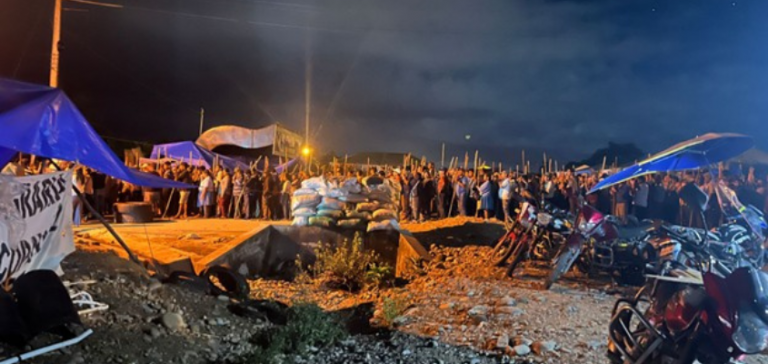
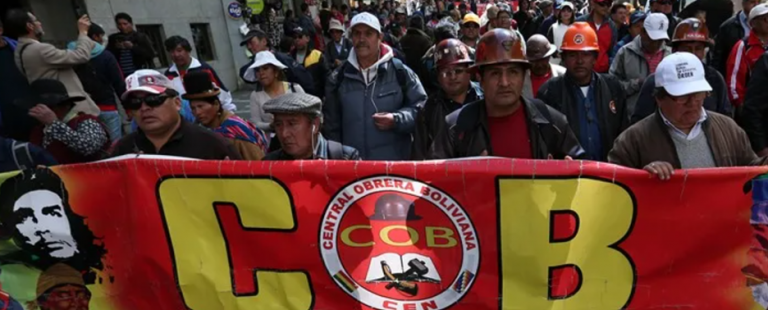
In Bolivia, the government of Luis Arce is confronted by the protests of peasants and workers, who are carrying out massive roadblocks. The pressure measure, which began five days ago, already affects four of the nine departments of the country and continues to expand. The government’s strategy of containment and delegitimization of this mass action, a strategy that was led by the minister of the presidency, Marianela Prada, and the minister of government, Eduardo del Castillo, did not yield results. Both authorities took on the task of minimizing the scope of the protest, stating that it was only seeking to protect Evo Morales.

Applying/Misapplying Gramsci’s Passive Revolution To Latin America

The second wave of progressive Latin American governments that began with the election of Andrés Manuel López Obrador in Mexico in 2018 does not have the aura of excitement surrounding the first, dating back to Hugo Chávez in 1998. It is not only characterized by pragmatism, but lacks the slogans and banners of radical change associated with Chávez and Evo Morales. As stated by former Bolivian vice president Álvaro García Linera in the face of challenges from an aggressive right, the second-wave left “turned up to the fight in an already exhausted state.”

Global South Denounces Genocide; Nicaragua Ends Relations With Israel

More and more countries in the Global South are cutting relations with Israel, accusing it of committing genocide against the Palestinian people in Gaza. United Nations experts have stated that there “are reasonable grounds to believe that the threshold indicating the commission of the crime of genocide … has been met”, adding that “the genocide in Gaza is the most extreme stage of a long-standing settler colonial process of erasure of the native Palestinians”. Scientific experts have estimated that 186,000 Palestinians will die due to Israel’s war of extermination on Gaza, representing roughly 8% of the population of the densely populated strip.
assetto corsa mods

Urgent End Of Year Fundraising Campaign

Online donations are back! Keep independent media alive. 

Due to the attacks on our fiscal sponsor, we were unable to raise funds online for nearly two years.  As the bills pile up, your help is needed now to cover the monthly costs of operating Popular Resistance.

Urgent End Of Year Fundraising Campaign

Online donations are back! 

Keep independent media alive. 

Due to the attacks on our fiscal sponsor, we were unable to raise funds online for nearly two years.  As the bills pile up, your help is needed now to cover the monthly costs of operating Popular Resistance.

Sign Up To Our Daily Digest

Independent media outlets are being suppressed and dropped by corporations like Google, Facebook and Twitter. Sign up for our daily email digest before it’s too late so you don’t miss the latest movement news.