Skip to content

Nicaragua

Nicaragua Tourism ‘Steals The Spotlight,’ Earning Punitive Measures From US

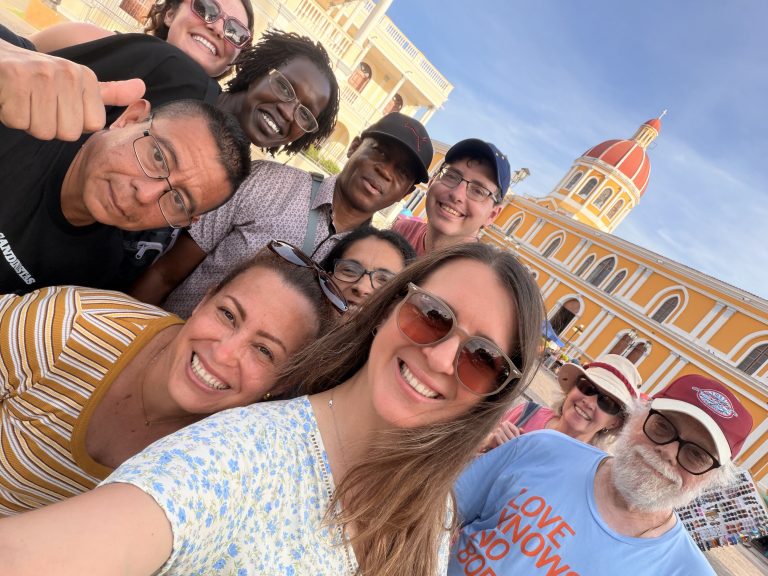
“Nicaragua Steals the Spotlight in Global Tourism Fairs,” read a headline in Travel and Tour World on 15 November, highlighting Nicaragua’s performance at recent industry events in the United Kingdom, China, Germany, and Canada. “Nicaragua is rapidly becoming one of the most talked-about destinations for international tourists,” the article gushed. Two days later on 17 November, the United States Embassy in Nicaragua announced new visa restrictions on representatives of Nicaraguan transportation companies, travel agencies, and tour operators. In a statement, the embassy claimed those affected had been “identified as knowingly facilitating illegal immigration to the United States.”

Did Germany Mislead The World Court?

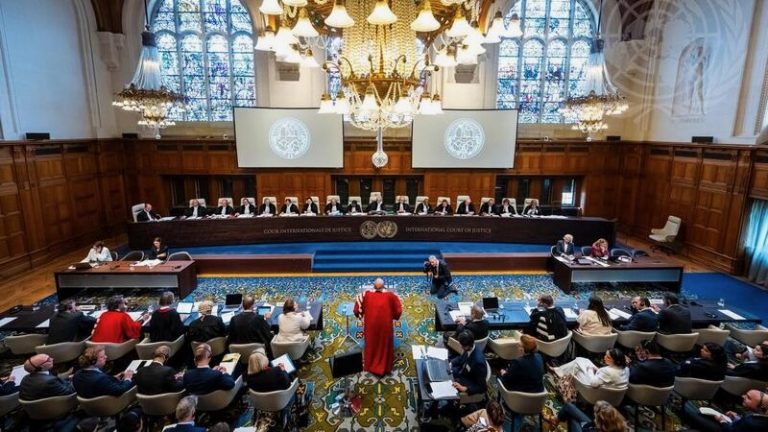
Since April 2024, Germany has been on trial before the International Court of Justice (ICJ) in The Hague. Nicaragua had filed a case against the Federal Republic, accusing it of complicity in the genocide in Gaza. As has now become known, German representatives may have made false statements in their very first testimony before the ICJ in April 2024, concerning the arms exports delivered to Israel. As Drop Site News (DSN) and the liberal German magazine Stern reported in a joint article, there are now serious doubts about Germany’s statements. They cite comments from the German Defense Ministry, obtained through a press law procedure before a German administrative court.

United States Scrambles To Put Pressure On Nicaragua

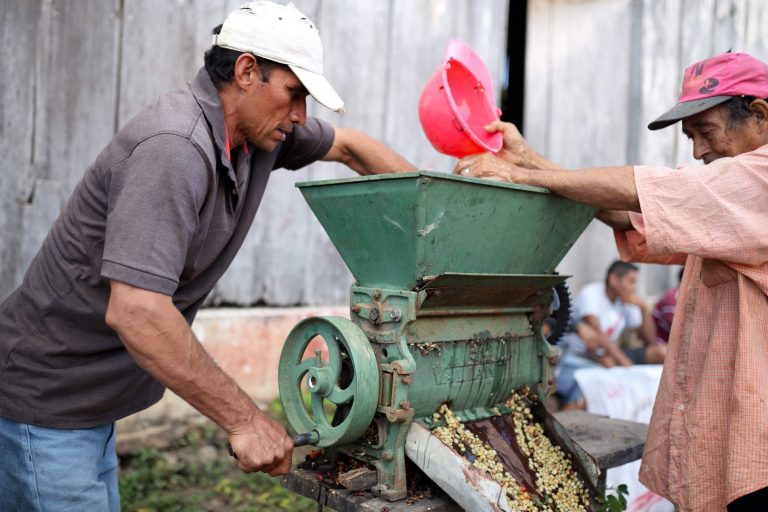
“We were already struggling with 18% tariffs this year, I don't know how we could export our coffee under 100% tariffs,” René Gaitan tells me as we watch the clouds clear out over a breathtaking expanse of Nicaraguan landscape. The view from the El Porvenir worker-owned coffee cooperative stretches from Lake Managua up toward the Honduran border, dominated by the smoking crater of the Telica volcano. Gaitán is the vice president of the 51-family cooperative. The co-op is remote; its members hike eight kilometers to get the bus to the city of León, a three-hour ride away. But the news on 20 October that the U.S. may impose 100% tariffs on the Central American nation reached the co-op with the lightning speed of the internet on Gaitan's smart phone, charged by solar panels.

Venezuelan Coup Leader Maria Corina Machado Vows To Privatize Oil

The 2025 Nobel Peace Prize was given to María Corina Machado, a far-right, pro-war Venezuelan opposition leader who has been funded by the US government for more than two decades. Machado has helped to lead numerous violent coup attempts in Venezuela, in 2002, 2014, 2017, 2019, and again today. She is now at the center of the US government’s regime-change war against Venezuela. In an interview with Donald Trump Jr. in February 2025, Machado made it clear that she wants to privatize Venezuela’s state-owned oil industry and sell off the South American nation’s natural resources to US corporations.

World Leaders Rebel Against United States And Israel

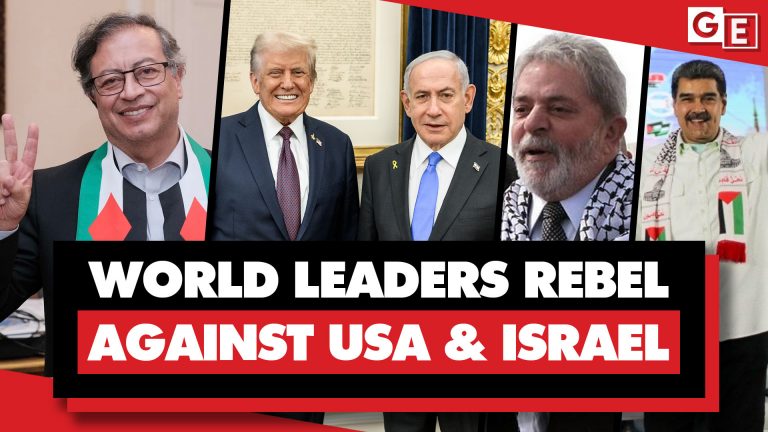
World leaders from roughly 190 countries gathered in September for the general debate of the United Nations General Assembly (UNGA). This year, many governments condemned the United States and Israel for carrying out crimes against humanity in Gaza. Representatives of numerous countries expressed support for the Palestinian people, while denouncing Western imperialism. A UN commission and multiple UN legal experts have stated conclusively that Israel is committing genocide in Gaza. At the 2025 UNGA general debate, it was left-wing leaders from Latin America who led the resistance against the US empire. Colombia’s President Gustavo Petro compared the US government to Nazi Germany and referred to Donald Trump as the “new Hitler”.

The True Face Of The White House Plan: More Money To Kill

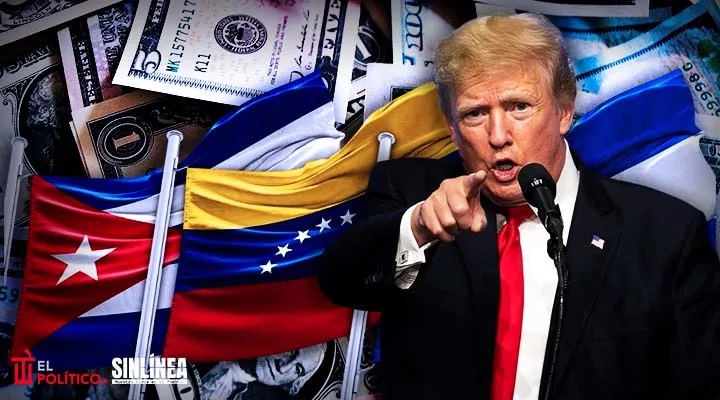
The United States announced that it will allocate $1.8 billion to foreign aid projects with a political and strategic vision. According to a document sent to Congress, $400 million will go to Latin America, aimed at confronting the “regimes” of Nicaragua, Venezuela, and Cuba. The Trump administration’s plan seeks to redirect resources toward programs to curb the influence of governments labeled by Washington as “anti-American,” extending its reach to Europe and Greenland in order to “contain China’s advance in strategic sectors.” This narrow and unilateral vision, which prioritizes Washington’s economic and security interests, far from promoting international cooperation based on mutual respect and solidarity, is based on a logic of confrontation that jeopardizes regional and global stability.

True, Or Fake News? ‘90% Of Nicaraguans Feel Spied Upon’

The “spied upon” headline from El Pais is unequivocal. The story, in the newspaper’s English-language edition, says that Nicaraguans live in “a climate of permanent surveillance” in which they distrust even their neighbors. Further, apparently harmless community meetings are really “a mechanism of social control” where they “feel watched.” El Pais sources a survey carried out “independently” by an organization called Hagamos Democracia (“Let’s Make Democracy”), based in Costa Rica. Its president, Jesús Tefel, says that people can’t “express opinions openly for fear of being betrayed.” El Pais’s conclusion is that Nicaraguans live under “constant surveillance and repression.”

A Quartet Of Nicaragua Critics Sings From Washington’s Songbook

In recent weeks, a motley crew of writers has found common cause in attacking Nicaragua’s Sandinista government: Jaden Hong, a high-school student from Sammamish, Washington, who has never visited the country; Jared O. Bell, a former USAID Foreign Service Officer; Barb Arland-Fye, editor of a Catholic newspaper in Iowa; and Gioconda Belli, a 76-year-old Nicaraguan novelist in self-exile. Writing in outlets ranging from The Teen Magazine to the New York Times, they have produced a string of biased, ill-informed pieces that repeat the same well-worn falsehoods about Nicaragua’s elected government. Their attacks on Nicaragua’s revolution reflect Washington’s talking points as it pursues its regime-change agenda.

Celebrating Nicaragua’s Gains And Feeling Anguish For Gaza

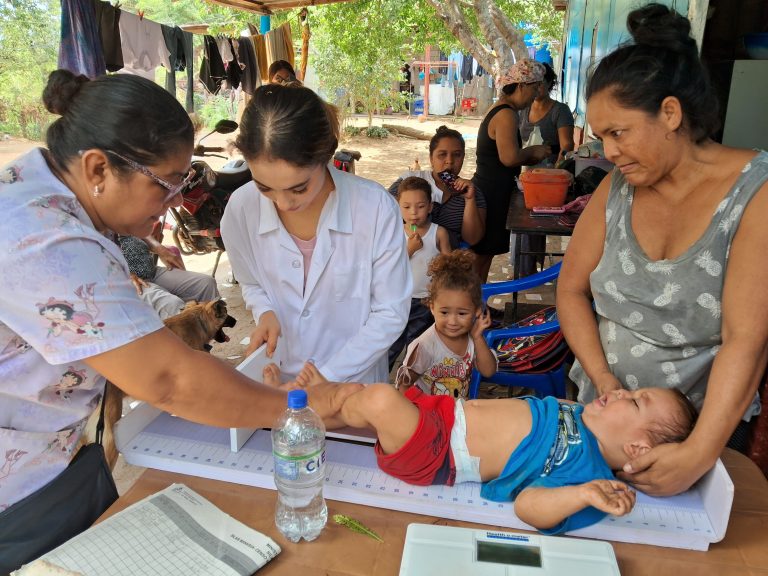
The image is forever seared in my mind: Francisco was two years old, his thin legs and swollen feet were covered in sores. Straw blond hair stuck to his head as he listlessly nursed from his teenage mother’s breast. He weighed 13 ½ pounds. It was the summer of 1999, and I was weighing babies in Nueva Vida.  I’d come to Nicaragua in the aftermath of Hurricane Mitch to help in any way I could through the Jubilee House Community and its project in Nicaragua, the Center for Development in Central America (JHC-CDCA). With its main office located just a mile down the road from the largest Hurricane Mitch resettlement camp in the country, the folks at the JHC-CDCA were busy.

The Struggle Against US Imperialism, Nicaragua Is A Model Of Sovereignty

Today, more and more US government officials, especially those in Donald Trump’s two administrations, have invoked the 200-year-old colonial Monroe Doctrine to claim that Latin America is supposedly Washington’s “backyard”, that the US empire should control it, and that China and Russia cannot have relations with the countries in the region. Given that the US government constantly violates the sovereignty of countries in Latin America, it makes perfect sense that several governments in the region have deepened their partnership with China and Russia, because they see that Beijing and Moscow actually respect their independence and have helped them to economically develop, while Washington has only sought to exploit them.

Nicaragua Celebrates The 46th Anniversary Of Its Revolution

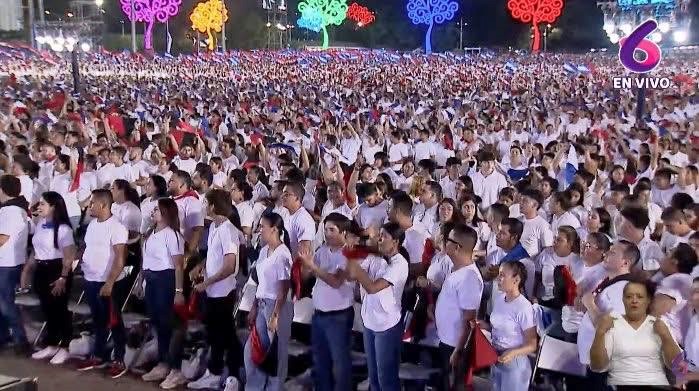
This year was different from celebrations since 2021 when there were perhaps 5,000 people invited – this year there were about 50,000! It took place in the Plaza de la Fe where the July 19th celebrations were held for years and years with open attendance of hundreds of thousands and little organization. That changed in 2020 with Covid. This time invitations were made and organized by the municipalities all over the country and those invited road in on Chinese buses down to the plaza. You can see from the photo, the organization was phenomenal to accommodate the 50,000.

46 Years On, Nicaragua’s Youth Still Lead The Revolution

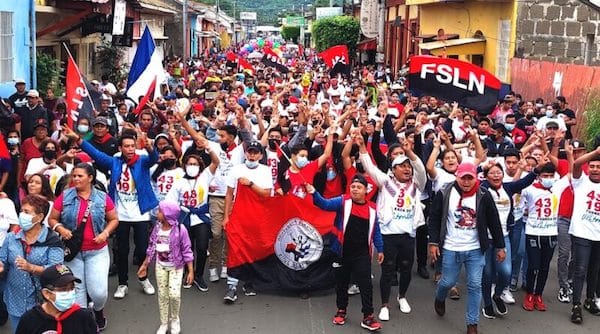
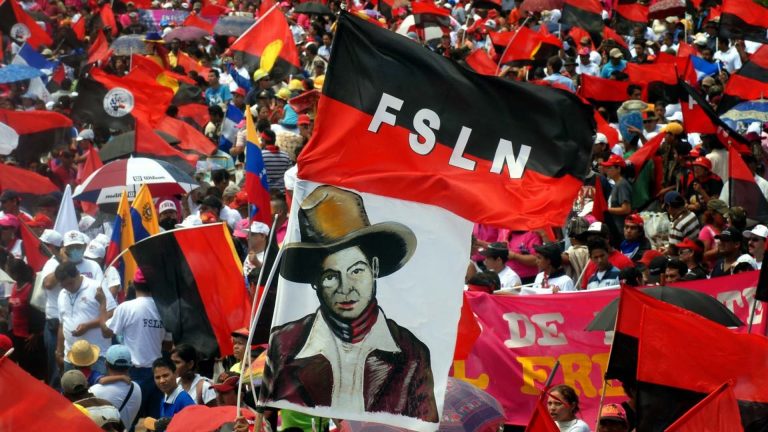
One of the questions I’m asked most frequently about Nicaragua is: “Does the revolution have a future?” Forty-six years ago, a popular revolution led by the Nicaragua’s youth overthrew the brutal Somoza dictatorship. Today, those viewing the country from the outside see that the surviving muchachos – the kids who defeated Somoza – are now in their 70s and 80s, and they worry that Nicaragua’s revolution won’t survive without them. To anyone who visits the country, however, it is obvious that Nicaragua’s revolution, which has managed to both revere its historical heroes and also treasure its youth, is stronger than ever.

Challenging The Media Myth Of Latino Machismo

Patriarchy is alive and well throughout the world. But the English-language media flatters itself by one-sidedly portraying machismo as a particularly Latin American malady, all the while overlooking significant feminist gains made in the region. Take, for instance, the entry under “machismo” in the latest edition of Britannica which asserts: “It has for centuries been a strong current in Latin American politics and society.” But the encyclopedia makes no such recognition for its own Anglo society. An article in the AP on sexual bias in Mexico blames “Mexico’s ‘machismo’ culture and strong Catholic roots,” calling out patriarchy as a defining and harmful feature for the whole of Latin American culture.

50,000 Died In Nicaragua’s Struggle Against Dictatorship; Sócrates Was One Of The Last

Nicaraguans will fill the streets later this month to celebrate the 46th anniversary of the Sandinista revolution. On July 19, 1979, the Somoza dictatorship finally fell, ending 18 years of guerilla fighting and urban insurrections. The regime had been supported for 43 years by successive US administrations (the history is told in Nicaragua: A History of US Intervention & Resistance). Only three weeks before, over the two days June 27-28, Sandinista forces had been forced to leave the capital, Managua, where the working-class barrios that they controlled in the east of the city came under aerial bombardment. Under cover of darkness, an enormous, silent retreat took place.

Violence In Costa Rica And The Rush To Blame Nicaragua

Traditionally regarded as safe for visitors, Costa Rica has recently become Central America’s second most dangerous country, with 400 homicides recorded so far this year. The violence is attributed to an epidemic of drug-related crime, as the country has become a major staging post for narcotics smuggled to Europe. Costa Rica just detained a former security minister and ex-judge for drug trafficking following a US extradition request. Even the US State Department warns of the danger of “armed robbery, homicide, and sexual assault” in Costa Rica. This month the violence claimed a Nicaraguan victim, Roberto Samcam, one of several Nicaraguans killed in Costa Rica in recent years.
assetto corsa mods

Urgent End Of Year Fundraising Campaign

Online donations are back! Keep independent media alive. 

Due to the attacks on our fiscal sponsor, we were unable to raise funds online for nearly two years.  As the bills pile up, your help is needed now to cover the monthly costs of operating Popular Resistance.

Urgent End Of Year Fundraising Campaign

Online donations are back! 

Keep independent media alive. 

Due to the attacks on our fiscal sponsor, we were unable to raise funds online for nearly two years.  As the bills pile up, your help is needed now to cover the monthly costs of operating Popular Resistance.

Sign Up To Our Daily Digest

Independent media outlets are being suppressed and dropped by corporations like Google, Facebook and Twitter. Sign up for our daily email digest before it’s too late so you don’t miss the latest movement news.