Skip to content

South Africa

South African Dockworkers Refuse to Unload Israeli Ship

Dockworkers in the South African port city of Durban have refused to offload cargo from an Israeli ship in a show of solidarity with Palestinians, and in protest at Tel Aviv’s military aggression against the besieged Gaza Strip.

A Milestone For South African Shack Dwellers Movement

The shack dwellers’ movement of South Africa marked 15 years of struggle for land, housing and dignity on October 4. It held a seminar, Sifike kanjani la? (How did we get to where we are?) and, the following day, relaunched the eKhenana branch of the movement. The celebration of the 15th anniversary of the formation of AbM was held at the eKhenana Occupation in Cato Manor, Durban. This occupation has an office, a farm, a recreation center and a political school, which is called The Frantz Fanon Political School. The first seeds for the farm were received from the MST (Landless Workers Movement) in Brazil.

Tell The People That The Struggle Must Go On

Young children marvel at an obvious contradiction in capitalist societies: why do we have shops filled with food, and yet see hungry people on the streets? It is a question of enormous significance; but in time the question dissipates into the fog of moral ambivalence, as various explanations are used to obfuscate the clarity of the youthful mind. The most bewildering explanation is that hungry people cannot eat because they have no money, and somehow this absence of money – the most mystical of all human creations – is enough reason to let people starve.

South Africa: Lives Over Profits! Bread Not Bullets!

The C19 People’s Coalition was born a month ago and includes 250 organisations from across civil society in all provinces, including community-based organisations, social movements, non-governmental organisations, research institutions, faith-based organisations and others. It is the broadest grouping of civil society that has come together to address the current crisis. We have developed a Programme of Action (POA).  Our rationale is that government alone cannot combat a health crisis of this scale; community and wider societal participation is critical if the measures that medical science requires us to undertake are to implement in a just and equitable manner. The failure of government and the state to fully align itself with this approach has shone a light on acute societal problems that as a matter of urgency now need to be addressed.  

How The Cuban Peoples’ Fight Against Colonialism Prepared It For The Coronavirus

Bill Cosby was always a rapist monster. That much, hindsight and evidence make clear. Still, moored in our “Me Too” moment, it’s easy to forget how profound and influential the man, and the network smash hit, The Cosby Show, once was. Much beloved—though he long had critics—“America’s Dad” had a global fanbase. Furthermore, with his sitcom’s socio-political undertones, Cosby then seemed something like a national conscience. The Cosby Show “conscience” had a distinct international component. Enter South Africa—an apartheid nation so repressive it had no television until 1976—where it was the era’s most popular sitcom. This was “ironic,” according to a local black high schooler: “that a show by somebody who was very explicitly an opponent of apartheid was shown in South Africa.”

Building Universal Healthcare In South Africa

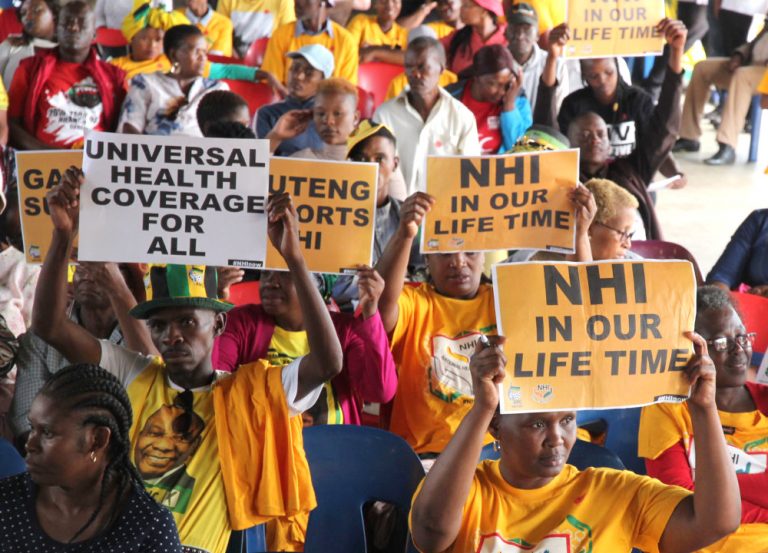
Wittingly or unwittingly, the proposal for National Health Insurance (NHI) in South Africa has created two camps: pro-NHI and anti-NHI. But as I argue in a recent article in the International Journal of Health Services, there is much more to improving health and healthcare in South Africa than the NHI.

2019 Protests From North, West, East And Southern Africa

2019 had her fair share of protests from North, West, East and Southern Africa. The reasons for these protests were largely political, followed by economic and then demand for human rights in some instances not to forget issues of ethnic tensions and insecurity. The protests toppled two long serving presidents, Sudan’s Omar al Bashir and Algeria’s Abdul Aziz Bouteflika. Two dogged movements swept away a combine 50-years of presidential rule. We look back at how these protests were started, what they achieved and their current statuses.

A Fight For The Right To Breathe Begins In South Africa

South African environmental justice advocates are suing the government to force it to clean up the air in the country’s Mpumalanga Highveld region. In the mid-1990s, South Africa’s post-apartheid government overhauled the nation’s constitution. Among the reforms, the country’s leaders adopted a bold, sweeping protection for the land and its people: the right to a healthy environment. Now, as scientists warn that all countries must take bold, sweeping action to avert the worst effects of a climate crisis, South African environmental justice advocates are testing that constitutional right. They are suing the government to force it to clean the dirty air that smothers South Africa’s Mpumalanga Highveld region.

How South Africa’s Shack Dwellers’ Movement Is Fighting Back—And Growing—Despite Waves Of Repression

In one of few appearances since he was forced to go underground, S’bu Zikode, a founder and leader of the Shack Dwellers Movement of South Africa (Abahlali baseMjondolo), spoke at the People’s Forum in New York this month. This is not his first time in hiding—he has faced threats and attempts on his life throughout the years—and many leaders of his movement have been assassinated. In New York, S’bu spoke of the struggle of his people and how they are moving forward in the face of brutal repression. How, in his words, they are not only living but marching forward “in the shadows of death” despite frequent raids, evictions, and assassinations. Despite what he faces at home—violence, separation from his family and his community, betrayal by his comrades—S’bu is calm, collected and kind.

We Build Your Homes, But Have No Homes Ourselves: Diary Of A South African Land Occupation

Talitha and Johanna work as maids. They earn R150 per day, which is the price of a gallon of milk, a pound of cheese, a loaf of bread and four oranges (1 Rand is about 5 Rupees). They could just about eat for a day, but that’s about it. They smile at me when I ask them how they manage to get by. Johanna says, ‘barely’. They live in Good Hope Settlement, a congested piece of land in Germiston – just outside Johannesburg (South Africa). Their homes are temporary, called ‘shacks’ in this part of the world. These shelters abut each other. They have no protection from the rain and offer no privacy. The lack of sanitation facilities means that sewage runs through their narrow lanes. It also means that illness is a constant worry.

‘We’ll Shut Down Economy’

South African Federation of Trade Unions (Saftu) general secretary Zwelinzima Vavi has threatened to shut down the economy if the proposed national minimum wage is implemented. Vavi was speaking at a May Day rally at the Lilian Ngoyi Sports Centre in Kwazakhele, Port Elizabeth. “We need a total shutdown of this economy for a minimum of two days. We want to occupy every city,” he said. “We won’t move until they withdraw this attack on workers.” Saftu is demanding a living wage of at least R12 500 a month, while the proposed minimum wage is R3 500 a month, or R20 an hour. “If the economy is going through hell, let the economy go through hell for everyone,” Vavi said.

How Racism In South Africa Shaped Gandhi

8 Feb 2018 – As is well known, Mohandas Gandhi had gone to England in 1888 at the age of 19 years to train as a lawyer. Before going his mother Putlibai who was a devout person, deeply religious and given to fasting regularly, extracted a promise from her son to abstain from wine, women and meat.  Mohandas followed her advice and the promises he had made but on arriving in England, started dressing like a British person and tried to behave like one by taking lessons in dancing and elocution and following other traits of a British gentleman. On returning from England to Gujarat after getting his Bar degree, a Muslim firm in South Africa sought his services as a lawyer. After talking to his brother and other friends Gandhi decided to go to South Africa to work as a Barrister for a firm owned by Abdulla Sheth.

Climate Change, Drought And Day Zero In Cape Town

CAPE TOWN, 7 February, 2018 – Day Zero is real. The Day Zero concept means that Cape Town’s utility managers will switch off water to residential buildings and businesses, and continue to supply only critical services such as hospitals, and also the communal taps in slum neighbourhoods where people already collect their water in buckets every day. This means most people in the suburbs will have to collect their daily 25l (0.88 cubic feet) water ration from 200 new distribution points. People have been warned that the military and police are on standby to manage any civil unrest. The fear is that the entire economy will grind to a halt, as businesses and schools shut down, lacking water to drink or to flush toilets. Households are currently asked to stick to a daily limit of 50l, but enforcement is difficult. The city says significant numbers of households, mostly wealthier ones, still massively exceed this figure.

South Africa’s Shack Dwellers See Politics Very Differently Than Average Westerner

Walking into the settlement at Kennedy Road in Durban, what one is confronted with is the familiarity of the place. I’ve been here before. Not to this settlement, but to others like it. To bastis in India and favelas in Brazil, to Mexico’s Neza-Chalco-Izta to Bangkok’s Klong Toey. The United Nation’s agency that monitors housing - UN Habitat - has said that there are a billion people in informal settlements (slums). A demographer at the UN tells me that within a few decades, he assumes that the number might easily double. In fact, he says, given how bad the data is, two billion people might already live in these kinds of vulnerable settlements. ‘We just don’t have the numbers,’ he said. The residents of Kennedy Road do not use the word ‘slum.’ They find the term dismissive and pejorative. Words aside, the residents would agree that they live in informal settlements. Kennedy Road is only one of Durban’s such habitats. A million of Durban’s citizens live in such places.

NUMSA: S. African Union Confronts New Forms Of Apartheid Through Class Struggle

I’ll answer your question first and then I’ll give some context. Our view of the current South African government is we have taken a very oppositionist perspective, we are opposed to the ANC -- African National Congress, ruling party in South Africa -- -led government. Up until 2013 NUMSA was an active member and an alliance partner and supporter of the ANC. This was because in the days of the liberation movement when we were still fighting the apartheid regime, all of the various formations, the trade unions, the NGOs and the popular community struggles which were all fighting against apartheid all came together in an alliance. So if you were an ANC member you were automatically a supporter of all of the trade union federations, of COSATU --Congress of South African Trade Unions -- for example.
assetto corsa mods

Urgent End Of Year Fundraising Campaign

Online donations are back! Keep independent media alive. 

Due to the attacks on our fiscal sponsor, we were unable to raise funds online for nearly two years.  As the bills pile up, your help is needed now to cover the monthly costs of operating Popular Resistance.

Urgent End Of Year Fundraising Campaign

Online donations are back! 

Keep independent media alive. 

Due to the attacks on our fiscal sponsor, we were unable to raise funds online for nearly two years.  As the bills pile up, your help is needed now to cover the monthly costs of operating Popular Resistance.

Sign Up To Our Daily Digest

Independent media outlets are being suppressed and dropped by corporations like Google, Facebook and Twitter. Sign up for our daily email digest before it’s too late so you don’t miss the latest movement news.